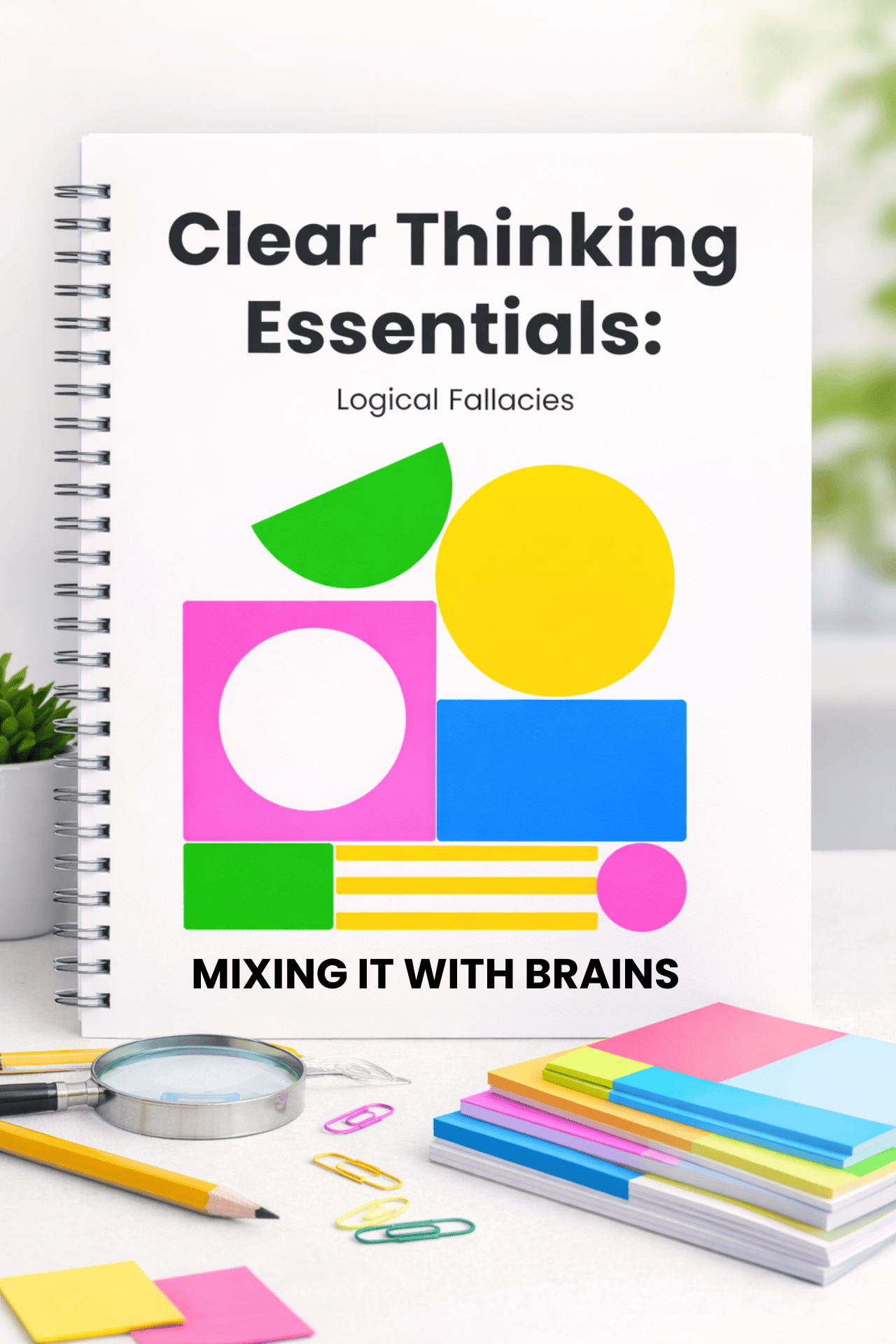
36-Week journey into critical thinking
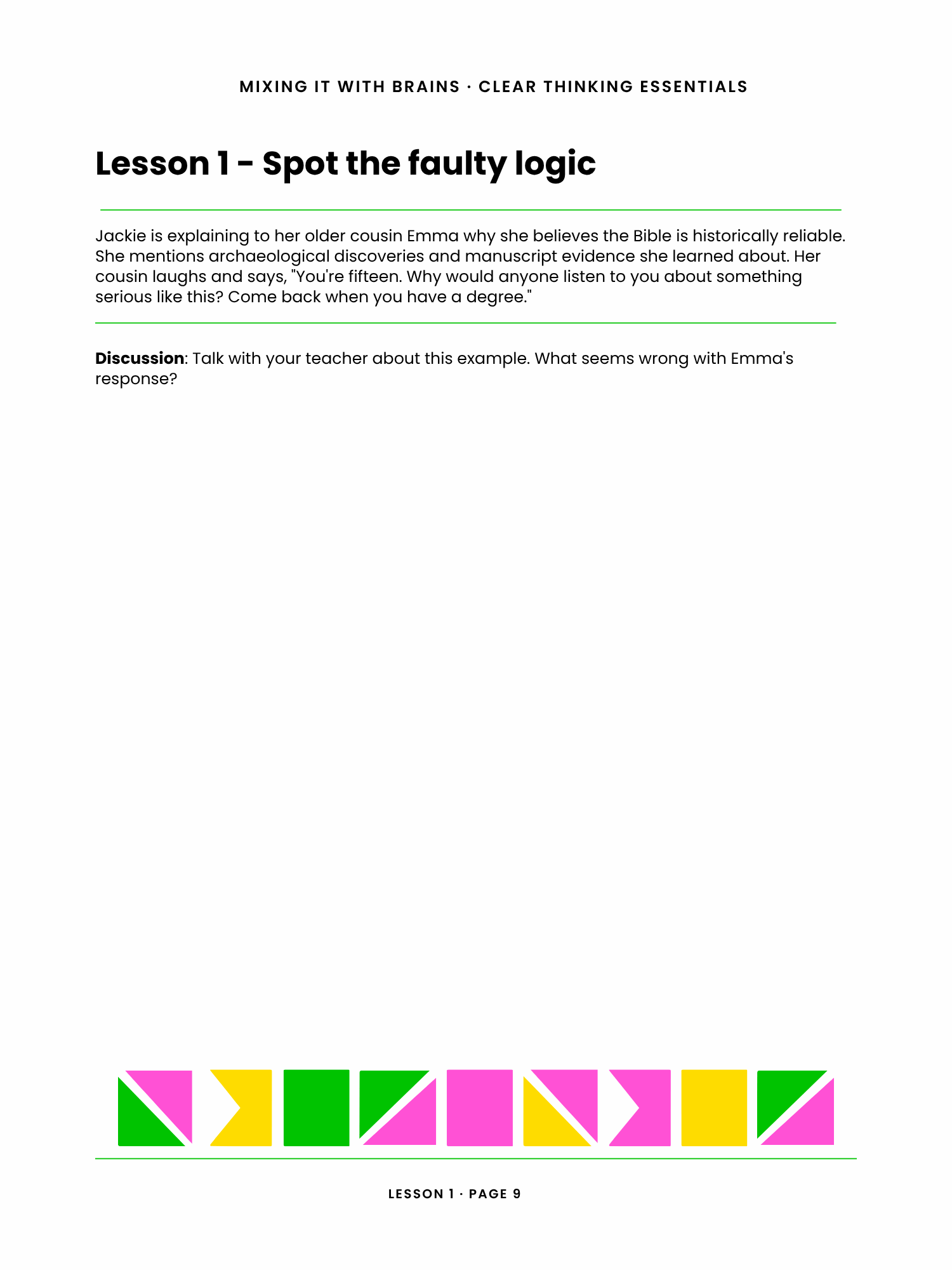
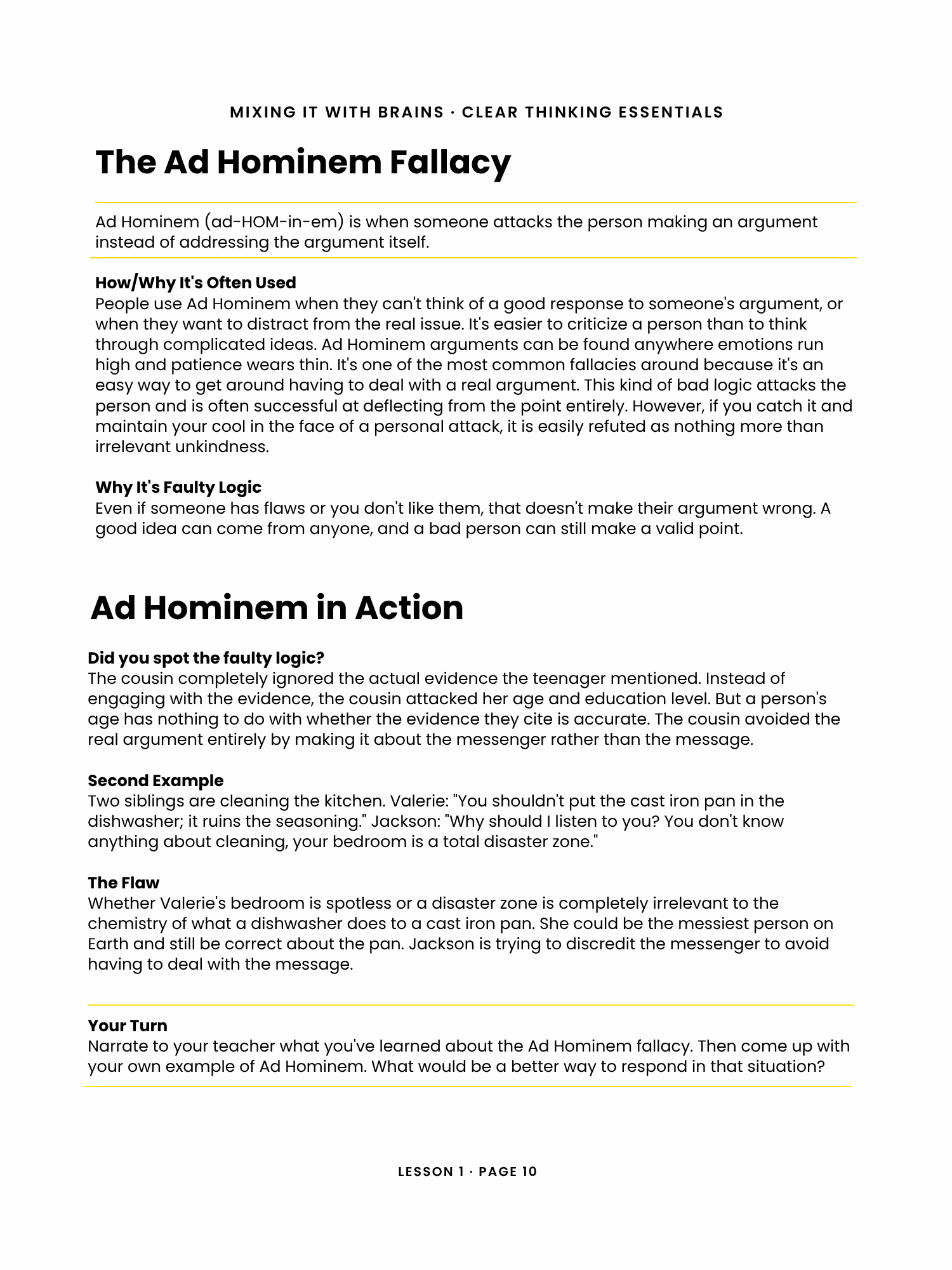
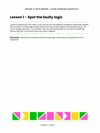
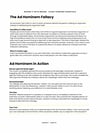
Students discover fallacies through real-world scenarios before learning definitions, making concepts stick naturally. Then they learn the proper academic term, including Latin pronunciations. (we don't dumb it down) They understand why people use this faulty reasoning, analyze a second example, and demonstrate mastery through narration. No worksheets, no busywork, just genuine understanding through narration and discussion.
Immersive Assessments
Rather than traditional multiple choice questions, our assessments immerse students in realistic dialogues where they must identify faulty reasoning as it naturally unfolds in conversation. This mirrors our ultimate goal: helping students recognize bad logic in debates, advertisements, and everyday disagreements.
Each assessment builds confidence through progressive complexity, starting with focused practice and expanding to more comprehensive reviews that gauge their ability to spot fallacies woven naturally into real conversations. We're replacing busywork with discussion starters that help you guide your student through the "why" behind each fallacy, reinforcing understanding and building critical thinking skills that last a lifetime.
I know what you're thinking:
"I haven't studied logic myself." You don't need to. Everything you need is on the page. Most parents tell me they're learning right alongside their kids.
"My kid hates worksheets." Same. That why there aren't any. Every lesson is built around story, conversation, and questions.
"My ten-year-old is too young." Not true. Most logic curricula wait until high school, but by then it's too late to close the transfer gap. Kids who start in upper elementary have years to practice before peer pressure heats up and they enter the chaos that is online discourse.
"We barely have time." I'm right there with you. The program is one short lesson a week. 10-15 minutes max. It's flexible, so you can skip a week, or do it every other week. There's no falling behind.