
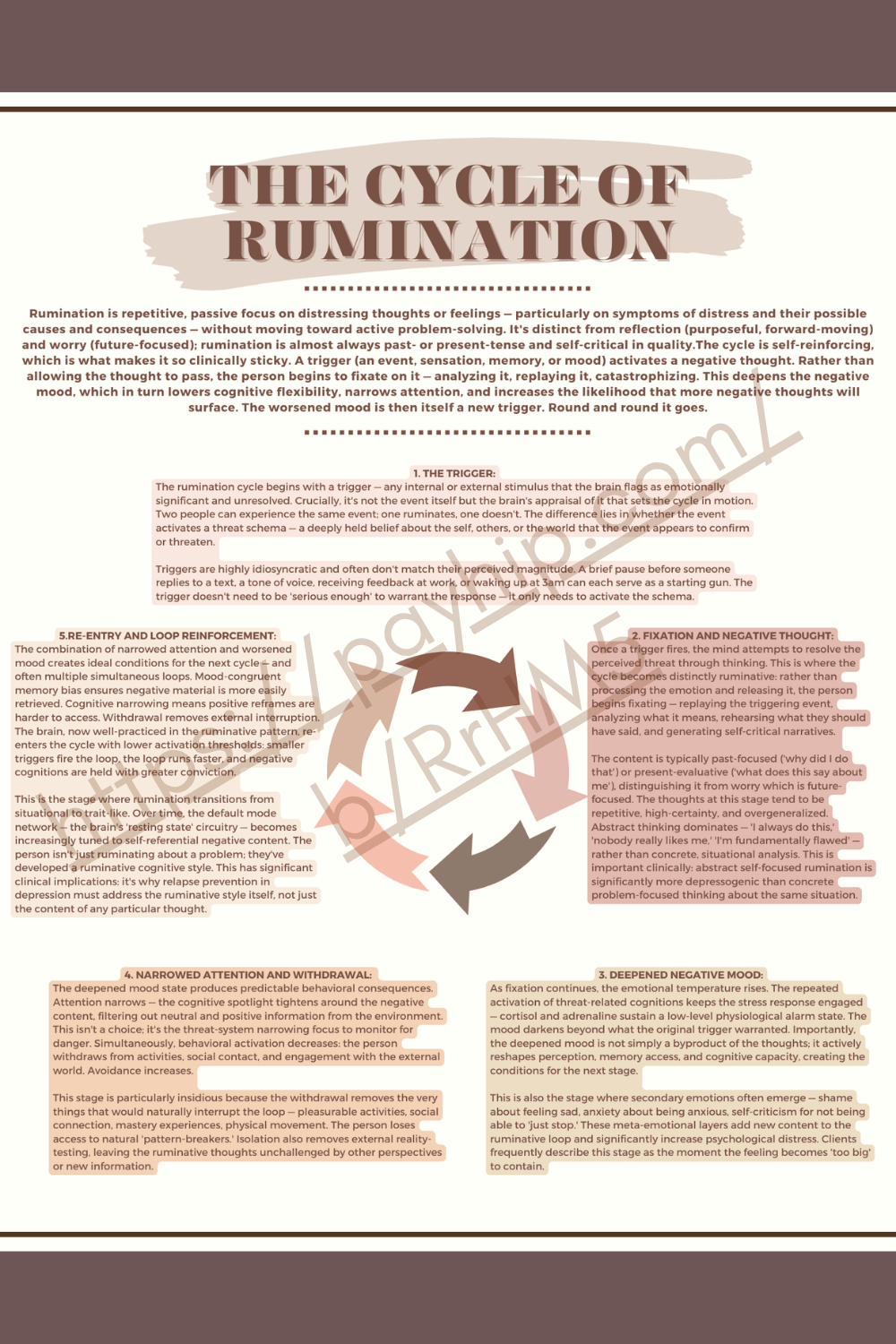
The Cycle of Rumination
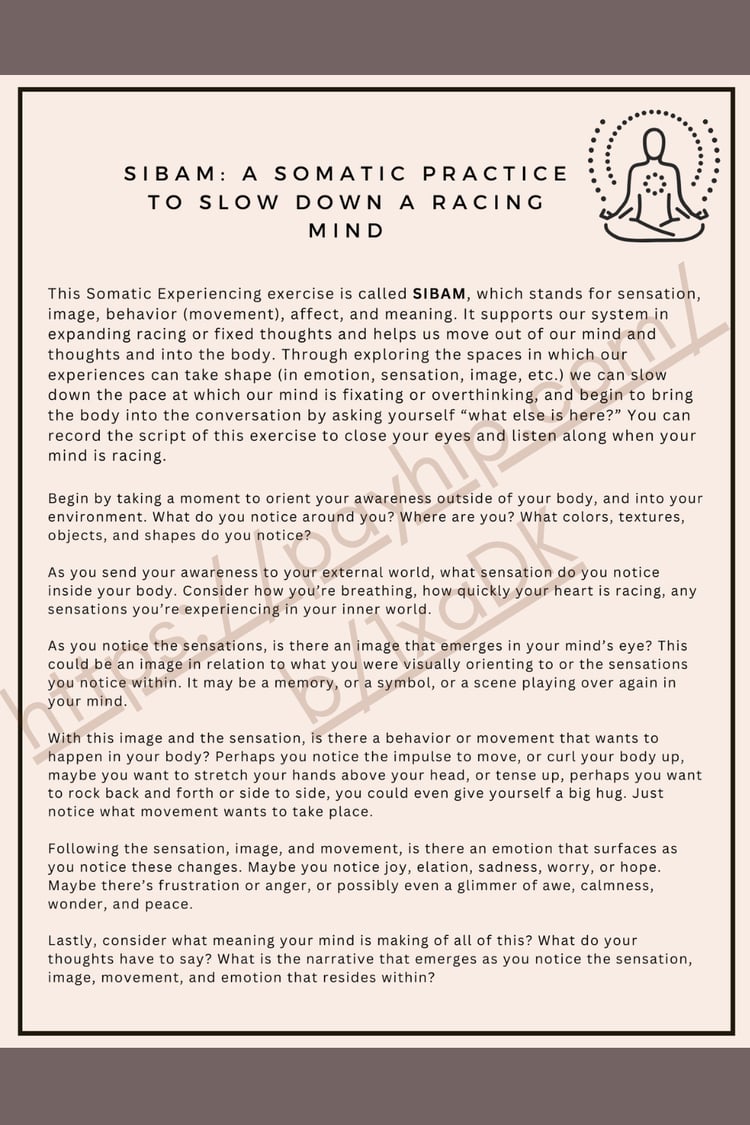
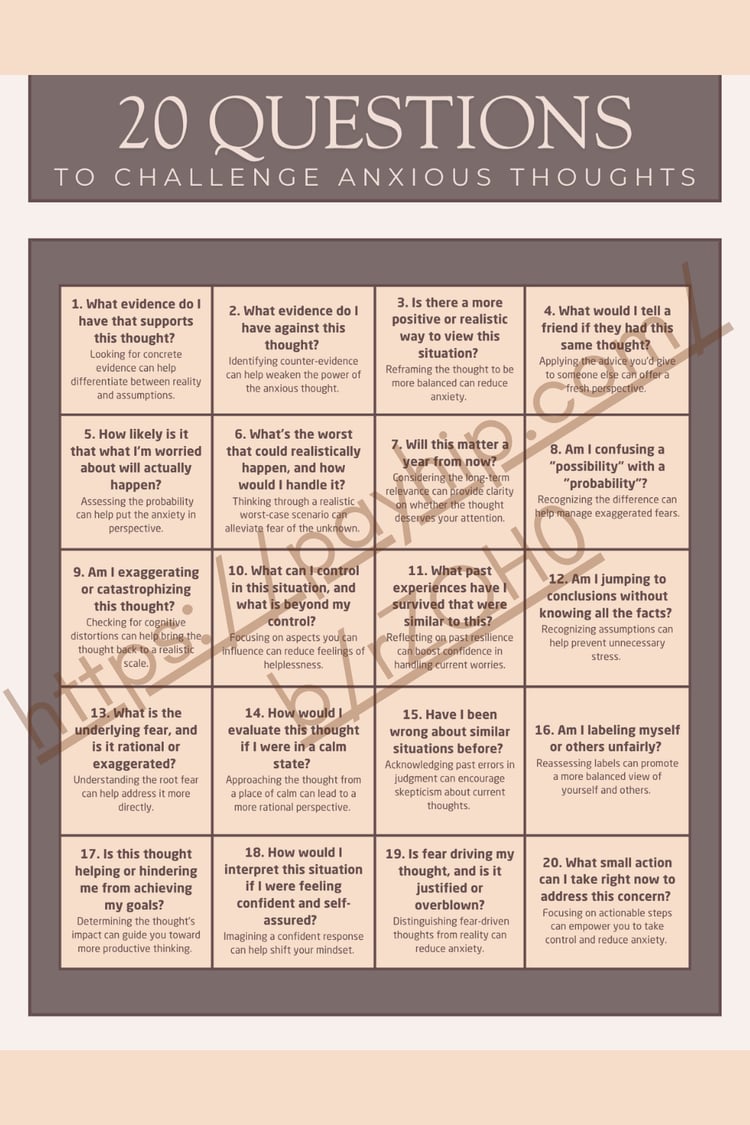
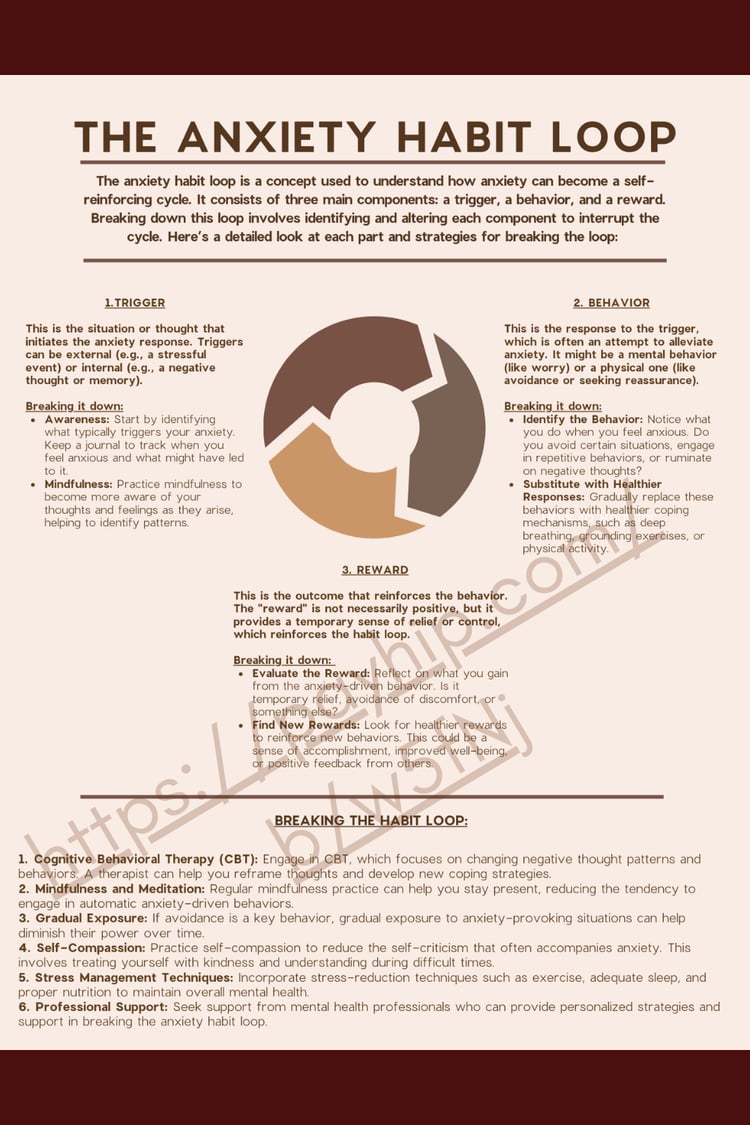
Rumination is repetitive, passive focus on distressing thoughts or feelings — particularly on symptoms of distress and their possible causes and consequences — without moving toward active problem-solving. It's distinct from reflection (purposeful, forward-moving) and worry (future-focused); rumination is almost always past- or present-tense and self-critical in quality.The cycle is self-reinforcing, which is what makes it so clinically sticky. A trigger (an event, sensation, memory, or mood) activates a negative thought. Rather than allowing the thought to pass, the person begins to fixate on it — analyzing it, replaying it, catastrophizing. This deepens the negative mood, which in turn lowers cognitive flexibility, narrows attention, and increases the likelihood that more negative thoughts will surface. The worsened mood is then itself a new trigger. Round and round it goes.