

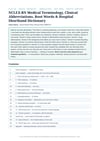
NCLEX-RN Medical Terminology, Clinical Abbreviations, Root Words & Hospital Shorthand Dictionary
Medical language is the exam's first test: every NCLEX-RN stem is written in shorthand, and the candidate who cannot decode it never reaches the clinical judgment. This dictionary teaches the decoding method and gives you the words.
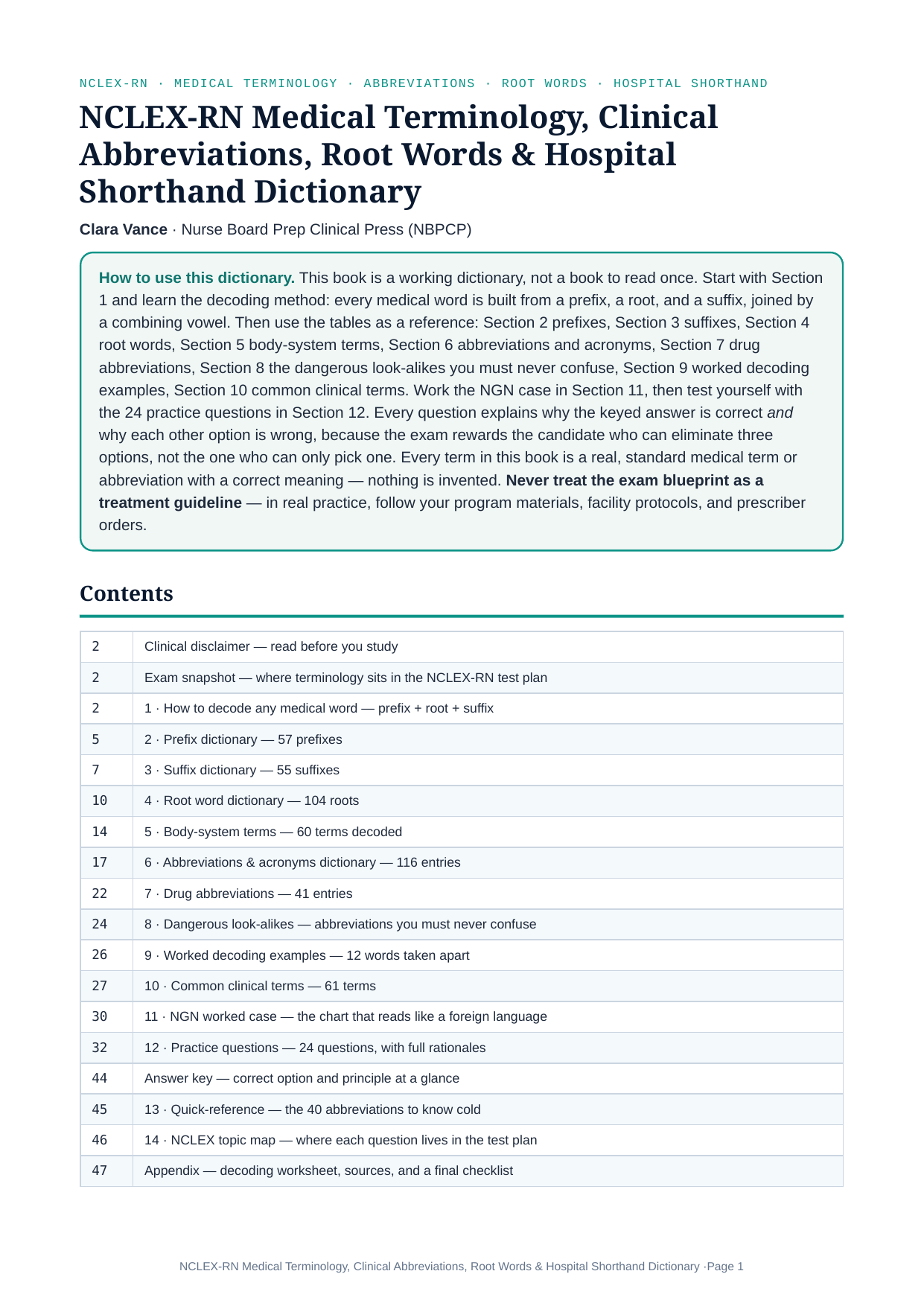
Inside — 516 verified dictionary entries:
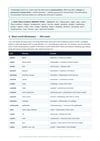
- How to decode any medical word: suffix first, prefix second, root last; the combining-vowel rules (keep the o before a consonant, drop it before a vowel, keep it between two roots)
- Prefix dictionary: 57 prefixes (hyper- vs. hypo-, brady- vs. tachy-, dys-, a-/an-, poly-, mono-, bi-, tri-, pre-, post-, peri-, endo-, ecto-)
- Suffix dictionary: 55 suffixes (-itis, -ectomy vs. -otomy vs. -ostomy, -algia, -emia, -megaly, -penia, -plegia, -pnea, -rrhea, -rrhage, -stasis)
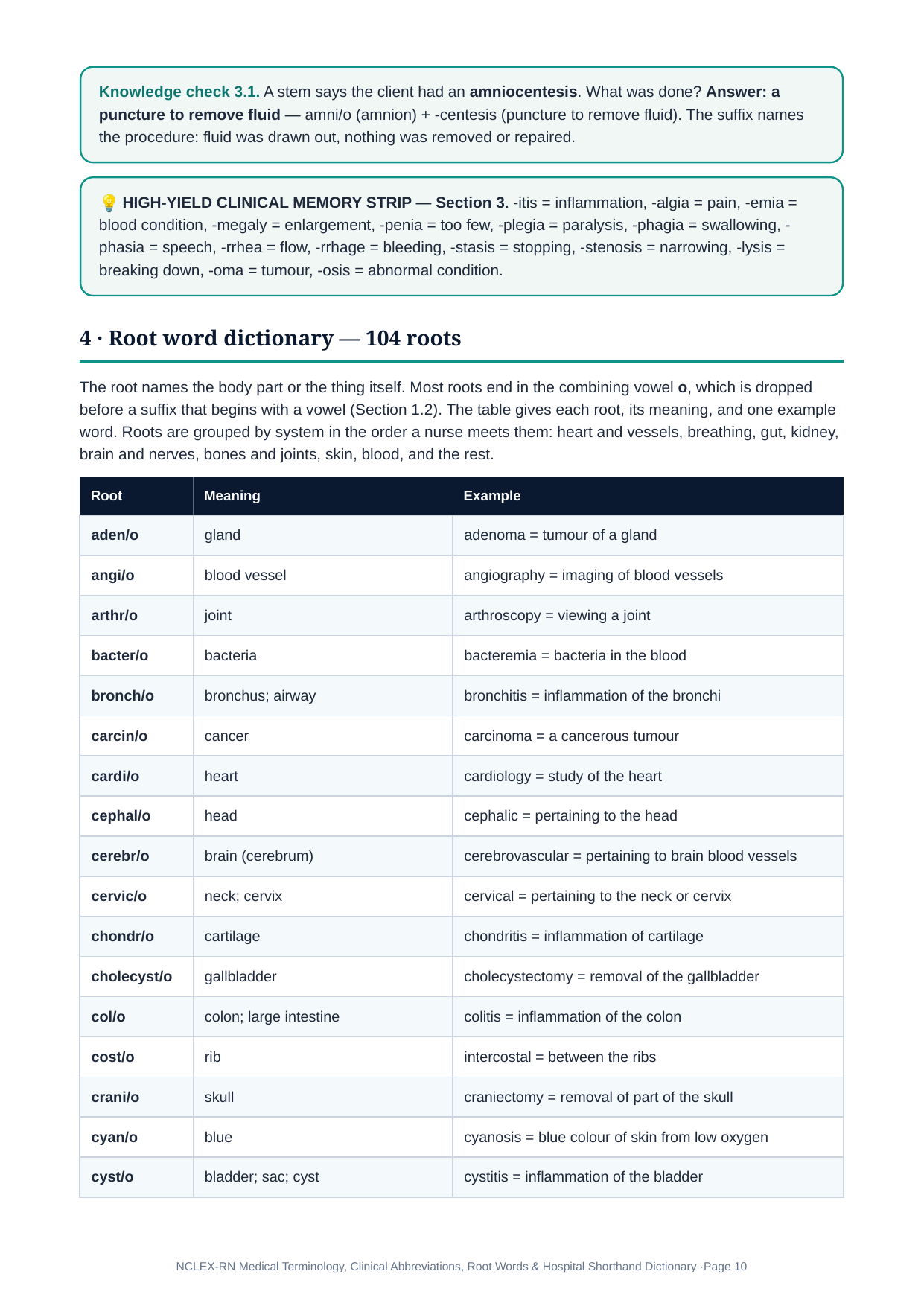
- Root word dictionary: 104 roots (cardi/o, gastr/o, hepat/o, nephr/o and ren/o, neur/o, oste/o, derm/o, hemat/o, pneum/o and pulmon/o, enter/o, encephal/o, my/o, arthr/o, cyst/o, cholecyst/o, pancreat/o)
- Body-system terms: 60 terms decoded into their word parts (hypertension, tachycardia, dyspnea, hyperglycemia, thrombocytopenia, myocardial infarction, pulmonary embolism, and more)
- Abbreviations & acronyms dictionary: 116 entries (BID, TID, QID, PRN, STAT, PO, IV, IM, SC, NPO, AC, PC, HS, CBC, BMP, CMP, ABG, ECG, MI, CVA, DVT, PE, CHF, COPD, DM, HTN, ICU, ED, OR, PACU, DNR, DNI, I&O, A&O, GCS)
- Drug abbreviations: 41 entries (mg, mcg, mL, units, tab, cap, gtt, SL, ACEI, ARB, CCB, PPI, H2RA, SSRI, NSAID, D5W, NS, LR, INR, aPTT)
- Dangerous look-alikes: 22 entries with explicit warnings — qd vs. qid, U vs. units, MSO4 vs. MgSO4, trailing zero (1.0 mg read as 10 mg), missing leading zero, cc vs. mL, QD vs. QOD, D/C, HS, HCT, SC vs. SL, mg vs. mcg
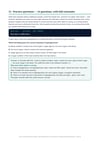
- Worked decoding examples: 12 words taken apart step by step (gastroenteritis, hyperkalemia, cholecystectomy, endocarditis, pancytopenia, tracheostomy, and more)
- Common clinical terms: 61 terms (acute vs. chronic, benign vs. malignant, sign vs. symptom, indication vs. contraindication, onset vs. peak vs. duration, remission vs. relapse vs. exacerbation)
- NGN worked case: a fictional chart with a dated cue timeline and a six-question answer-to-cue crosswalk
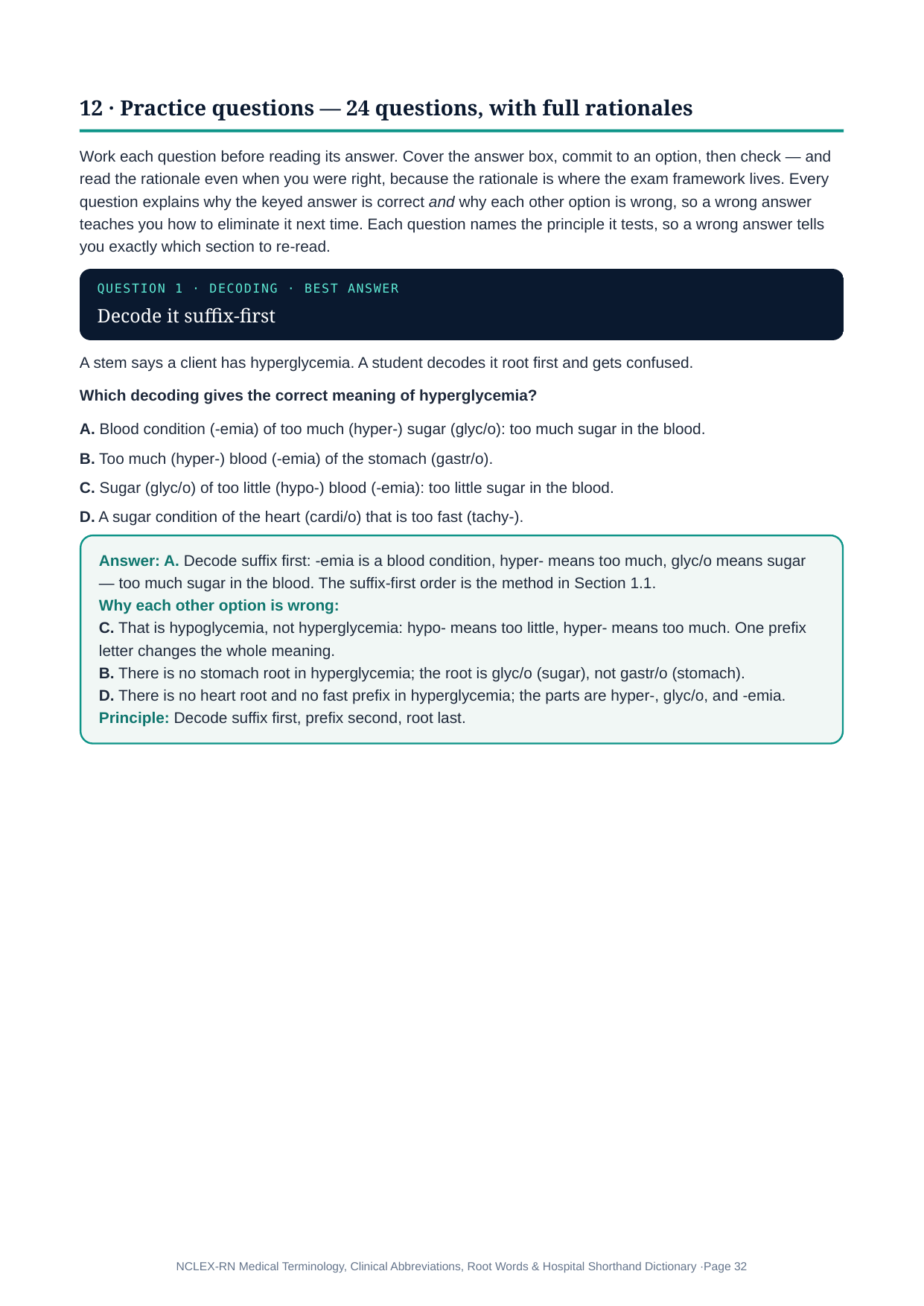
- 24 practice questions with full rationales — why the keyed answer is correct AND why each other option is wrong — plus an answer key
- Quick-reference: the 40 abbreviations to know cold; NCLEX topic map; decoding worksheet and sources in the appendix
No real medicine doses are asserted in this book — dosing is prescriber-ordered and product-specific. The medicine amounts shown are unit definitions, ISMP look-alike examples, and clearly labelled fictional teaching-case orders. Original teaching cases written for exam practice. This guide is not affiliated with NCSBN and does not guarantee a pass. If you find an error, a corrected version will be sent free.