


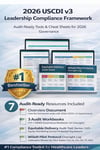
2026 USCDI v3 Leadership Compliance Framework
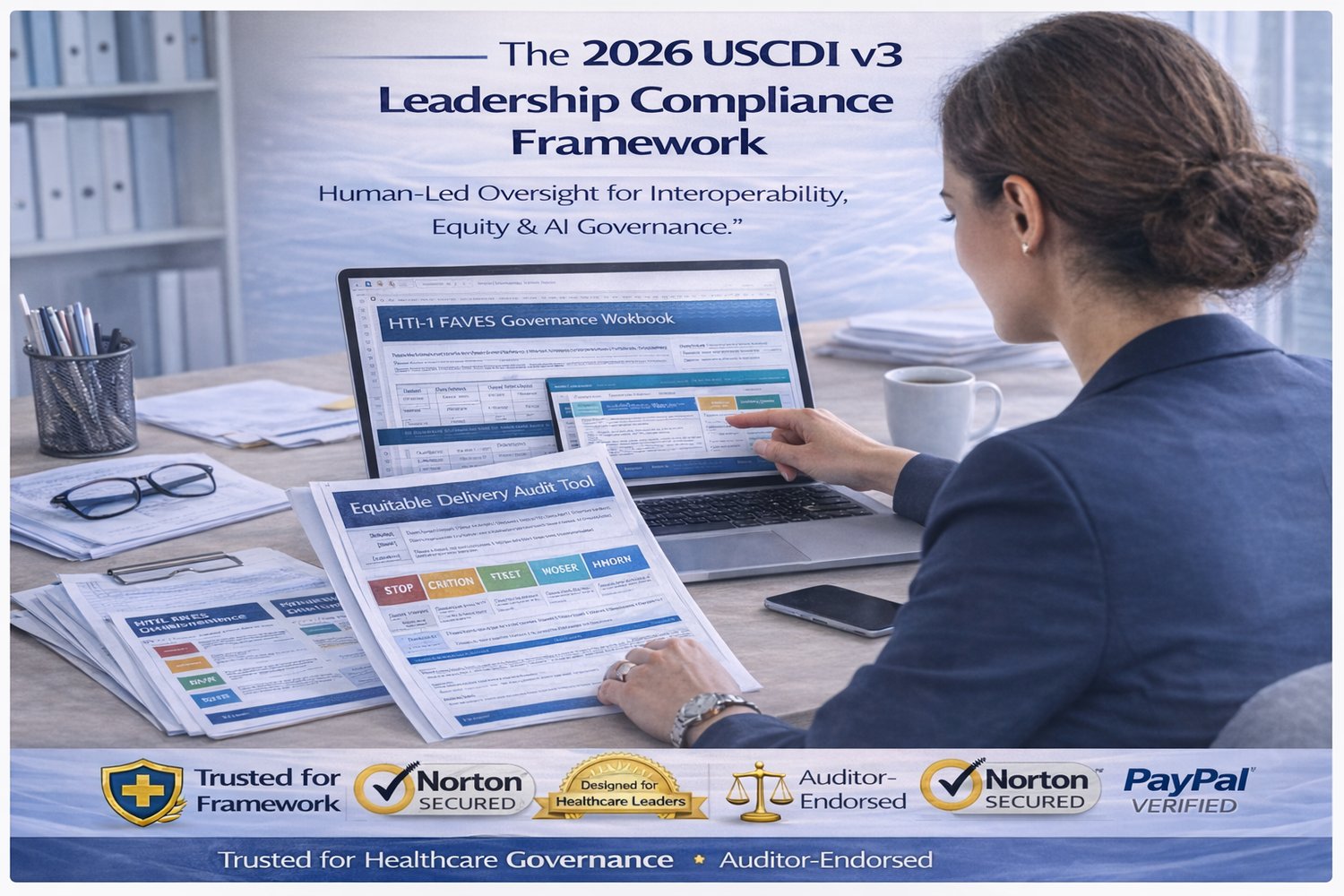
2026 USCDI v3 Leadership Compliance Framework
Human-Led Oversight for Interoperability, Equity & AI Governance
“In 2026, systems don’t protect organizations — documented oversight does. This framework equips leaders with defensible evidence of governance, equity monitoring, and regulatory readiness.”
As of January 1, 2026, healthcare organizations are no longer evaluated solely on whether systems are configured correctly — they are evaluated on whether leadership can prove active oversight of data use, equity impact, and automated decision-making.
The 2026 USCDI v3 Leadership Compliance Framework is a non-technical, audit-ready governance suite designed for executives, compliance leaders, and clinical directors who must answer for:
- USCDI v3 data use and interoperability
- HTI-1 algorithm transparency and AI oversight
- Section 1557 nondiscrimination enforcement
- WISeR (Wasteful & Inappropriate Service Reduction) pilot scrutiny in hotspot states
This is not a study guide.
It is a documentation system that produces the exact evidence regulators expect in 2026.
What’s Included in This Package
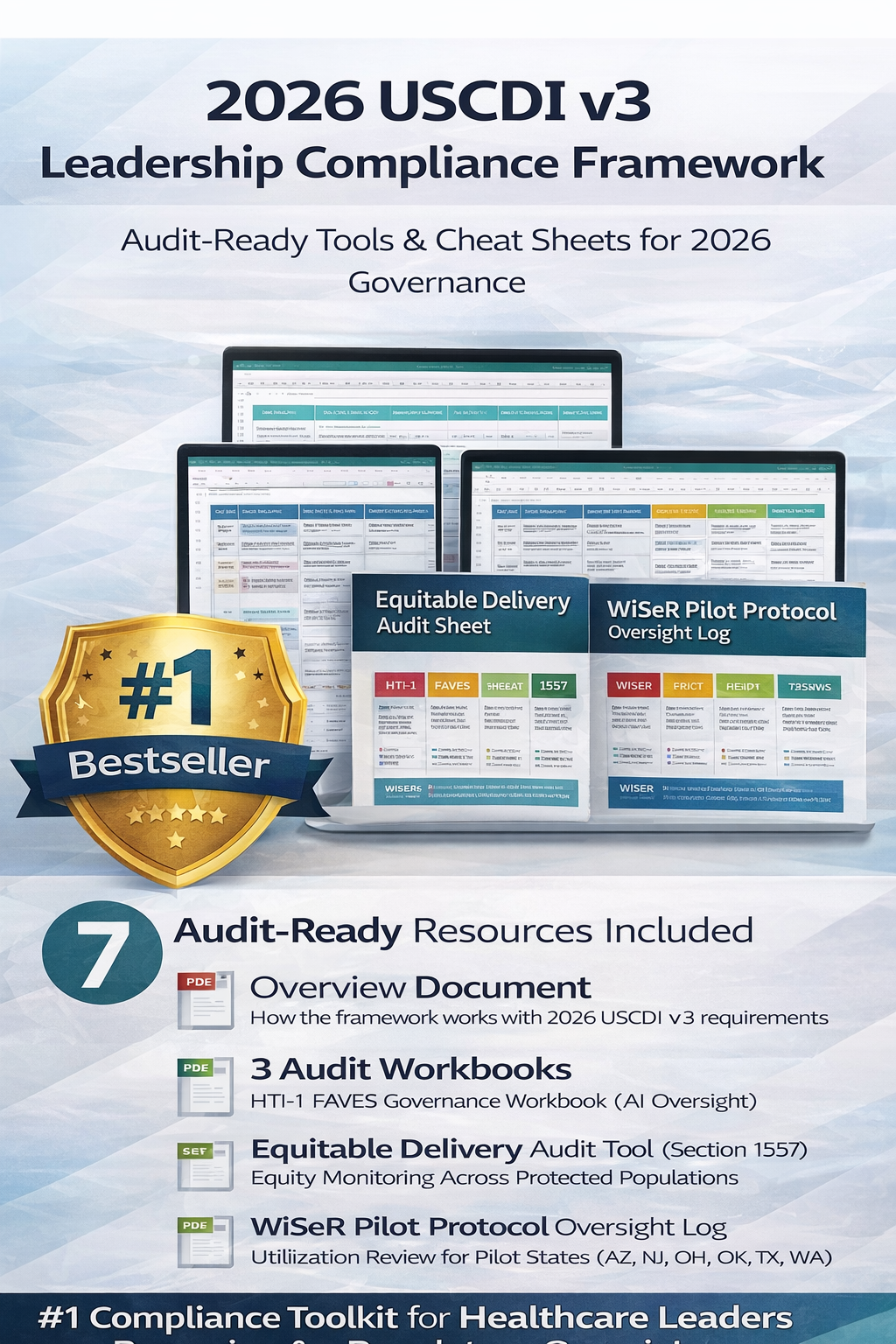
This bundle includes 7 total files, delivered as separate, ready-to-use resources:
📘 1 Overview Document
- Explains the regulatory landscape for 2026
- Shows how the tools work together
- Provides leadership-level context without technical jargon
📊 3 Excel Workbooks (Editable)
Each tool is delivered as its own Excel workbook, designed for internal governance and audit defense.
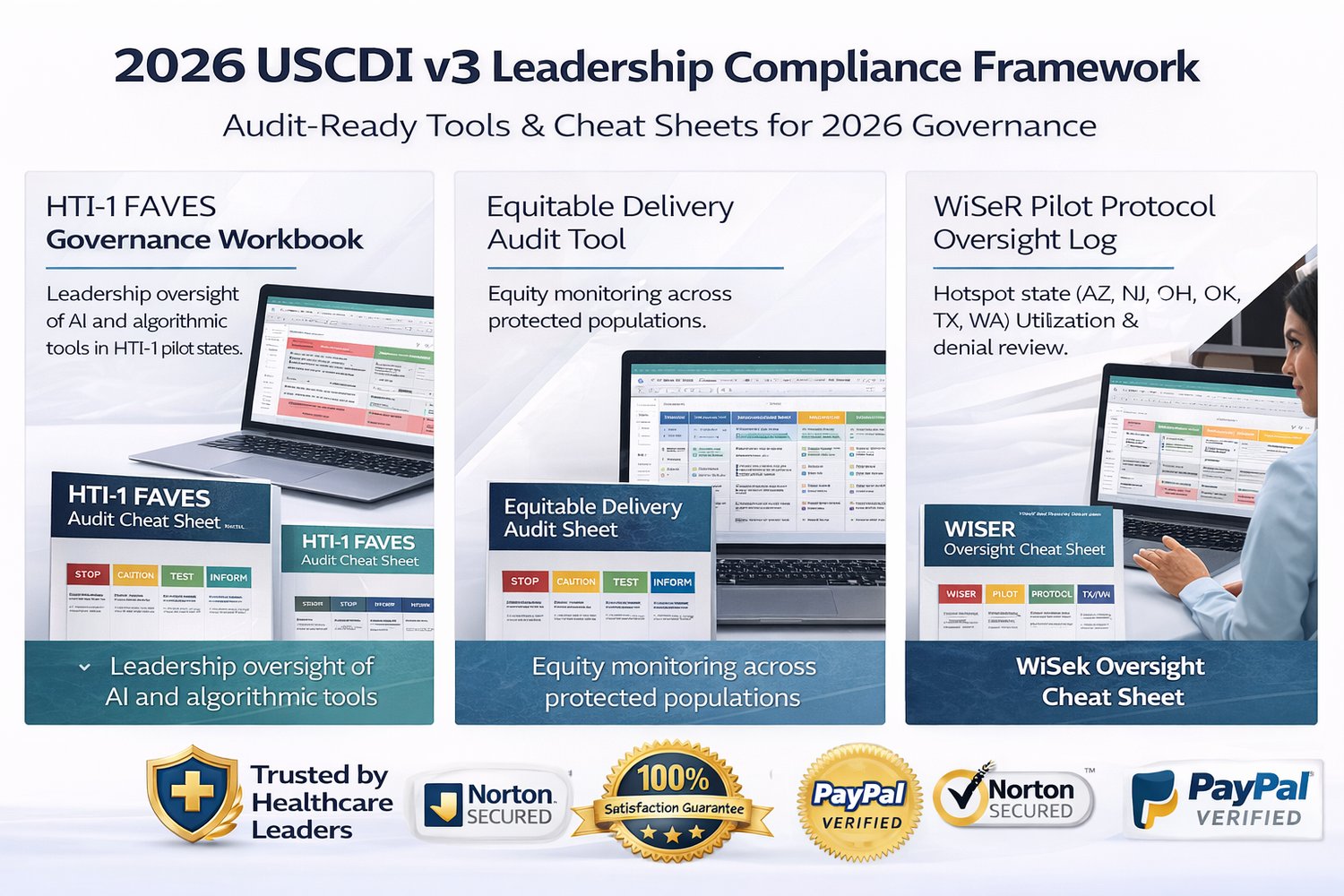
Tool 1: HTI-1 FAVES Governance Workbook
(Fairness, Appropriateness, Validity, Effectiveness, Safety)
Purpose:
Documents leadership oversight of AI and algorithmic tools in alignment with ONC HTI-1 certification and DOJ expectations for human-in-the-loop governance.
Includes:
- Plain-language “Auditor Common Sense” questions
- Evidence tracking without coding or IT expertise
- Stoplight audit status (🟢🟡🔴) aligned with 2026 CMS expectations
- Corrective action documentation when risks are identified
Tool 2: Equitable Delivery Audit Tool
Section 1557 Oversight Log (2026)
Purpose:
Tracks whether AI-assisted or data-driven decisions create unintended disparate impact across protected populations.
Designed to prove:
- Equity monitoring is active and ongoing
- Outcomes are reviewed — not just policies
- Leadership is informed and accountable
This is an internal monitoring and risk-mitigation log, not bedside documentation and not a legal determination of discrimination.
Tool 3: WISeR Pilot Protocol - Hotspot State Oversight Tool
Purpose:
Documents leadership oversight for organizations operating in WISeR pilot states (AZ, NJ, OH, OK, TX, WA), where utilization and wasteful service scrutiny has intensified.
Tracks:
- Utilization pattern triggers
- Geographic expansion risk
- Service line growth scrutiny
- Denials and payer inquiries
- Internal audit findings
This tool demonstrates proactive governance, not reactive defense.
🧾 3 Printable Cheat Sheets (PDF)
Each workbook is supported by a one-to-two page printable cheat sheet for fast reference:
- HTI-1 FAVES Audit Cheat Sheet
- Equitable Delivery (Section 1557) Cheat Sheet
- WISeR Oversight Cheat Sheet
These explain:
- What triggers review
- What 🟢🟡🔴 statuses mean in 2026
- What actions auditors expect to see documented
Why This Framework Matters in 2026
Federal enforcement in 2026 focuses on:
- Outcomes, not intent
- Oversight, not configuration
- Human accountability, not vendor assurances
This framework helps organizations demonstrate:
Leadership identified risk → reviewed evidence → applied judgment → documented action.
That is the audit story regulators expect.
Who This Is For
- C-Suite Executives
- Compliance & Quality Leaders
- Clinical Directors
- Utilization & Governance Committees
- Organizations using AI-enabled systems or operating in high-scrutiny states
💡 About the Research Lead: S. Muhammad, MSN-Ed, MBA, RN, CCM
Nurse Auditor & 5-Time Author | 20+ Years Experience
As a Senior Nurse Auditor with nearly 9 years at a major health plan, S. Muhammad specializes in identifying the documentation gaps that lead to claim denials and False Claims Act (FCA) scrutiny.
This tool is Auditor-Developed, designed to bridge the gap between clinical bedside care and the rigorous 2026 data standards. As a 5-time published author on CMS mandates and AI governance, S. Muhammad provides the "Human-in-the-Loop" documentation required to survive 2026 audits.
Published Works Include:
"Don't leave your 2026 clinical oversight to chance. Secure this auditor-validated framework today."