
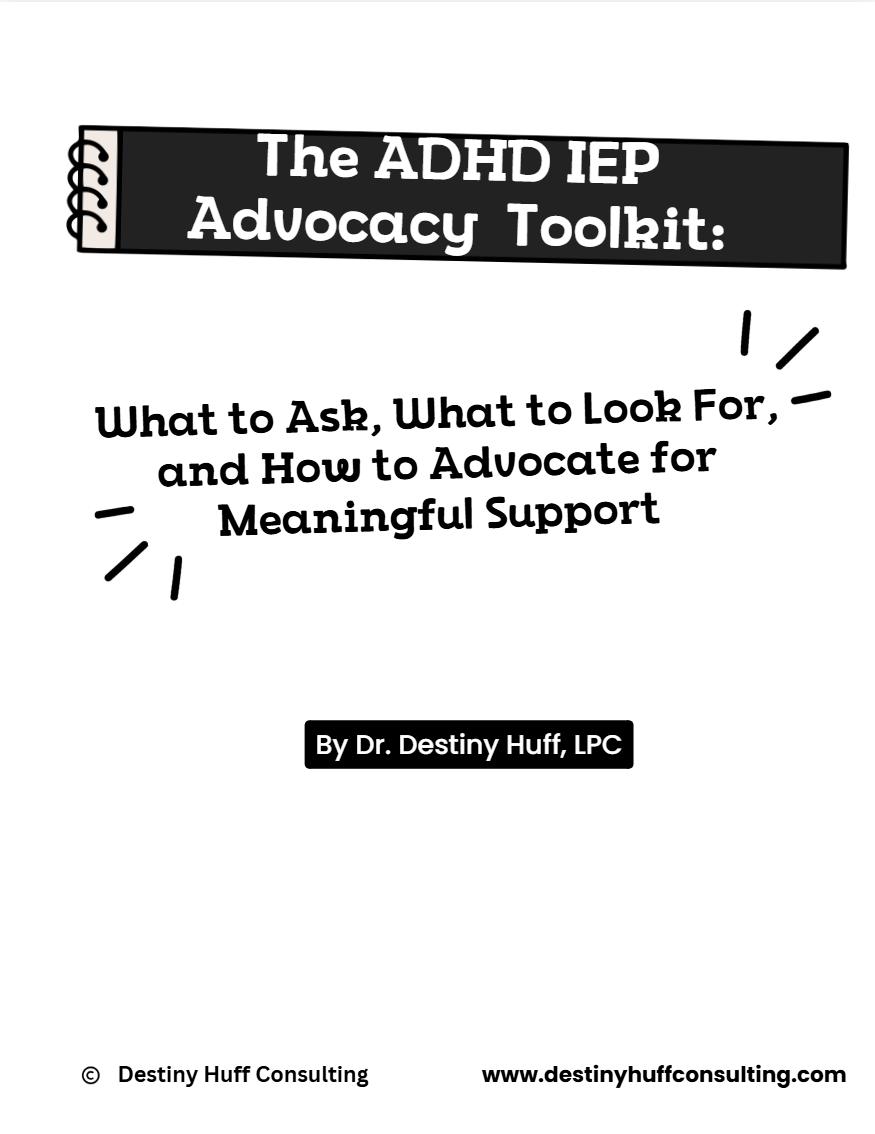
The ADHD IEP Advocacy Toolkit
The ADHD IEP Advocacy Toolkit
What to Ask, What to Look For, and How to Advocate for Meaningful Support
$1.99 | 13-Page Digital Download
ADHD is about more than attention, and an IEP should reflect more than a diagnosis or a learner's grades.
When reviewing your child's IEP, do you know what to look for? Are their executive functioning, regulation, organization, and other disability-related needs being appropriately addressed? Do you know what questions to ask when the school says, "Their grades are fine" or "They just need to try harder"?
The ADHD IEP Advocacy Toolkit is a 13-page neuroaffirming resource designed to help families move beyond labels, identify gaps in educational supports, prepare for IEP meetings, and advocate for meaningful access to education.
What's Included?
- Common School Statements & Advocacy Responses: Practical ways to respond to common assumptions about ADHD and educational needs.
- ADHD IEP Audit & Printable Checklist: Review evaluations, present levels, goals, accommodations, specially designed instruction, related services, and progress monitoring.
- Follow the Need Through the IEP Worksheet: Examine how identified disability-related needs are documented and addressed throughout the IEP.
- IEP Meeting Preparation Worksheet: Organize your concerns, priorities, learner strengths, and questions before the meeting.
- Advocacy Questions to Keep in Your Pocket: Meaningful questions to ask during IEP discussions.
- Sample Parent Advocacy Language: Examples of what to say when requesting support, clarification, or an IEP meeting.
- IEP Meeting Follow-Up Tracker: Document decisions, responsibilities, unresolved concerns, and next steps.
- Neuroaffirming IEP Guidance: Keep the focus on meaningful access, autonomy, individualized support, and progress rather than compliance.
Who Is This Resource For?
Parents, caregivers, special education advocates, educators, and other professionals supporting ADHD learners through the IEP process.
Why This Toolkit Matters
An IEP should not be a generic list of accommodations or a document focused on making a learner appear less ADHD.
It should reflect their individual strengths, disability-related needs, barriers to access, and the instruction, accommodations, and services necessary to support their education.
The goal isn't simply to have an IEP. The goal is an IEP that meaningfully supports the learner's access, participation, and progress.
Product Details
- 13-page printable PDF
- Instant digital download
- One-time purchase: $1.99
- Designed for use before, during, and after IEP meetings
Created by Dr. Destiny Huff, LPC, neurodivergent therapist and non-attorney special education advocate.
This resource is for educational and informational purposes and does not constitute individualized legal advice. No physical product will be shipped.