
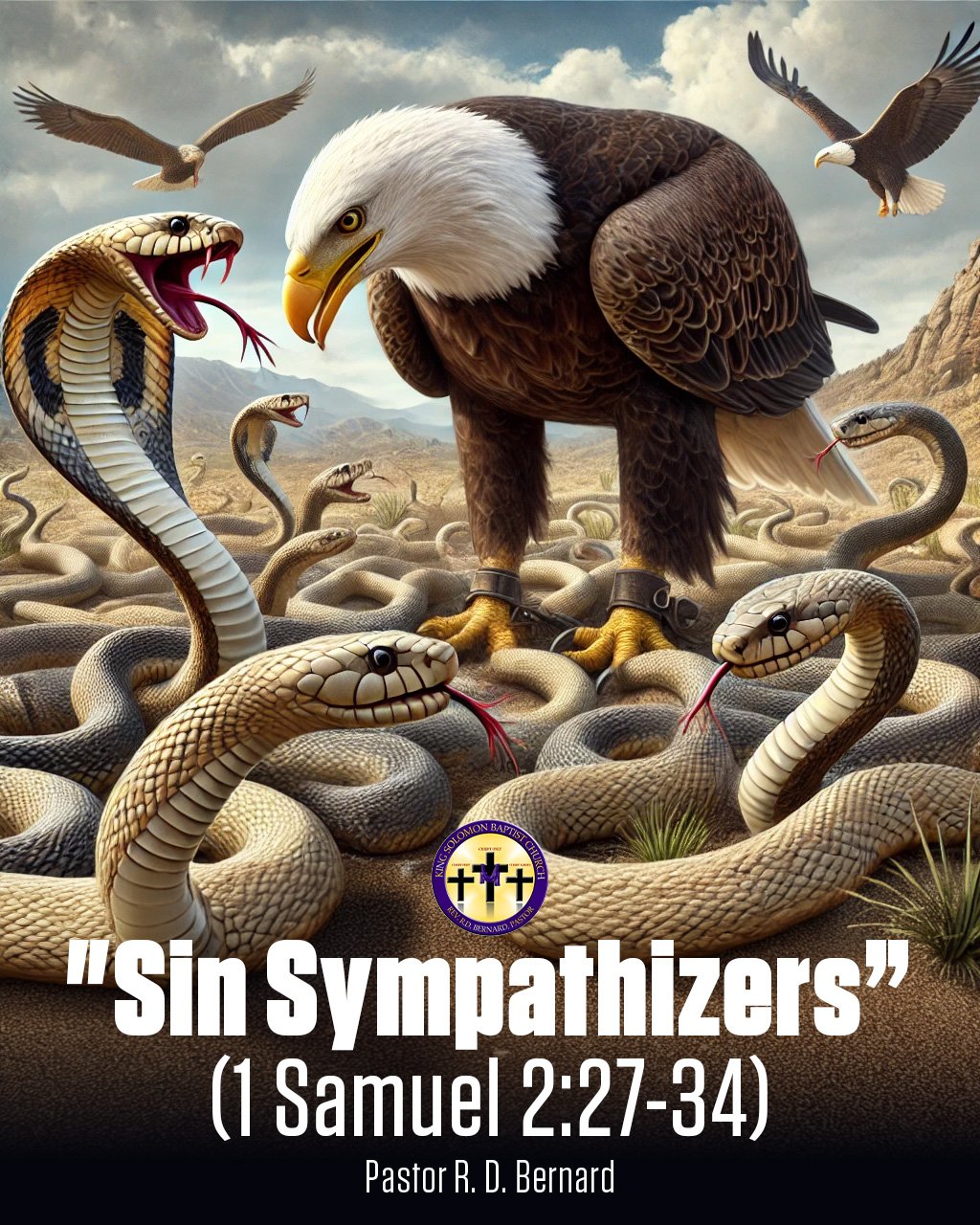


"Sin Sympathizers” (MP3 AUDIO)
"Sin Sympathizers” (1 Samuel 2:27-34)
One of the easiest things for the newly saved to understand is the love of God (John 3:16; Romans 5:8; 1 John 4:9-10). On the other hand, one of the hardest things for the newly saved to understand is the extent of God’s hatred for sin (Romans 1:18; 6:23; Ephesians 5:6; Colossians 3:5-6; Hebrews 10:26-27).
It is hard for the newly saved to process the fact that God can both love the sinner and hate the sin. Yet these two polarities must be held in tension if we are to get an accurate view of who God is.
God is a holy God who hates sin. Yet He is also a God of love who loves the sinner. Most everyone understands and indeed takes advantage of “the God of love” but to be saved we must also embrace the God who hates sin.
This is of supreme importance for our souls and for growing in the knowledge of who God is. To be saved, as well as to grow into the fullness of salvation, requires that we too have the same hatred for sin [but love for the sinner] that God has.
Consider the high priest and judge, Eli, who was faithful to God, but showed more honor toward his sinful sons. From all accounts he was a deeply pious man whose service to the Lord was unblemished, except with regard to the sinful actions of his sons, Hophni and Phinehas. Following are four salient points taken from our text.
- At the moment we give ourselves to the Lord, we are entangled in a web of sinful relationships and associations.
- a. No one knows the Lord from birth (Psalm 51:5).
- b. When we come to the Lord [not in baptism or church membership but in true salvation], we enter through the narrow gate of Matthew 7:13-14, where all worldly associations are left behind (Luke 9:23).
- c. Eli’s sons were sinners (1 Samuel 2:12, 17, 22; 3:13).
- There is solidarity among sinners – whether they realize it or not.
- a. Jesus said in Matthew 12:30 in the NLT: “Anyone who isn’t helping me opposes me, and anyone who isn’t working with me is actually working against me.”
- b. Luke 16:13 reads in part in the NLT, “No servant can serve two masters…”
- c. We must forsake or deny all in our lives that is not made subservient to Christ, since we come to the Lord in a state of solidarity with Satan and all who serve sin (John 8:44; Ephesians 2:1-3; 1 John 3:8; 2 Corinthians 4:4).
- d. Eli, who was very old, relied on his sinful sons to help serve the people of Israel (1 Samuel 1:3; 2:12-13).
- Sometimes we may not commit the sin or evil act, but through our association with those who do, we become sin sympathizers.
- a. 1 Corinthians 15:33 reads in the KJV: “Be not deceived: evil communications corrupt good manners.”
- b. Eli honored his sons more than he honored God because he did not put a stop to their wicked behavior (1 Samuel 2:29).
- i. Eli’s words to his sons in verses 23-25 of chapter 2 were strong, but he didn’t have any action to back it up.
- ii. God decides to punish Eli and his sons (1 Samuel 3:11-14).
- God will judge those who honor sinners more than they honor Him.
- a. Eli was warned several times about the coming judgment (1 Samuel 2:27-36; 3:11-14).
- b. Hophni and Phinehas would die on the same day (1 Samuel 2:34; 4:11).
- c. Eli would also die after receiving the news of his sons’ deaths (1 Samuel 4:18).
"Christ First, Christ Only, Christ Always"