







ADHD and Sensitivity to Touch
Payhip Description
✔️ Sensory-Processing Challenges Related to Touch in ADHD Women
Fact Sheet + Self-Reflection Worksheet
Sensory-Processing-Challenges-R…
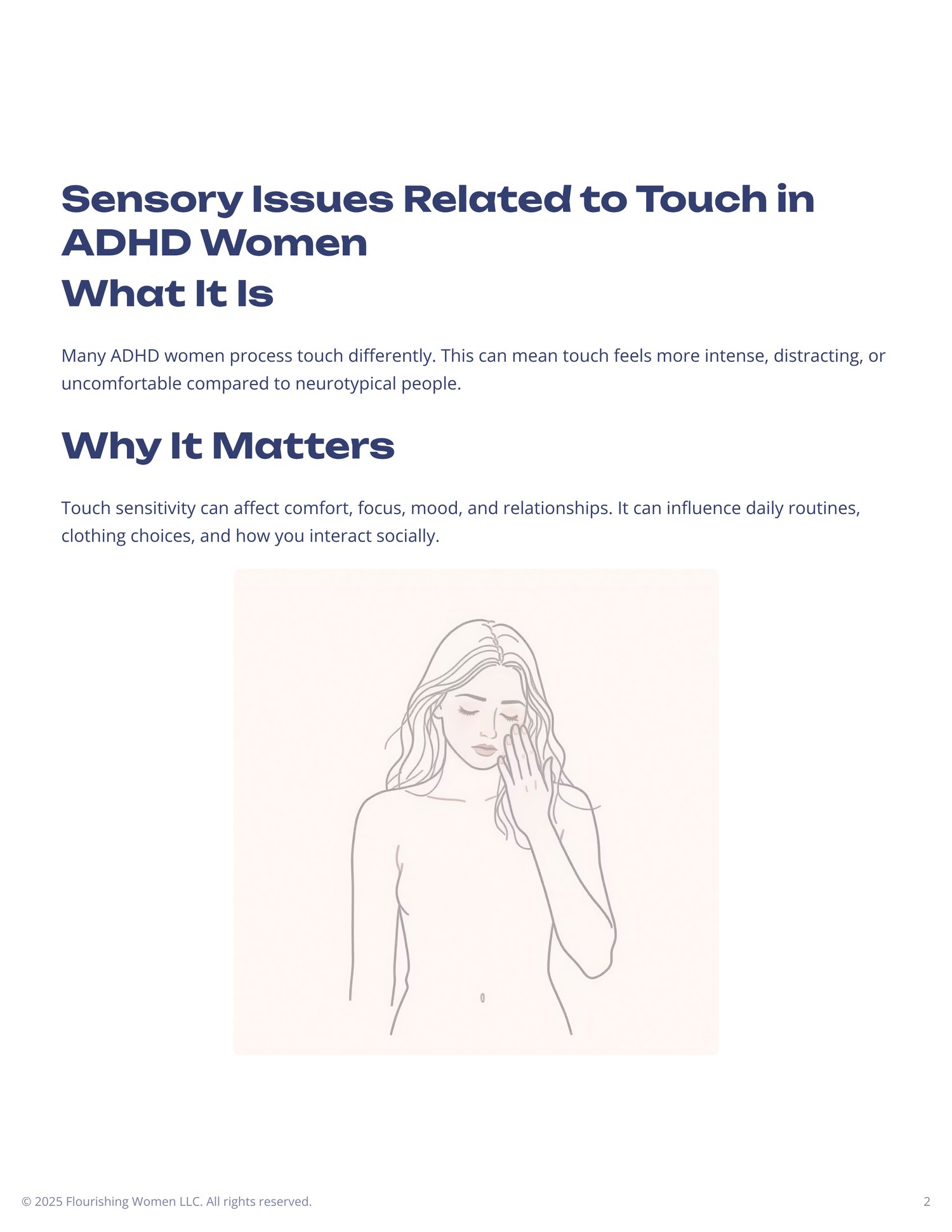
Many ADHD women process touch differently. Light pressure, certain fabrics, unexpected hugs, or crowded environments can create sensory overwhelm that affects focus, mood, and relationships. This worksheet helps you understand these patterns and build strategies that support your nervous system instead of pushing through discomfort.
This resource includes:
🔵 A clear fact sheet explaining why touch sensitivity is common in ADHD women, how it affects daily life, and how it connects to overwhelm, emotional regulation, and social experiences.
🔵 Reflection prompts to help you identify your patterns, triggers, and comfort levels with different types of touch.
🔵 A step-by-step overload map so you can understand when, where, and why tactile overload happens.
🔵 Self-accommodation tools such as fabric choices, environment adjustments, and ways to reduce tactile overload in daily routines.
🔵 Self-advocacy scripts for communicating sensory needs without shame, pressure, or over-explaining.
🔵 Calming strategies that help your nervous system shift out of overload using pressure, movement, texture, breath, and grounding.
🔵 A full-page body map you can use to track your sensitivities and identify areas of irritation or discomfort.
This worksheet is designed for:
🔵 ADHD women
🔵 AuDHD women
🔵 Teens and adults who struggle with tactile sensitivity
🔵 Therapists, coaches, and educators who support neurodivergent clients
This is a neurodivergent-affirming resource. It centers lived experience, sensory sovereignty, and practical tools for comfort and clarity — not “fixing” or suppressing symptoms.