


Data Science – Complete Quick Guide
1️⃣ What is Data Science?
Data Science is the field of extracting knowledge, insights, and predictions from structured and unstructured data using:
- Statistics
- Machine Learning
- Programming
- Domain expertise
2️⃣ Data Science Process (CRISP-DM)
- Business Understanding – Define objectives
- Data Collection – Gather raw data
- Data Cleaning & Preprocessing – Handle missing values, outliers
- Exploratory Data Analysis (EDA) – Understand data patterns
- Modeling – Apply ML/AI algorithms
- Evaluation – Validate model performance
- Deployment & Monitoring – Make model production-ready
3️⃣ Key Skills in Data Science
CategorySkillsProgrammingPython, R, SQLLibrariesPandas, NumPy, Matplotlib, Seaborn, Scikit-learnStatisticsMean, Median, Std, Probability, Hypothesis testingMachine LearningRegression, Classification, Clustering, Decision Trees, Random ForestData VisualizationMatplotlib, Seaborn, Tableau, PowerBIBig DataSpark, Hadoop (optional for advanced roles)Cloud / DevOpsAWS, GCP, Docker (optional for deployment)
4️⃣ Data Types
- Structured Data – Tables, Excel, SQL
- Unstructured Data – Text, Images, Videos
- Semi-Structured Data – JSON, XML, Logs
5️⃣ Common Data Science Tools
- Python / R – Programming
- Jupyter Notebook / RStudio – Interactive coding
- Pandas / NumPy – Data manipulation
- Matplotlib / Seaborn – Visualization
- Scikit-learn – Machine learning
- SQL / NoSQL – Databases
- Tableau / PowerBI – Dashboarding
6️⃣ Basic Python Example (EDA)
import pandas as pd
import seaborn as sns
import matplotlib.pyplot as plt
# Load dataset
data = pd.read_csv("data.csv")
# Overview
print(data.head())
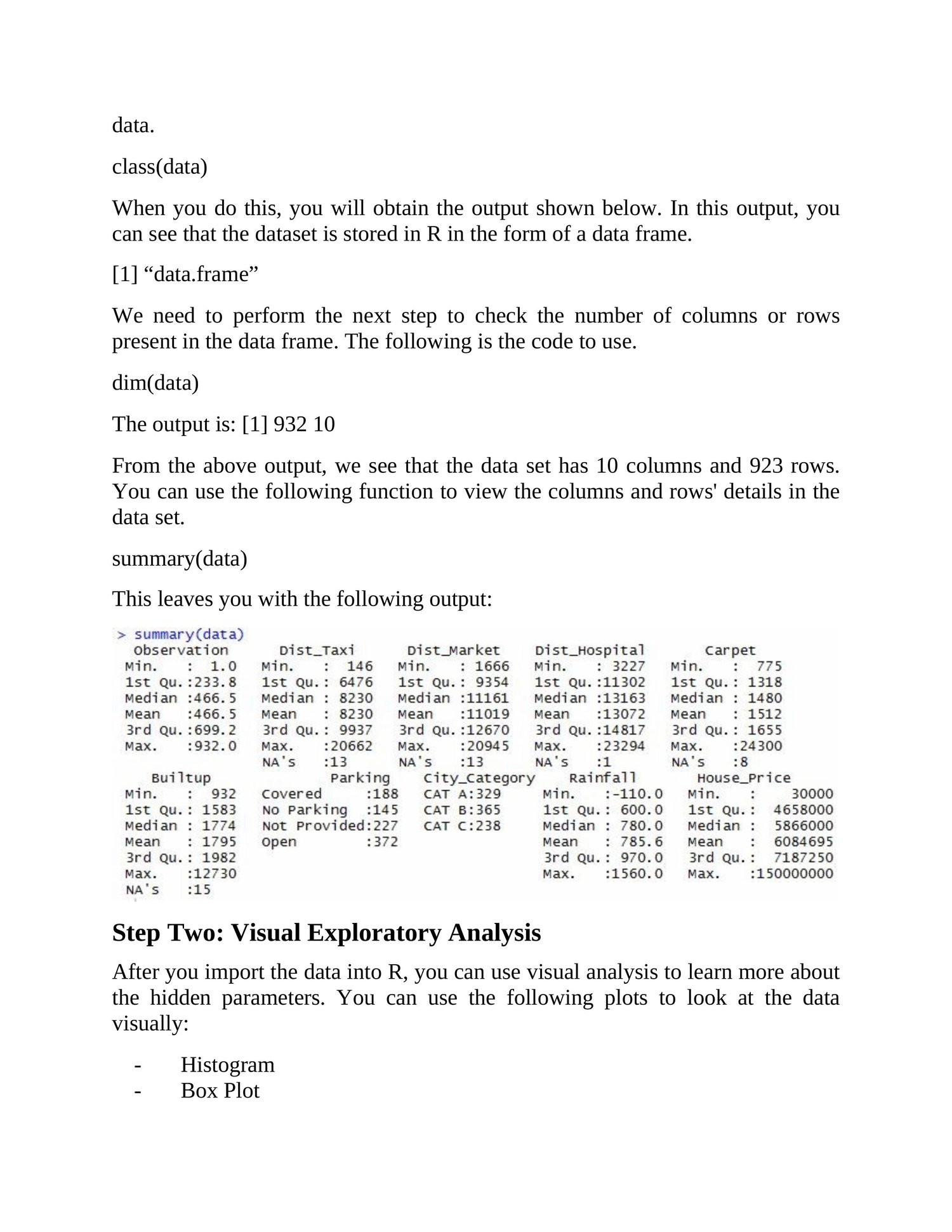
print(data.describe())
print(data.isnull().sum())
# Visualization
sns.heatmap(data.corr(), annot=True)
plt.show()
7️⃣ Machine Learning Workflow
- Split Data – Train / Test
- Choose Algorithm – Regression, Classification, Clustering
- Train Model – Fit model to training data
- Evaluate – Accuracy, Precision, Recall, F1 Score
- Tune Hyperparameters – GridSearch, RandomSearch
- Deploy Model – REST API, Cloud, Dashboard
8️⃣ Popular Algorithms
TypeExamplesRegressionLinear Regression, Lasso, RidgeClassificationLogistic Regression, Decision Tree, Random Forest, SVMClusteringK-Means, DBSCAN, HierarchicalNeural NetworksDeep Learning, CNN, RNN
9️⃣ Big Data & Advanced Topics (Optional)
- Spark / PySpark for distributed processing
- Hadoop HDFS for storage
- NLP (Text analysis)
- Computer Vision (Image/video analysis)
- Time Series Analysis (Stock, IoT, Sensor data)
🔟 Interview Quick Questions
Q: What is Data Science?
A: Extracting insights and predictions from data.
Q: Difference between Data Science, Data Analysis, and Machine Learning?
- Data Analysis – Insights from existing data
- Machine Learning – Predict future outcomes
- Data Science – Full pipeline from data collection to deployment
Q: What is overfitting?
Model performs well on training data but poorly on unseen data.
Q: What is cross-validation?
Technique to evaluate model performance on multiple folds of data.
Q: Which Python libraries are used for ML?