




Wfuzz – A Detailed Guide for Pentesters
Wfuzz – A Detailed Guide for Pentesters
Wfuzz is a powerful web application fuzzing tool widely used by penetration testers and security researchers to discover hidden resources, parameters, and vulnerabilities in web applications.
It automates the process of sending large volumes of crafted HTTP requests and analyzing responses to identify attack surfaces that are often missed during manual testing.
 Why Wfuzz Matters in Web Pentesting
Modern web applications are complex. Hidden endpoints, undocumented parameters, and weak input validation are common.
Wfuzz helps pentesters:
Reduce manual effort
Increase coverage
Detect misconfigurations early
Validate assumptions with real responses
 Common Use Cases
 Directory & File Enumeration
Identify hidden folders, backup files, and admin panels.
Parameter Discovery
Find GET/POST parameters not exposed in the UI.
API Testing
Fuzz REST endpoints and headers for unexpected behavior.
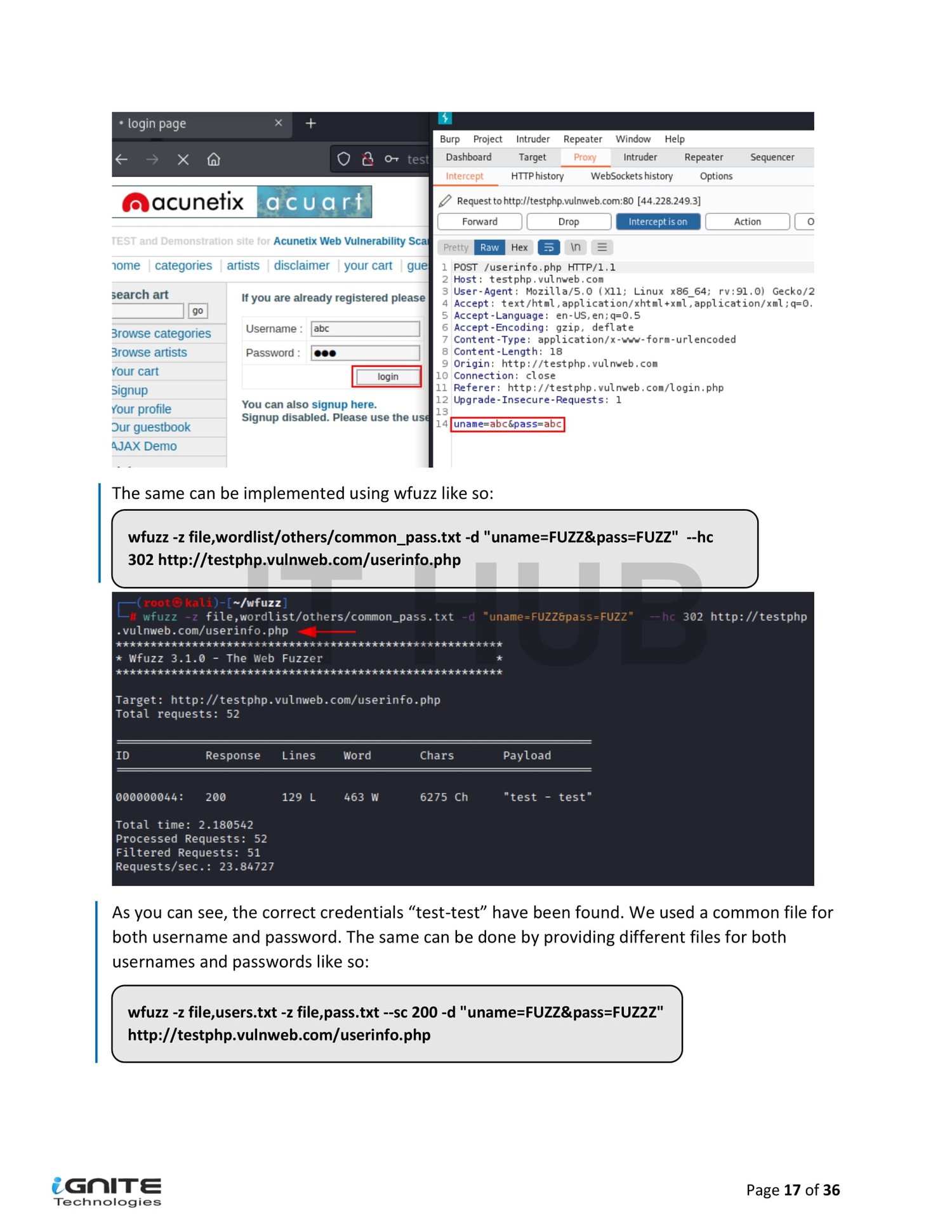
Authentication Testing
Analyze login flows, response patterns, and error handling.
Input Validation Checks
Observe how applications respond to malformed or unexpected input.
 Core Concepts in Wfuzz
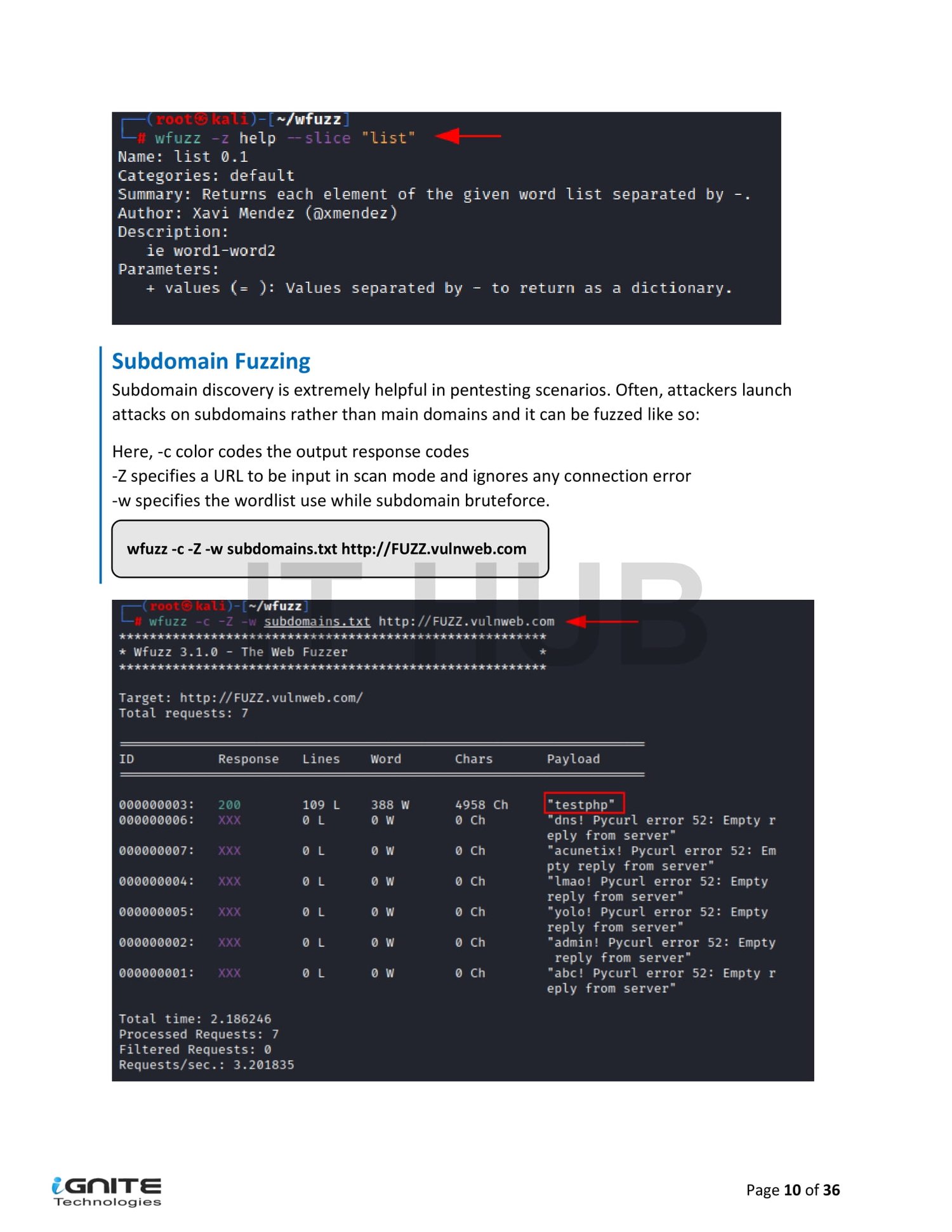
 Wordlists
Wfuzz relies on wordlists to generate payloads:
Directories
Parameters
Filenames
Headers
FUZZ Keyword
The FUZZ keyword marks where payloads are injected in the request.
Filters
Critical for reducing noise:
Filter by status code
Filter by response length
Filter by word count
Filter by lines
This helps focus only on meaningful responses.
 Protocol & Request Support
Wfuzz supports:
HTTP / HTTPS
Custom headers
Cookies & sessions
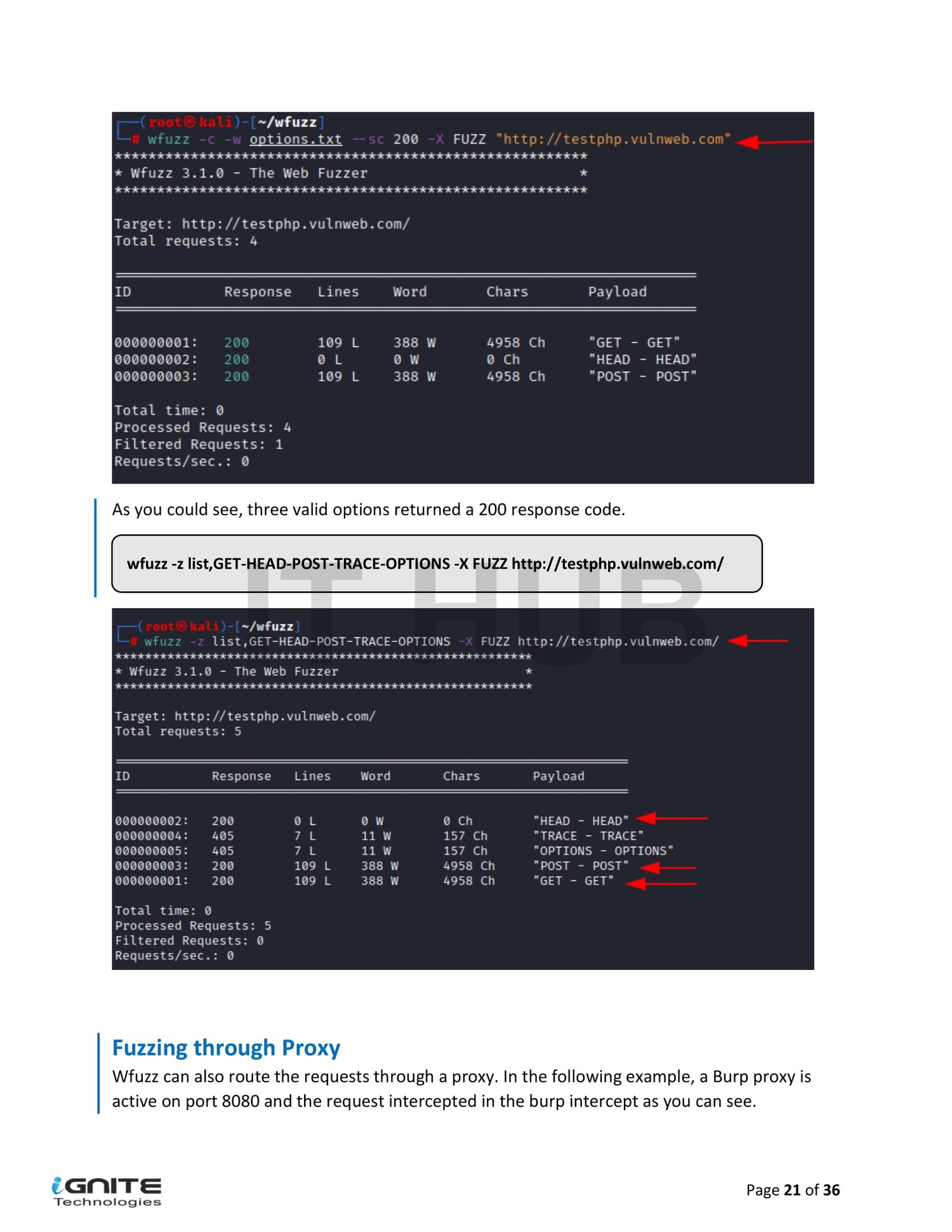
GET and POST methods
JSON and form data
Authentication headers
This makes it suitable for modern web and API testing.