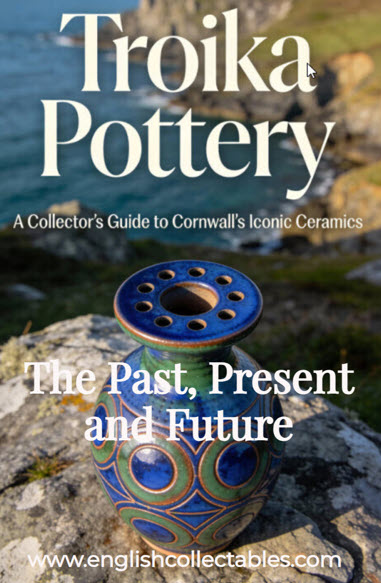
Troika pottery
Introduction: The Art of the Rebellion
There is a moment every collector knows well: scanning a shelf of generic ceramics when, suddenly, something jumps out at you. It is rough, textured, perhaps a little aggressive in its geometry, and undeniably modern. It looks less like a vase and more like a relic from an ancient civilization or a piece of brutalist architecture.
This is the magic of Troika.
When Benny Sirota, Leslie Illsley, and Jan Thompson founded the pottery in St Ives in 1963, they weren’t just making pots; they were staging a quiet revolution. At the time, Cornwall was dominated by the Bernard Leach school of pottery—beautiful, functional, and overwhelmingly brown. The Troika founders (named after the Russian word for a team of three) wanted the opposite. They envisioned "art for the people," creating mould-cast, sculptural pieces that smuggled abstract modernism into the average British living room.
For the collector, Troika offers a unique thrill. Unlike mass-produced factory wares, every piece of textured Troika was hand-finished by a small team of local decorators. The excitement lies in turning a "Coffin" vase or "Marmalade" jar upside down to decipher the hand-painted initials on the base. Was it painted by the prolific Avril Bennett? The rare distinct style of Honor Curtis? Identifying these decorators transforms a simple purchase into a piece of social history.
From the early smooth-glazed wares of the St Ives era to the iconic rough-textured Aztec and Cycladic designs of the Newlyn years (1970–1983), Troika remains one of the most distinctive chapters in 20th-century British design.
This book is your guide to that world. Whether you are a seasoned investor looking for rare prototypes or a new enthusiast hunting for your first Cube vase, the pages that follow will help you identify shapes, decode decorators' marks, and uncover the story behind the pottery that dared to be different.
Welcome to the world of Troika.