


ADHD and Depression Fact Sheet
Summary of Fact Sheet: ADHD & Depression
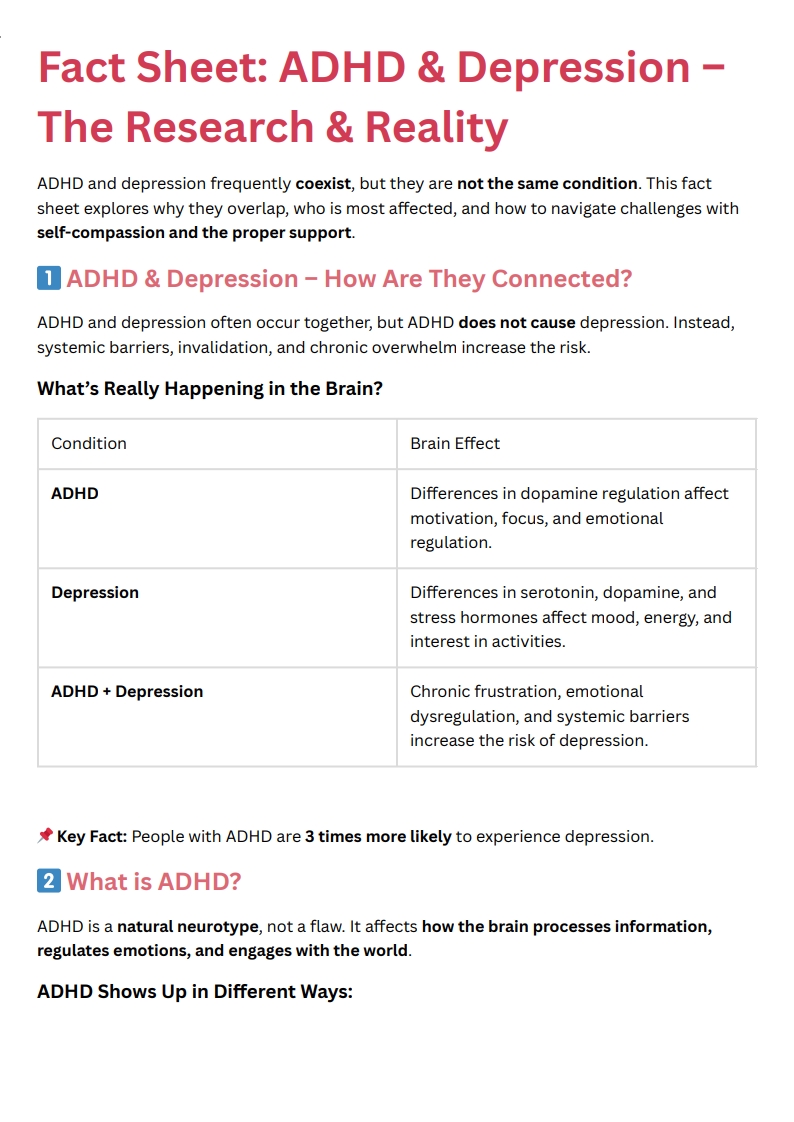
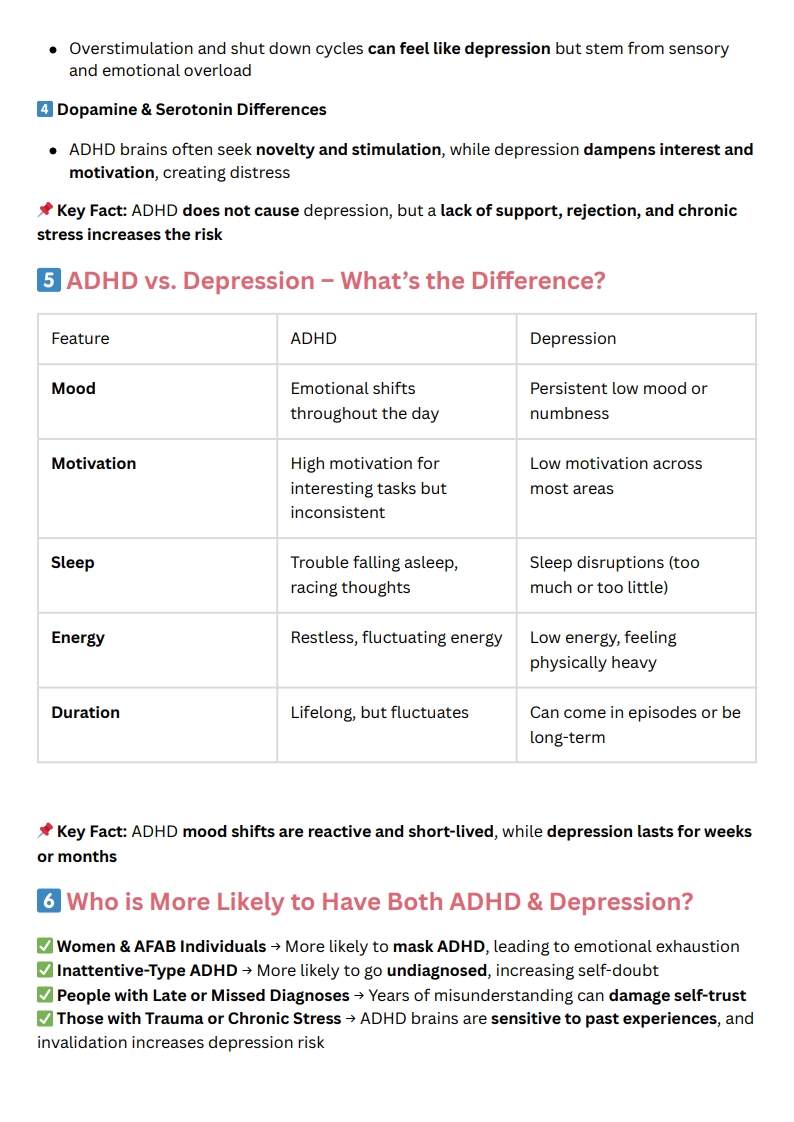
ADHD and depression frequently co-occur, but ADHD does not cause depression. Instead, systemic barriers, emotional exhaustion, and chronic stress contribute to increased depression risk. Research shows that people with ADHD are 2.7 to 3 times more likely to experience major depressive disorder.
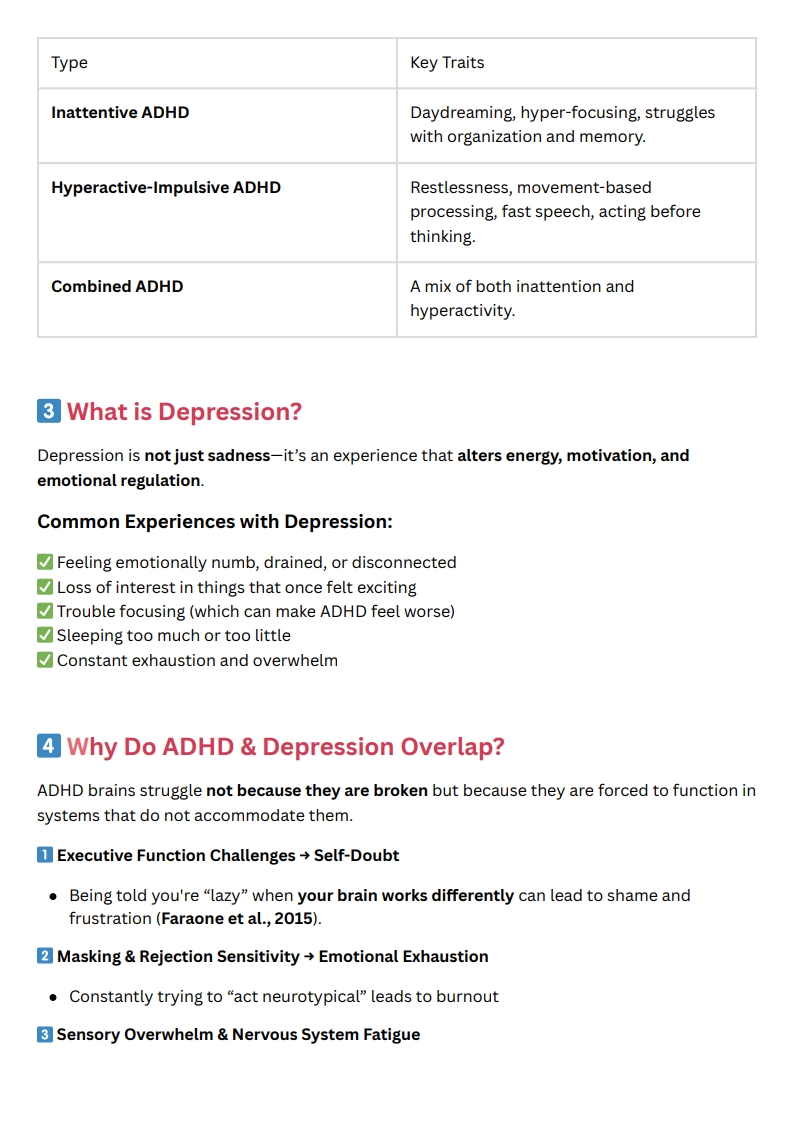
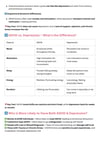
ADHD affects executive function, motivation, and emotional regulation, while depression impacts mood, energy, and interest in activities. Key differences include ADHD’s short-term mood shifts and fluctuating energy, whereas depression presents persistent low mood and fatigue lasting weeks or months.
Certain groups face higher risks, particularly women, individuals with inattentive-type ADHD, and those diagnosed late in life. Effective management includes accommodations, self-compassion, therapy (CBT, ACT, DBT, IFS), medication, and lifestyle changes. Research suggests that ADHD medication may reduce depression risk by 20%.
Mental health support is essential, especially for individuals with ADHD experiencing suicidal thoughts. Addressing rejection sensitivity, burnout, and sensory overwhelm can help reduce depression risk. Creating environments that support ADHD needs is crucial for long-term well-being.