
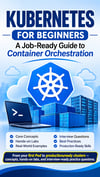


🚀📘 KUBERNETES FOR BEGINNERS – The Complete Job-Ready Guide to Container Orchestration | Master Pods, Deployments, Services, Networking, ConfigMaps, Secrets, Storage, StatefulSets, Helm, RBAC, Security, Autoscaling, Monitoring, Troubleshooting
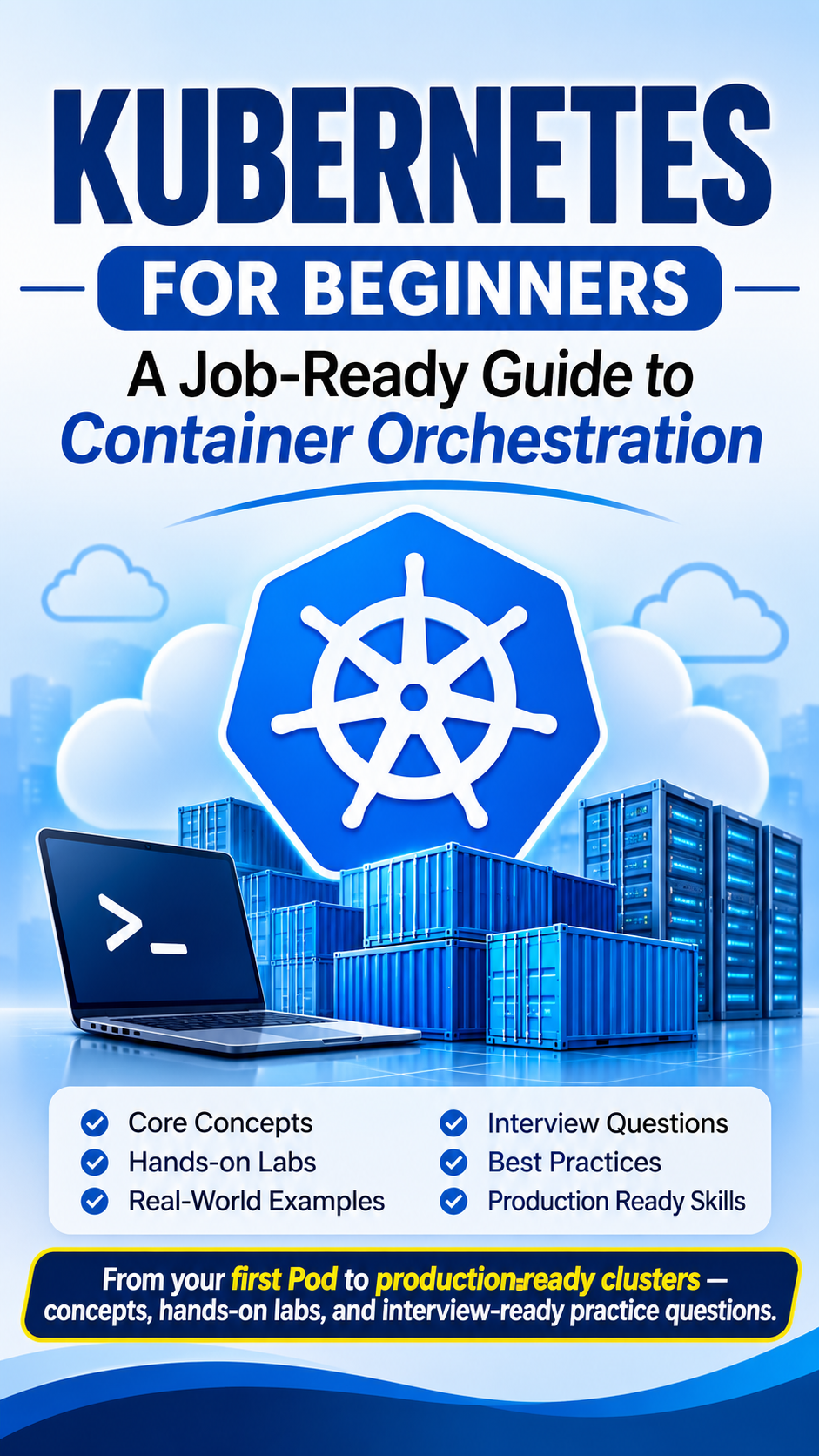
🚀 Kubernetes for Beginners
A Job-Ready Guide to Container Orchestration
From Your First Pod to Production-Ready Clusters — Learn Kubernetes Through Concepts, Hands-On Labs, Real-World Examples, and Interview Practice Questions!
Are you ready to understand Kubernetes and learn how modern applications are deployed, managed, scaled, and maintained?
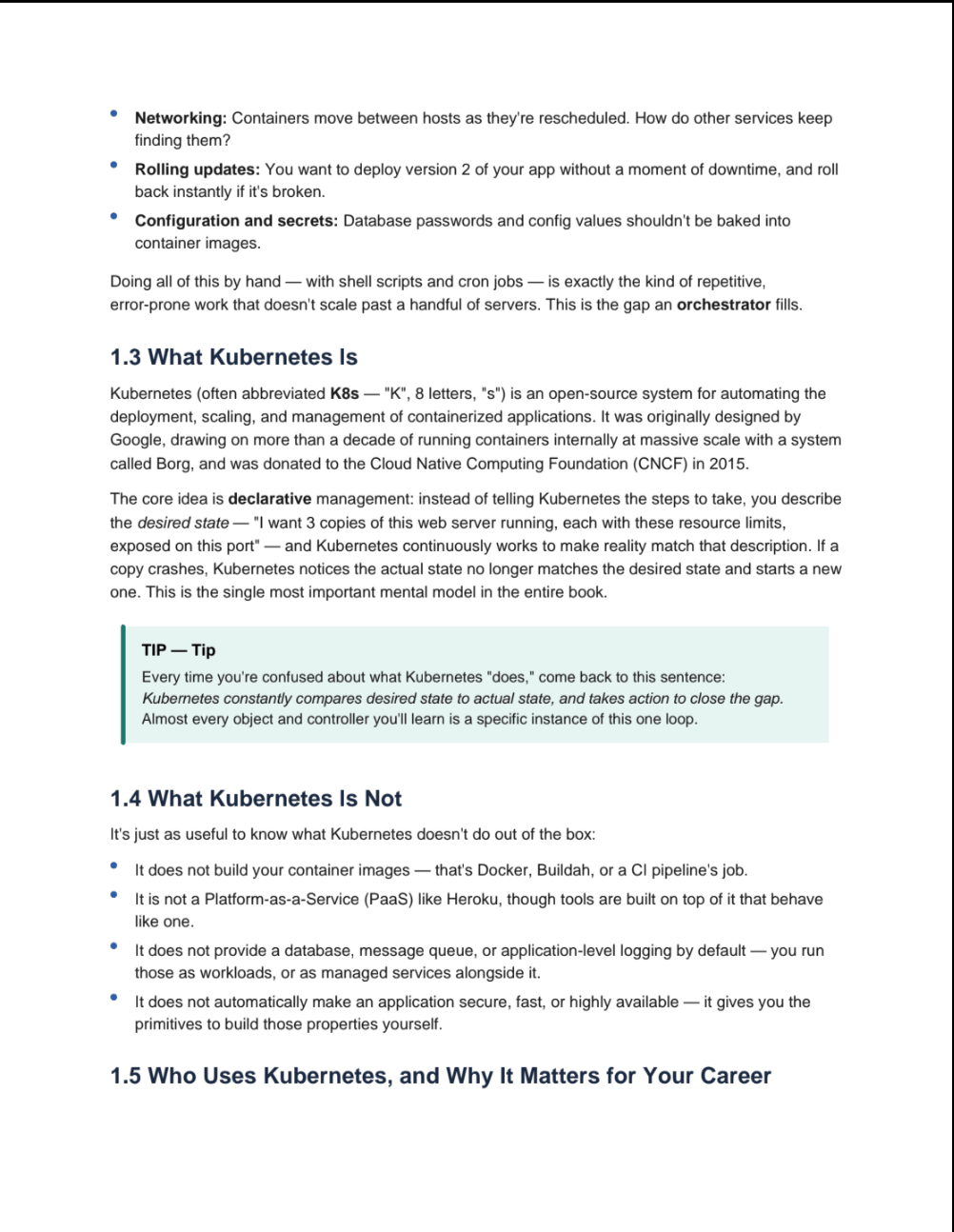
🌐 Kubernetes has become an important technology in modern cloud-native development, DevOps, and container orchestration. Organizations use it to manage containerized applications, automate deployments, maintain application availability, and scale workloads based on demand.
However, getting started with Kubernetes can feel confusing. Concepts such as Pods, Deployments, Services, ReplicaSets, ConfigMaps, Secrets, StatefulSets, Helm, RBAC, and Autoscaling may seem complicated when learned individually without practical examples.
That's exactly where Kubernetes for Beginners comes in!
📘 This book provides a structured learning path that takes you from the fundamentals of container orchestration to important Kubernetes concepts used in real-world environments.
Instead of focusing only on theory, this guide encourages you to understand concepts, explore YAML configurations, execute commands, work with a local Kubernetes cluster, and test your knowledge through chapter-wise practice questions.
Whether you are a beginner, software developer, DevOps engineer, cloud enthusiast, or IT professional looking to expand your technical skills, this book will help you build a strong foundation in Kubernetes.
🎯 What Will You Learn?
This book covers the essential Kubernetes concepts in a structured, beginner-friendly learning journey.
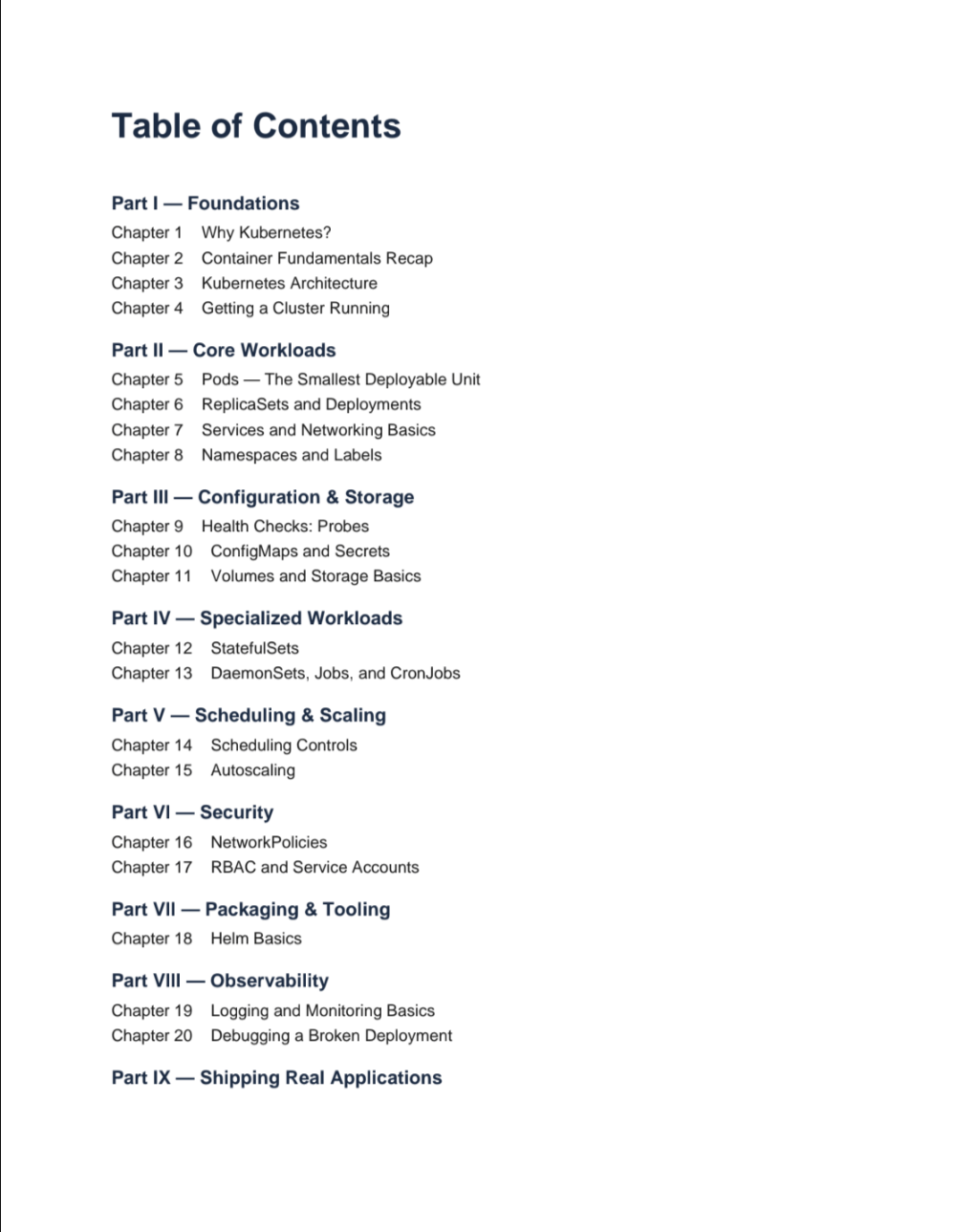
🏗️ 1. Kubernetes Fundamentals
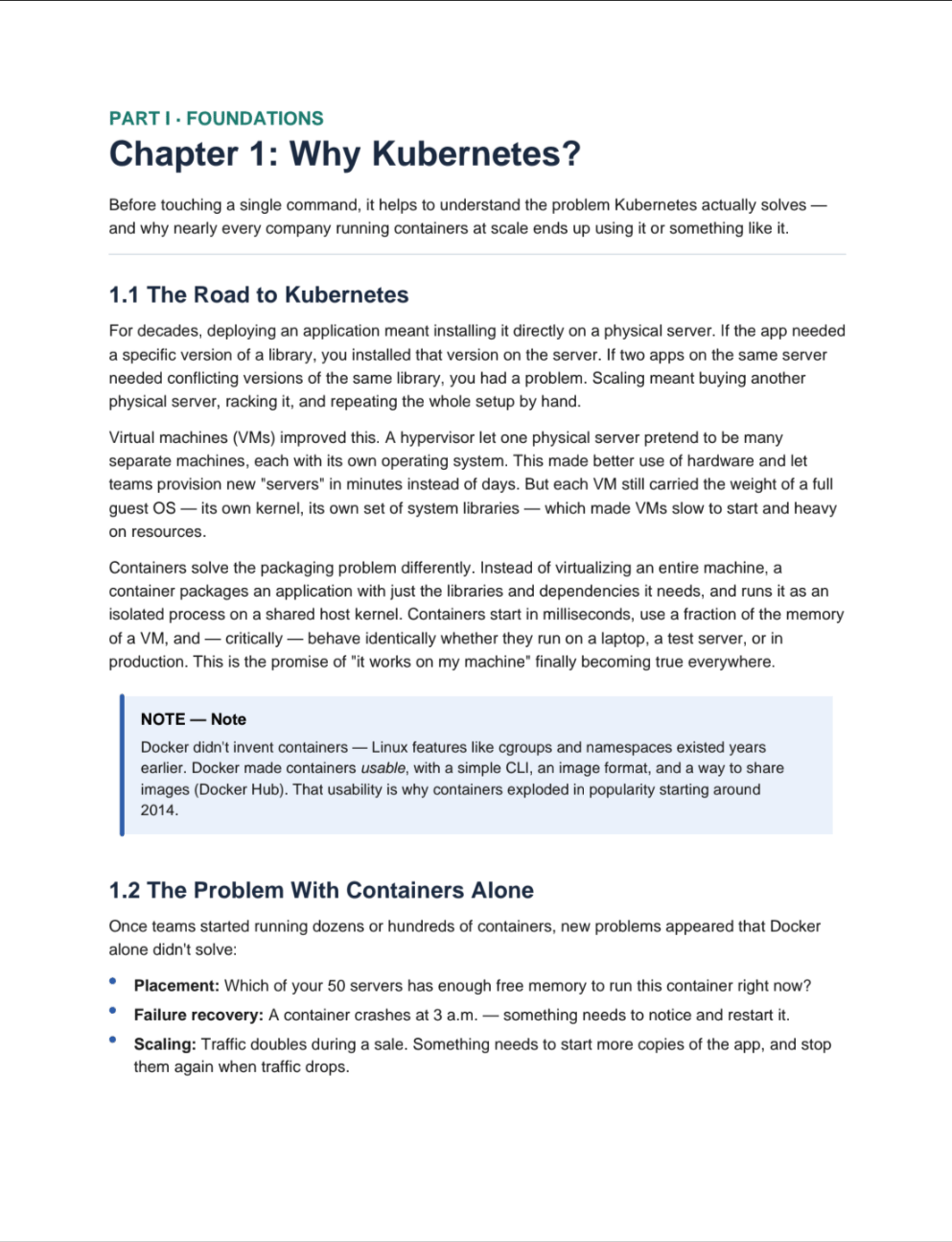
Start by understanding why Kubernetes exists and the problems it solves.
Learn about:
- Why Kubernetes is needed.
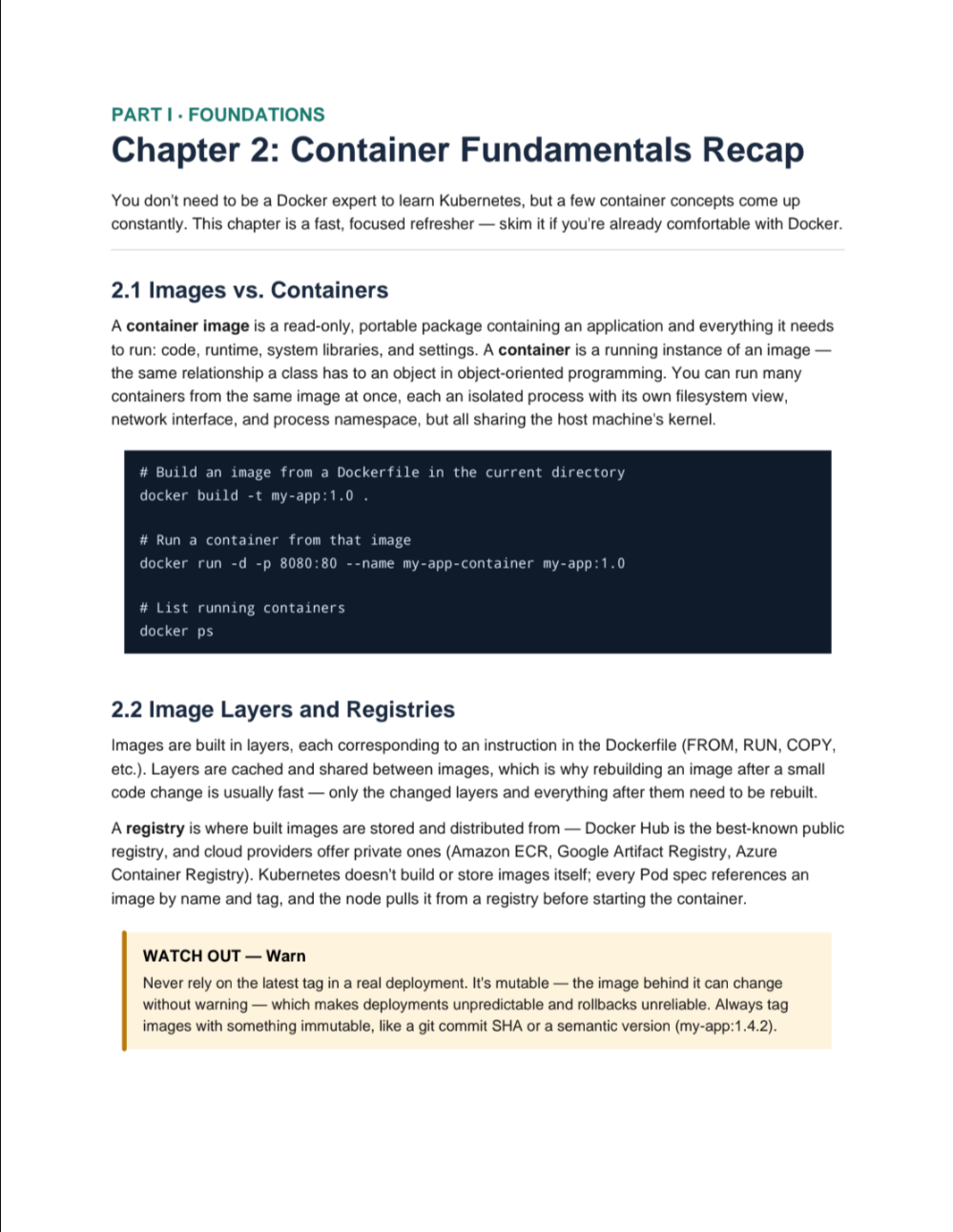
- Container fundamentals.
- Kubernetes architecture.
- Control Plane and Worker Nodes.
- Kubernetes components.
- How a Kubernetes cluster works.
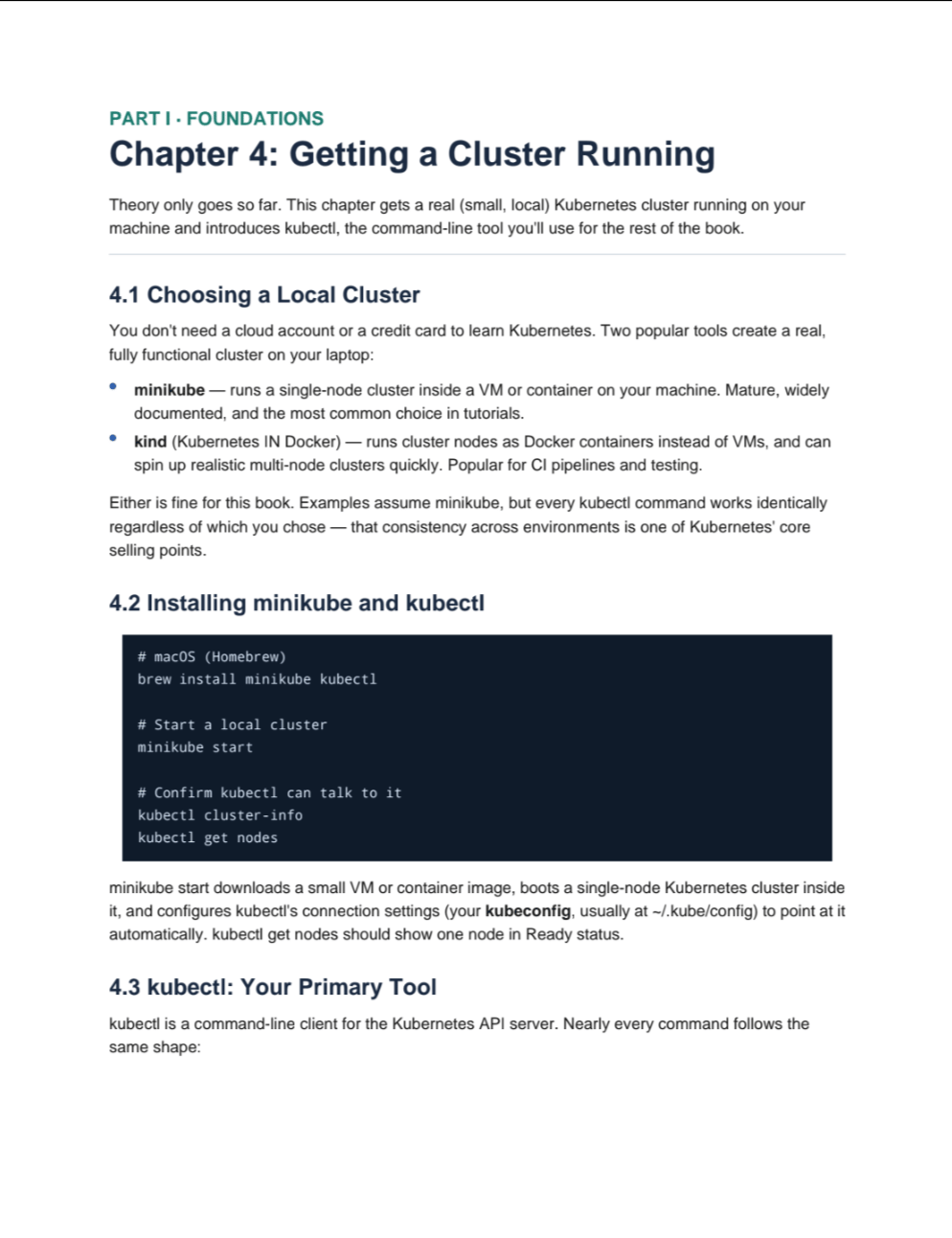
- Setting up your first local Kubernetes cluster.
📦 2. Core Kubernetes Workloads
Understand the building blocks used to deploy and manage applications.
Explore:
- Pods — the smallest deployable unit.
- ReplicaSets and their responsibilities.
- Deployments and application rollouts.
- Services and networking basics.
- Namespaces and Labels.
- Managing application workloads.
⚙️ 3. Configuration and Storage
Learn how Kubernetes manages application configuration, sensitive information, and persistent data.
Topics include:
- Liveness, Readiness, and Startup Probes.
- ConfigMaps.
- Secrets.
- Volumes.
- Persistent application storage.
- Understanding how applications use external configuration.
🔄 4. Specialized Kubernetes Workloads
Discover Kubernetes resources designed for different application requirements.
Learn:
- StatefulSets.
- DaemonSets.
- Jobs.
- CronJobs.
- When to use different workload controllers.
- How Kubernetes manages specialized workloads.
📈 5. Scheduling and Autoscaling
Understand how Kubernetes decides where applications should run and how workloads can scale.
Explore:
- Scheduling controls.
- Node selectors.
- Node affinity and Pod affinity.
- Taints and Tolerations.
- Horizontal Pod Autoscaling.
- Kubernetes autoscaling concepts.
- Managing workloads across cluster resources.
🔐 6. Kubernetes Security
Learn important security concepts for managing access and controlling communication inside a cluster.
Topics include:
- NetworkPolicies.
- Role-Based Access Control (RBAC).
- Roles and ClusterRoles.
- RoleBindings and ClusterRoleBindings.
- Service Accounts.
- Understanding access permissions.
📊 7. Helm and Kubernetes Tooling
Learn how Helm helps package and manage Kubernetes applications.
Understand:
- Helm fundamentals.
- Helm Charts.
- Chart installation and management.
- Values and configuration.
- Managing application deployments with Helm.
🔍 8. Logging, Monitoring, and Troubleshooting
Learn how to observe applications and investigate common Kubernetes problems.
Explore:
- Kubernetes logging basics.
- Monitoring fundamentals.
- kubectl logs.
- Metrics Server.
- Prometheus concepts.
- Debugging broken deployments.
- Identifying common application and Pod issues.
🚀 9. Deploying Real Applications
Move beyond individual Kubernetes resources and understand how applications are delivered and maintained.
Learn about:
- CI/CD fundamentals.
- GitOps concepts.
- Kustomize.
- Managing Kubernetes configurations.
- Environment-specific configuration.
- Organizing application deployment workflows.
💻 Learn by Doing – Hands-On Kubernetes Practice
Kubernetes is a practical technology, and reading theory alone is not enough.
That's why this book includes runnable examples and terminal commands that help you understand how Kubernetes works in practice.
You will learn how to create a local Kubernetes environment using:
✅ Minikube
✅ kind (Kubernetes IN Docker)
✅ kubectl command-line tool
You don't need to begin with an expensive cloud environment. You can start learning with a local cluster and execute the examples on your own machine.
Practice working with Kubernetes YAML manifests, creating resources, inspecting workloads, managing deployments, and troubleshooting common issues.
The goal is simple: Don't just read Kubernetes commands. Understand what they do and practice using them.
🧠 Interview Preparation and Practice Questions
Learning a technology is one thing. Explaining it confidently during a technical interview is another.
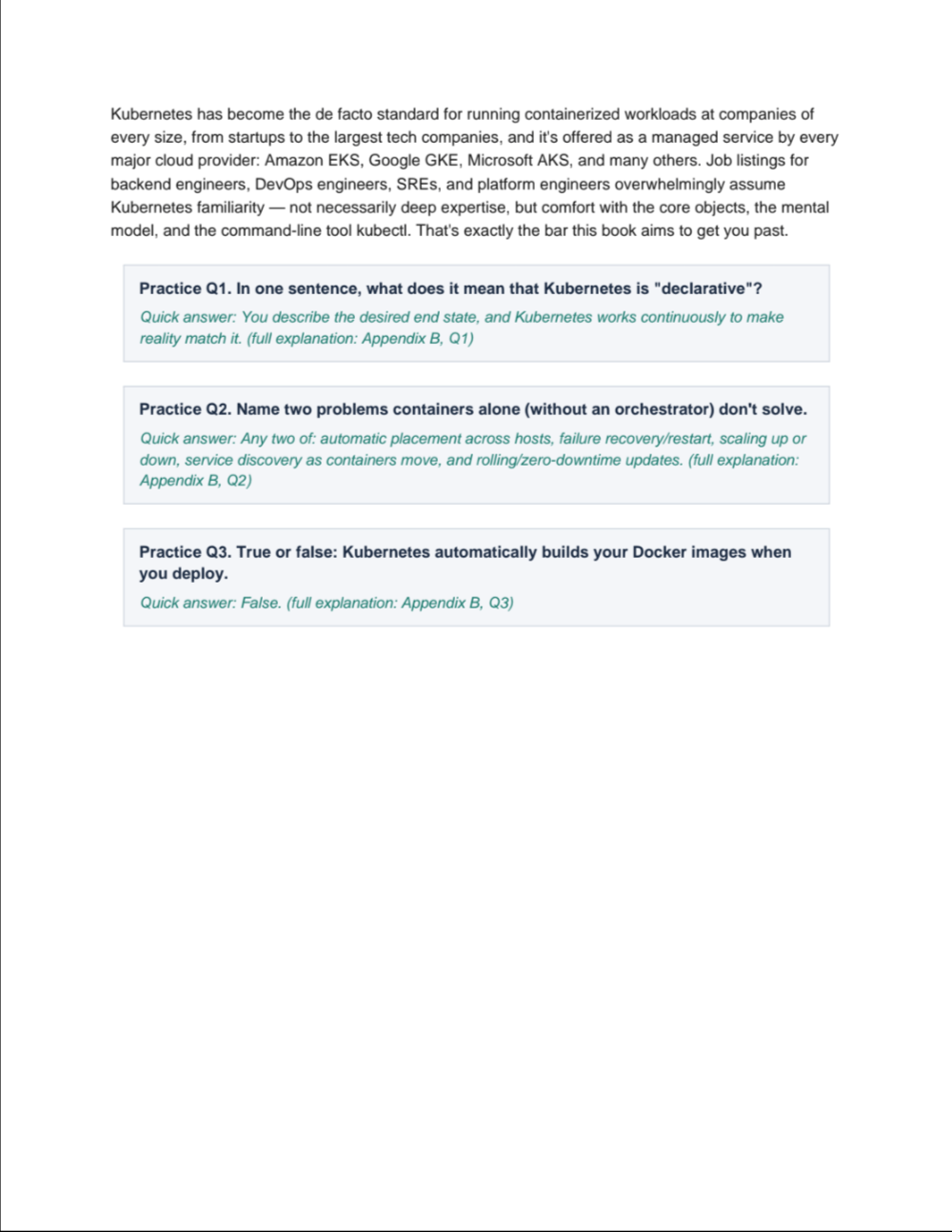
This book includes chapter-wise practice questions to help you check your understanding as you progress.
Each practice question provides:
- A quick answer for immediate revision.
- A detailed explanation in Appendix B.
- Concept-focused questions.
- Practical scenario-based understanding.
- Important differences between Kubernetes resources and features.
You can attempt each question before checking the answer and use the detailed explanations to strengthen your understanding.
🎯 This approach helps you prepare for technical discussions and build confidence when explaining Kubernetes concepts.
📚 Additional Learning Resources
The book also includes useful reference material to support your learning journey.
📌 Appendix A – kubectl Command Cheat Sheet
Quickly review useful kubectl commands for inspecting, managing, and troubleshooting Kubernetes resources.
📌 Appendix B – Full Explanations to Practice Questions
Revisit the practice questions with detailed explanations whenever you need additional clarity.
👨💻 Who Should Read This Book?
This book is suitable for:
👨🎓 Students and Beginners – People who want to understand Kubernetes from the fundamentals.
💻 Software Developers – Developers who want to learn how their applications run inside Kubernetes clusters.
⚙️ DevOps Engineers – Professionals who want to strengthen their container orchestration knowledge.
☁️ Cloud Engineers – People working with modern cloud-native infrastructure and application deployment.
🔧 System Administrators – IT professionals interested in learning Kubernetes workload management.
🎯 Interview Candidates – Developers and IT professionals preparing for Kubernetes and DevOps technical interviews.
📖 Self-Learners – Anyone who prefers structured explanations, practical examples, and chapter-wise questions.
🌟 Why Choose This Book?
✔️ Beginner-friendly learning structure.
✔️ 22 focused chapters organized into 9 learning parts.
✔️ Covers Kubernetes fundamentals through application delivery.
✔️ Practical YAML examples and terminal commands.
✔️ Local cluster setup using Minikube or kind.
✔️ Covers important real-world Kubernetes resources.
✔️ Includes scheduling, scaling, security, and troubleshooting.
✔️ Introduces Helm and Kustomize.
✔️ Chapter-wise practice questions.
✔️ Detailed answers in Appendix B.
✔️ kubectl command cheat sheet for quick reference.
🚀 Start Your Kubernetes Learning Journey Today!
Kubernetes may look complicated when you first encounter it, but learning it step by step makes the journey much easier.
Start with the fundamentals. Understand Pods and Deployments. Learn how Services connect applications. Explore configuration, storage, security, scheduling, and scaling. Then move toward monitoring, troubleshooting, and application delivery.
With consistent practice, you can develop the knowledge needed to understand Kubernetes environments and participate more confidently in cloud-native and DevOps projects.
Your journey from Kubernetes Beginner to Job-Ready Learner starts here!
📘 Get your copy of Kubernetes for Beginners – A Job-Ready Guide to Container Orchestration and start building your Kubernetes knowledge today.
🔥 Learn the concepts.
💻 Practice the commands.
🧠 Test your knowledge.
🚀 Build your future in cloud-native technology!