

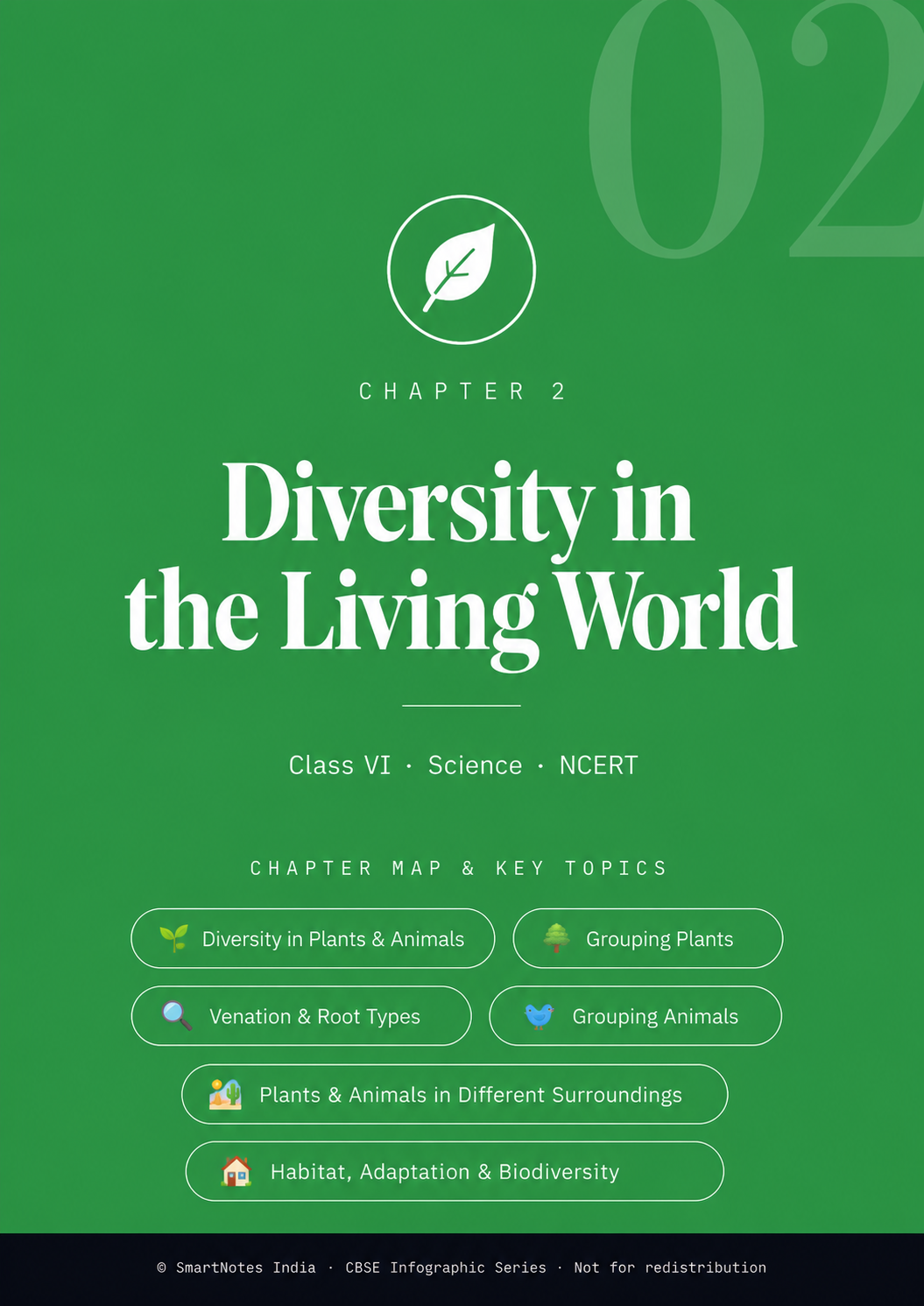





Class 6 Science Chapter 2 — Diversity in the Living World | CBSE Visual Notes PDF | Infographic Study Guide
🌍 Have you ever wondered why a cactus looks nothing like a deodar tree? Or why a camel in Rajasthan has one hump but a camel in Ladakh has two? The answer is the same for both: the place where they live shaped everything about them.
Chapter 2 of Class 6 Science is one of the most fascinating chapters in the entire year — and this visual notes PDF turns every concept into something your child can see, understand, and remember.
✨ What's Inside — 8 Visual Pages:
🌱 Diversity in Plants and Animals Around Us
Dr Raghu and Maniram chacha take students on a nature walk — and this page captures exactly what they discover. Plants with different stems, leaves, flowers. Animals that fly, swim, crawl, and run. A visual snapshot of the incredible variety of life around us, and why noticing it is the first step to understanding it.
🌳 How to Group Plants?
Not all plants are the same — and now your child will never confuse them again. Herbs (soft green stems, short — like tomato), shrubs (woody multi-stems, medium — like rose), trees (thick brown stems, tall — like mango), climbers, and creepers. Each type is laid out as a profile card with features clearly mapped, so the differences are impossible to forget.
🔎 Leaf Venation and Root Types
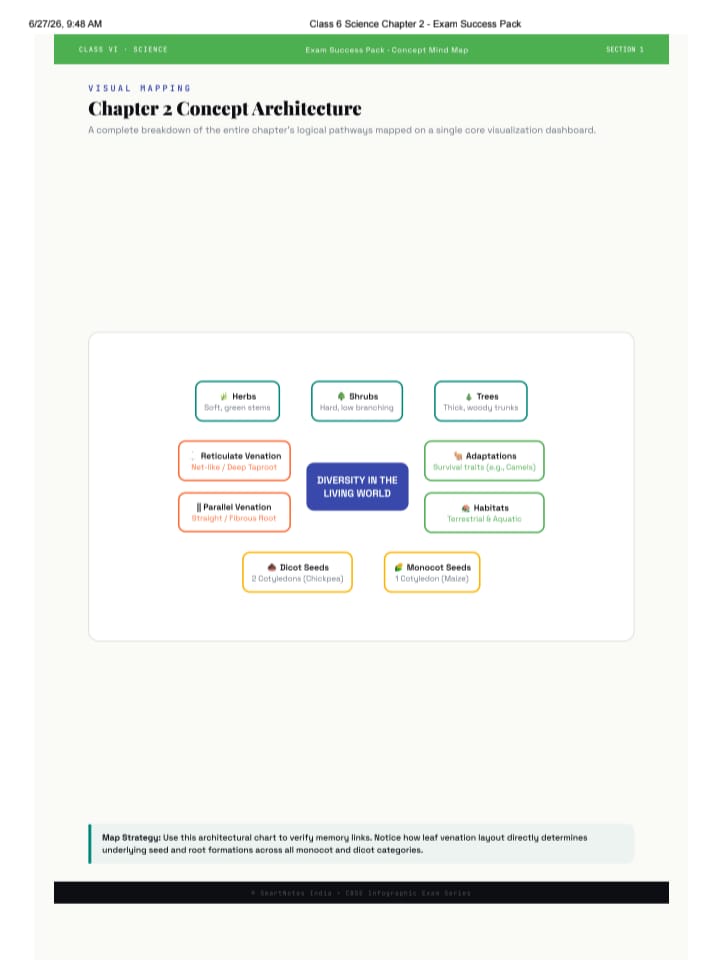
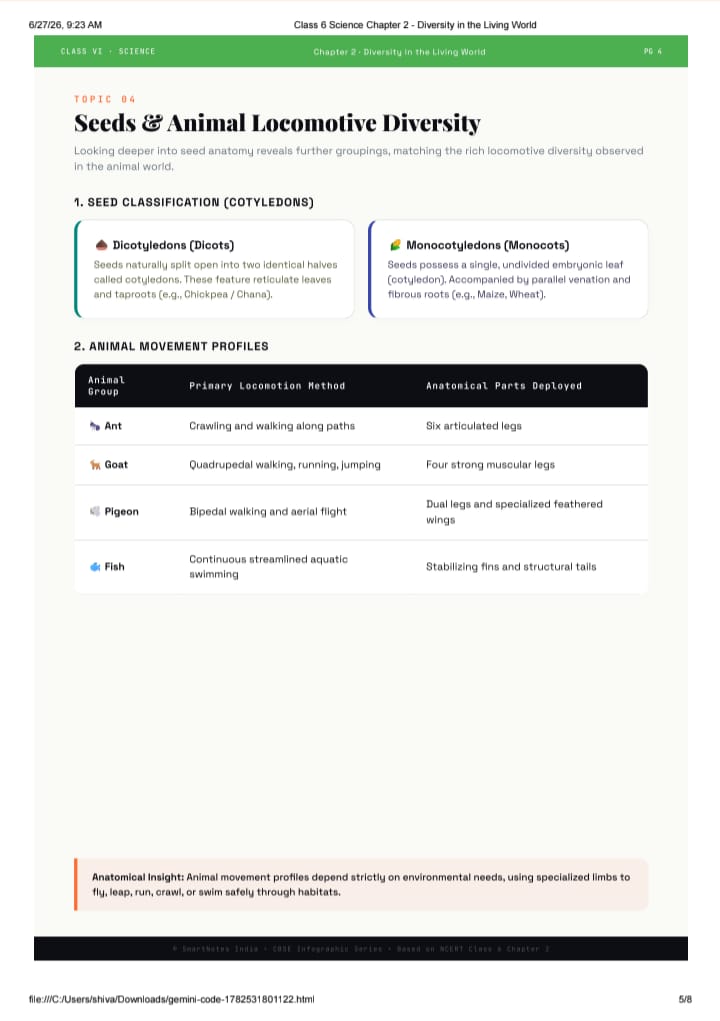
This is the concept students lose marks on most — and it's actually beautiful once you see it visually. Reticulate venation (net-like, like hibiscus) → taproot. Parallel venation (lined, like banana) → fibrous roots. Dicots vs monocots. This page connects all three — venation, root, and seed — in one clean flow so your child sees the pattern, not three separate facts to memorise.
🐦 How to Group Animals?
Animals move differently. They eat differently. They live in different places. This page shows how each of these features is a way to group them — using real examples from the NCERT textbook, including Janaki Ammal (the Indian botanist who dedicated her life to documenting plant biodiversity). Science has heroes — and students should know them.
🏜️ Plants and Animals in Different Surroundings
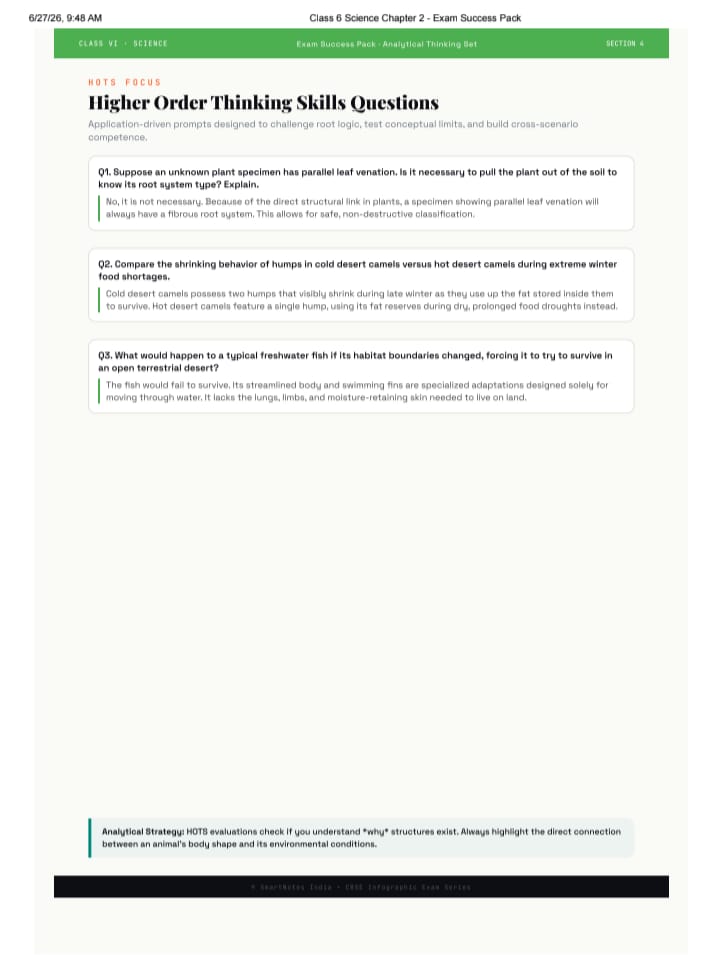
Why does the deodar tree have a conical shape? Why does the cactus store water in its stem? Why does the camel in Rajasthan have wider hooves than the one in Ladakh? This page answers all of these using side-by-side visual comparisons — desert vs mountain, hot vs cold — so the logic of adaptation clicks immediately.
🏠 Habitat, Adaptation and Biodiversity
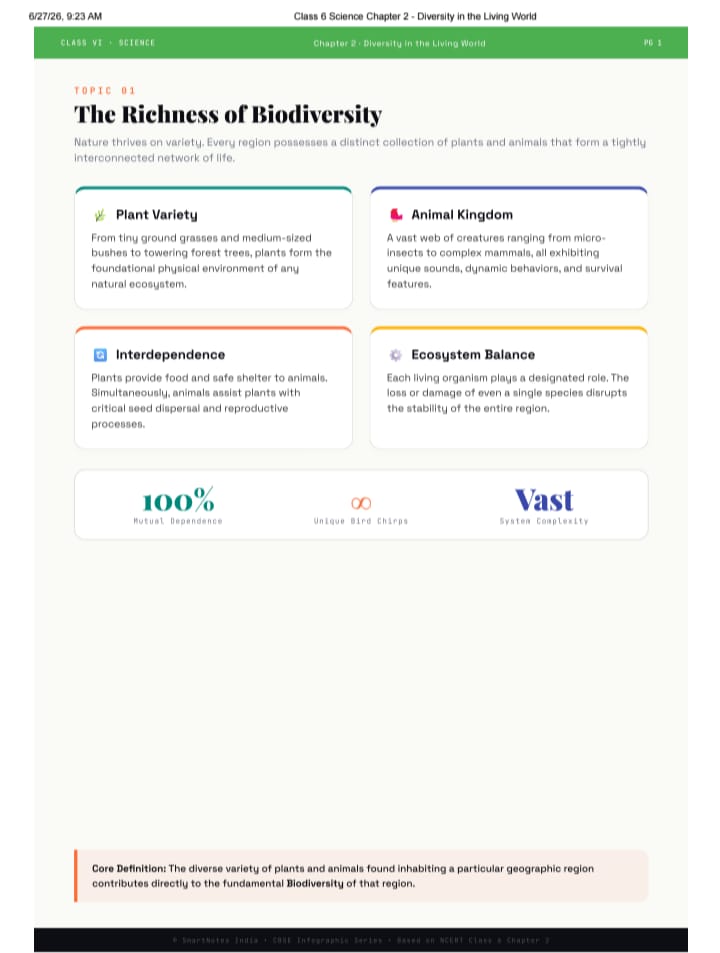
Habitat is where a living thing lives. Adaptation is how it survives there. Biodiversity is the variety of life a region holds. And when habitats are damaged — biodiversity is lost. This page maps all three concepts together, with the Bengal Tiger, Cheetah, and Great Indian Bustard as real Indian examples of what happens when we don't protect them. It ends with the story of Silent Valley — a forest in Kerala saved by ordinary people. Science and values, together.
⚡ Quick Revision Card
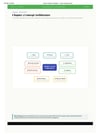
Every key term defined. Full chapter mind map. Must-know facts. Exam tips (the venation-root connection is a guaranteed exam question). Micro-recall Q&A. All on one page.
🎯 Perfect For:
📝 Class tests, unit assessments, and nature walk assignments
🌿 Students who need to remember herbs vs shrubs vs trees for exams
🔁 Half-yearly revision — Chapter 2 concepts appear in questions every year
🧠 Building real curiosity about the natural world, not just textbook knowledge
✅ What You Get:
📄 1 PDF · 8 pages · A4 · Print-ready · Instant download
💡 No app. No login. Buy once, keep forever. Works on phone, tablet, or printed at home.