

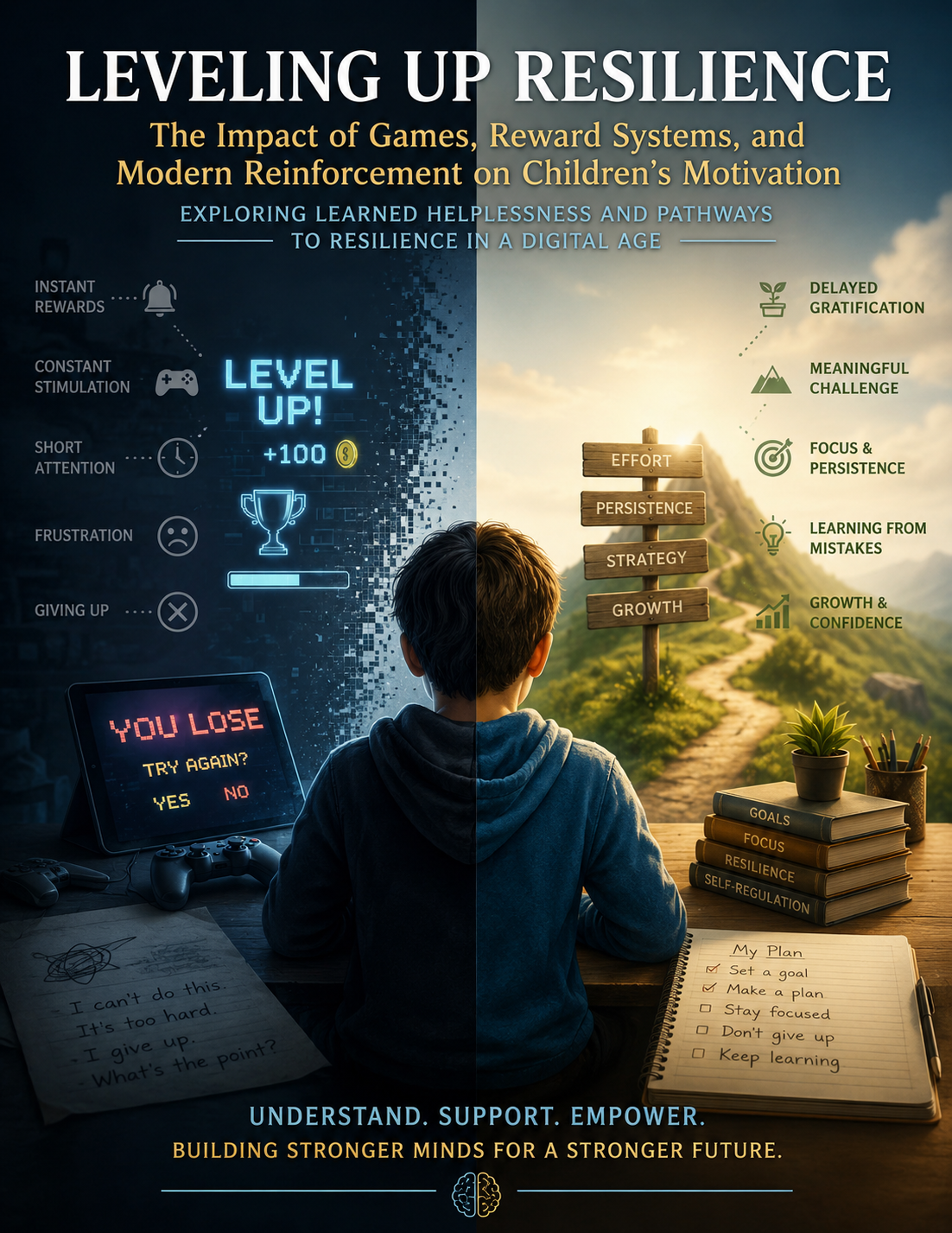
Game Rewards, Learned Helplessness, and Student Motivation History, Present Challenges, and Paths Toward a Healthier Future
Abstract
This paper examines the relationship between reward-heavy digital gameplay, learned helplessness, student motivation, and modern educational challenges. Many children now grow up in environments filled with apps, games, and social systems designed around immediate feedback, rapid reward cycles, and continuous stimulation. While these systems are highly engaging and can support creativity,
problem-solving, and collaboration, they may also contribute to reduced frustration tolerance, weakened persistence, and expectations of immediate reinforcement.
This paper argues that excessive exposure to high-reward digital environments may shape student expectations about effort and gratification, particularly when children have limited opportunities to build resilience through real-world responsibilities and sustained academic struggle. The paper explores the historical foundations of learned helplessness, modern reinforcement systems in gaming, changes in classroom behavior, executive functioning concerns, and long-term implications for school, work, and personal responsibility.
The report concludes with practical recommendations for teachers, parents, and schools, emphasizing that the goal is not to eliminate gaming but to balance digital experiences with opportunities for self-regulation, persistence, and productive struggle.