

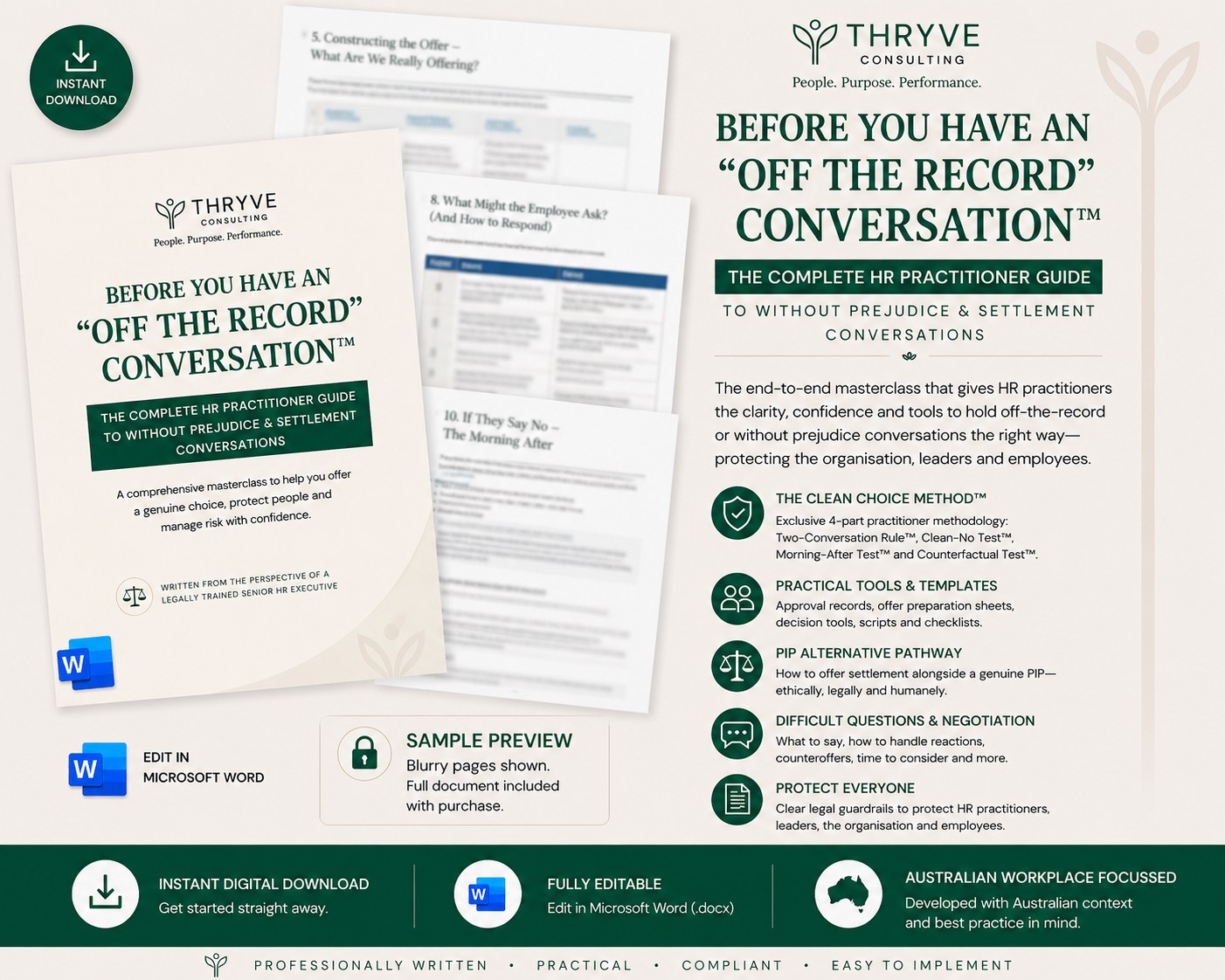
Before You Have an “Off the Record” Conversation: A Comprehensive HR Practitioner Guide to Without Prejudice & Settlement Conversations
Before You Have an “Off the Record” Conversation
A Comprehensive HR Practitioner Guide to Without Prejudice & Settlement Conversations
Thinking about having an “off the record” or without prejudice conversation with an employee?
Read this first.
These conversations can be incredibly useful when handled well - but they are also one of the areas of HR practice that can make even experienced practitioners and leaders nervous. What can you actually say? When is a conversation really “without prejudice”? How do you explain it to an employee without alarming them? What happens if they say no? How do you introduce an agreed exit alongside a genuine PIP without turning the PIP into a threat? And how do you make sure a well-intentioned conversation doesn’t inadvertently create more risk than it resolves?
Before You Have an “Off the Record” Conversation is a comprehensive, practical guide designed to take the uncertainty out of the entire process.
Written from the perspective of a legally trained senior HR executive, this is not simply a checklist or a collection of generic scripts. It is an end-to-end practitioner masterclass covering what happens before, during and after a settlement conversation - including the preparation and internal conversations that the employee never sees.
What makes this guide different?
Most resources tell you what “without prejudice” means or give you a basic conversation script.
This guide teaches you how an experienced practitioner thinks about the conversation before they ever walk into the room.
It includes the proprietary Clean Choice Method™ - a practical decision-making methodology containing the Two-Conversation Rule™, Clean-No Test™, Morning-After Test™ and Counterfactual Test™.
These are the insider practitioner tests designed to help you answer questions such as:
Is the organisation genuinely ready to offer a choice?
Would our underlying process still stand up if settlement disappeared completely?
Can this employee genuinely say no without their position becoming worse?
And will tomorrow look different simply because they rejected our offer?
The guide also explores the Contamination Trap™ - the often-overlooked risk of an unsuccessful settlement conversation beginning to influence the manager’s subsequent decisions or contaminate the underlying employment process.
What you receive
Your purchase includes one comprehensive, fully editable Word guide combining education, practitioner guidance, simple scripts, worked examples and reusable tools.
Inside you will find guidance on what without prejudice and “off the record” really mean; when settlement conversations may and may not be appropriate; privilege and confidentiality considerations; the psychology and power imbalance of the conversation; leader coaching; written internal approvals; constructing an offer; separating existing entitlements from the genuine settlement incentive; negotiation authority; consideration time; difficult employee questions; failed negotiations; agreed exits; settlement implementation; and what happens when the employee simply says no.
It also includes practical tools and templates such as an Internal Settlement Approval Record, Settlement Offer Preparation Sheet, Settlement Conversation Decision Record, Clean Choice Method™ decision tools, desk-side conversation guide, scripts, worked PIP scenarios, negotiation guidance, “Things I Would Never Say in the Room” guidance, Privilege Check and Before I Close the File checklist.
Particular attention is given to one of the most difficult scenarios for HR practitioners: offering an agreed exit as an alternative to a genuine performance improvement process - without undermining the integrity of the PIP, predetermining an outcome or making the employee feel they are being forced to resign.
Protect the conversation - and the people in it
A well-managed settlement conversation should protect more than the organisation.
It should help HR practitioners understand their boundaries and prepare properly; help leaders avoid damaging language or unintended promises; help organisations manage risk and decision-making appropriately; and help employees understand that they have a genuine choice and what happens whichever pathway they choose.
The guide therefore goes beyond “What should I say?”
It helps you understand:
Should I be having this conversation at all?
What needs to happen before I have it?
What am I authorised to offer?
How do I explain it humanely?
What do I say when the employee asks the difficult questions?
What if they counteroffer?
What if they accept?
What if they say no?
And what must happen the morning after?
The practitioner principle at the heart of the guide
Most guides tell you what to say in the room. This one teaches you the tests experienced practitioners apply before they ever walk into it.
If you are an HR practitioner, HR Business Partner, People & Culture leader, Employee Relations practitioner, People Manager or business leader contemplating an off-the-record, without-prejudice or negotiated-exit conversation, this is designed to be the guide you reach for before you have it.
Professionally developed. Legally informed. Human-centred. Exceptionally practical.
Fully editable Word document | Australian HR practitioner edition | Instant digital download
General professional-practice guidance only. This resource does not constitute legal advice and should be applied alongside current legislation, applicable industrial instruments, contracts, policies and specialist advice where appropriate.