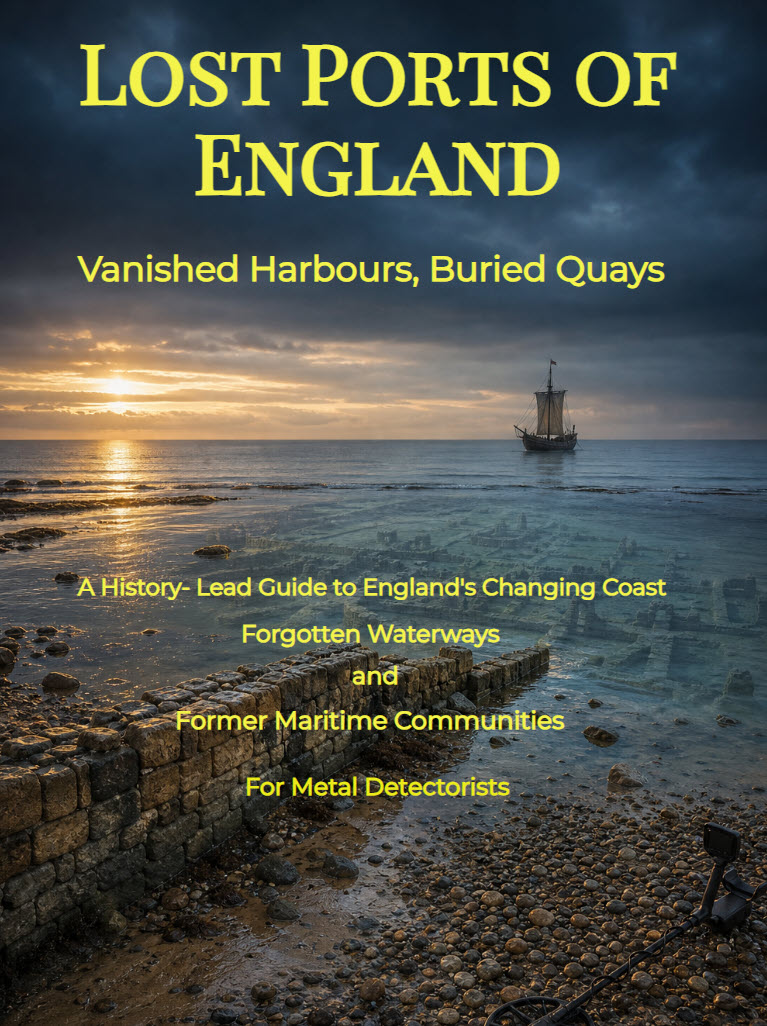
Lost Ports of England
Lost Port of England
By Douglas Hemmings
There is a quiet, haunting sorrow to a place that history has forgotten. We are accustomed to the grand narratives of progress—to cities that expand, skylines that reach ever upward, and coastlines that bristle with the commerce of an interconnected world. Yet scattered along the jagged fringes of the British Isles lie the ghostly remnants of another story altogether. These are the places where the tide once brought wealth, empire, and ambition, only to carry them back out again, leaving behind little more than silted channels, rotting timbers, and silence.
Lost Port of England is an exploration of one such place: a harbor that once stood at the very heart of the nation’s maritime identity, now reduced to a whisper on historical maps and a footnote in regional folklore.
To understand a lost port is to understand the fragile threshold between human ambition and the relentless forces of nature. For centuries, this stretch of coast was alive with the sound of creaking hulls, heavy iron chains, and the shouting of dockworkers in a dozen dialects. Ships set sail from these havens laden with wool, tin, and coal, returning with spices, wines, and stories from the far corners of the earth. Monarchs looked to these waters for defense, merchants built their fortunes upon these tides, and generations of families knew no life beyond the rhythm of the sea.
Yet, history is rarely static. Rivers shift their courses, sandbars creep silently across navigable channels, and economic tides prove even more capricious than the ocean itself. What nature did not claim, human conflict and industrial migration finished. Over decades, or sometimes in a single catastrophic storm, the lifeblood of the town drained away. The grand custom houses fell quiet, the quays crumbled into the salt marsh, and the water receded, leaving a landlocked shell of a community wondering where its future had gone.
This book is both a historical chronicle and an act of excavation. Through painstaking archival research, local oral histories, and physical exploration of the surviving landscape, Lost Port of England reconstructs the rise, peak, and ultimate decline of this remarkable maritime hub. It examines the socio-economic forces that built it, the vibrant human lives that populated it, and the environmental shifts that sealed its fate.
Beyond the dates and trade figures, however, this is a human story. It is about the resilience of a community forced to reinvent itself when the source of its livelihood vanished into the mud. It is about memory, legacy, and the physical traces of the past that still linger in the marshland mist—if you know where to look.
As you turn these pages, you are invited to step back into a world where these deserted shores were the gateway to a global empire, and to uncover the forgotten story of the lost port of England.