

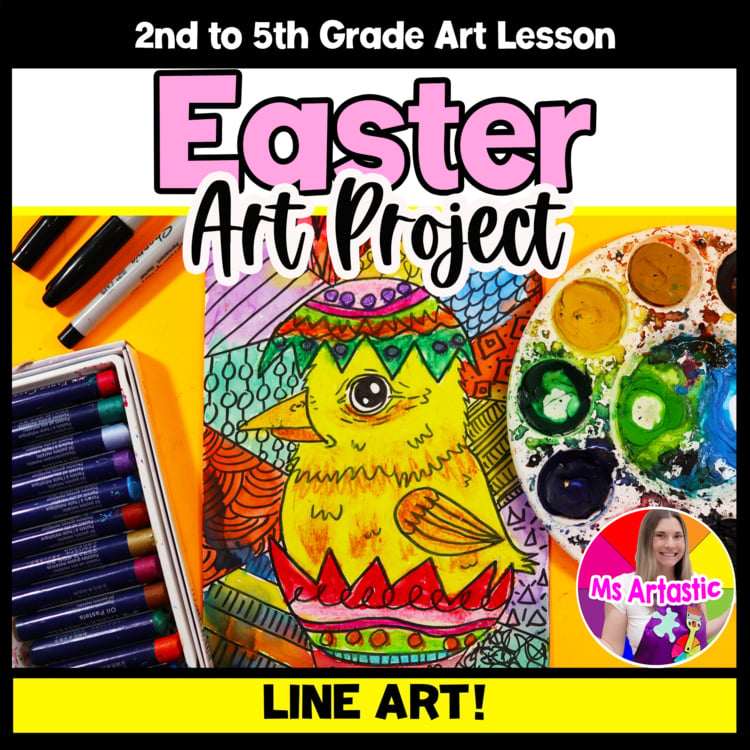
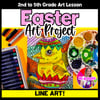

Easter Chick Line Art Lesson Easter Chick Colorful Easter Art Project Activity
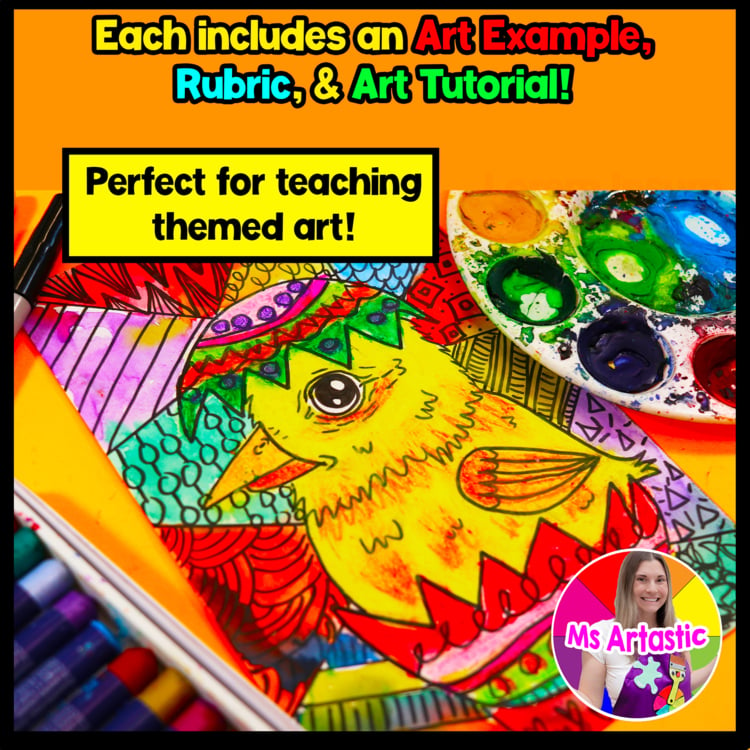
This Easter Chick Line Art Project teaches the Element of Art: Line through a colorful spring artwork. Students draw a chick hatching from a decorated Easter egg, divide the background into large sections and fill each one with different lines and patterns.
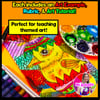
Students then color the chick and egg with oil pastels, blending for texture and depth, and paint the background sections with watercolor or tempera paint. The bright painted sections contrast with the black line designs, and every artwork turns out different. It suits elementary art classes, homeschool art and substitute plans, and makes a cheerful spring display.
WHAT TEACHERS ARE SAYING
★★★★ “A fun, inclusive art activity that engages all students—perfect for both hesitant and confident artists. Highly recommended!” Fawn M.
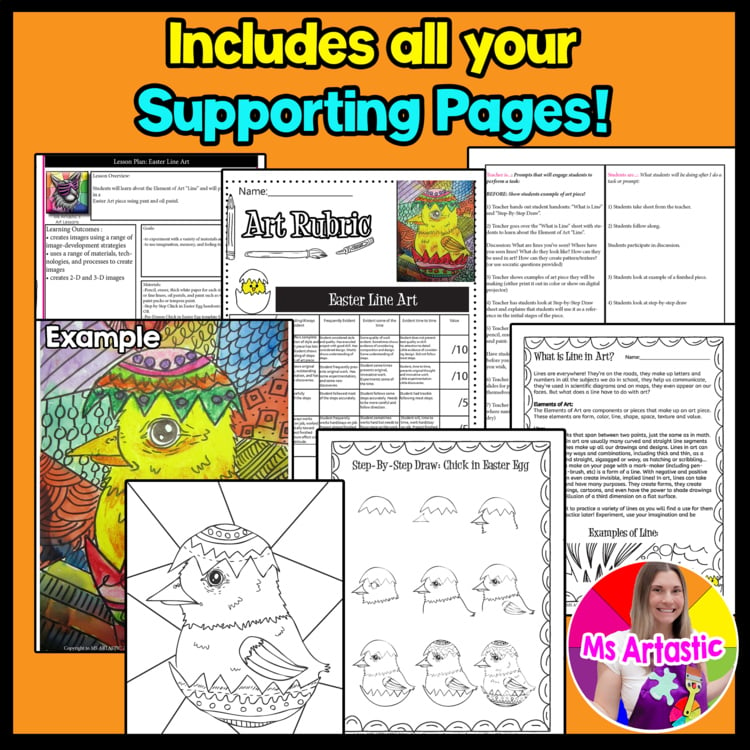
WHAT'S INCLUDED (NON-EDITABLE)
- Easter Chick Line Art Lesson Plan introducing the Element of Art: Line, with a materials list, learning goals and discussion prompts
- What is Line in Art? Worksheet explaining line types and how lines are used in artwork
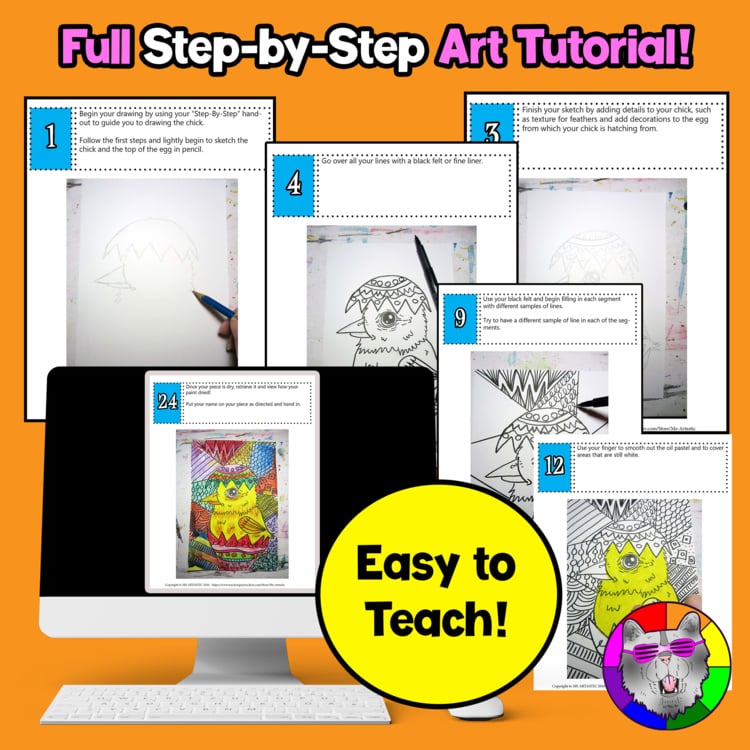
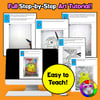
- Step-by-Step Directed Drawing Guide for a chick hatching from an Easter egg
- Line Types Reference Sheet with examples for the background designs
- Background Segment Instructions for filling sections with line patterns
- Step-by-Step Visual Demonstration Pages from sketch to finished piece
- Oil Pastel Blending Instructions for the chick, wings and egg
- Painting Instructions for adding watercolor or tempera paint to the background
- Student Art Rubric for creativity, effort, craftsmanship and understanding of the process
- Example Finished Artwork Poster to use as a visual reference
MATERIALS
Pencil and eraser, black marker or fine liner, ruler, oil pastels, watercolor or tempera paint, paint brushes and water, and thick drawing paper or cardstock.
HOW TO USE IT
Introduce line with the worksheet, guide students through the directed drawing, then give them time to explore line design and pattern before they finish with oil pastels and paint. Students try zigzags, curves, dots, hatching and patterns in their egg decorations and backgrounds.
It fits Easter and spring art lessons, Elements of Art: Line units and mixed media projects.
FAQ
Who is this for?
Elementary art teachers, classroom teachers adding seasonal art, homeschool families and substitute teachers looking for a structured spring art lesson.
How long does it take?
Most classes finish in 2 to 3 class periods, depending on student age, class length and how detailed students make their line patterns and painting.
What paint can I use?
Watercolor or tempera paint both work for the background sections.
Is it editable?
No. The resource is non-editable.
Get free, classroom-ready art lessons and printables in my Free Art Lesson Library.
ABOUT THE AUTHOR
Kathleen McGiveron (Ms Artastic) is an artist who has been featured on NBC LX News and was the featured educator on the cover of OCO Magazine for the October 2025 edition. She designs art lessons for kids and educational resources for teachers. She is the founder of Ms Artastic and hosts the Ms Artastic YouTube Channel and Podcast.
TERMS OF USE
Images and lessons are copyright products.
YOU MAY: use the clip art as clip art, website graphics, binder covers or bulletin board decorations, and use this in creative ways and have as much fun with it as you like. Additional licenses are available for school use.
YOU MAY NOT: use this on OutSchool, put it on your blog, share it with other teachers, administration or districts (admin can buy additional licenses), sell it, give it out for free or photocopy it for others.
Sincerely,
Ms Artastic
ALL TEACHER REVIEWS (5)
★★★ “As a French as a Second Language (FSL) teacher, I found the Easter Art Project: Easter Egg Line Art Project & Easter Chick Art Activity to be a delightful and engaging resource for my students. This project combines artistic expression with language learning, making it a perfect fit for the spring season. Strengths: Cultural Relevance: The project introduces students to Easter traditions and symbols, providing a cultural context that enhances their language learning experience. Creative Expression: Students have the opportunity to create their own Easter-themed artwork, allowing for personal expression and creativity. Language Integration: Incorporating French vocabulary related to Easter and art into the project helps reinforce language skills in a meaningful context. Areas for Improvement: Visual Appeal: While the project is engaging, incorporating more colorful visuals or examples could enhance student interest and provide clearer guidance for the activities. Differentiation: Including differentiated tasks or scaffolding strategies would better support students with varying skill levels and learning needs. Conclusion: Overall, the Easter Art Project is a valuable resource that combines cultural learning, creativity, and language development. With minor enhancements in visual design and differentiation, it can become an even more effective tool in fostering French language acquisition and cultural understanding.” Academic E.
★★★★★ “fun easter project” Jeffrey D.
★★★★ “Super cool for my class. I thought expensive once converted to canadian dollars” Leah C.
★★★★★ “Fun Easter activity for teaching line art!” Jennifer C.
★★★★★ “Lovely lesson just in time for Easter!” Angela W.