
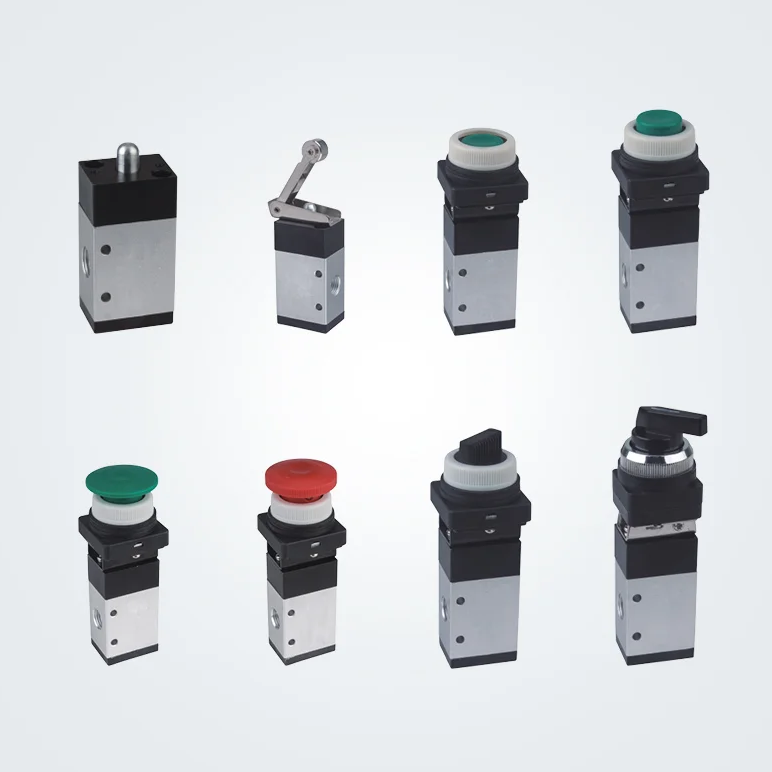
Pneumatic Control Valves: A Comprehensive Guide to Types, Functions, and Applications
Pneumatic control valves play a vital role in modern industrial automation by precisely regulating the flow, direction, and pressure of compressed air in pneumatic systems. Also known as control valves or pneumatic directional valves, these components are essential for controlling actuators, cylinders, and other pneumatic devices efficiently and reliably. This guide covers their working principles, common types, key applications, selection tips, and benefits of choosing high-quality options.
What Are Pneumatic Control Valves?
A pneumatic control valve is a device that controls the passage of compressed air or gas within a system. It responds to control signals—such as electrical, pneumatic, or manual inputs—to adjust airflow, enabling precise operation of pneumatic equipment.
These valves typically include a valve body, an actuator (solenoid, air pilot, or mechanical), and internal elements like spools, poppets, or diaphragms. They are widely preferred in hazardous or explosive environments because they eliminate spark risks associated with electrical components.
How Pneumatic Control Valves Work
Pneumatic control valves function by altering the position of an internal mechanism to direct, restrict, or release airflow:
- Directional control: Routes air to specific paths, allowing cylinders to extend, retract, or hold position.
- Flow control: Regulates the volume of air to control actuator speed and smoothness.
- Pressure control: Maintains, reduces, or relieves pressure to protect system components.
For instance, solenoid-operated valves use an electromagnetic coil to quickly shift the spool, while air-pilot or manual valves rely on air pressure or operator input. This design ensures fast response times, fail-safe operation, and minimal energy consumption.
Common Types of Pneumatic Control Valves
Pneumatic systems use various control valve types tailored to specific functions:
- Solenoid Valves: Electrically actuated for rapid on/off or directional switching, ideal for automated processes.
- Directional Control Valves: Available in 2/2, 3/2, 5/2, or 5/3-way configurations to manage single- or double-acting actuators.
- Flow Control Valves: Include throttle, needle, and one-way types for precise speed adjustment (meter-in or meter-out).
- Pressure Control Valves: Such as pressure regulators, relief valves, and sequence valves to maintain safe operating pressures.
- Mechanical and Manual Valves: Hand levers, push buttons, foot pedals, or roller levers for direct operator control.
Specialized options like quick exhaust valves accelerate cylinder retraction, while shuttle valves enable logic operations in complex circuits.
Key Applications of Pneumatic Control Valves
Pneumatic control valves are indispensable across numerous industries:
- Industrial Automation: Powering robotic arms, pick-and-place systems, and conveyor controls.
- Automotive Manufacturing: Operating clamps, lifts, and assembly tools with precision.
- Packaging Industry: Controlling gentle actuation for filling, sealing, and labeling machines.
- Food and Beverage Processing: Providing hygienic, reliable operation in production lines.
- HVAC and Ventilation: Regulating airflow for climate control systems.
Their inherent safety, durability in harsh conditions, and low maintenance requirements make them a preferred choice worldwide.
How to Choose the Right Pneumatic Control Valve
Selecting the appropriate control valve depends on several factors:
- Thread size and port configuration (e.g., G1/8, G1/4, G3/8, G1/2)
- Operating pressure and temperature range
- Actuation type (solenoid voltage, air pilot, manual/mechanical)
- Body material (aluminum alloy, brass, or stainless steel for corrosion resistance)
- Response time, flow rate (Cv value), and certifications (CE, RoHS, IP65 rating)
Premium valves offer better sealing, longer lifespan, reduced air leakage, and improved system efficiency, ultimately lowering operational costs.
Explore a full range of high-quality pneumatic control valves, including solenoid valves, directional valves, flow controls, pressure regulators, and manual/mechanical options, at Hosepneumatic Control Valves.
Conclusion
Pneumatic control valves are fundamental to achieving precise, safe, and efficient operation in pneumatic systems. By understanding their types, functions, and selection criteria, engineers and technicians can optimize performance and reliability. Investing in durable, well-designed control valves ensures smoother automation, reduced downtime, and enhanced productivity across industrial applications.