









Tulip Mania EDU 1632 to 1637. (English / Swedish)
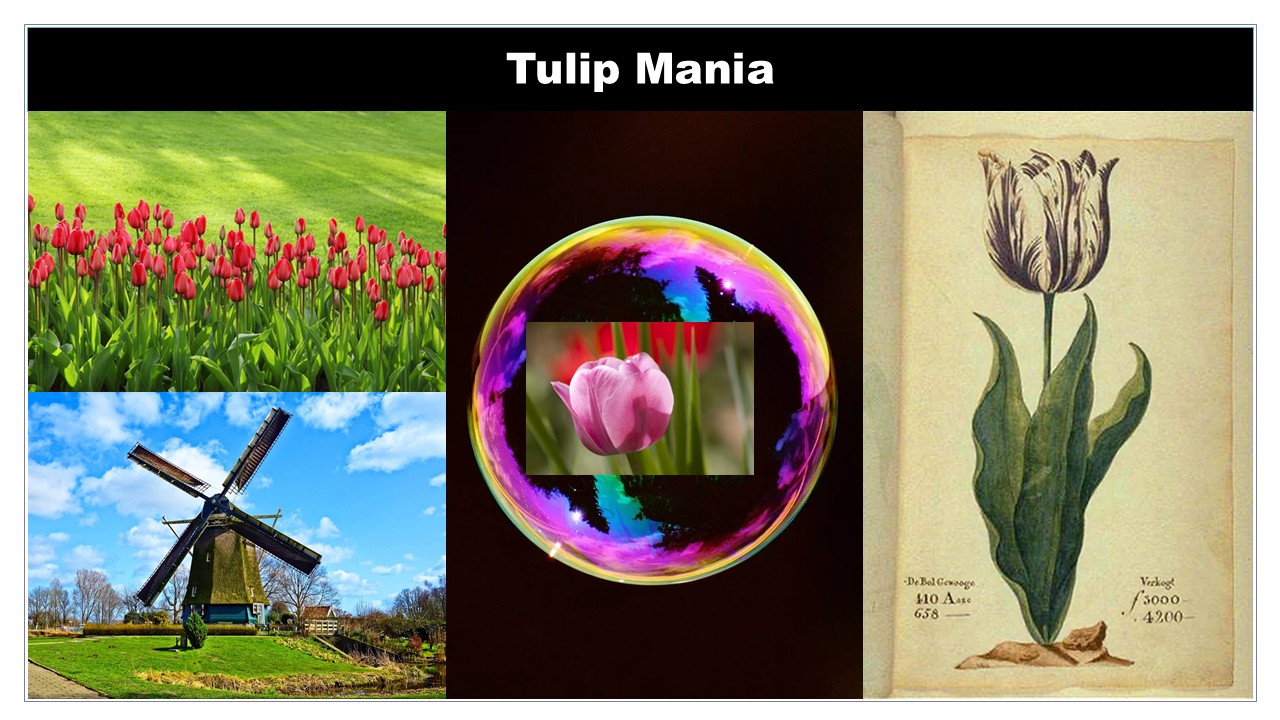
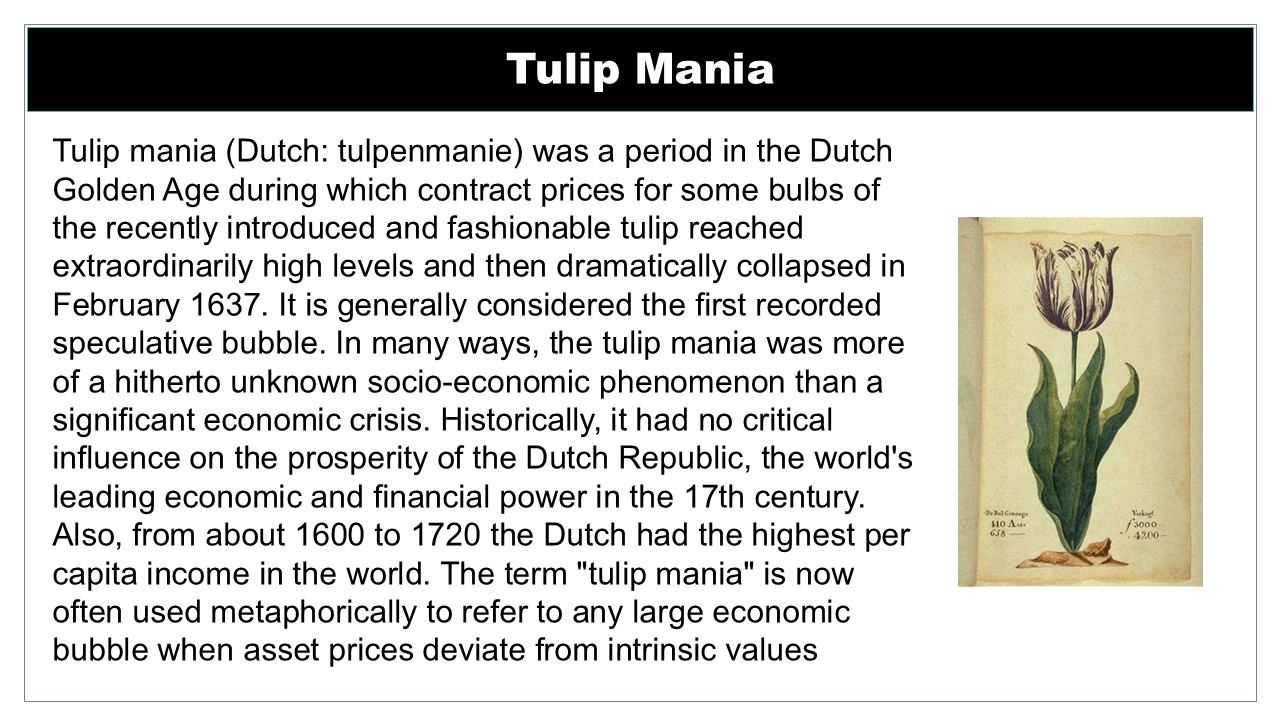
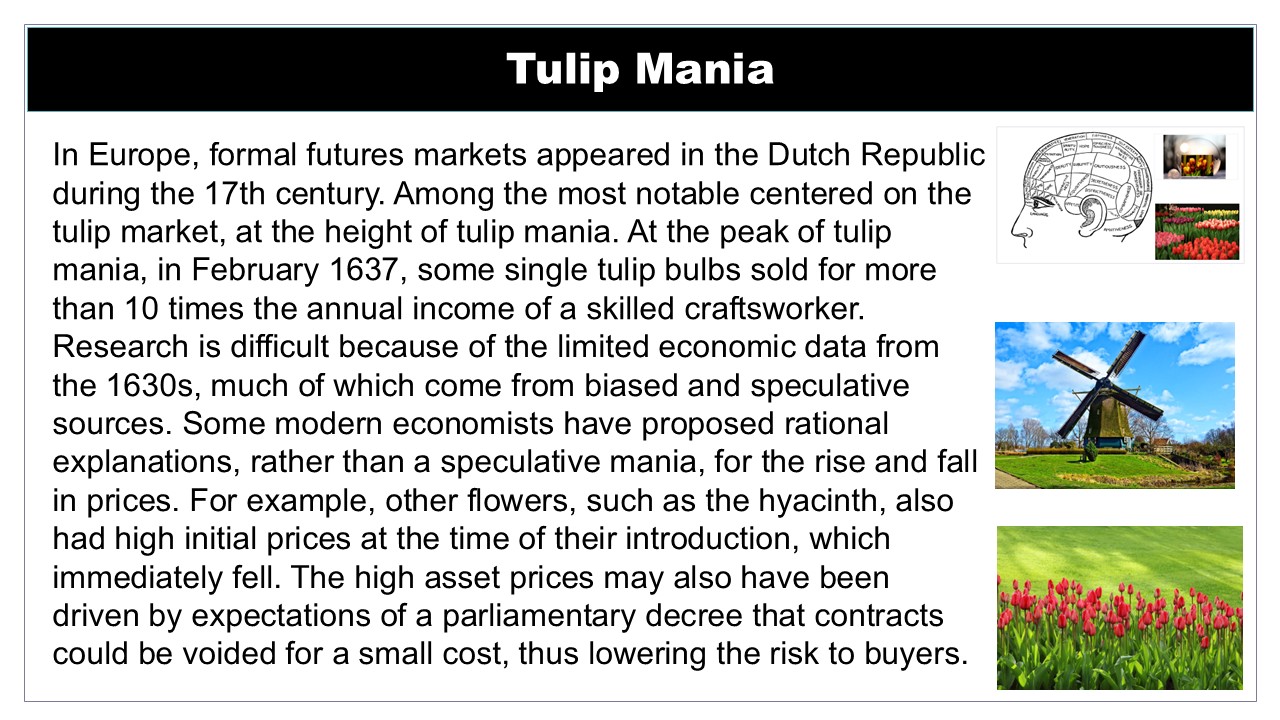
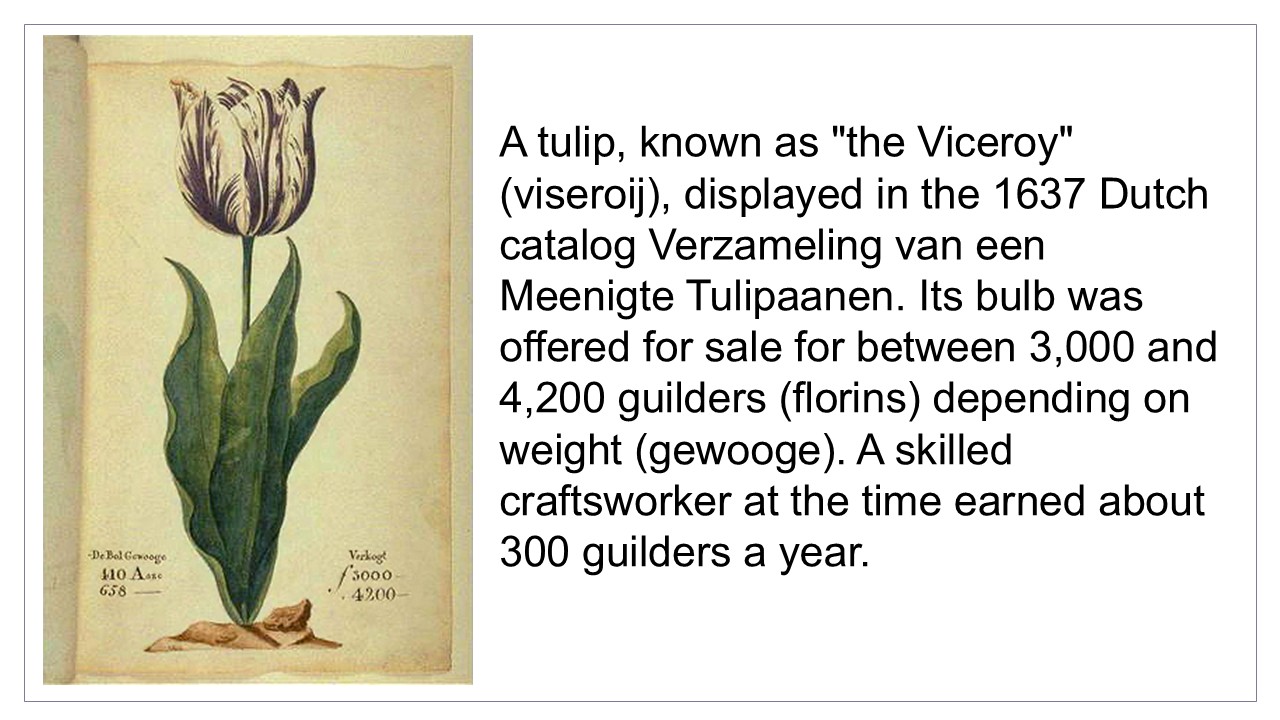
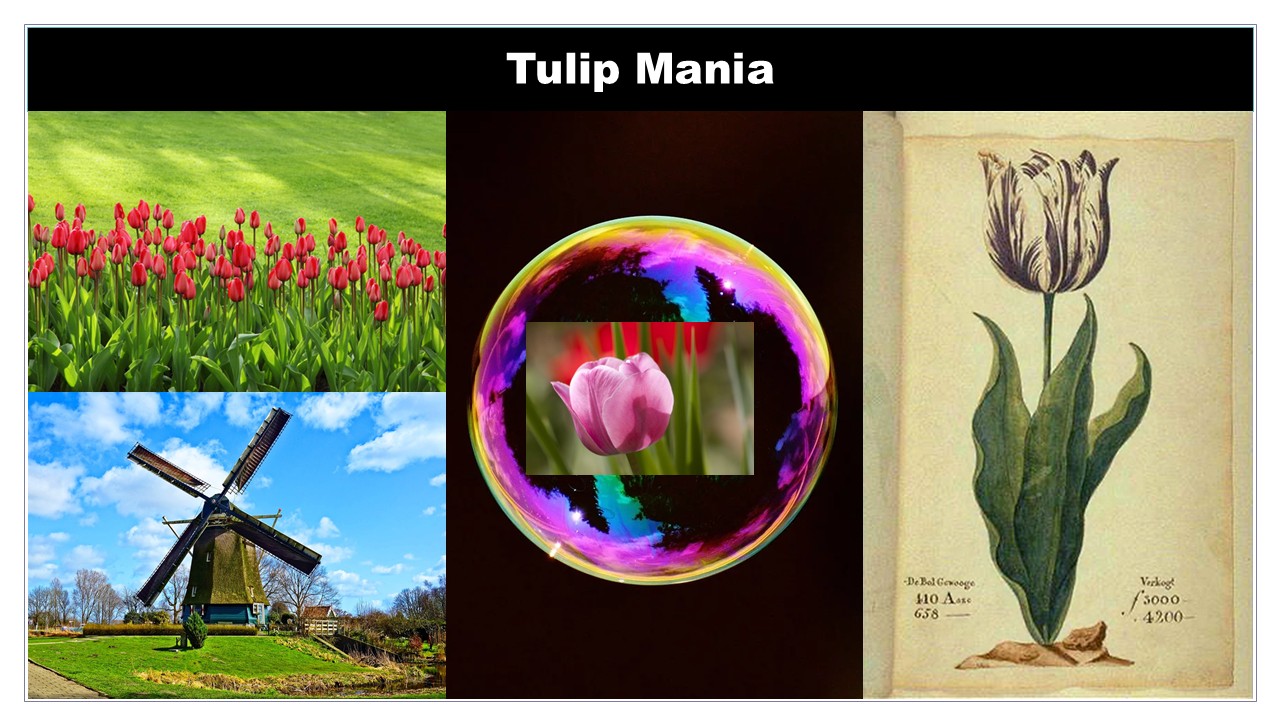
Tulip mania (Dutch: tulpenmanie) was a period in the Dutch Golden Age during which contract prices for some bulbs of the recently introduced and fashionable tulip reached extraordinarily high levels and then dramatically collapsed in February 1637. It is generally considered the first recorded speculative bubble. In many ways, the tulip mania was more of a hitherto unknown socio-economic phenomenon than a significant economic crisis. Historically, it had no critical influence on the prosperity of the Dutch Republic, the world's leading economic and financial power in the 17th century. Also, from about 1600 to 1720 the Dutch had the highest per capita income in the world. The term "tulip mania" is now often used metaphorically to refer to any large economic bubble when asset prices deviate from intrinsic values
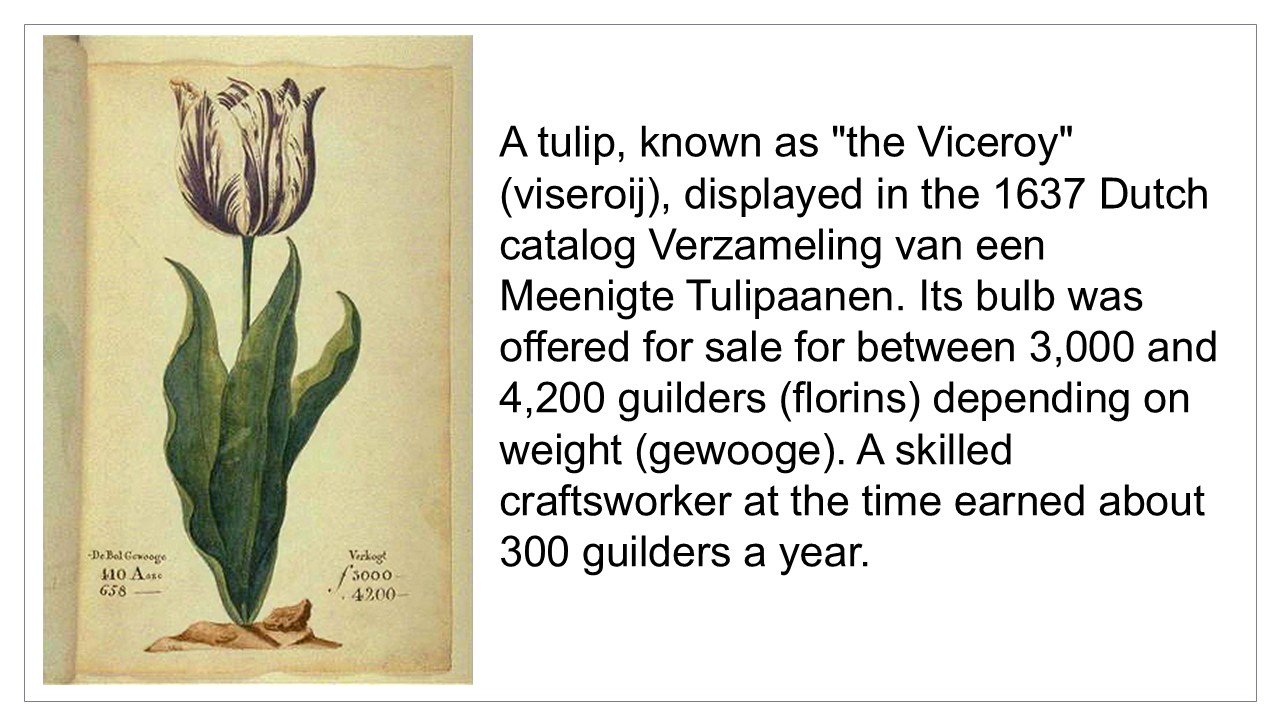
As the flowers grew in popularity, professional growers paid higher and higher prices for bulbs with the virus, and prices rose steadily. By 1634, in part as a result of demand from the French, speculators began to enter the market. The contract price of rare bulbs continued to rise throughout 1636, but by November, the price of common, "unbroken" bulbs also began to increase, so that soon any tulip bulb could fetch hundreds of guilders. That year the Dutch created a type of formal futures market where contracts to buy bulbs at the end of the season were bought and sold. Traders met in "colleges" at taverns and buyers were required to pay a 2.5% "wine money" fee, up to a maximum of three guilders per trade.



Best (5 stars) rating (Teachers Pay Teachers TPT) US Teacher tested this slideshow. Her students loved it.