

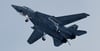
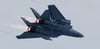
F-14A Tomcat
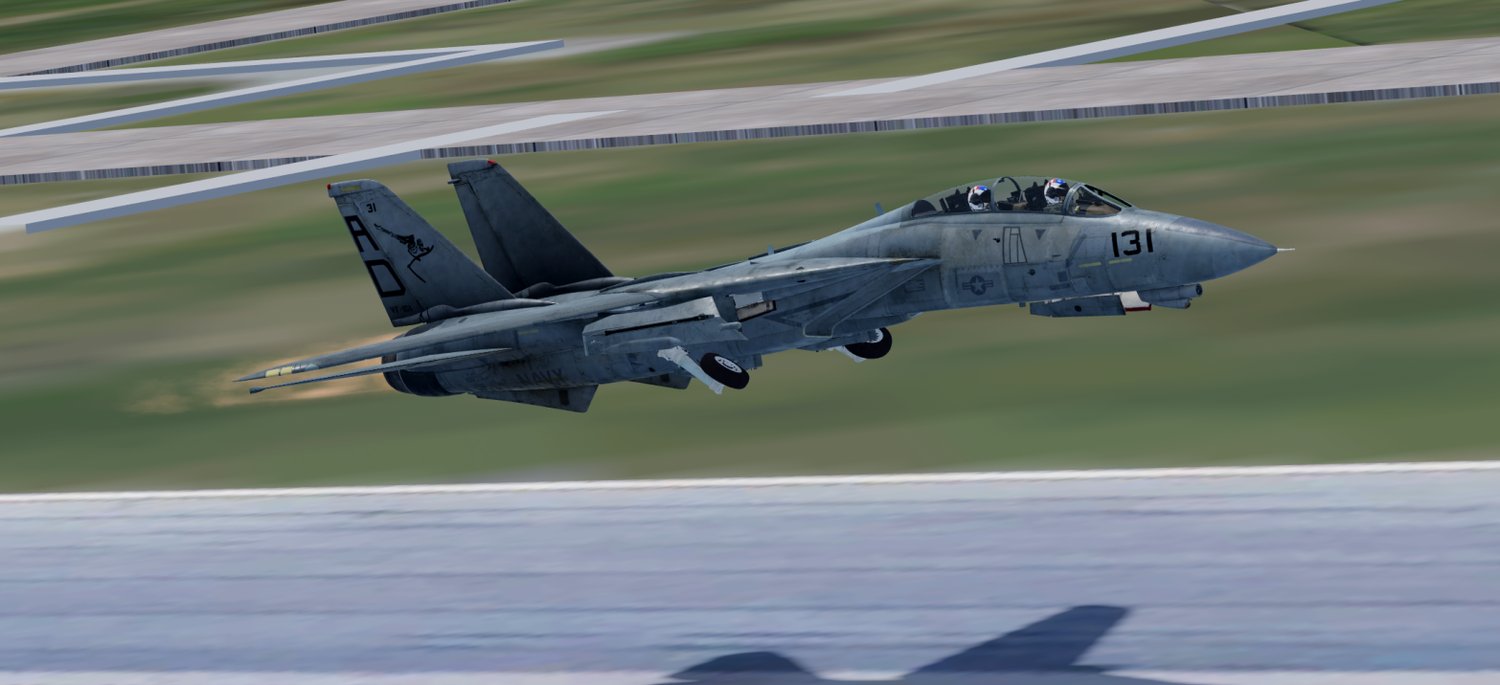
The F-14A Tomcat represents a complete recreation of the early twin-engine naval interceptor, combining detailed airframe simulation, responsive flight dynamics, and authentic two-seat crew functionality. Its design merges analog-era avionics with advanced physics tuning, faithfully capturing the balance between high-speed agility, carrier operations, and variable-geometry flight control that defined the original platform.
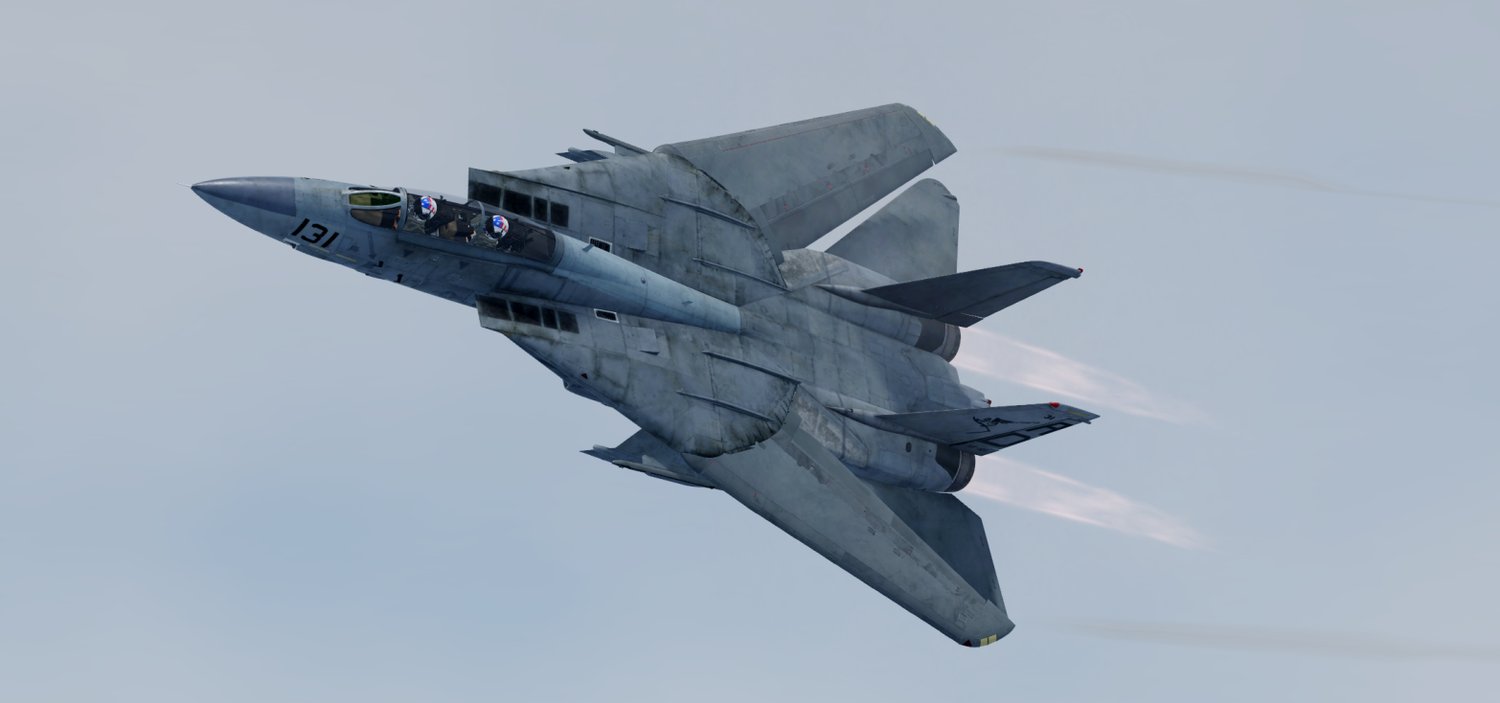
Aerodynamically, the F-14A’s flight model has been comprehensively refined to replicate the aerodynamic behavior of the 70s–80s production configuration powered by Pratt & Whitney TF30 engines. Lift, drag, and wing-sweep drag curves have been recalibrated across the full envelope, recreating the aircraft’s distinct performance separation between low-speed, high-AOA maneuvering and high-speed intercept flight. The variable-geometry wing system dynamically adjusts to optimize control responsiveness and energy management, while full tailplane and spoiler interactions produce the authentic yaw-roll coupling and pitch sensitivity characteristic of the Tomcat. Thrust curves model the TF30’s slow spool response and potential compressor stall behavior at extreme AoA, requiring deliberate throttle handling to avoid asymmetric power loss.
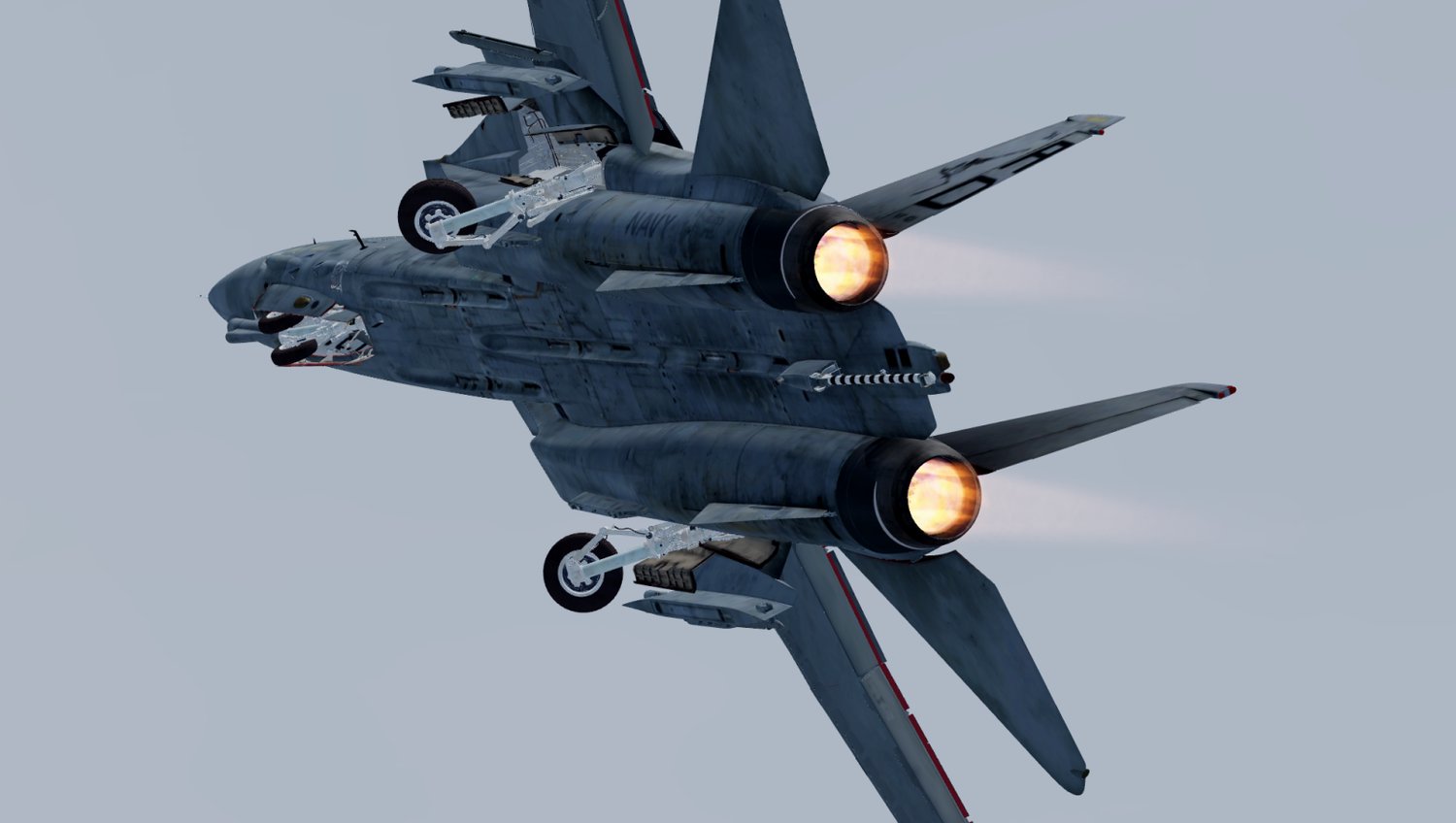
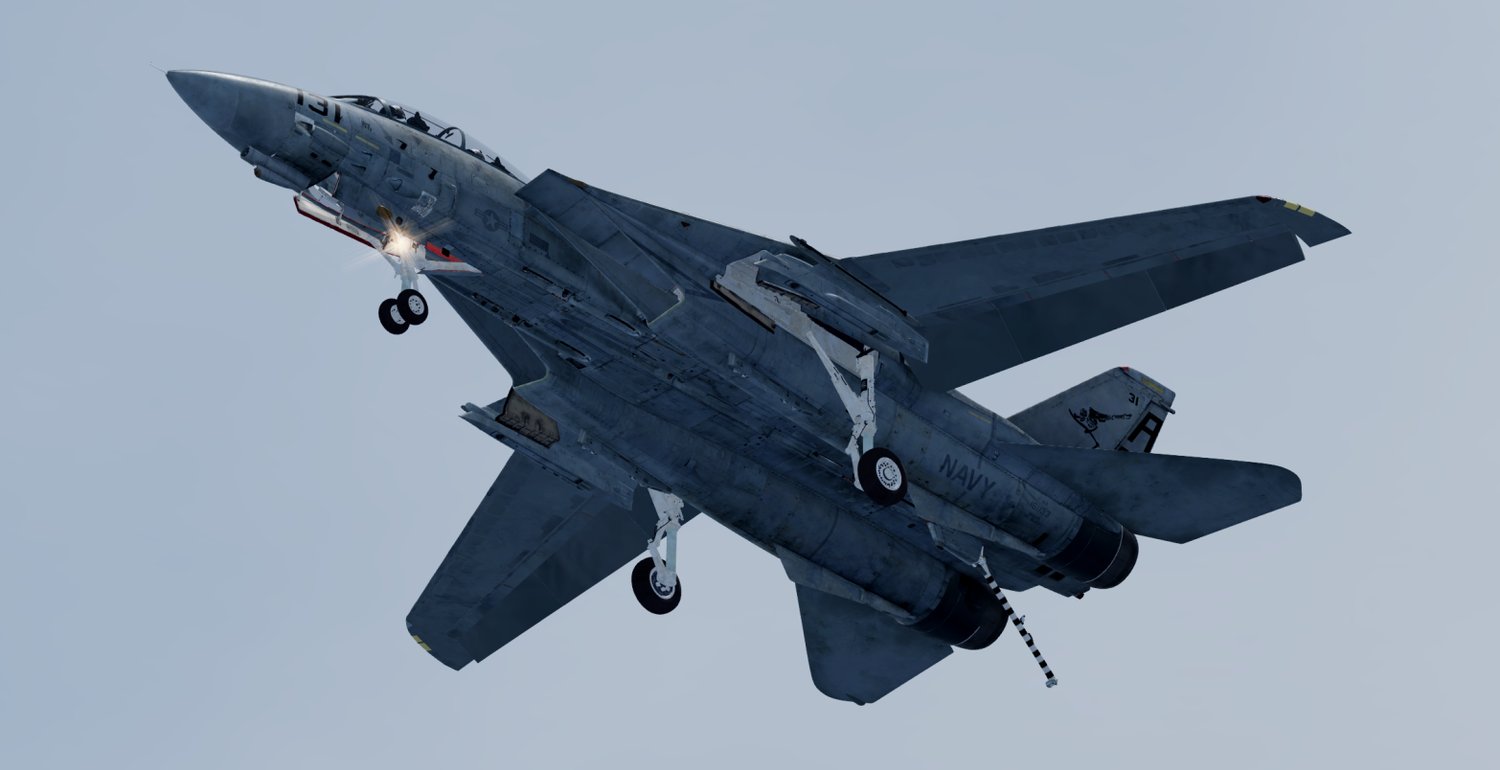
Externally, the model showcases a detailed recreation of the F-14A’s complex mechanical features. The swing-wing geometry is fully animated, synchronizing with wing-sweep and oversweep positions for carrier storage. Full gear and strut animation include hydraulic compression, nose extension, and tailhook damping during carrier takeoff and recovery operations. Operational navigation, formation, and landing light arrays are functional, along with refueling probe deployment and associated receptacle lighting. Both forward and main air brake panels deploy under realistic hydraulic timing, accompanied by accurate spoiler response linked to roll inputs. Canopy actuation, boarding ladder, and tailhook mechanisms reflect original Navy servicing procedures for ground operations.
Internally, both crew positions—pilot and RIO—feature fully interactive cockpit stations. Every switch, lever, and rotary is clickable, allowing players to manage both navigation and combat tasks through direct input. The pilot’s cockpit includes animated throttle and stick assemblies tied to control response, along with operable control panels for flaps, gear, lighting, and weapon release selection. The RIO’s rear cockpit accommodates the AWG-9 radar control systems, mode selectors, and TID/DDD displays. Together, these simulate the full radar environment from search to track-while-scan and missile engagement. All major gauges, annunciators, and caution lamps are tied to electrical and hydraulic states for proper sequencing during startup and in-flight operation. Cockpit lighting, flood illumination, and night mode functions are modeled for carrier deck use and nighttime mission environments.
Core systems include full engine startup and shutdown logic with battery and APU sequence dependencies. The hydraulic and electrical networks are interlinked, dictating control surface operation under correct system pressure. Weapons integration encompasses AIM-7 Sparrow, AIM-9 Sidewinder, and AIM-54 Phoenix, with missile launch behavior synchronized through the AWG-9’s target-handling system. Fuel management, wing-sweep scheduling, and stabilator inputs are governed by accurate mechanical and electrical feedback loops. Environmental control sounds such as cockpit pressurization, wind buffeting, and ECS cycling have been incorporated to enhance cockpit immersion, while ground effect, carrier catapult physics, and arresting dynamics ensure authentic deck-handling fidelity.
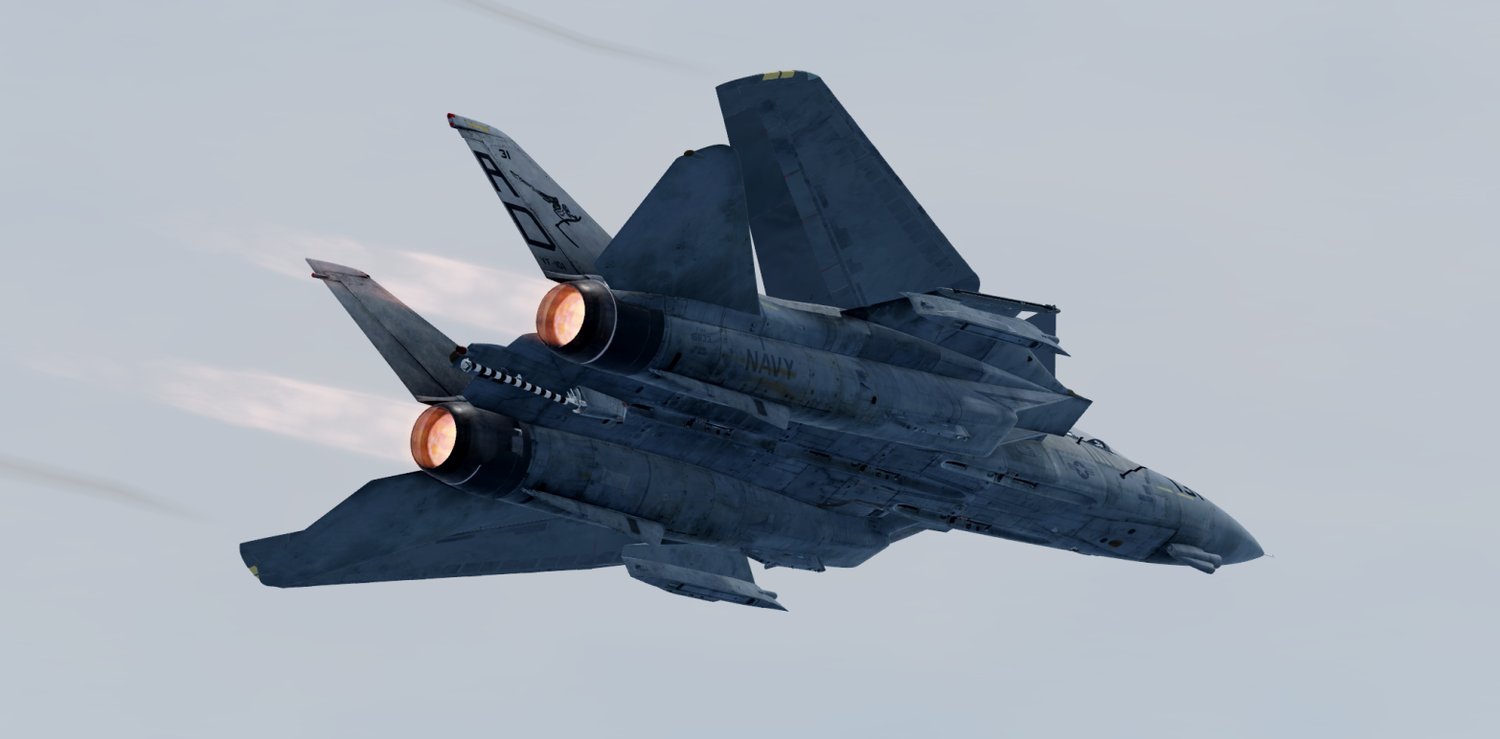
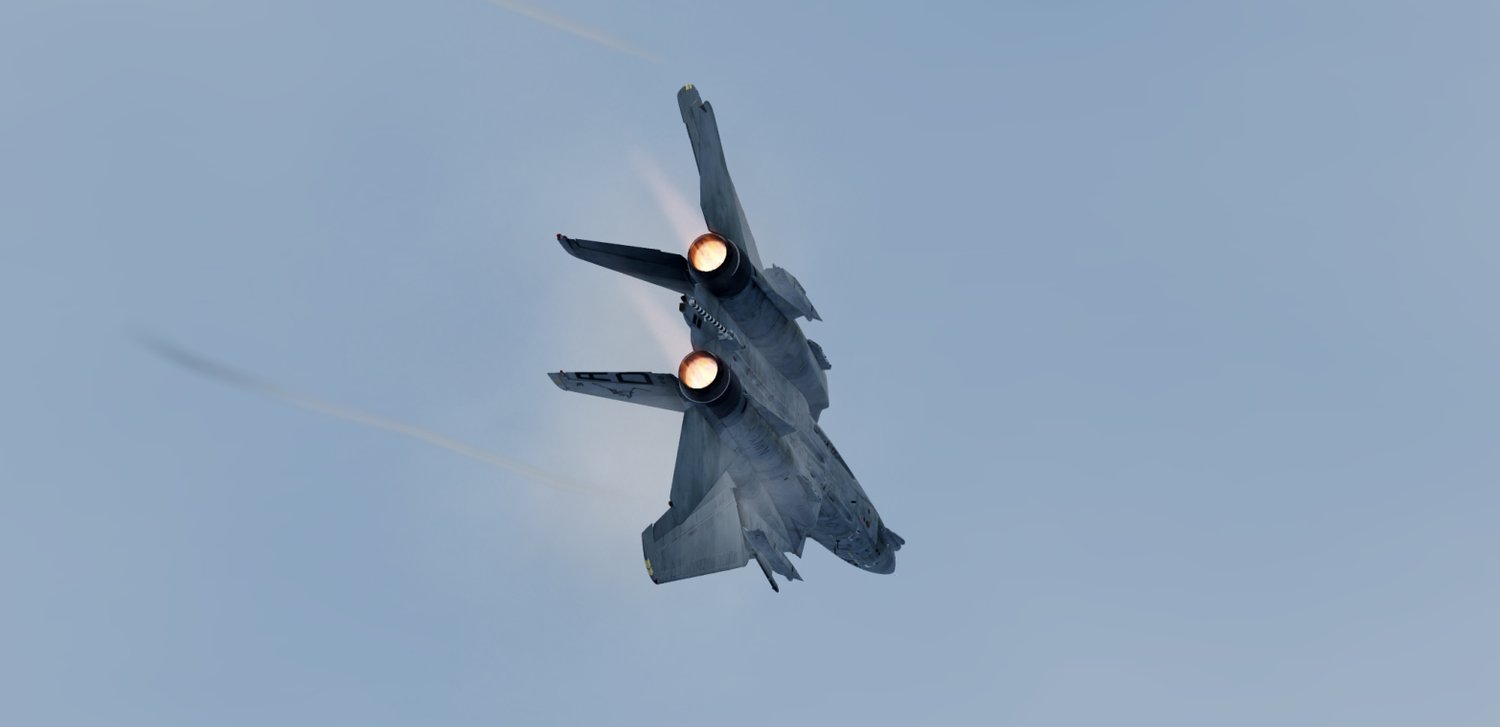
Visual and physical effects complement the flight model’s realism. Vapor and condensation sheets form dynamically along the glove vanes and wing surfaces under high humidity and transonic flight. Afterburner exhaust signatures respond to throttle input displaying the characteristic twin-plume pattern of the TF30 engines. Tail and wing flex respond to aerodynamic loading, and visual wear elements—heat staining, hydraulic fluid streaks, and subtle weathering—evolve with operational time. The soundscape has been rebuilt to match the Tomcat’s distinctive tone, from its low-frequency rumble at idle to the sharp roar of its full afterburners.
Together, these elements establish the F-14A Tomcat as a deeply authentic naval aviation simulation—a study-level recreation of one of the most iconic carrier-based aircraft ever fielded, blending analog-era complexity with believable fluidity and atmosphere both in flight and on deck.