Why Sensory Needs Matters
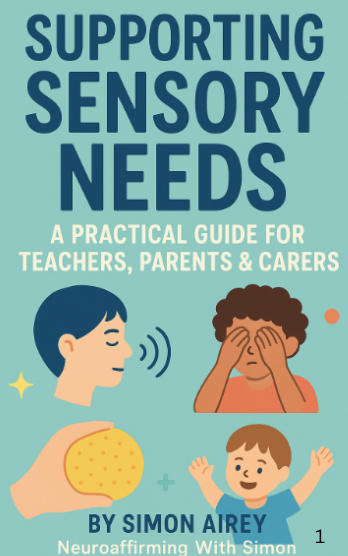
Empower yourself to understand and effectively support the sensory needs of children with this essential guide by Simon Airey of Neuroaffirming With Simon.
This practical guide is designed to help teachers, parents, and carers navigate the world of sensory processing, reducing distress and increasing regulation for children, especially those who are neurodivergent.
🔥 Solve Your Pain Points: Understand and Address Challenging Behaviours
Are you struggling with "behaviours" like biting, hitting, meltdowns, or refusal? This guide provides the understanding you need to move beyond managing behavior to meeting underlying needs.
- Understand the "Why": Learn why children's nervous systems shift into "protect mode" when sensory needs aren't met, leading to challenging behaviours.
- Decode Sensory Needs: Differentiate between Sensory Seeking (under-stimulated) and Sensory Avoiding (highly sensitive).
- Quick Solutions: Get immediate, practical supports for both sensory seeking (e.g., movement breaks, heavy work, chewy tools) and sensory avoiding (e.g., reduce noise/lights, predictable routines).
🛠️ Practical, Low-Cost Sensory Support Strategies
The booklet provides six high-impact, low-cost strategies you can implement right away:
DIY Sensory Tools: Create tools like a rice-filled sock (weighted lap pad) or rubber bands for quiet fidgeting.
Flexible Seating: Offer choices like a cushion or a yoga mat to help a child's body learn best.
Visual Schedules: Reduce anxiety and uncertainty by using visual plans to prepare children for transitions.
Social Stories/Comic Strip Conversations: Prepare the nervous system in advance using simple, visual narratives to explain situations and make hidden social information visible.
Natural Materials: Utilize outdoor elements like water, rocks, or leaves for calming sensory input and grounding.
Quick Reference Guide: A handy chart matching behaviors like biting and hitting to possible sensory needs and supports.