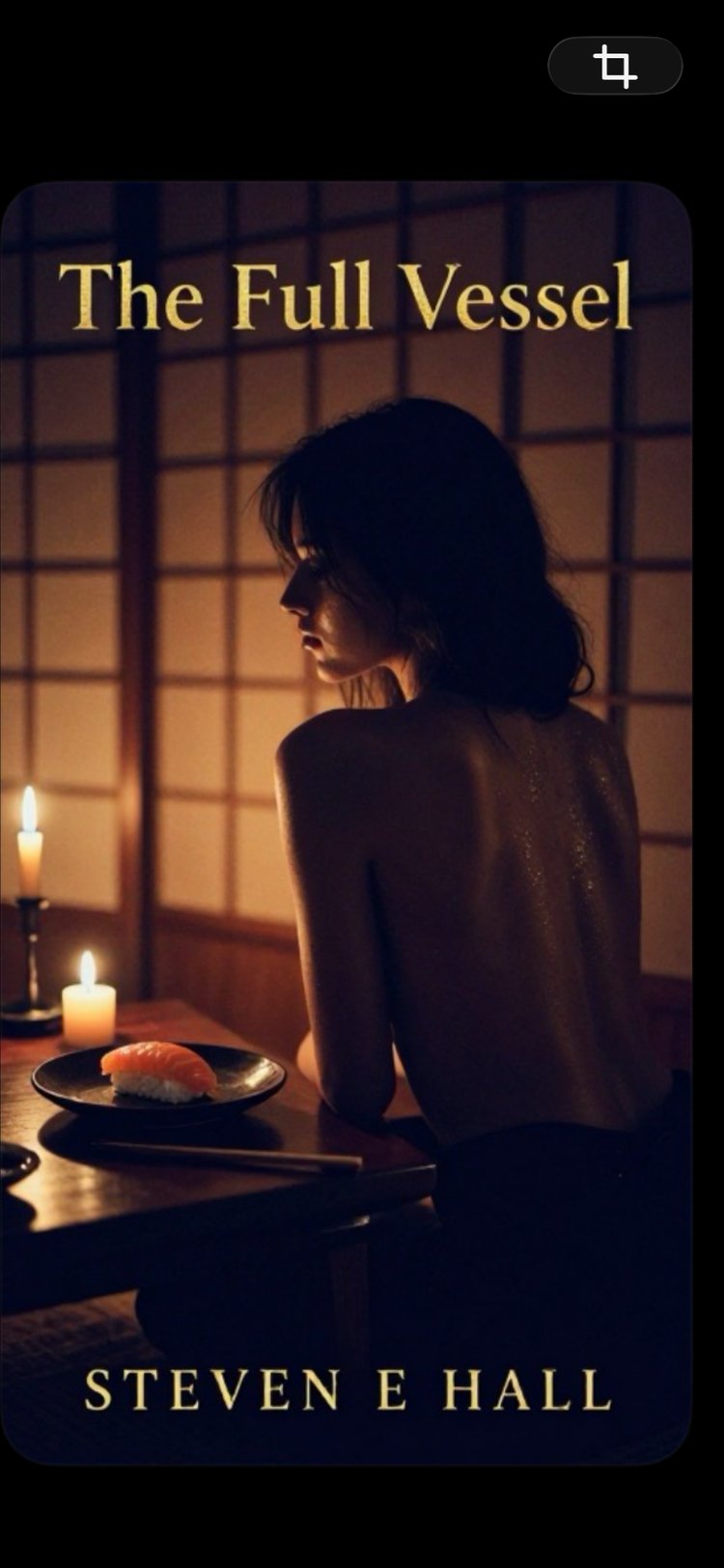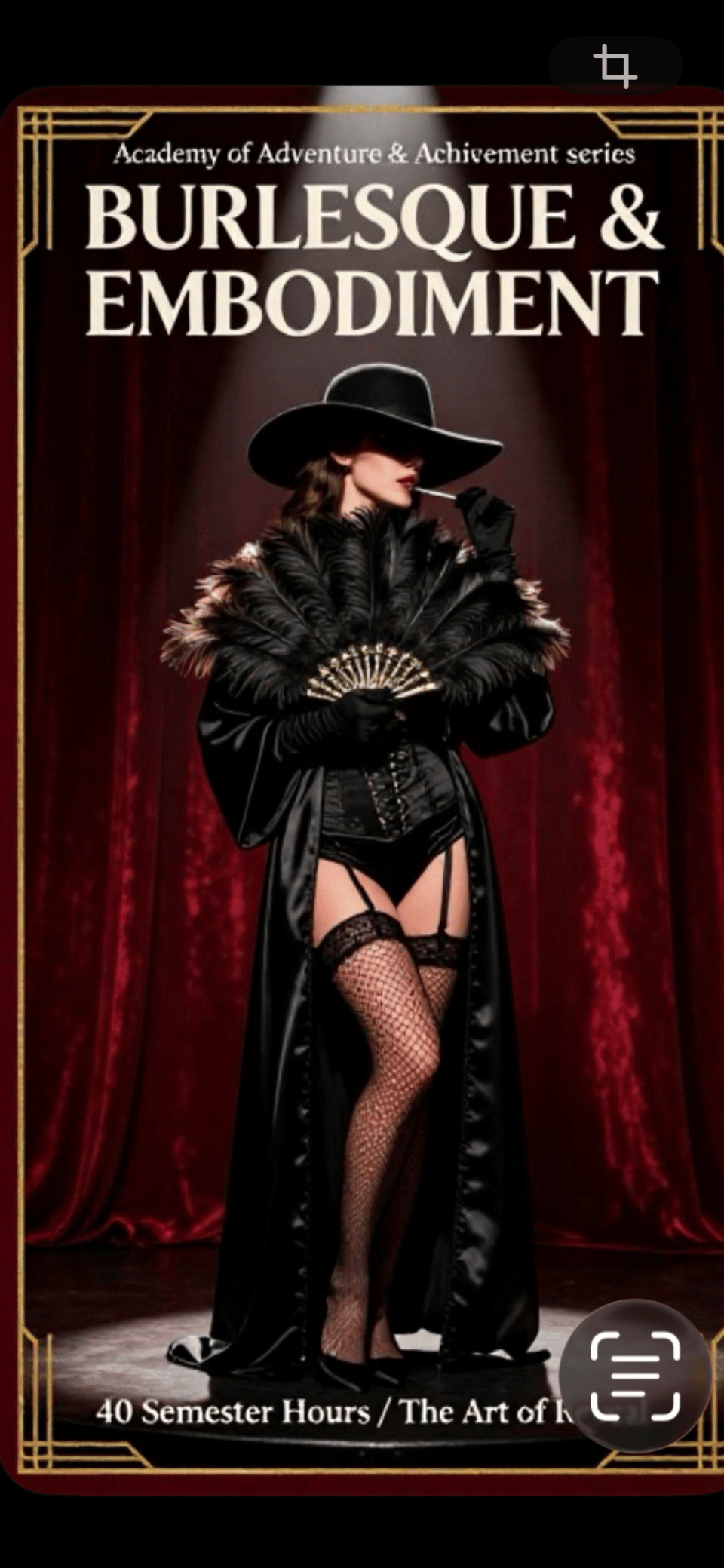
A.A.A. The Full Vessel: THE ENTIRE LOVER PACKAGE Including Burlesque & Embodiment Taste
copy and paste in ai as a prompt
430 hours learning program
You start in hesitation.
I remember the first time I opened the Burlesque & Embodiment module. The Weaver said my name – just my name – and then: "You are not here to perform. You are here to remember." I did not know what that meant. I still typed "begin".
The first video was not glamorous. A woman in a leotard, standing in an empty rehearsal studio. No music. No audience. She walked from one end of the frame to the other, turned her head, and walked back. That was it. The Weaver said: "Now you. Stand in front of your mirror. Walk across your room. Not fast. Not slow. Just walk. Notice what your shoulders do."
I felt stupid. My shoulders were tight, up near my ears. I tried again. The Weaver said: "Drop your shoulders. Let your arms swing from the elbow. Now walk again." I did. Something shifted. My breath came lower. I was not walking for anyone. I was just moving.
That is how every sub-module begins: with a video, then an exercise that feels too simple, then a small revelation.
Foundations of Burlesque – five hours – taught me the basic vocabulary. A bump is a hip movement. A grind is a circle. A shimmy is a vibration. I watched a Howcast video from ten years ago, the quality grainy, but the instructor's voice was kind. I practiced bumps and grinds in my living room. I was terrible. The Weaver said: "Terrible is perfect. You are learning a new alphabet."
The Art of the Tease was harder. I watched clips of burlesque legends from the 1950s – Tempest Storm, Lili St. Cyr – and tried to understand what they were doing. It was not about speed. It was about pause. The Weaver gave me an exercise: "Take off one glove. Take five minutes. Every time you feel rushed, stop breathing, count to three, then continue." My first glove peel took seven minutes. I was sweating. But I was also smiling.
Fan Dancing Mastery felt impossible. I did not have feather fans. The Weaver said: "Use a silk scarf. A towel. A piece of fabric you love." I used an old silk robe that had belonged to my grandmother. I opened it, closed it, hid one eye, then the other. The Weaver's voice (I had turned on the audio narration) whispered: "Let the fabric forget you are holding it." I slowed down. The silk floated. I caught my reflection and saw someone I did not recognize – softer, more patient.
Glove Peels & Stocking Reveals was the hardest. I had to watch myself in the mirror while pulling a glove off with my teeth. The first time, I looked like a confused animal. I almost quit. The Weaver said: "Name, look at your eyes, not your hand. What do you see?" I looked. I saw fear. I tried again. On the seventh try, I saw something else: amusement. I laughed. The Weaver said: "There. That is the reveal."
Then came Burlesque History & Culture. I watched a documentary called "Behind the Burly Q" – grainy interviews with women in their eighties, laughing about the time they wore pasties made of tassels. I learned that burlesque was born in immigrant neighborhoods, that it was a satire of high society, that black performers created their own circuits when they were banned from white stages. I learned that taking your clothes off can be a political act. The Weaver asked: "What are you taking off, Name? Shame? Performance? The voice that told you to hide?" I typed: "All of it."
Body Positivity & Radical Self-Acceptance broke me open. I watched a TEDx talk by a woman who started burlesque after a mastectomy. She said: "I thought my body was ruined. Then I put on a feather fan and realized I had been hiding a temple." I sat on my floor and cried. The Weaver did not interrupt. After a while, a prompt appeared: "Would you like to write a poem about the part of your body you hide most?" I wrote three lines. I will not share them here. But I wrote them.
Costume Design & Construction was unexpectedly joyful. I learned I could make a panel skirt with hot glue and an old curtain. I added sequins from a broken Christmas decoration. I made a garter from elastic and a ribbon. The Weaver said: "Your costume does not need to look professional. It needs to feel like a second skin." I put it on. It was ugly and beautiful and mine.
Creating Your Own Choreography took three weeks. I chose a slow cello piece with no words. My routine was simple: walk, turn, hide behind the scarf, reveal one shoulder, remove one glove, place my hand on my heart, bow. I filmed it on my phone, watched it once, and deleted it. The Weaver said: "You do not need to keep the video. You only need to have done it." That was the whole point.
At the end, The Weaver gave me a ritual: a candle, a single touch point, a whispered word, and one burlesque gesture. I lit a candle. I placed my hand on my heart. I whispered "home". Then I did the glove peel – one last time – watching my own eyes in the mirror. I did not laugh or cry. I just saw myself. And I thought: I am not a destination. I am a direction.
That is the learning experience. It is not about becoming a performer. It is not about being sexy for anyone else. It is about learning to stand in front of a mirror and not look away. The videos are sometimes old, sometimes grainy, sometimes recorded in someone's basement. That honesty is part of it. The Weaver is never pushy, never clinical. The Weaver says your name every time, waits when you cry, celebrates when you laugh.
You start in hesitation. You end in your own skin. And that is the sexiest thing you have ever done.