
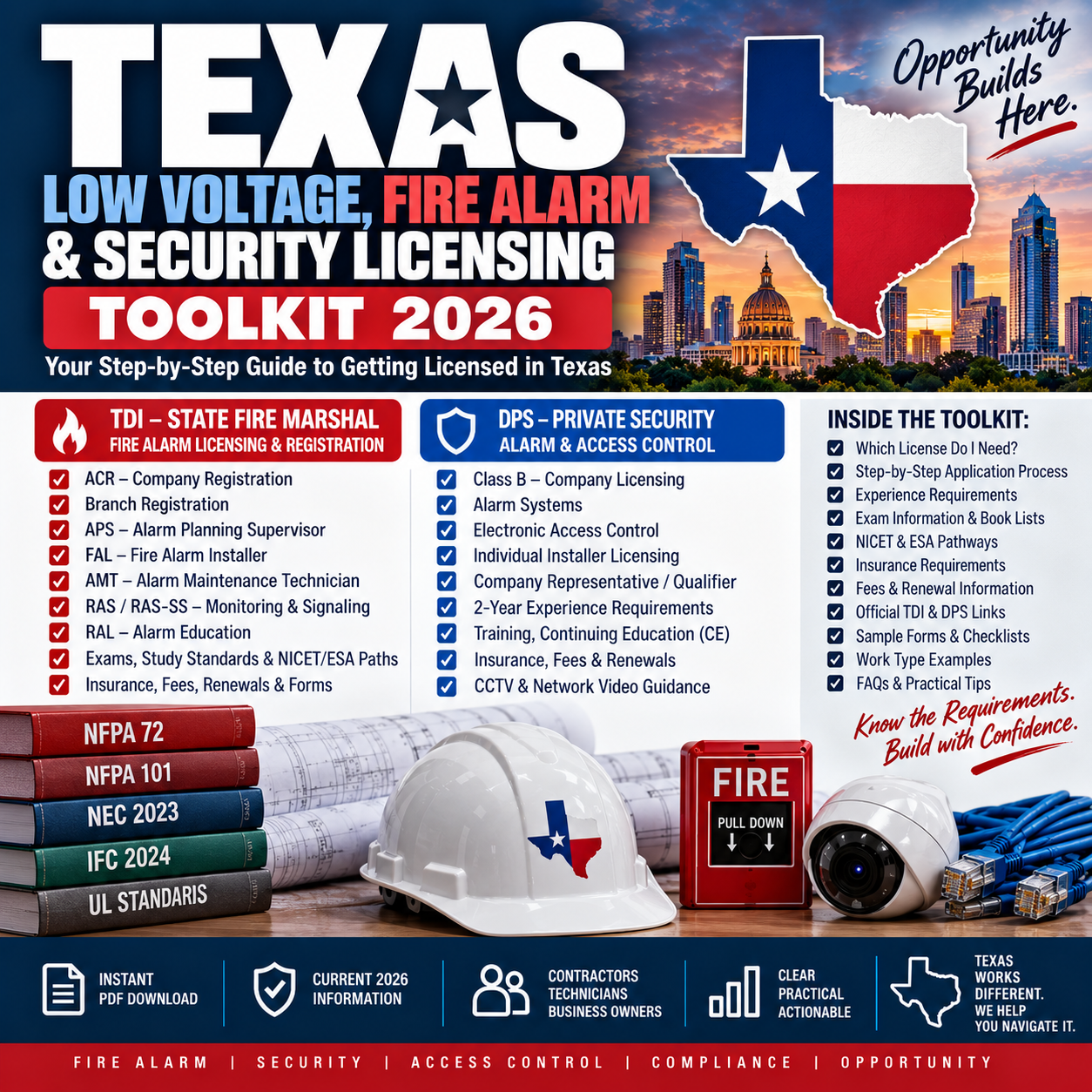
Texas Low Voltage, Fire Alarm & Security Licensing Toolkit — 2026
Texas doesn't have one universal low-voltage license. This toolkit helps you figure out exactly which Texas licensing system applies to the work you want to perform.
The Texas Low Voltage, Fire Alarm & Security Licensing Toolkit — 2026 is a practical reference for contractors, technicians, business owners and qualifying representatives working with fire alarm, burglar/security alarm, electronic access control and other low-voltage systems in Texas.
Texas splits this work between multiple regulators. This guide organizes the requirements into one practical roadmap covering both the Texas Department of Insurance / State Fire Marshal's Office (TDI/SFMO) and the Texas DPS Private Security Program.
FIRE ALARM — TDI / STATE FIRE MARSHAL
• ACR company registration
• Branch registration
• APS — Fire Alarm Planning Superintendent
• FAL — Fire Alarm Technician
• AMT — Fire Alarm Monitoring Technician
• RAS and RAS-SS licensing
• RAL residential licensing
• What each license allows you to do
• Fire-alarm company insurance requirements
• TFM11, TFM12, TFM13 and TFM14 examinations
• Exam passing requirements and testing limits
• Fire-alarm study standards and reference materials
• NICET Level II and Level III pathways
• ESA Level II and Level III / CFAD pathways
• Step-by-step APS and FAL application checklists
• Company + individual licensing roadmap
SECURITY & ACCESS CONTROL — TEXAS DPS
• Class B Security Contractor Company licensing
• Alarm company requirements
• Electronic Access Control company requirements
• Alarm Installer licensing
• Electronic Access Control Device Installer licensing
• Alarm System Monitor licensing
• Company Representative / qualifier requirements
• 2 consecutive years of full-time experience requirement explained
• Company Representative examination
• Alarm Level I training requirements
• Continuing education requirements
• DPS insurance requirements
• Company and individual fees
• Branch-office requirements
• TOPS application roadmap
ALSO INCLUDED
• “Which license do I need?” work-type examples
• Fire alarm vs. security licensing comparison
• Texas low-voltage electrician-license exemption explained
• CCTV and network-video considerations
• Electronic access-control requirements
• Builder/pre-wire considerations
• Company vs. individual licensing explained
• Current fee and renewal information
• Insurance checklists
• Exam books, codes and study-material checklist
• Official Texas TDI, DPS and TDLR links
• Master company-application checklists
• Individual technician checklist
• Final licensing-readiness checklist
Know which regulator applies. Know which company license you need. Know which individual license you need. Know the experience, testing, insurance and application requirements before you start.
Format: Instant digital PDF download
Edition: 2026
Verified: September 2026
Important: This toolkit is an independent educational reference and is not affiliated with or endorsed by the Texas Department of Insurance, State Fire Marshal's Office, Texas Department of Public Safety, Texas Department of Licensing and Regulation, NICET, ESA or any other government or certification organization. Licensing requirements, fees, examinations, adopted codes, forms and agency procedures can change. Always verify current requirements with the appropriate licensing authority before applying, contracting or performing regulated work.