
Bible Commentators' Interpretation Sermons (Copyright-Free Commentators) - docx files
Commentators' Sermons
This is a copyright-free sermon by commentators covering the entire New and Old Testaments of the Bible.
sample
Commentators' Interpretation Sermons (Copyright-Free Commentators)
Matthew 1: Jesus' Genealogy and Birth (Matthew 1:1-25)
Chapter 1 of the Gospel of Matthew contains the genealogy and birth story of Jesus. This chapter reveals who Jesus is and that he is the fulfillment of God's promises. The first part emphasizes Jesus's lineage as a descendant of David and Abraham, while the second part discusses Jesus' birth and Joseph's dream.
1. The Genealogy of Jesus (Matthew 1:1-17)
Matthew 1 begins with the genealogy of Jesus. This genealogy clearly establishes Jesus's lineage as a descendant of Abraham and David, heralding the coming of the Messiah prophesied in the Old Testament. This lineage, extending from Abraham through David to Jesus, demonstrates that Jesus was already connected to God's people in God's plan before he came to earth.
Commentators' interpretations
John Calvin emphasizes through Jesus' genealogy that Jesus, as a descendant of David, inherited the throne and as a descendant of Abraham, fulfilled God's plan of redemption. He explains how God's faithful promise was fulfilled through Jesus' genealogy.
Matthew Henry emphasizes through Jesus' genealogy that Jesus was a real person born in human history. He also interprets it as proving that Jesus is the Messiah who continues the history of redemption by clarifying his lineage as a descendant of Abraham and David.
Lessons and Applications:
Jesus holds a crucial place in the plan for humanity's redemption. Our salvation was not an accident, but was accomplished within God's plan. Through this genealogy, we must realize that God's faithful promise has been fulfilled, and we must trust and rely on the fact that our lives are also fulfilled according to God's plan.
2. The Story of Mary and Joseph (Matthew 1:18-25)
Matthew 1:18-25 tells the story of Jesus' birth. Mary and Joseph were engaged, but when he discovered that she was pregnant with Jesus by the Holy Spirit, he wanted to leave her. However, God revealed to Joseph in a dream that Mary was pregnant by the Holy Spirit, and Joseph decided to take Mary as his wife. This fulfilled Old Testament prophecy, and Jesus was given the name "Immanuel," meaning "God with us."
Commentators' interpretations
Charles Spurgeon emphasizes Joseph's obedience in this passage. He explains Joseph's decision to take Mary as his wife in obedience to God's will when he learned of her pregnancy as an act of faith. Spurgeon also emphasizes that Jesus' birth was the event that fulfilled God's will to be with us.
Adam Clarke explains that Joseph's decision was a pivotal moment in the coming of Jesus as the Messiah, and interprets Joseph's acceptance of Mary's marriage as a sign of his trust in God's will.
Lessons and Applications:
The birth of Jesus was the moment when God's plan of redemption was fully realized. Through this event, we realize that God's plan transcends human imagination and understanding, and we must live in obedience to His will. Even if there are times in our lives when we don't understand, we can find true peace when we trust in and follow God's plan.
conclusion
Matthew 1 is a pivotal chapter that reveals the birth of Jesus and his identity. Jesus, a descendant of Abraham and David, was born to fulfill God's promise. Mary and Joseph follow God's plan and realize that Jesus' birth fulfills Old Testament prophecies. This chapter clearly demonstrates that Jesus is the central figure of redemption and that God is with us.
Prayer
Dear Father God,
We thank you for revealing God's amazing plan of redemption through the genealogy and birth of Jesus. We believe that Jesus' coming to this earth as our Savior is the fulfillment of God's promise. Help us to follow Jesus' example and live in obedience to God's will, and give us the courage to share His love with the world. In Jesus' name, we pray. Amen.
Matthew 2: The Magi and King Herod (Matthew 2:1-23)
Matthew 2 covers the events that followed Jesus' birth. It tells the story of the Magi coming to worship Jesus, King Herod's threats, and the flight of Jesus' family. Through these events, Matthew confirms that Jesus is the Messiah prophesied in the Old Testament and shows how God's plan of redemption was fulfilled.
1. The Visit of the Magi (Matthew 2:1-12)
Magi from the East arrive in Jerusalem to find the king born in Bethlehem of Judea. They learned of Jesus' birth by a star and came to worship him, bringing gifts. King Herod, feeling threatened, asks the magi for Jesus' whereabouts and asks them to report back when they return. However, God warns the magi in a dream not to return to Herod, and they return by another route.
Commentators' interpretations
Adam Clarke explains that the visit of the Magi was not simply a journey following a star. He interprets the Magi's long journey to worship Jesus as having great significance in their recognition of the Messiah as Gentiles. Furthermore, the gifts they brought—gold, frankincense, and myrrh—represent Jesus' royal authority (gold), his priestly role (frankincense), and his death (myrrh).
Matthew Henry explains that the Magi's offering to Jesus was not simply a gift to a king, but a sign of their worship, acknowledging Jesus' divinity and humanity. Through this incident, he emphasizes that Jesus is the Savior for all nations.
Lessons and Applications:
The faith and worship of the Magi teach us that when we seek and worship God, we must approach with sincerity and pure faith. God sent Jesus as the Savior for all nations. We must always have a heart of faith and worship in Jesus.
2. King Herod's Threat (Matthew 2:13-18)
When the Magi failed to return, King Herod ordered the death of all male children born in Bethlehem two years old and younger. This event fulfilled prophecy and the Old Testament's prophecy of a time of sorrow. God warned Joseph in a dream, and he fled to Egypt with Mary and the baby. After Herod's death, an angel of God appeared to Joseph again, informing him that they could return to Israel.
Commentators' interpretations
John Calvin interprets Herod's cruelty as a reflection of human pride and obsession with power. He explains Herod's fear of Jesus's appearance, his attempts to kill him as a threat to his royal authority, as a result of human self-centered desires. Furthermore, Calvin emphasizes the connection between this incident and the sorrow prophesied in the Old Testament, explaining that God's will transcends human wickedness.
Charles Spurgeon emphasizes God's providence and protection through this incident. He explains that God guided Joseph through a dream to protect Jesus, and that Jesus safely began his redemptive ministry by following the path God had led.
Lessons and Applications:
Despite Herod's evil deeds, God's plan was still fulfilled. God protects us and accomplishes His will even when we face difficulties and threats in our lives. We must trust in God and live according to His plan.
3. Jesus's Flight (Matthew 2:19-23)
After King Herod's death, an angel of God appeared to Joseph and told him they could return to Israel. Joseph returned with his family, but was warned again in a dream by Archelaus, son of Achilla, who was king of Judea. They eventually settled in Nazareth. This event also fulfilled prophecy, for Jesus would be called the Nazarene.
Commentators' interpretations
Augustine emphasizes that Jesus' flight to Nazareth was a significant event that fulfilled Old Testament prophecy. He explains that Jesus' being called "the Nazarene" signifies his role as the Messiah, representing the people of Israel. Furthermore, Augustine interprets Jesus' flight and his suffering as connected to the history of Israel in the Old Testament.
David Platt explains how God protected and guided Jesus in this incident, emphasizing the lesson that God also guides our lives in detail. He explains that Jesus's flight was not a simple historical event, but a pivotal moment in the fulfillment of God's plan of redemption.
Lessons and Applications:
God protected Jesus and guided him meticulously to fulfill His will. Likewise, we must trust in God's guidance and follow it even in difficult times. God guides our lives, and His will will surely be accomplished.
conclusion
Matthew 2, through the key events that occurred after Jesus' birth, demonstrates that Jesus is the Messiah prophesied in the Old Testament. The visit of the Magi, the threat of King Herod, and Jesus' flight all represent the unfolding of God's plan of redemption. This chapter is a crucial part that clearly demonstrates that Jesus is the Savior sent by God.
Prayer
Dear Father God,
I thank you for allowing me to deeply meditate once again on the fulfillment of God's plan of redemption through the birth of Jesus and the events that followed. Following the example of the faith of the Magi and the obedience of Joseph, I pray that we too may live our lives according to God's will. May we understand the plan of redemption that Jesus brought to this earth and live lives obedient to His will. In Jesus' name, I pray. Amen.
Matthew 3: John the Baptist and the Baptism of Jesus (Matthew 3:1-17)
Matthew 3 unfolds around the ministry of John the Baptist and Jesus' baptism, before Jesus began his public ministry in earnest. This chapter presents the fulfillment of Old Testament prophecy and is a crucial event that prepares Jesus for his public ministry.
1. The Ministry of John the Baptist (Matthew 3:1-12)
John the Baptist proclaimed, "Repent, for the kingdom of heaven is at hand," in the Judean Desert, and baptized the people with a baptism of repentance. He baptized those who confessed their sins and repented with water, a baptism that symbolically signified the forgiveness of sins. John prophesied that one greater and more powerful than himself would come, and that when he did, he would baptize with the Holy Spirit and fire.
Commentators' interpretations
Adam Clarke emphasizes the role of John the Baptist in preparing for the coming of Jesus. He interprets John's call for repentance as not simply a confession of sin, but a call for a complete change of life and obedience to God's will.
John Calvin explains that John the Baptist's ministry was a time of preparation for the coming of Jesus, and that he foretold the grace of forgiveness of sins through the baptism of repentance. Calvin emphasizes that John led people to Jesus through his message of repentance and salvation.
Lessons and Applications:
John the Baptist's message calls for repentance and a changed life. When we sincerely repent to God and live a life of obedience to His will, the work of salvation is accomplished. Before Jesus' return, we must prepare for a life of repentance and prepare to welcome His coming.
2. The Baptism of Jesus (Matthew 3:13-17)
Jesus came from Galilee to the Judean Desert to be baptized by John the Baptist. Knowing Jesus was sinless, John denied his right to baptize him. However, Jesus responded, "It is fitting for us to do God's will in this way," and was baptized. After Jesus was baptized, the heavens opened, the Holy Spirit descended upon him like a dove, and a voice was heard from heaven, "This is my beloved Son, with whom I am well pleased." This event marked the beginning of Jesus' ministry.
Commentators' interpretations
Matthew Henry interprets Jesus' baptism not simply as the forgiveness of sins, but as the first step in Jesus' fulfillment of all righteousness for the redemption of humanity. By being baptized, Jesus identified with humanity and announced the beginning of his redemptive work.
Charles Spurgeon emphasizes that Jesus' baptism was an event that demonstrated his perfect redemption as humanity's redeemer. Spurgeon explains that Jesus, though sinless, was baptized to fulfill all righteousness according to the plan of redemption. He also interprets this event as the moment when Jesus was filled with the Holy Spirit and his relationship with God was firmly established.
Lessons and Applications:
Although Jesus was sinless, he was baptized to fulfill all righteousness. This teaches us that we must follow Jesus' life and live in obedience to God's will. Just as Jesus fulfilled God's will, we too must live in obedience to God's will. Furthermore, we must realize that through Jesus' baptism, we can experience the guidance of the Holy Spirit and God's joy, and our lives must be transformed in accordance with His will.
conclusion
Matthew 3 heralds the beginning of Jesus' public ministry through the ministry of John the Baptist, who prepared for his ministry, and Jesus' baptism. John urged people to repent, and Jesus was baptized to achieve righteousness without sin. This chapter teaches us that Jesus came to this earth to fulfill God's will, and that we too must live lives of obedience to God's will.
Prayer
Dear Father God,
Thank you for allowing us to meditate on the ministry of John the Baptist and the baptism of Jesus through Matthew 3 today. Just as Jesus was baptized to fulfill righteousness and lived according to God's will, may we also live lives of obedience to God's will. Help us to emulate Jesus' life, to live lives of repentance and transformation, and to follow the guidance of the Holy Spirit. In Jesus' name, I pray. Amen.
Matthew 4: Jesus' Temptations and the Beginning of His Ministry (Matthew 4:1-25)
Matthew 4 is a crucial chapter marking the beginning of Jesus' public ministry. It covers the events leading up to his temptation in the wilderness and the beginning of his ministry in Galilee. It also details the calling of the disciples and their coming to follow Jesus.
1. The Temptation of Jesus (Matthew 4:1-11)
Jesus was led by the Spirit into the wilderness, fasted for forty days, and then was tempted. Satan presented Jesus with three temptations. The first was to turn stones into bread and eat it. The second was to jump from the pinnacle of the temple in Jerusalem and demonstrate God's saving power. The third temptation was to offer Jesus all the power and glory of the world and to worship him. However, Jesus defeated all of Satan's temptations with the word of God.
Commentators' interpretations
Charles Spurgeon interprets Jesus' temptations as a crucial part of redemption. He emphasizes that Jesus was tempted as our representative and that by overcoming them, he could complete humanity's redemption. Spurgeon mentions that Jesus defeated Satan through the Word each time he was tempted, and explains that we too must hold on to God's Word in the face of adversity and temptation.
John Calvin interprets Jesus' temptation as an event that simultaneously reveals His humanity and divinity. He emphasizes that while Jesus is fully God, He is also fully human, overcoming temptation and experiencing human weakness. Calvin explains that Jesus' temptation allows us to trust in Him as our Savior.
Lessons and Applications:
Jesus overcame all our trials and temptations. We must follow Jesus' example and overcome temptations through God's Word. Furthermore, we must believe that we can overcome difficulties with the strength God gives us, and trust in His guidance.
2. The Beginning of Jesus' Public Ministry (Matthew 4:12-17)
After John was imprisoned, Jesus went to Galilee and began preaching the gospel: "Repent, for the kingdom of heaven has come near." This passage marks the beginning of Jesus' public ministry. Jesus' message fulfilled Old Testament prophecy and called people to repentance and salvation.
Commentators' interpretations
Matthew Henry interprets Jesus' message as a declaration that "the kingdom of heaven is at hand," signaling the nearness of God's redemption. He emphasizes that Jesus' gospel offers a path to repentance and redemption, explaining that the gospel of the kingdom Jesus brought is a vital message that transforms people's lives.
Adam Clarke emphasizes that Jesus' message was not just for the Jews, but offered the light of salvation to all peoples. He explains that Jesus, as the prophesied Messiah, initiated the redemption of humanity, and that this message must be spread throughout the world.
Lessons and Applications:
The gospel of Jesus opens the way for us to repentance and salvation. We must listen to Jesus' words and transform our lives in preparation for the near coming of heaven. We must share the joy of salvation God has given us with others.
3. The Calling of the Disciples (Matthew 4:18-22)
Jesus calls Simon and his brother Andrew, and James and his brother John, from the Sea of Galilee, and tells them he will make them "fishers of men." They immediately decide to follow him, leaving their families and work to follow him. This is a pivotal moment, as the disciples immediately respond to Jesus' call.
Commentators' interpretations
Charles Spurgeon emphasizes the simplicity and directness of Jesus's call to His disciples. He interprets that when Jesus called His disciples, He looked not at their qualifications or qualifications, but at their hearts and devotion. The disciples responded immediately to Jesus' call because they possessed faith and obedience to God.
David Platt explains that the disciples' immediate response illustrates how we should respond to Jesus' call. Platt emphasizes that the disciples gave up everything to follow Jesus, and suggests that we should reflect on how we should be committed to God's call.
Lessons and Applications:
When Jesus called his disciples, they responded immediately. We must respond immediately to God's call and make Him our top priority in our lives. We must lay down everything we have and plan to follow Jesus, and live according to the mission God has given us.
4. Jesus' Ministry and Healing (Matthew 4:23-25)
Jesus taught in Galilee, preached the good news of the kingdom, and healed every disease and infirmity. His fame spread as far as Syria, and many came to him and received his healing. Jesus' ministry was not limited to words alone; it demonstrated his powerful power to transform and heal people's lives.
Commentators' interpretations
Matthew Henry emphasizes that Jesus' ministry encompassed both preaching the gospel and healing. He explains that Jesus' redemptive work aimed at the holistic restoration of all people, as evidenced by his healing of physical and spiritual ailments while preaching.
Adam Clarke interprets Jesus' simultaneous teaching and healing as evidence of the realization of the Kingdom of God. He explains that Jesus announced the coming of the Kingdom of God through words and actions.
Lessons and Applications:
Jesus' ministry wasn't merely theoretical; it was a powerful ministry that actually transformed people's lives. We must follow Jesus' example, extending a loving and healing hand to others not only through words but also through our own lives.
conclusion
Matthew 4 recounts the events that led to Jesus' overcoming temptations and the beginning of his public ministry. Jesus overcame Satan's temptations, preached the gospel, and called others. This chapter highlights the pivotal moments that marked the beginning of Jesus' redemptive ministry, and through the calling of the disciples and Jesus' healing ministry, it announces the nearness of the kingdom of God.
Prayer
Dear Father God,
Thank you for allowing us to meditate on Jesus' temptation, the beginning of his ministry, the calling of his disciples, and his ministry of healing through Matthew 4 today. May we, following the example of Jesus' faith and obedience, obey God's will and help us to share God's love with others through our words and lives. In Jesus' name, we pray. Amen.
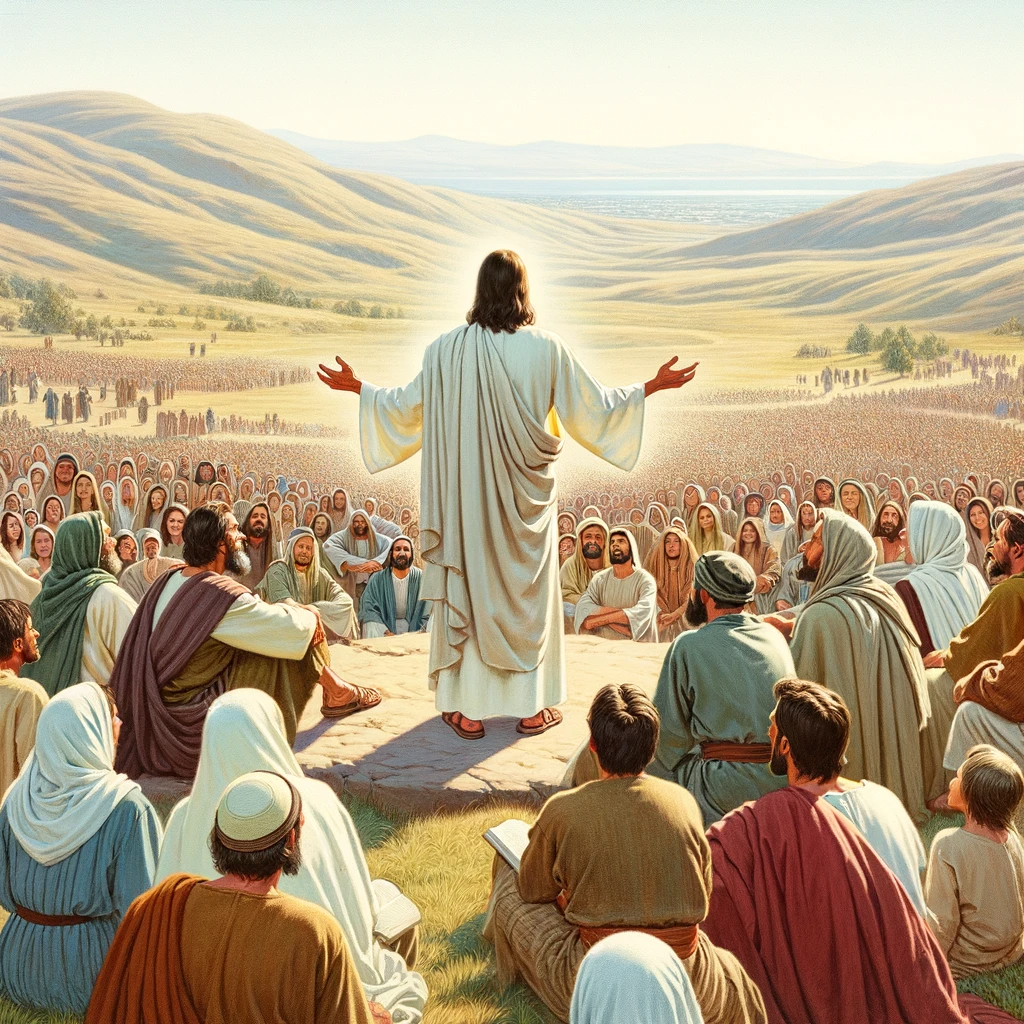
Matthew 5: The Sermon on the Mount (Matthew 5:1-48)
Matthew 5 is the first part of Jesus' Sermon on the Mount, containing the key teachings he imparted to his disciples. This chapter reveals how Jesus' teachings presented God's will in a surprising and novel way to the people of his time. Jesus teaches that he did not come to abolish the Law, but to fully fulfill it and reveal its deeper spiritual meaning.
1. The Beatitudes (Matthew 5:3-12)
Jesus taught his disciples on the mountain and proclaimed the Beatitudes, beginning with the phrase "Blessed are you." The Beatitudes proclaim that God's blessings rest on those who are humble, hungry for righteousness, and peacemakers. These words offered great comfort and hope to those who were not respected in Jewish society at the time—the poor, the sorrowful, and those who pursued righteousness.
Commentators' interpretations
Charles Spurgeon interprets the Beatitudes as Jesus' proclamation of blessings for those deemed unworthy by the world. Through Jesus' words, Spurgeon emphasizes that the kingdom of God possesses values different from those of the world, explaining that God exalts the humble and righteous.
Matthew Henry interprets the Beatitudes as Jesus' message that God's blessings lie not in material success on earth, but in spiritual satisfaction and salvation. He emphasizes the characteristics of those whom God exalts and blesses—humility, righteousness, mercy, and so on.
Lessons and Applications:
The Beatitudes teach us that to live a blessed life in God's kingdom, we must adopt a lifestyle that pleases God, not one based on worldly values and standards. We must pursue a humble and righteous life, and become people who share mercy and peace with others.
2. The Fulfillment of the Law (Matthew 5:17-20)
Jesus says he did not come to abolish or eliminate the law, but to fulfill it. He deeply understood the law and fulfilled it perfectly. He teaches that living righteously and loving God completely are the essence of the law.
Commentators' interpretations
John Calvin explains that Jesus fulfilled the law by saying that He completely fulfilled all its requirements. Calvin emphasizes that Jesus perfectly kept the law for us and, through Him, achieved the law's original purpose.
Adam Clarke interprets Jesus not as simply dismissing the law, but as revealing its deeper meaning. He explains that in fulfilling the law, Jesus revealed its hidden spiritual meaning.
Lessons and Applications:
We must not view the law simply as rules, but rather understand God's will contained within it and live a life that fully fulfills it. We must remember that, as Jesus demonstrated, loving God and loving our neighbors is the essence of the law.
3. Murder, Adultery, Divorce, and Swearing (Matthew 5:21-37)
When Jesus explains the Old Testament law, he teaches that its meaning extends not only to actions but also to the heart and mind. He mentions murder, adultery, divorce, and oaths, emphasizing that even if we appear to be free of external problems, harboring anger or lust can be a sin before God.
Commentators' interpretations
Matthew Henry emphasizes that Jesus placed great importance on the inner state, explaining that purity of heart, not just outward actions, is what pleases God. He interprets Jesus as summarizing the essence of all the laws as an inner life rooted in love and righteousness.
Charles Spurgeon explains that Jesus raised the law to a higher level. Spurgeon emphasizes that Jesus leads us beyond simply keeping the law to following God's will from the heart and mind.
Lessons and Applications:
We must fulfill God's will not simply through outward actions, but from our hearts and minds. Jesus' teachings teach us to master our inner sins and desires and live a life that maintains a right relationship with God.
4. Love Your Enemies and Love Your Neighbors (Matthew 5:38-48)
Jesus goes beyond the vindictive attitude of "an eye for an eye, a tooth for a tooth," and gives us a new command: to love our enemies and give more to our neighbors. Jesus teaches us not to repay evil with evil, but to overcome evil with good. He also tells us that just as God has loved us, we too must love all.
Commentators' interpretations
Adam Clarke emphasizes that Jesus' command to love one's enemies presented a new moral standard for us to emulate in the world. He explains that Jesus' teachings demand a deep love that transcends instinctive human reactions.
Charles Spurgeon interprets Jesus' teachings of love as a way for us to love our neighbors and even our enemies with the same love for God. He emphasizes that this love is not simply an emotional one, but a practical one.
Lessons and Applications:
Jesus' teachings are not merely theoretical; they must be put into practice in our lives. We must love our enemies, constantly show love to our neighbors, and live lives that demonstrate the love God has shown us.
conclusion
Matthew 5 contains the essential teachings of Jesus' Sermon on the Mount. Jesus explained the essence of the law and called for inner transformation and a life centered on love. Through Jesus' teachings, we must establish a right relationship with God and live a life of love for our neighbors and the world.
Prayer
Dear Father God,
Today, through Matthew 5, I thank you for allowing me to meditate on the Beatitudes, the fulfillment of the Law, and the lesson of love taught by Jesus. May we follow Jesus' teachings and live lives of inner purity and love. Help us love our enemies, show mercy to our neighbors, and live lives that fulfill God's will. In Jesus' name, I pray. Amen.