
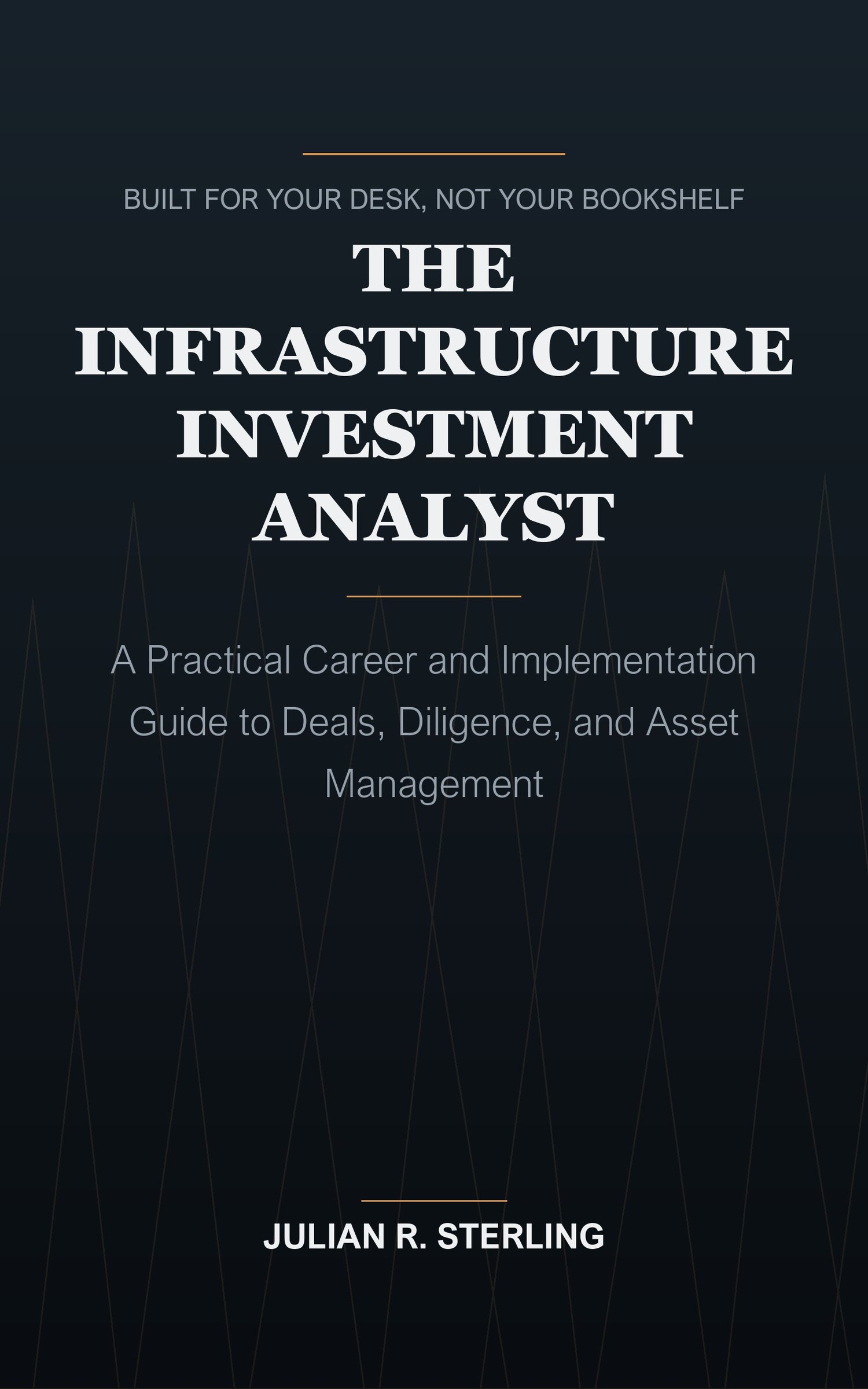
The Infrastructure Investment Analyst (PDF edition)
Discount equity cash flow at the WACC and you overstate the asset by 33.5 percent. Discount unlevered cash flow at the cost of equity and you understate it by 72.4 percent. This book shows why, on one asset, to the last decimal.
Infrastructure analysts are expected to move between models, contracts, regulators and lenders. Most books describe the asset class. This one shows how a deal is sourced, modeled, financed, diligenced and managed after close, with the arithmetic on the page.
Who this book is for
- Analysts and associates joining infrastructure funds
- Direct investment teams at pensions, insurers and sovereign wealth funds
- Advisers and lenders working alongside infrastructure sponsors
- Career switchers from project finance, engineering or corporate development
Worked, not described
- Calder Toll Road debt sculpting: how much debt each year's cash flow can carry, and why the resurfacing reserve matters. Set the reserve contribution to zero and the debt quantum falls from 171.3 to 131.1.
- Calder Water, a regulated utility with twenty-five years of concession, valued twice: adjusted present value and an equity DCF with the cost of equity relevered every year agree at 242.18.
- Seven valuation claims tested against that one asset. Three of them need correcting, and the book says which and why.
Tools included
A tracker for fifteen diligence workstreams, a risk register, an investment committee memo frame, a concession and handback read-through, an adviser report review and a quarterly asset review. Nine Excel workbooks included accompany the book: the sculpting model, the Calder Water valuation, blank models for your own asset, forty self-marking questions and three further cases (four ways to fund the resurfacing; traffic 8 percent below the consultant; selling with fifteen years left). Nothing is locked; download details are inside the book.
Contents in brief
The asset class and the analyst's role; sectors and the risk-return spectrum; sourcing and screening; financial modeling; valuation, returns and the cost of capital; commercial and technical diligence; structuring, contracts and financing; regulatory, political, construction and demand risk; ESG and the energy transition; asset management after close; monitoring, valuations and reporting; exits; your first 90 days and career roadmap.
Part of The Private Markets Career Guides. Read next: The Data Center Development Handbook, The Private Credit Investor, The Private Markets Limited Partner.
Educational content. All examples are fictional; not investment advice.
This edition: PDF, 6 x 9 in, 173 pages, DRM-free. The free companion Excel workbooks for this book are at julianrsterling.com/infrastructure.