
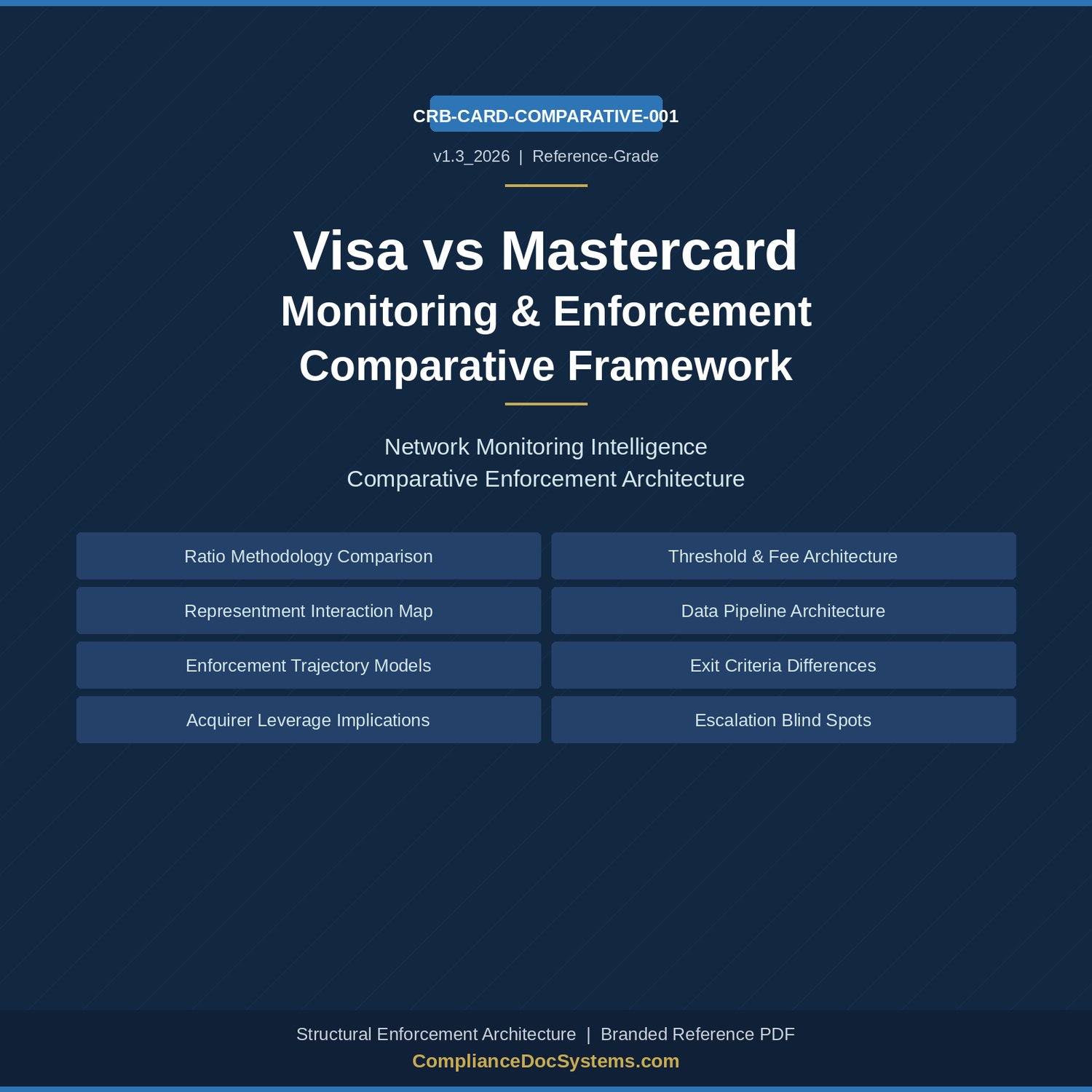



Visa vs Mastercard Monitoring Enforcement Architecture (2026 Comparative Framework)
Institutional comparative analysis of Visa VAMP and Mastercard ECP monitoring structures — dispute ratios, fraud rails, escalation trajectories, fee layering, and exit validation mechanics.
Designed for merchants, portfolio managers, risk teams, and advisors operating inside card-brand monitoring programs.
CRB-CARD-COMPARATIVE-001
Visa vs Mastercard Monitoring & Enforcement Architecture
2026 Reference-Grade Intelligence Framework
Most remediation failures in high-risk processing are not caused by bad data.
They are caused by structural misinterpretation.
Visa and Mastercard monitoring programs are not symmetrical.
They do not escalate the same way.
They do not integrate fraud and disputes the same way.
They do not exit the same way.
Treating them as interchangeable is expensive.
What This Framework Delivers
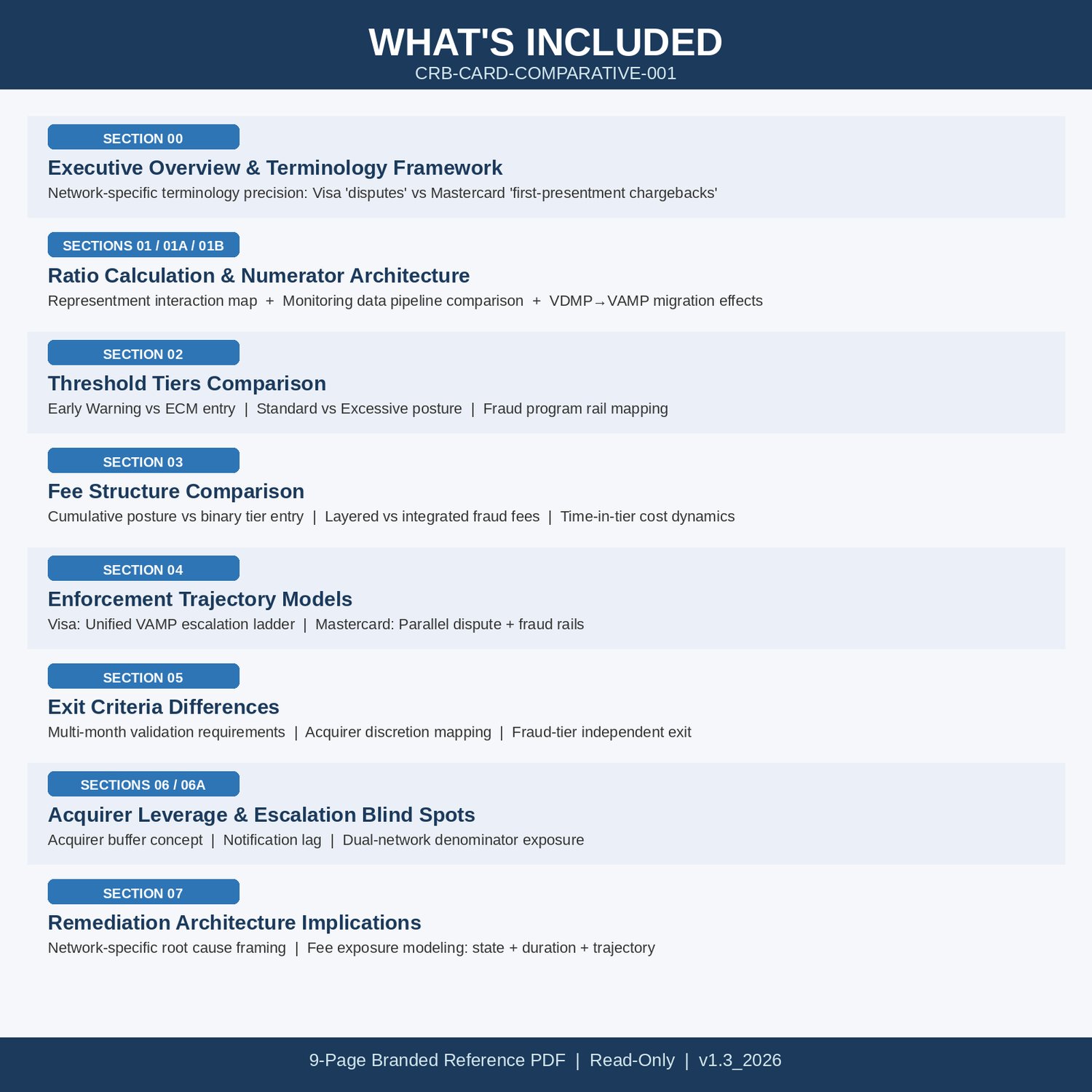
This document provides a structural comparison of:
• Visa VAMP / VFMP enforcement posture
• Mastercard ECP (ECM / HECM) dispute tiers
• Mastercard fraud-monitoring tiers (parallel rails)
• Escalation cadence differences
• Fee progression layering
• Exit validation lag mechanics
• Acquirer buffer dynamics
It maps enforcement architecture — not just thresholds.
Core Structural Concepts Covered
Posture vs Tier Identity
Visa enforces unified posture.
Mastercard enforces parallel tier rails.
Ratio Architecture
Numerator definitions, denominator sensitivity, monitoring month timing, and fraud integration differences.
Enforcement Trajectory Models
How escalation paths diverge under similar surface ratios.
Acquirer Buffer Effect
Why your effective risk boundary is usually inside the published network threshold.
Exit Validation Lag
Why one clean month does not equal immediate program exit — and how lag compounds cost.
Why This Matters
Mis-scoped remediation extends time-in-tier.
Time-in-tier compounds fees.
One month in elevated monitoring can exceed the price of this framework.
This document exists to prevent structural misalignment before it becomes expensive.
Who This Is For
• Merchants currently in Visa or Mastercard monitoring
• High-risk vertical operators (travel, subscription, nutraceutical, adult, digital goods, etc.)
• Portfolio risk managers
• Payment facilitators / aggregators
• Consultants and advisory teams
• Acquirer-facing remediation teams
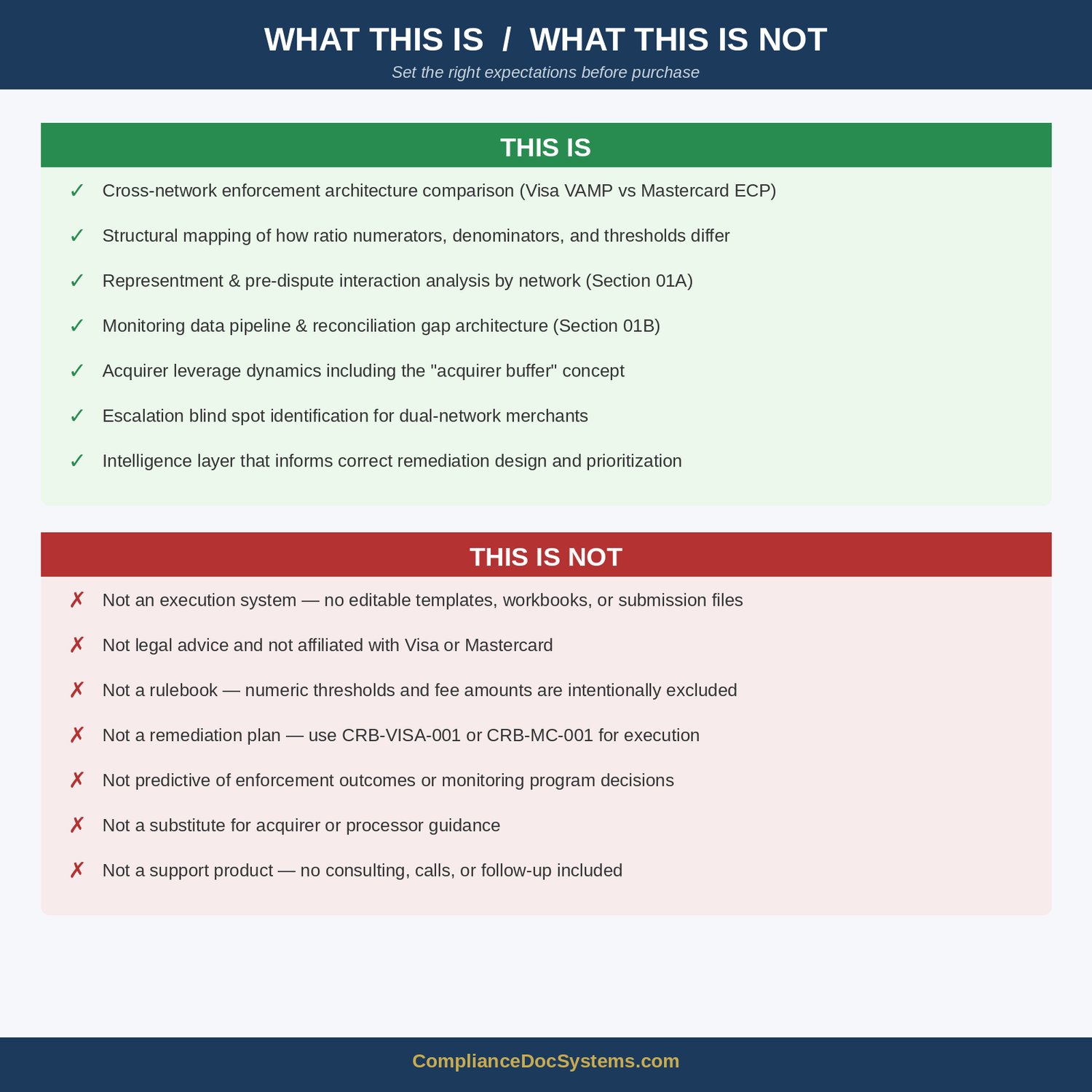
Who This Is NOT For
• Entry-level merchants seeking basic chargeback definitions
• Businesses outside card-brand monitoring exposure
• Buyers looking for a template kit
• Buyers seeking legal advice
This is institutional architecture mapping — not a beginner guide.
What You Receive
• Reference-grade PDF (2026 edition)
• Structural enforcement comparison tables
• Escalation mapping models
• Fee progression framework
• Exit validation architecture
• Acquirer leverage modeling
• Blind spot analysis
Format: Digital PDF
Delivery: Immediate download
Strategic Stack Positioning
If you require tactical execution:
→ MC-001 (Mastercard Remediation Framework)
→ VISA-001 (Visa Remediation Framework)
→ Intelligence Bundle (Comparative + Execution)
This product is the architecture layer.
Execution frameworks build on it.
Price
USD $597
One-time purchase. Immediate download.
This analysis is based on publicly available program architecture and observed enforcement patterns as of 2026. It is provided for structural comparative purposes only and does not constitute legal, regulatory, or financial advice. Network rulebooks and acquirer guidance remain authoritative.