
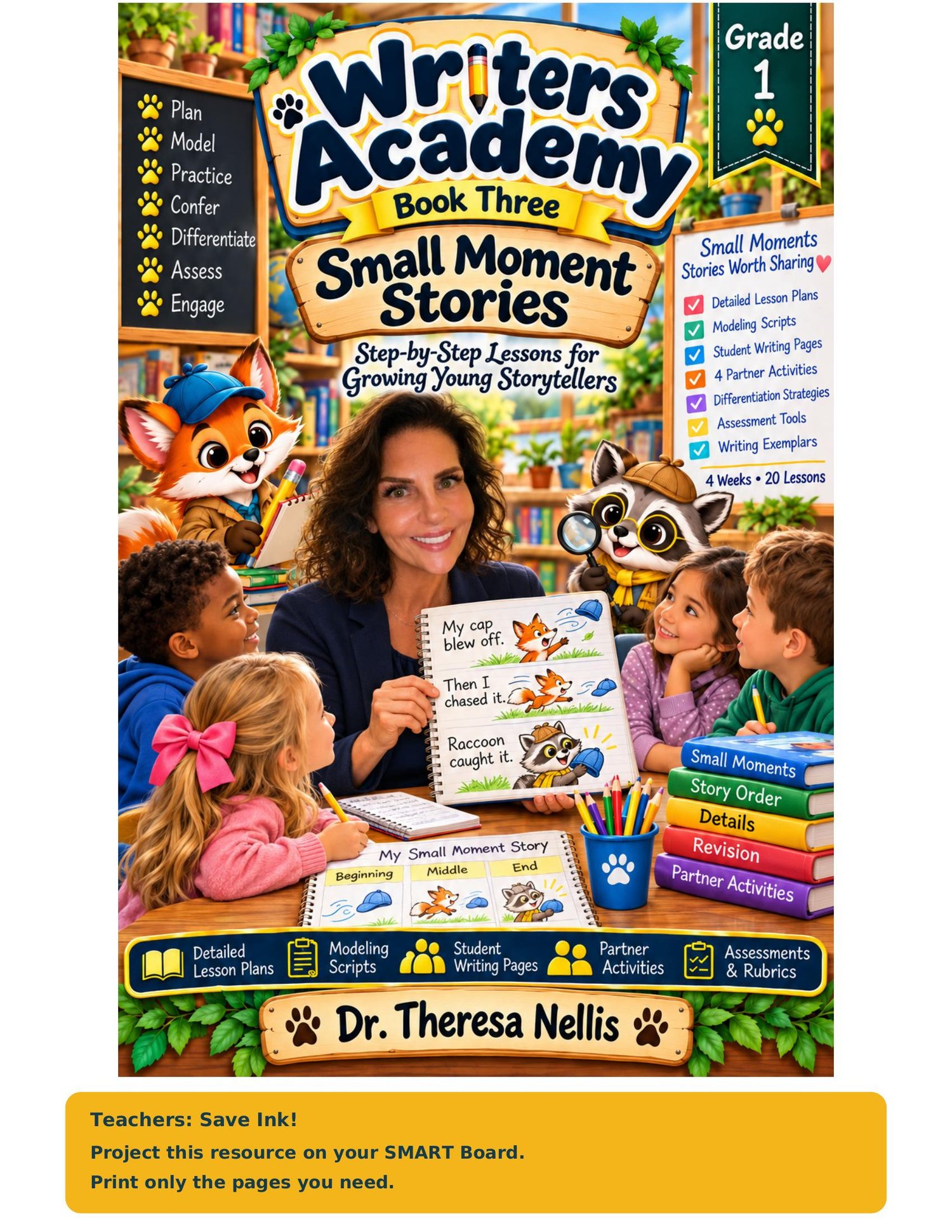


First Grade Narrative Writing Unit 3 | Small Moment Stories | 4 Weeks of Writing Lessons
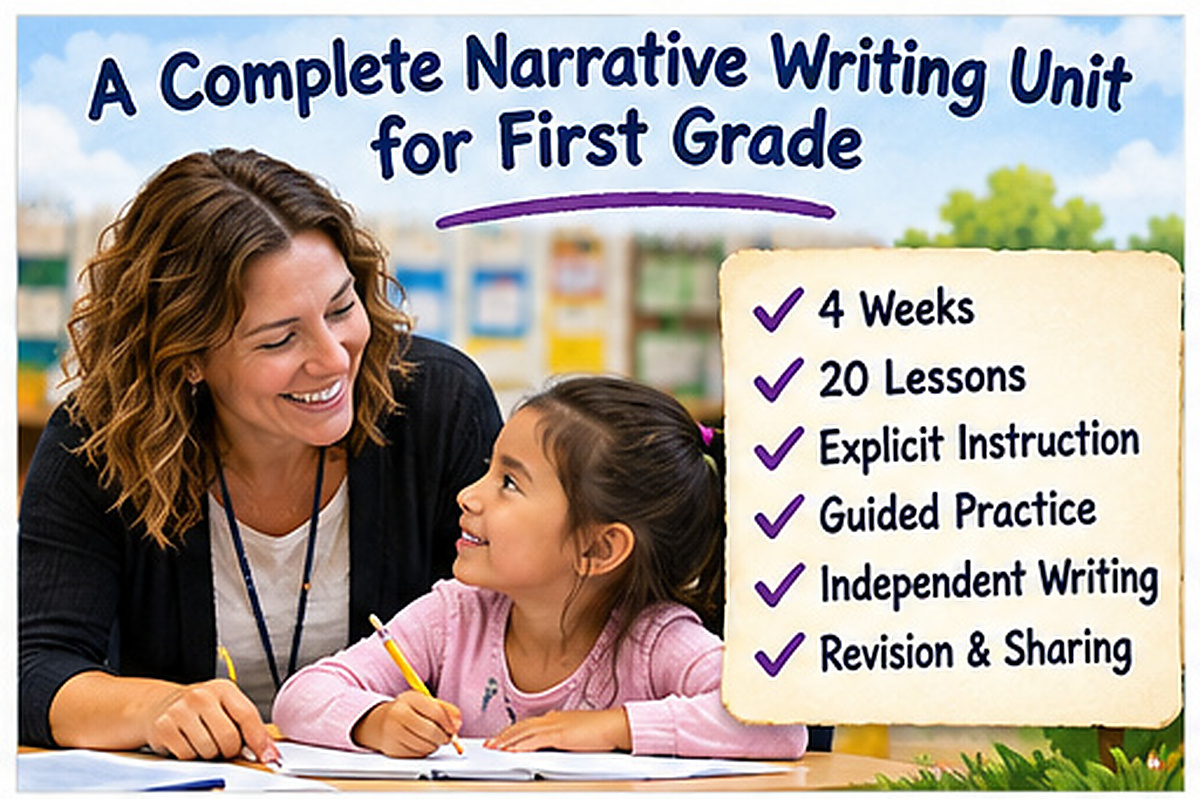
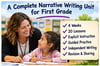
Help first graders move from “I don’t know what to write” to focused, connected small-moment stories with a complete four-week narrative writing unit designed for real classrooms.
Writing Detectives: Small Moment Stories gives teachers 20 structured lessons that explicitly teach young writers how to choose one manageable event, tell what happened in order, add meaningful details, revise with purpose, and prepare a finished story to share.
This is not a stack of loosely related worksheets. Each lesson builds intentionally on the one before it, giving students repeated practice while gradually increasing independence.
What Students Learn
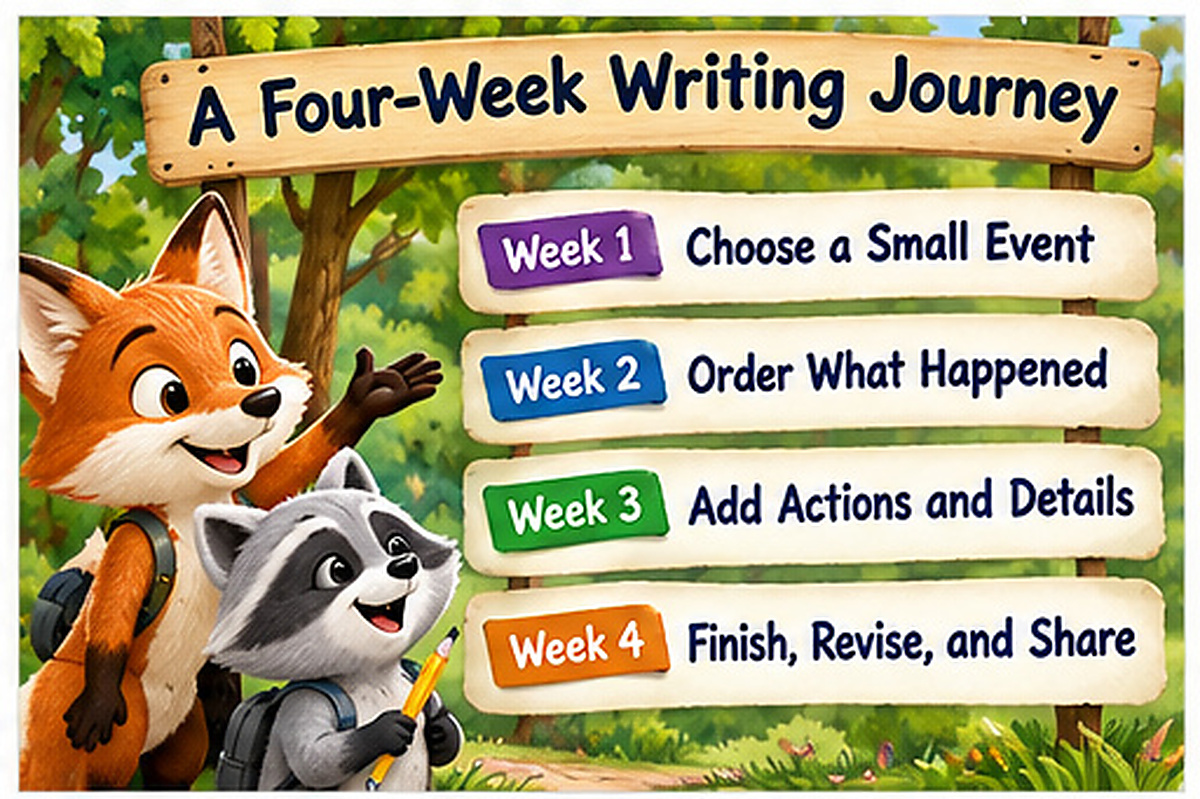
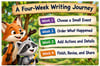
Week 1: Choose a Small Event
- Understand that a story can focus on one small moment
- Find story ideas in ordinary experiences
- Rehearse connected events orally
- Sketch a useful writing plan
- Turn a plan into connected story writing
Week 2: Order What Happened
- Put story events in a logical sequence
- Keep an important middle
- Use time words when they help the reader
- Begin close to the action
- Write an ending that belongs to the story
Week 3: Add Actions and Details
- Choose actions readers can picture
- Add relevant details
- Show feelings through actions
- Maintain a clear storytelling voice
- Use reader questions to strengthen writing
Week 4: Finish, Revise, and Share
- Check that endings provide closure
- Remove details that wander away from the moment
- Revise meaning before editing conventions
- Prepare a polished story for an audience
- Compare beginning and ending samples to notice writing growth
Designed to Make Teaching Easier
Each lesson follows a predictable instructional structure so teachers can open the resource and teach without spending Sunday night reinventing writing workshop.
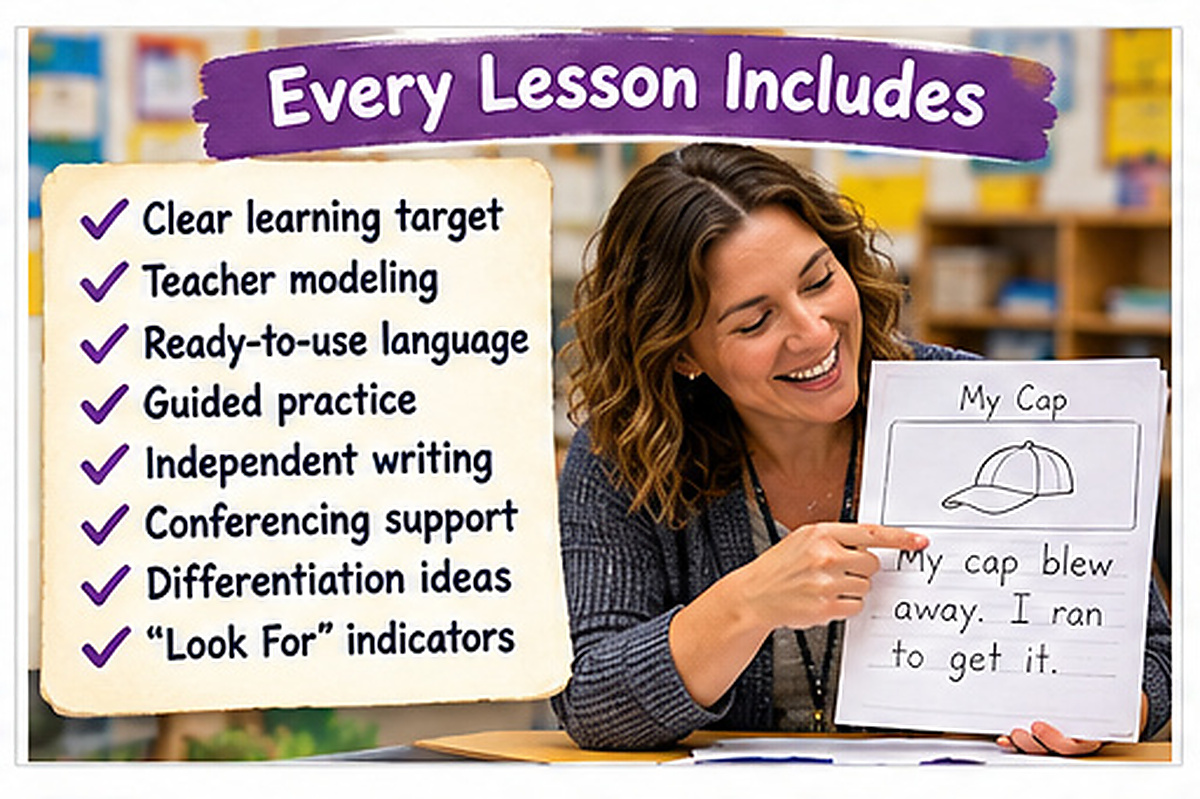
Lessons include:
- Clear learning targets
- Approximately 30-minute teaching sequences
- Explicit teacher modeling
- Ready-to-use teacher language
- Guided practice
- Independent writing opportunities
- Conferencing guidance
- Support and extension ideas
- “Look For” indicators to guide observation
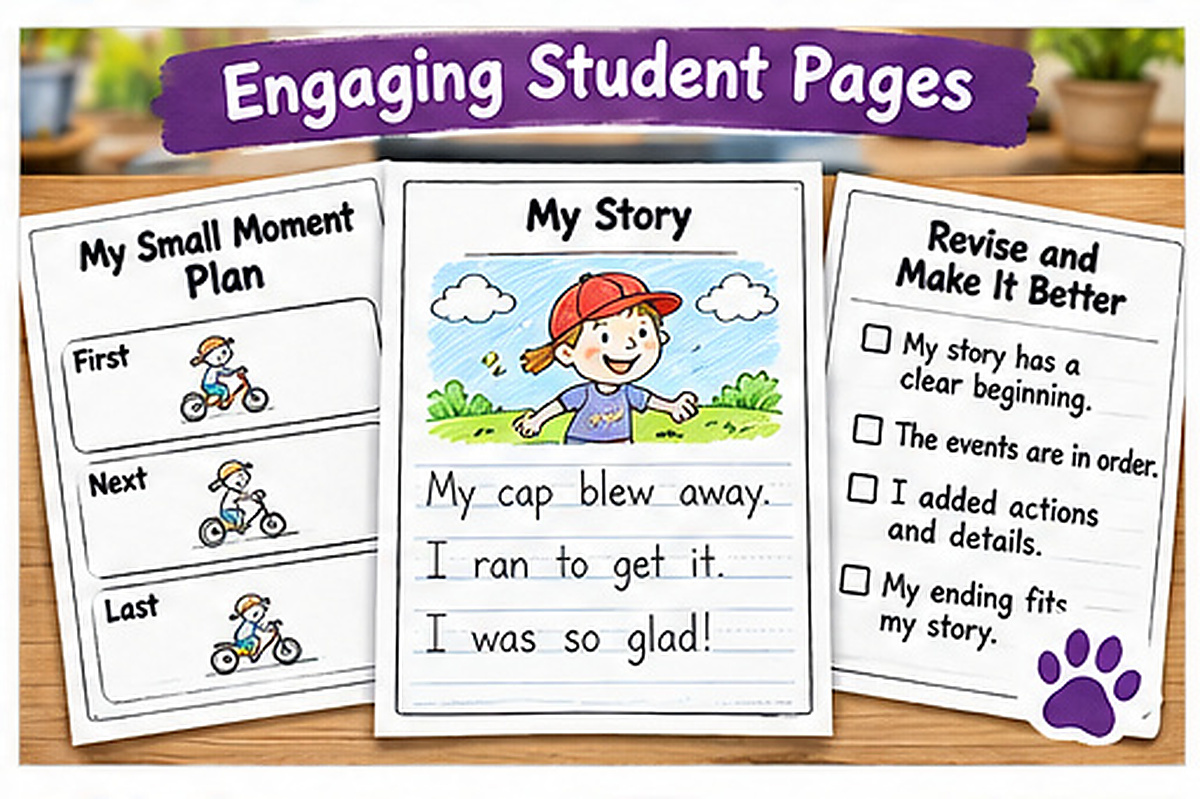
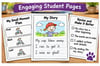
- Student writing and planning pages
- Mentor-story examples
- Fox and Raccoon visual models
- Partner activities
- Revision and publishing tools
- Student reflection pages
- Teacher assessment and conference records
- Fillable class tracking forms for up to 28 students
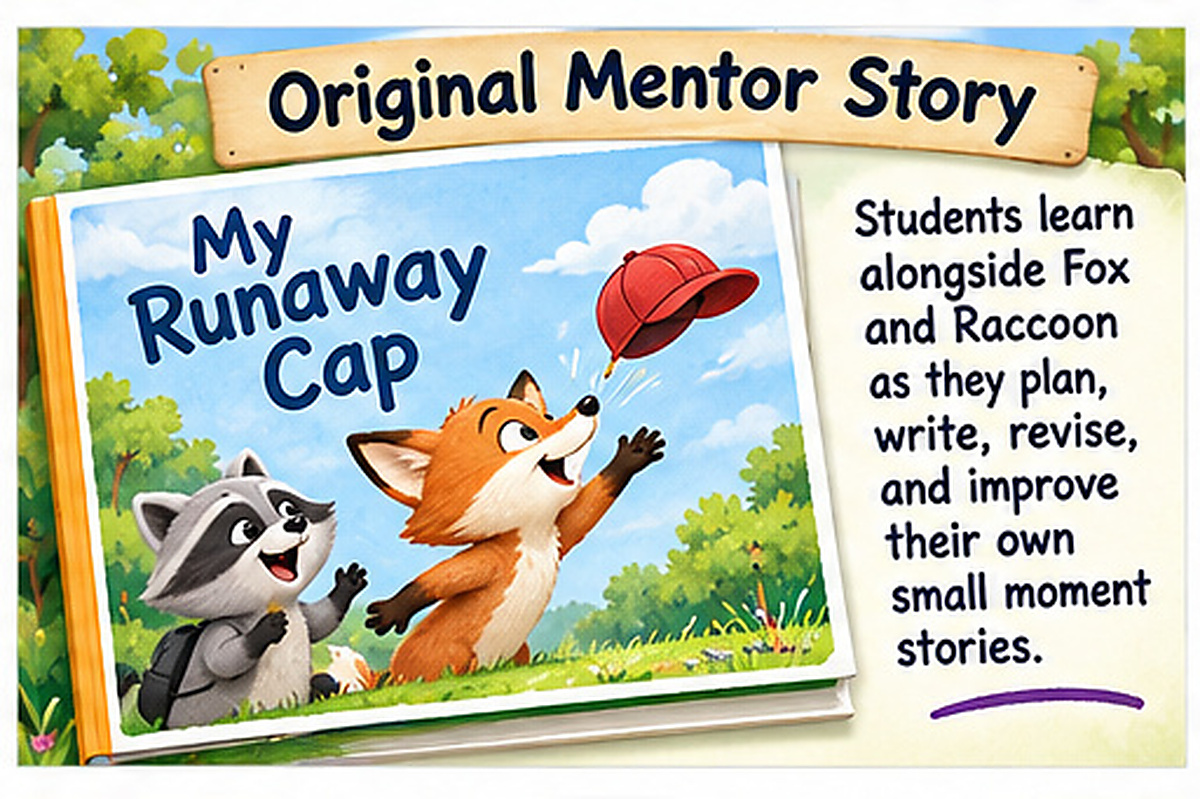
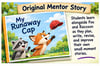
Original Mentor Story
Students learn alongside Fox and Raccoon through the original mentor story My Runaway Cap.
The recurring characters allow students to examine one familiar story across multiple lessons instead of wasting cognitive energy decoding a completely new example every day.
Students see how one small event can be:
- narrowed
- sequenced
- expanded with actions and details
- revised
- given a meaningful beginning and ending
- prepared for an audience
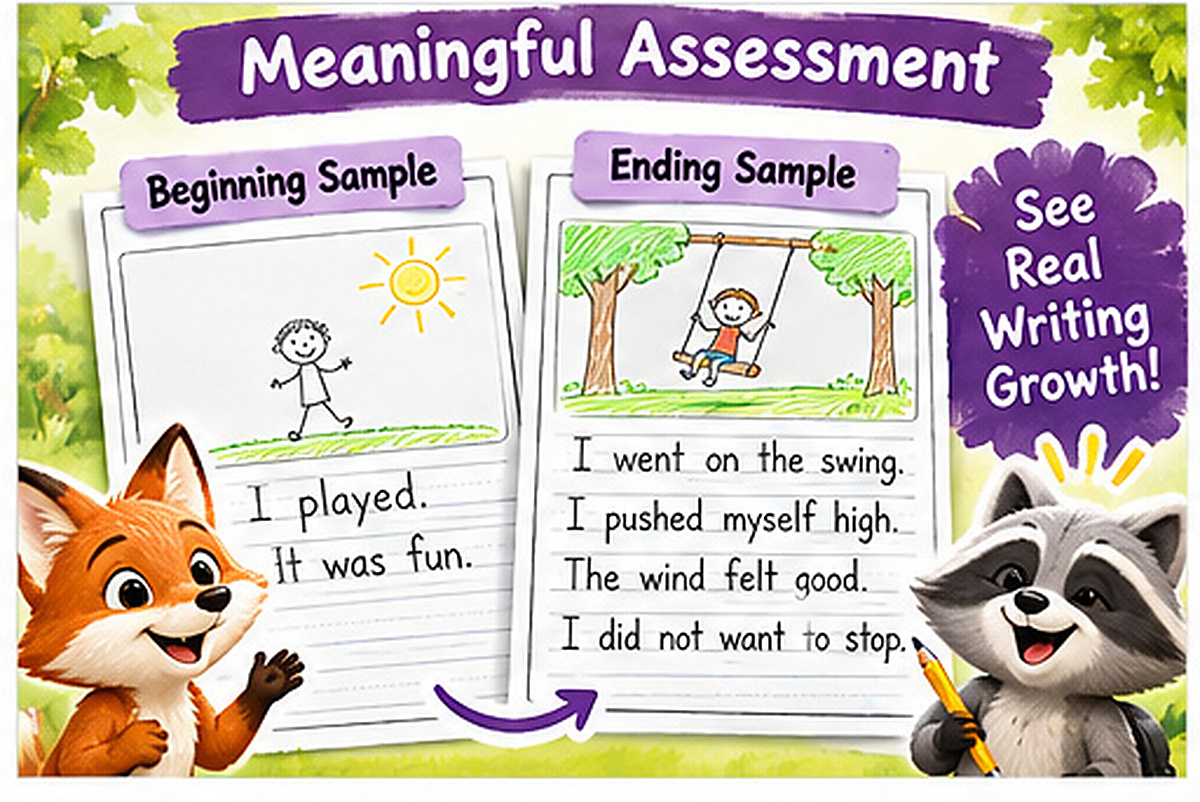
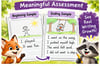
Meaningful Assessment Without Turning Writing Into a Test
The unit includes comparable beginning and ending writing opportunities so teachers can document genuine narrative-writing growth.
Students complete the same picture-supported writing task under comparable conditions at the beginning and end of the unit.
Teachers can look for growth in:
- focus
- sequence
- use of time language
- relevant detail
- closure
- independence
The goal is evidence of development, not simply a longer or neater piece of writing.
Built for Real First Grade Writers
Young children do not all write at the same pace or in the same way. This unit supports oral rehearsal, drawing, developmentally appropriate spelling attempts, teacher conferencing, enlarged writing spaces, and differentiated support while protecting student ownership of the story. Students are encouraged to compose rather than copy.
Teacher-Friendly and Printer-Conscious
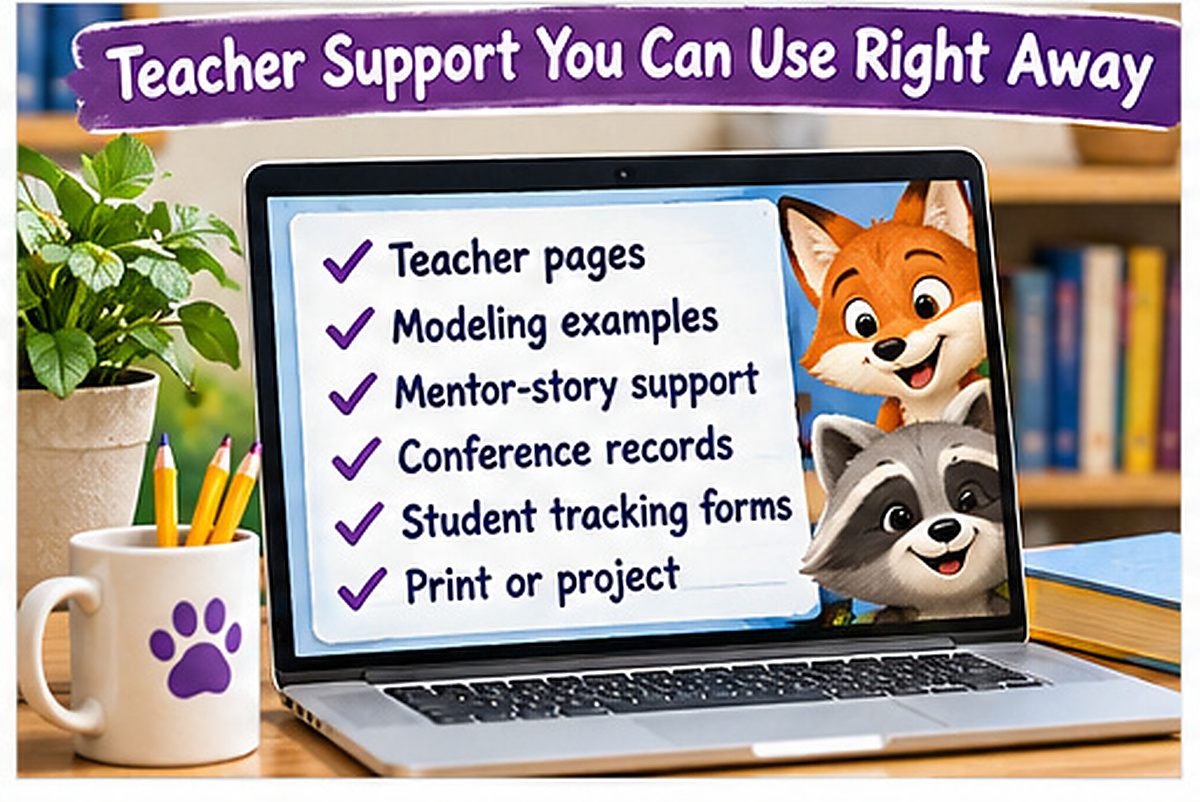
Teacher pages include visual examples and classroom modeling support, while student pages preserve the writing and drawing space children actually need.
Teachers can also project instructional pages to a SmartBoard or classroom display and print only the student materials needed for each lesson.
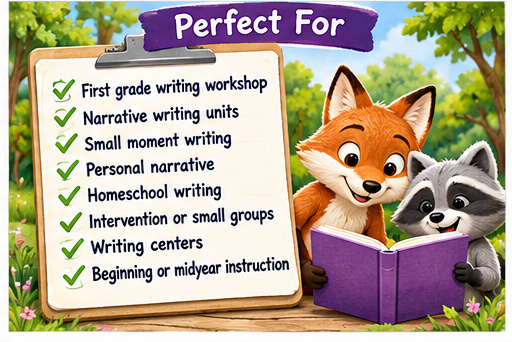
Perfect For
- First grade writing workshop
- Narrative writing units
- Small moment writing
- Personal narrative introduction
- Homeschool writing instruction
- Intervention or small-group writing
- Beginning-of-year or midyear writing instruction
- Writing centers
- Teacher-led mini lessons
- Narrative writing assessment
Students leave the unit understanding one of the most important lessons beginning writers can learn: A good story does not have to cover an entire day. Sometimes the smallest moment gives a writer the most to say.