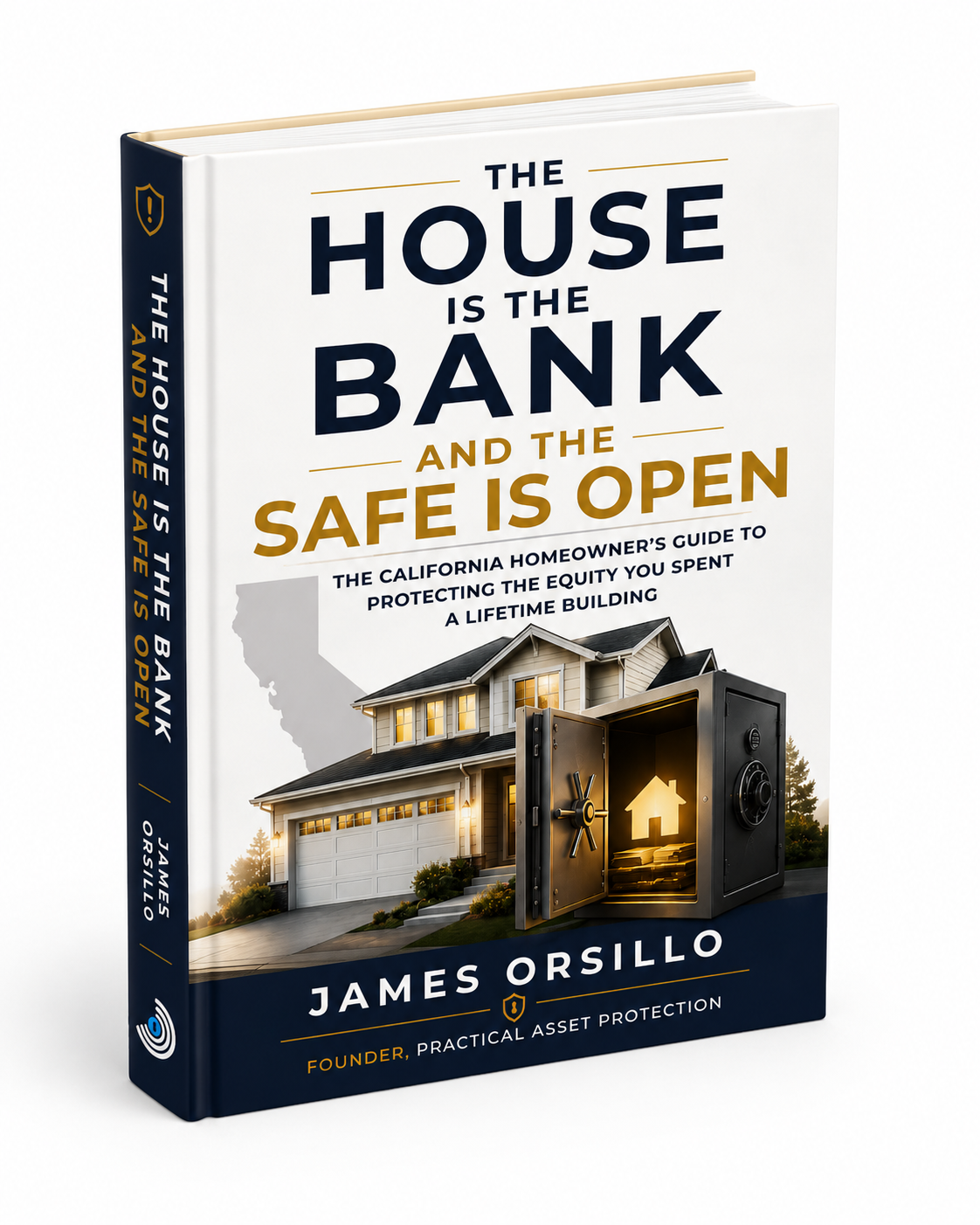


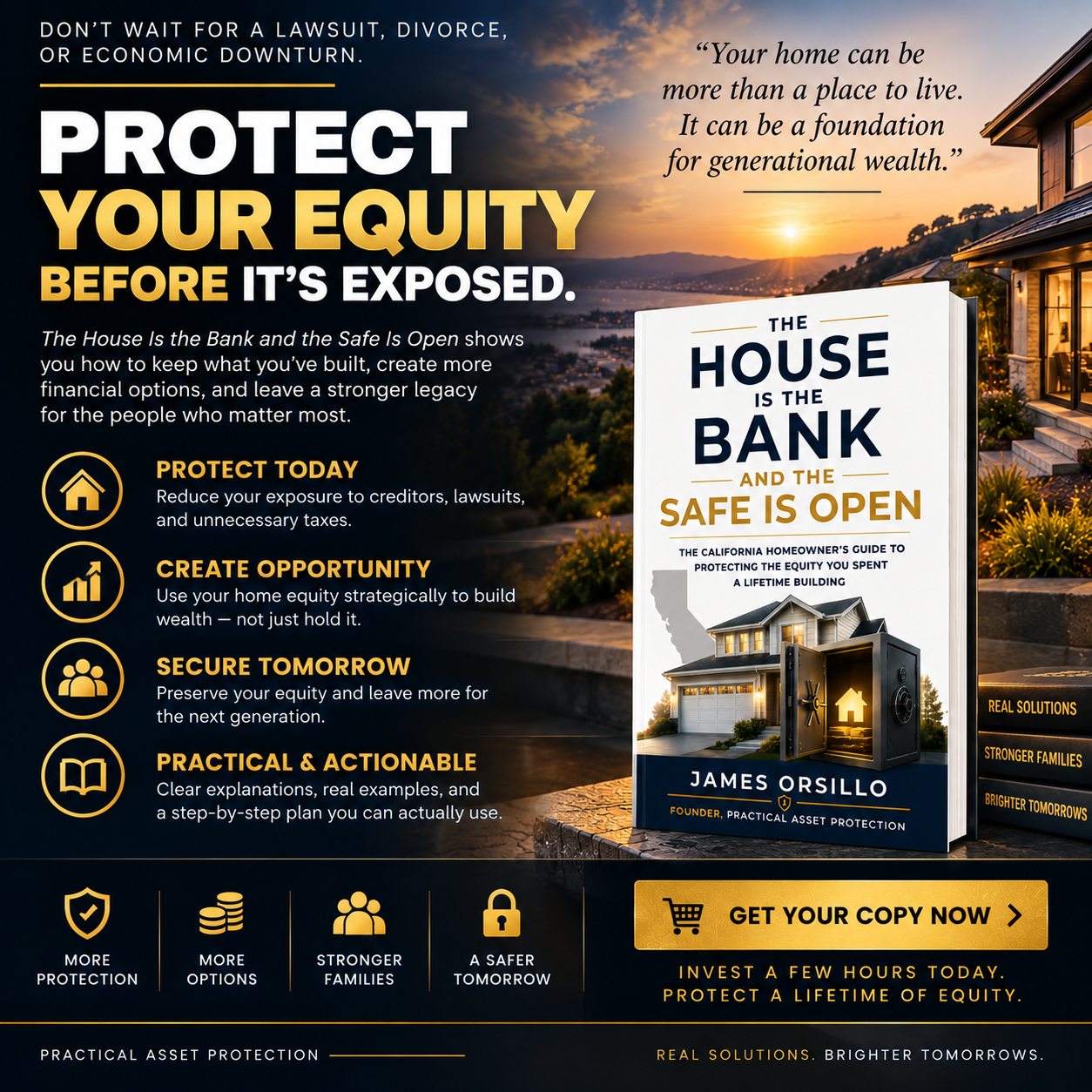

The House Is the Bank and the Safe Is Open
That's the uncomfortable idea behind The House Is the Bank and the Safe Is Open.
Most Americans are taught the same financial lesson:
- Buy the house.
- Make the payments.
- Pay down the mortgage.
- Build equity.
- Own it free and clear.
- Celebrate.
James Orsillo wants you to look at that house from another direction.
What does somebody trying to collect from you see?
- They don't see the years you worked.
- They don't see the mortgage payments you made when money was tight.
- They don't see the weekends you spent repairing the place.
- They don't see the sacrifice required to accumulate $300,000, $500,000, or $1 million in equity.
- They see an asset.
- They see equity.
And depending on your circumstances and applicable law, some of that equity may be reachable.
You built the bank.
The question is whether you remembered to close the safe.
YOUR HOUSE CAN BE BOTH WEALTH AND EXPOSURE
For many entrepreneurs, homeowners, and real-estate investors, property becomes one of the largest stores of accumulated wealth they will ever own.
That's exactly why it deserves more thought than:
“The house is paid off. I'm safe.”
- Paid off from whom?
- The mortgage company?
- That's one kind of safety.
Asset protection asks a different question:
Who else could potentially reach the equity?
- A judgment creditor?
- A business creditor after a personal guarantee?
- A lawsuit?
- A claim exceeding insurance limits?
- Another unexpected financial catastrophe?
The answer depends on the property, the owner, the state, the type of claim, applicable exemptions, existing liens, and the structure surrounding the asset.
That is why this book doesn't begin with a magic trick.
It begins with understanding how equity actually fits into your financial fortress.
THE PROBLEM ISN'T OWNING EQUITY
The problem is failing to understand what that equity represents.
If you have a $700,000 property with a $600,000 legitimate mortgage, the financial picture looks very different from a $700,000 property owned free and clear.
- Same house.
- Same kitchen.
- Same bedroom.
- Same owner.
Very different equity position.
That simple observation opens the door to a much larger discussion about real-estate asset protection.
- Homestead protections.
- Insurance.
- Ownership.
- Liens.
- Mortgages.
- LLCs.
- Trusts.
- Financing.
- Equity management.
And the difference between legitimately structuring your affairs before a problem exists and trying to rearrange assets after a creditor is already knocking.
EQUITY IS NOT JUST A NUMBER ON ZILLOW
It is stored financial value.
And stored financial value deserves protection.
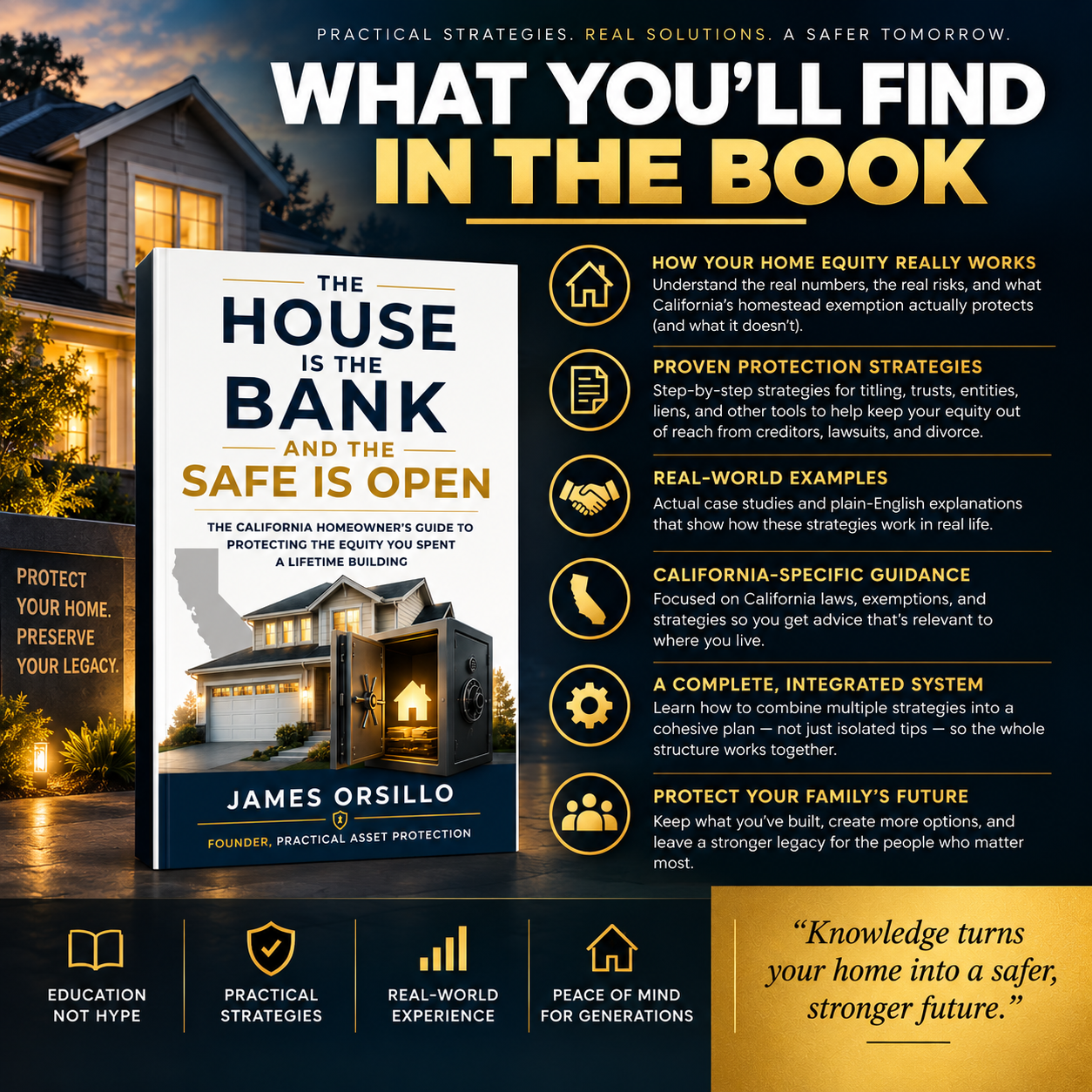
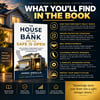
The House Is the Bank and the Safe Is Open explores the practical thinking behind home-equity protection, real-estate asset protection, insurance, homestead laws, ownership structures, debt and liens, entity planning, trusts, and layered protection.
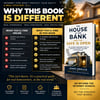
But this isn't a legal textbook.
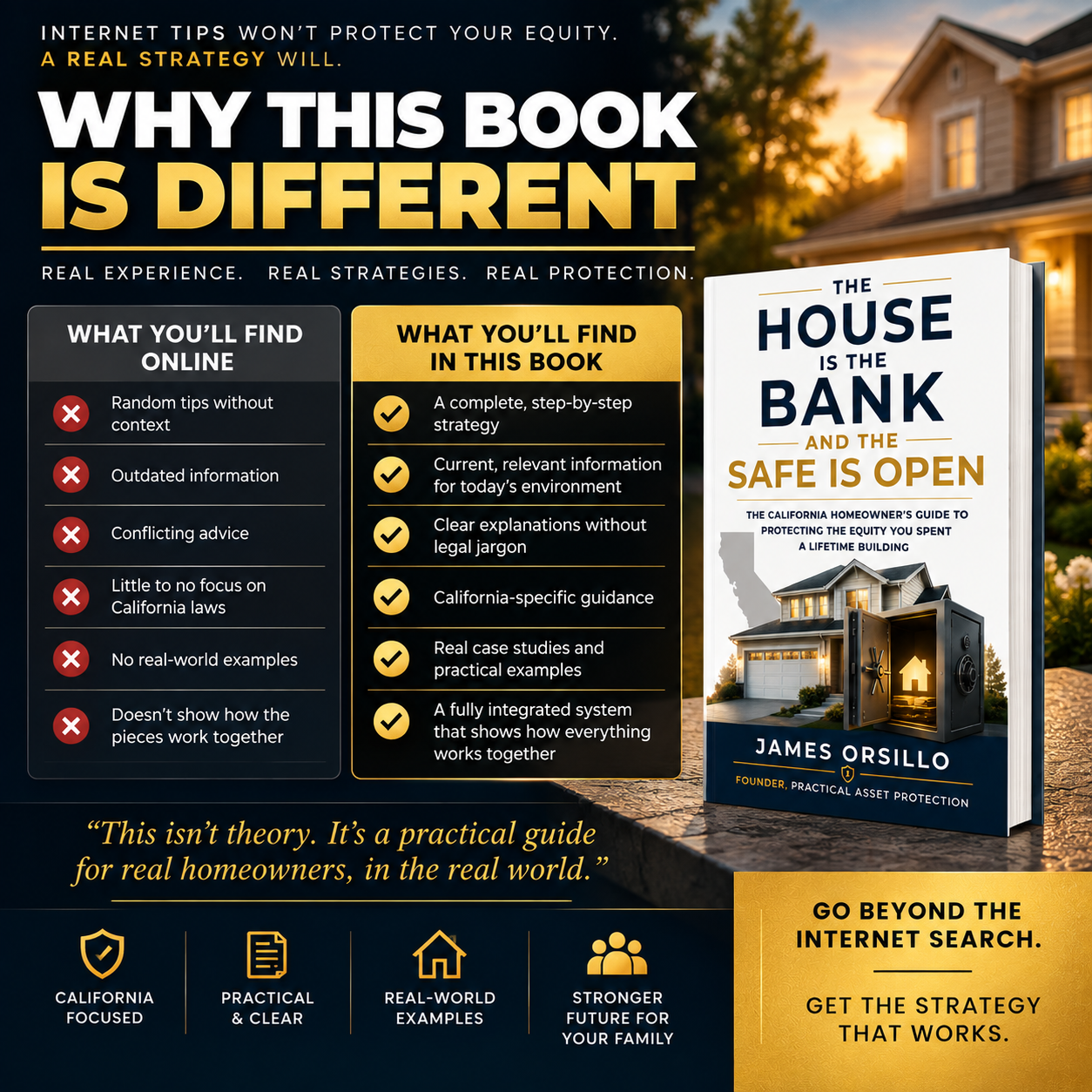
And it isn't a collection of internet tricks.
James Orsillo approaches the subject the way an entrepreneur approaches a machine:
What is this part doing?
- Why is it here?
- What happens if it fails?
- What protects the next layer?
- And where is the weak point?
That's how a real asset-protection system should be understood.
ONE WALL IS NOT A FORTRESS
Insurance matters.
But insurance has limits, exclusions, conditions, and coverage boundaries.
An LLC can matter.
But an LLC doesn't solve every personal liability problem.
A trust may serve an important purpose.
But simply putting the word “trust” on a document doesn't make property untouchable.
A homestead exemption can be extremely valuable.
But its protection depends heavily on applicable state law and circumstances.
A mortgage or other legitimate lien changes the equity picture.
But debt isn't automatically an asset-protection strategy.
Every tool has a job.
The mistake is asking one tool to do all of them.
This book is about understanding how the layers interact.
THE GOAL IS NOT TO MAKE YOUR HOUSE DISAPPEAR
- Your property is still your property.
- Your equity is still real.
- Your financial statements still matter.
- Your taxes still matter.
- Your lenders still matter.
- And legitimate creditors don't disappear because you formed another LLC.
- Asset protection isn't magic.
It's planning.
- It's understanding exposure while you still have time to make legitimate decisions.
- It's maintaining insurance.
- Understanding your state's protections.
- Structuring ownership deliberately.
- Keeping records.
- Coordinating your real estate with your business and estate plan.
And recognizing that the worst time to start asking these questions is after the lawsuit arrives.
IF YOU OWN A BUSINESS AND OWN REAL ESTATE, PAY ATTENTION
Entrepreneurs can face an additional problem.
They may spend decades building wealth in two places simultaneously:
The business and the property.
- Then they personally connect them.
- Personal guarantees.
- Personal ownership.
- Cross-collateralization.
- Shared entities.
- Poor documentation.
- Accumulated equity.
One structure begins touching another until nobody can clearly explain where one risk stops and the next asset begins.
That's when you need to see the whole board.
- Not just the house.
- Not just the LLC.
- Not just the insurance policy.
Everything.
NO GATEKEEPING. UNDERSTAND WHAT YOU OWN.
You shouldn't need to become a real-estate attorney to understand why your house may be exposed.
You shouldn't need a CPA license to ask intelligent questions about your structure.
And you shouldn't have to blindly purchase an expensive asset-protection package without understanding what each piece is supposed to accomplish.
That's the philosophy behind James Orsillo's Practical Asset Protection.
Learn the architecture.
Understand the terminology.
Recognize the risks.
Then sit down with the appropriate attorneys, CPAs, insurance professionals, lenders, and advisors and have a much better conversation.
The website and educational resources at Practical Asset Protection continue that conversation beyond this book.
Because the objective isn't to replace professionals.
It's to stop being completely dependent on somebody else to explain your own financial life to you.
YOU ALREADY BUILT THE WEALTH
Look at your house differently.
Don't just ask:
“What is it worth?”
Ask:
- “How much equity is there?”
- “Who can potentially reach it?”
- “What protections already exist?”
- “What am I assuming protects me that actually doesn't?”
- “How does this property fit into everything else I own?”
Those questions can completely change how you think about a paid-off house.
You spent years putting money into the safe.
Now learn how the door works.
The House Is the Bank and the Safe Is Open.
By James Orsillo
Author and founder of Practical Asset Protection