



First Aid - Jellyfish Stings (Coloring + Facts)
On Sale
$0.99
$0.99
First Aid - Jellyfish Stings (Coloring + Facts)
Jellyfish First Aid Facts & Safety Guide | Ocean Life Science & Beach Safety
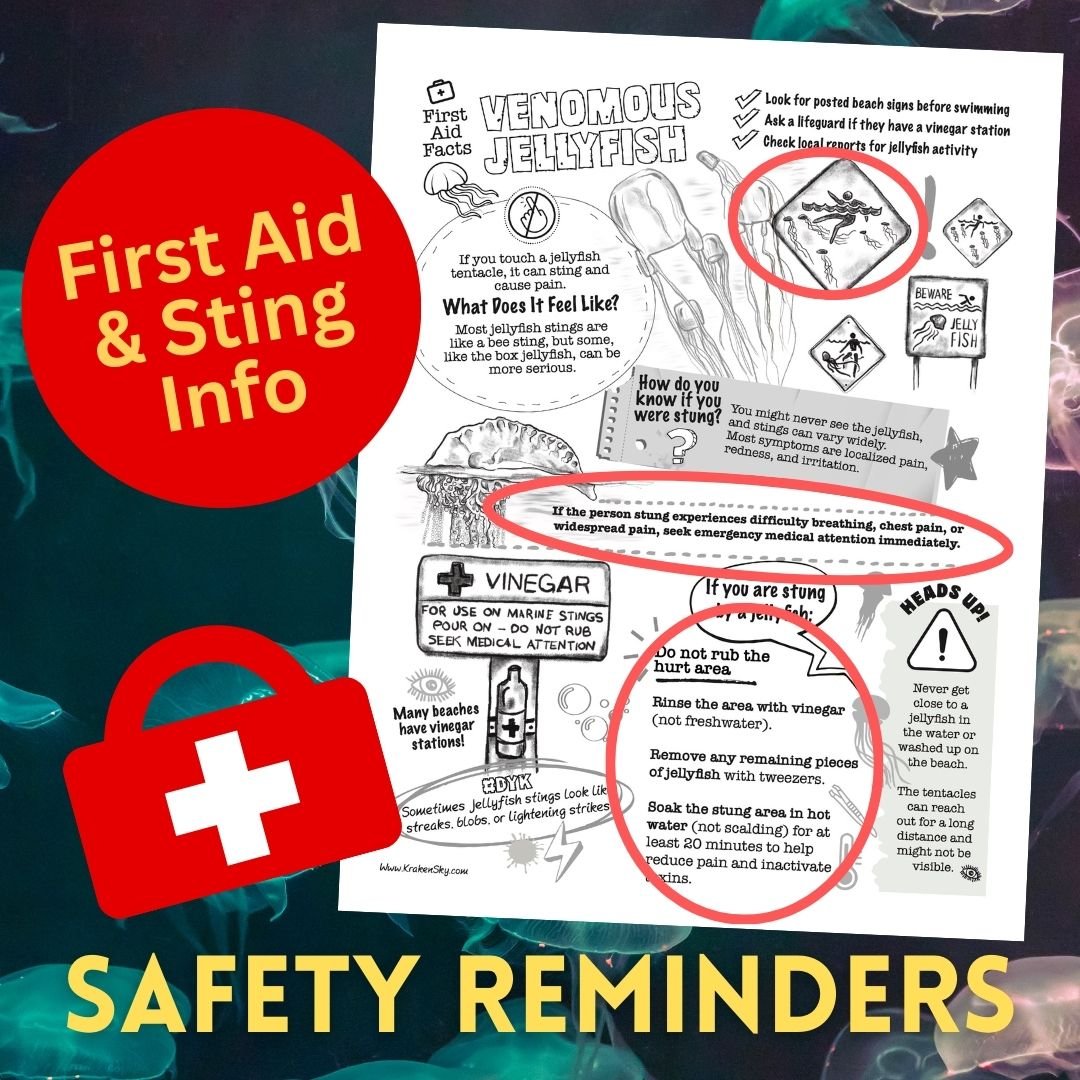
Help your students stay safe and informed with this engaging Jellyfish First Aid Facts resource! Perfect for science lessons, ocean safety units, or summer-themed activities, this printable handout teaches children what to do if stung by a jellyfish and how to avoid dangerous encounters.
This resource is kid-friendly, visually clear, and practical, making it great for classroom discussions, health & safety lessons, science centers, and even family travel prep before a beach trip.
- What does it feel like?
- How do you know if it was a sting?
- What do stings look like?
- What do you do?
- & More!
Curriculum Alignment
Next Generation Science Standards (NGSS):
- 3-LS4-3: Construct an argument with evidence that in a particular habitat some organisms can survive well, some survive less well, and some cannot survive at all.
- 4-LS1-1: Construct an argument that animals have internal and external structures that support survival, growth, behavior, and reproduction.
- MS-LS2-2: Construct an explanation that predicts patterns of interactions among organisms across multiple ecosystems.
Health & Safety Connections:
- Personal health and safety education (beach/ocean safety)
- First aid awareness for environmental hazards
Cross-Curricular Links:
- Science: Ocean ecosystems, marine biology, venomous animals
- Health/PE: First aid, emergency response, personal safety
- Geography: Understanding coastal environments