

What Your Child Is Afraid to Tell You-parent child communication God
h.
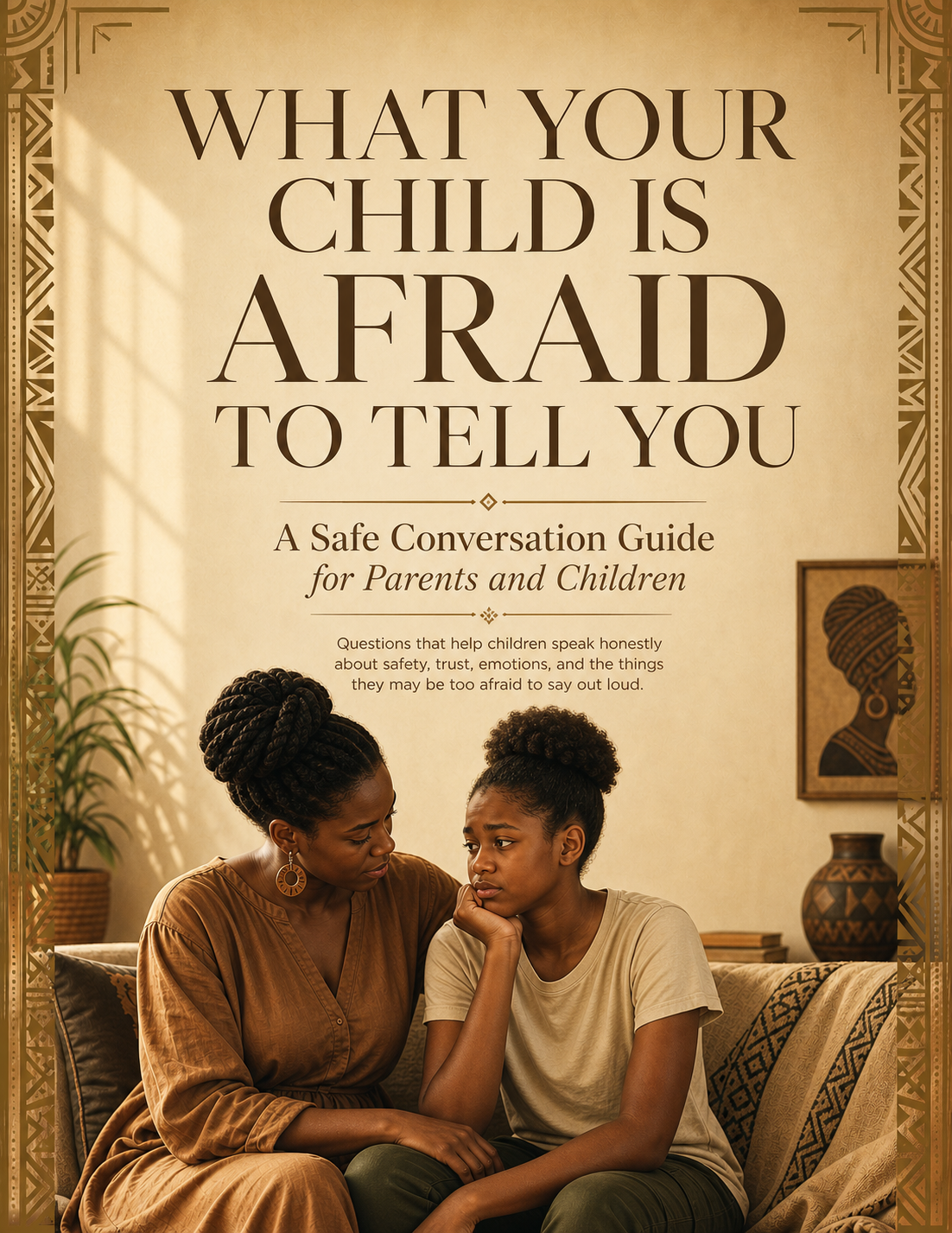
WHAT YOUR CHILD IS AFRAID TO TELL YOU
A Safe Conversation Guide for Parents and Children
Most kids are not hiding things because they are “bad.”
They are hiding because they are afraid—of being punished, misunderstood, or judged.
This printable guide is designed to help you have the conversations your child is too scared to start on their own. It turns “I’m fine” into real, honest answers about their safety, stress, emotions, and mental health. �
What this guide actually does
Helps your child tell the truth without fear of yelling or punishment. �
Opens up conversations about anxiety, sadness, suicidal thoughts, and self-worth. �
Brings hidden struggles with friends, peer pressure, and social media to the surface. �
Gives you simple scripts so you know how to respond calmly, even to hard truths. �
Instead of guessing what your child is going through, you get a structured way to ask—and a safer way for them to answer.
Inside the guide
Parent Agreement Page
You make a written promise to your child before they answer anything: no yelling, no shaming, no using their honesty against them later. This resets the tone from punishment to emotional safety. �
“Before You React” Page
A one-page reminder to pause, breathe, and listen before responding—so you do not shut your child down the moment they finally open up. �
Child Instructions (“Let’s Be Honest”)
Step‑by‑step directions written directly to your child about how to answer privately using the built‑in answer sheet (or a blank page if they did not print). This lets them be honest without you looking over their shoulder. �
30 “Let’s Be Real” Questions
Split into three gentle but direct sections: �
Section 1 – Honest Personal Questions
Questions about secrets, regrets, hiding parts of themselves, sex, drugs, and peer pressure.
Section 2 – Safety, Trust & Gut Feelings
Questions about unsafe adults, pressure to keep secrets, scary situations they never told you about, and times they ignored their gut.
Section 3 – Emotions, Stress & Social Media
Questions about feeling like the world would be better without them, feeling useless, being judged online, cyberbullying, and feeling like they live “two lives” (online and real).
Printable Answer Sheet
A clean, easy-to-use answer page for all 30 questions so your child can respond quickly and privately. �
Trusted Adults & Safety Plan
A simple safety plan page where your child writes down trusted adults, emergency contacts, and what they will do if they ever feel unsafe or overwhelmed. �
If Your Child Discloses Something Serious
A short parent guide based on best-practice advice: what to say (“I believe you,” “You’re not in trouble”), what not to do (panic, blame, interrogate), and what to do next if your child talks about abuse, self-harm, or danger. �
Parent Resource Guide
Crisis numbers (988, 211, child abuse hotlines), plus directions for finding help with food, rent, childcare, therapy, and job training—because a more stable home supports better mental health. �
Bonus “Just Between Us” Page
Extra questions for older kids and teens about sex, suicidal thoughts, feeling like they don’t matter, and how social media is impacting their mental health and self-image. �
Who this is perfect for
Parents of preteens and teens who say “I’m fine” but clearly aren’t. �
Parents who suspect their child is struggling with anxiety, sadness, self-harm thoughts, or online pressure but don’t know how to ask. �
Caregivers who want to build long-term trust and emotional safety, not just “check their phone” and hope for the best. �
How to use it
Print the guide (or open it on a device) and read the Parent Agreement. �
Let your child fill out the questions privately using the answer sheet. �
Read their answers alone first, then sit together and talk using the prompts and “Before You React” page as your anchor. �
Use the safety plan and resource pages to follow up with real support, not just one conversation. �
This is not about having a “perfect” child.
It is about becoming the kind of parent your child can be honest with about their mental health—before things spiral into crisis. �