
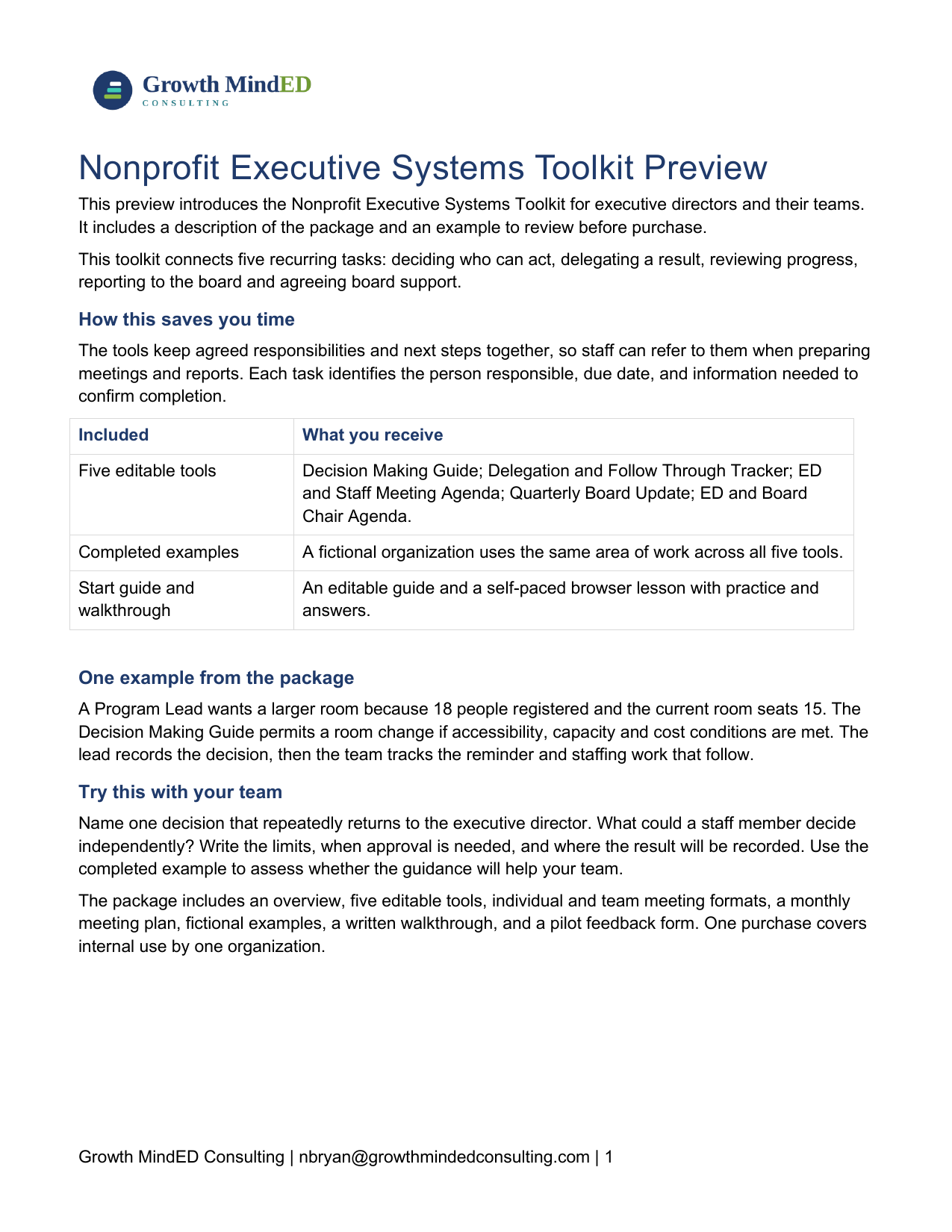
Nonprofit Executive Systems Toolkit
Lead your nonprofit with clearer expectations for staff and a more useful partnership with your board.
Starting as an executive director means learning the organization while making decisions, supporting staff, and preparing for the next board meeting. A staff member may need to know what they can approve. An assignment may need a clearer description of the finished result. The board may need to understand where its advice or a formal decision is needed.
Each conversation takes preparation. When responsibilities and next steps are spread across emails and meeting notes, preparing the next conversation also means searching for what was agreed and asking for another update.
The Nonprofit Executive Systems Toolkit gives nonprofit leaders five editable tools for that work. The tools help an executive director explain expectations, give staff enough information to act, and bring the board a clear question or request. For a leader who is new to the role, the instructions and completed examples also show what to prepare, what to ask, and what to record afterward.
HOW THIS SAVES YOU TIME
The toolkit provides a starting point for recurring leadership work, so you do not have to create a new agenda, assignment tracker, or board update from a blank page. Each form prompts you to record the information needed for the next conversation.
For example, when you assign a program task, the tracker gives you a place to agree on the finished result, the person responsible, the support needed, and when the work should be completed. At the next staff meeting, you can use that record to discuss progress and resolve a question. If the work needs board attention, the board update helps you explain the issue and state what you need from the board.
Recording those details as the work happens gives you something concrete to review instead of reconstructing the assignment from several emails. Agreeing on decision authority also gives staff a written reference for when they can move forward and when they need your input. The agendas provide questions and space for next steps, reducing the preparation involved in deciding how to lead each conversation.
You can use the tools in meetings already on your calendar. Begin with the one that addresses your immediate need and add the others as they become useful.
WHAT IS INCLUDED AND HOW IT HELPS
The Start Here overview explains what each tool is for, how the tools work together, and where to begin. A first-month plan and pilot feedback form help you check whether expectations are clearer, meetings produce useful next steps, and the tools fit your team's work.
The Decision Making Guide helps you clarify who can make a decision, whose input is needed, and when a matter needs to come to you or the board. Staff gain a clearer basis for acting, and you have a written reference when a question about approval comes up.
The Delegation and Follow Through Tracker helps you explain what a completed assignment should produce and agree on responsibility, support, and when the work should be completed. Staff can see what is expected, and you can review progress without relying on memory or asking everyone to reconstruct the last conversation.
The Executive Director and Staff Meeting Agenda includes a 45-minute individual meeting, a 60-minute team meeting, a 30-minute weekly option, and a four-week planning sequence. The individual agenda makes room for a check-in, progress, coaching, and feedback for both the staff member and executive director. That gives each person a regular opportunity to raise concerns, ask for support, and discuss what would help them work together. The team formats help staff coordinate assignments, discuss decisions, and agree on who will do what next.
The Quarterly Board Update helps you organize progress, concerns, and requests for board attention before the meeting. Board members receive the context they need to discuss the issue, understand the request, and prepare to contribute. Discussion prompts help you distinguish an update from a matter that needs advice, action, or a decision.
The Executive Director and Board Chair Agenda helps you prepare a recurring conversation about organizational priorities, emerging concerns, and the next board meeting. It includes feedback in both directions so the executive director and chair can discuss how they are supporting each other. It also helps clarify which matters need the full board's attention.
Each of the five tools includes instructions, an editable Word form, and a completed fictional example. The examples show how much detail to include and how an issue can move from a staff conversation to a board update. A printable PDF and a written walkthrough with practice questions and answers provide additional ways to review the process before using it with your team.
PRICE AND LICENSE
The pilot price is $149 for one organization, limited to five purchasing organizations. The planned standard price is $249.
Staff, board members, and contractors working for the purchasing organization may adapt the files for internal use. Each additional organization needs its own license. Resale, public distribution, and use in an outside paid service require a separate agreement. Keep Growth MindED attribution in master copies.
HOW TO START
Unzip the download and read 00 Start Here.docx. Choose the tool for your next decision, assignment, or meeting. Open Walkthrough.html in a browser with the included logo beside it to review the written practice activities. After one month, use the feedback form to identify what is helping and what needs adjustment.
All examples are fictional. Your organization's governing documents and approved policies continue to determine decision authority, formal approvals, and board responsibilities.