

NCLEX-RN Psychiatric Medications Master Guide: Antidepressants, Antipsychotics, Mood Stabilizers & Benzos
Antidepressants, antipsychotics, mood stabilizers and benzodiazepines for the Next-Gen NCLEX-RN — every class with its mechanism, its adverse effects, the monitoring it requires, and when the medicine must be held or adjusted.
Inside:
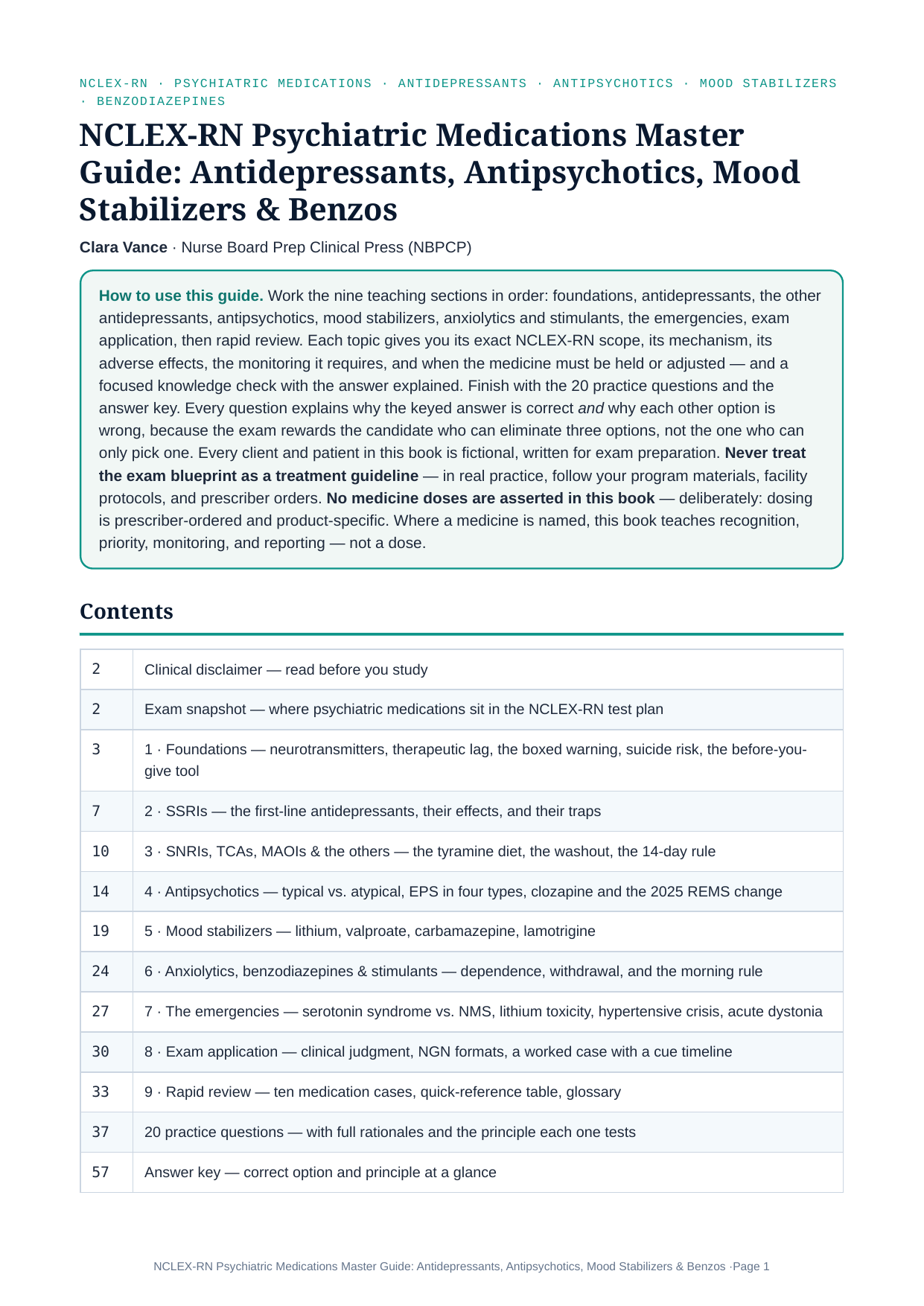
- Foundations: the four neurotransmitters, therapeutic lag (2–4 weeks to begin, 6–8 weeks for the full effect), the antidepressant boxed warning (increased suicidal thoughts and behaviour under age 25), suicide risk assessment, and the five-check before-you-give tool
- SSRIs: fluoxetine (longest half-life), sertraline, paroxetine (most discontinuation symptoms), citalopram/escitalopram, adverse effects, discontinuation syndrome, and the serotonin stack (St. John's wort, tramadol, triptans, MAOIs)
- SNRIs, TCAs, MAOIs & the others: venlafaxine and blood pressure, TCA anticholinergic + cardiac effects, the MAOI tyramine diet (aged, fermented, cured) with the 14-day rule and a worked washout-date calculation, bupropion (seizure risk), mirtazapine, trazodone
- Antipsychotics: typical vs. atypical, EPS in four types with their timings (acute dystonia, akathisia, parkinsonism, tardive dyskinesia), metabolic monitoring, prolactin and QT effects, clozapine and the 2025 REMS change (REMS removed June 2025; ANC monitoring continues per label), long-acting injectables
- Mood stabilizers: lithium (therapeutic range 0.6–1.2 mEq/L, trough 8–12 hours after the dose, toxicity above 1.5 mEq/L) with a worked level reading and reverse-check, valproate (neural tube defects, liver, pancreas), carbamazepine (agranulocytosis, Stevens-Johnson, low sodium), lamotrigine (slow titration, any rash reported at once)
- Anxiolytics, benzodiazepines & stimulants: dependence and withdrawal (taper, never stop suddenly), buspirone, z-drugs, stimulants (morning dose, appetite, growth, blood pressure and pulse)
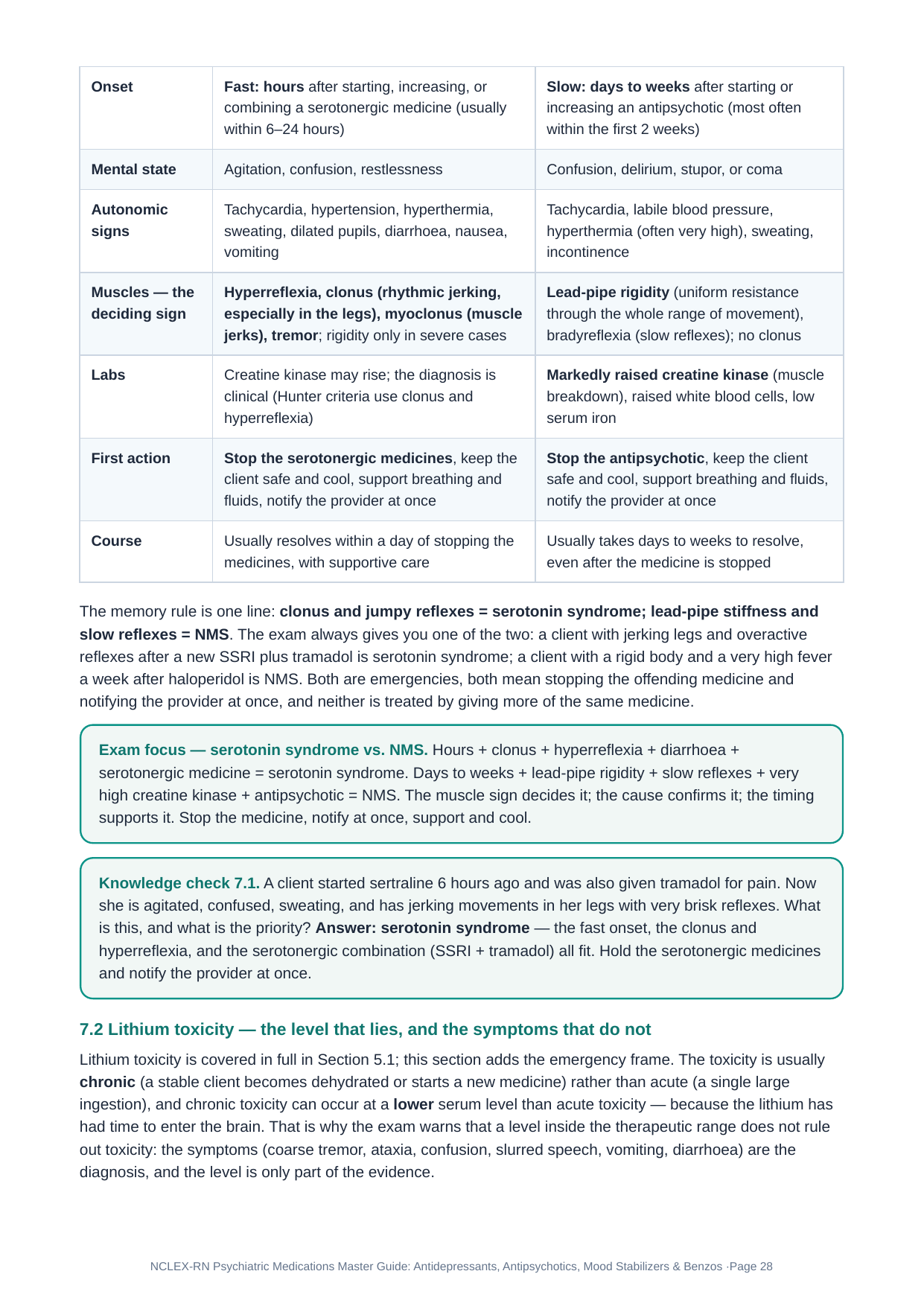
- The emergencies: serotonin syndrome vs. NMS (the muscle sign that decides it), lithium toxicity, hypertensive crisis, acute dystonia, and a one-table emergency quick-split
- Exam application: NCJMM applied to psychiatric medications, NGN formats, a worked serotonin syndrome case with a dated cue timeline and answer-to-cue crosswalk
- Rapid review: 10 medication cases, emergency quick-reference table, glossary
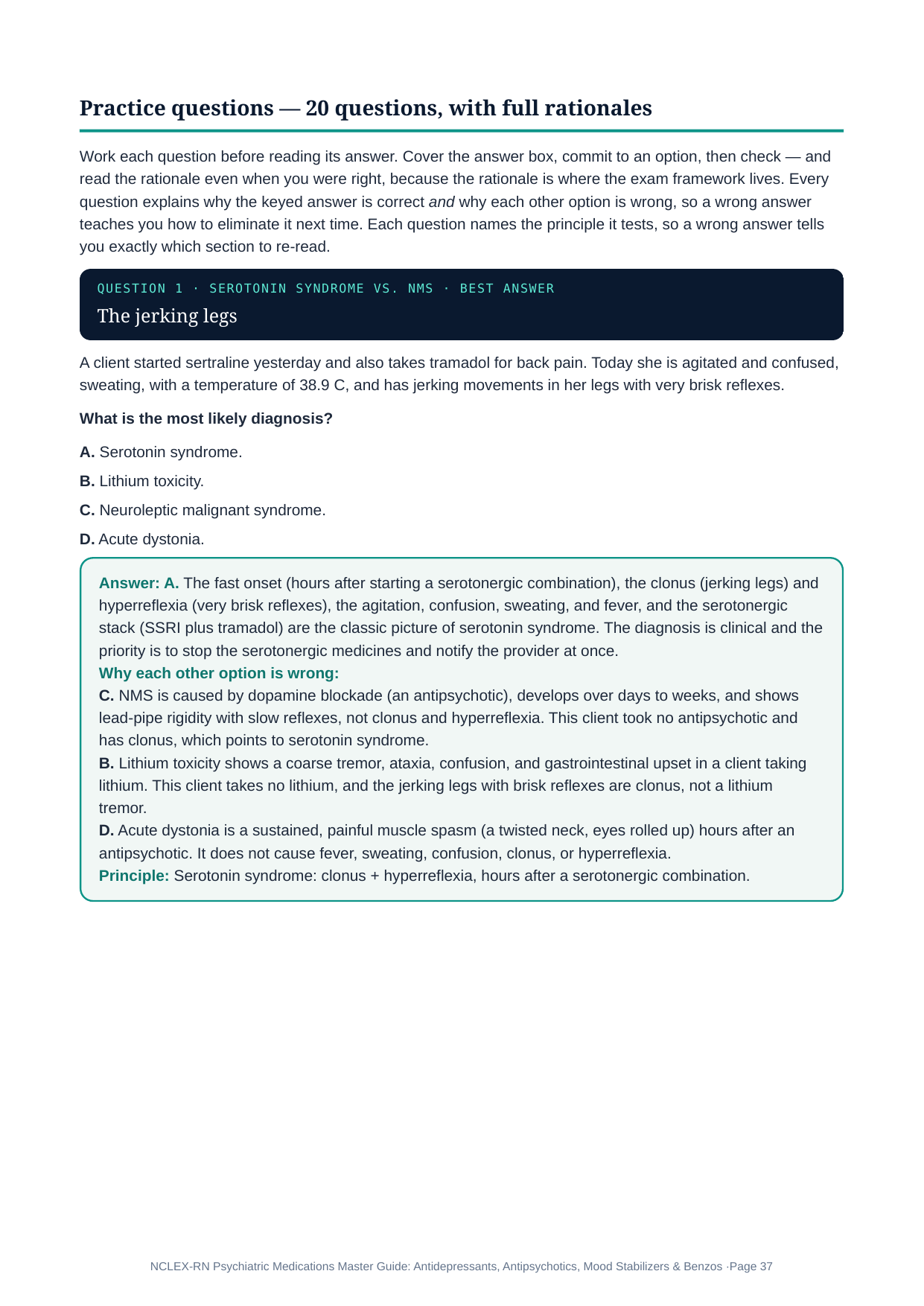
- 20 practice questions with full rationales — why the keyed answer is correct AND why each other option is wrong — plus an answer key
No medicine doses are asserted in this book — dosing is prescriber-ordered and product-specific. Original teaching cases written for exam practice. This guide is not affiliated with NCSBN and does not guarantee a pass. If you find an error, a corrected version will be sent free.