

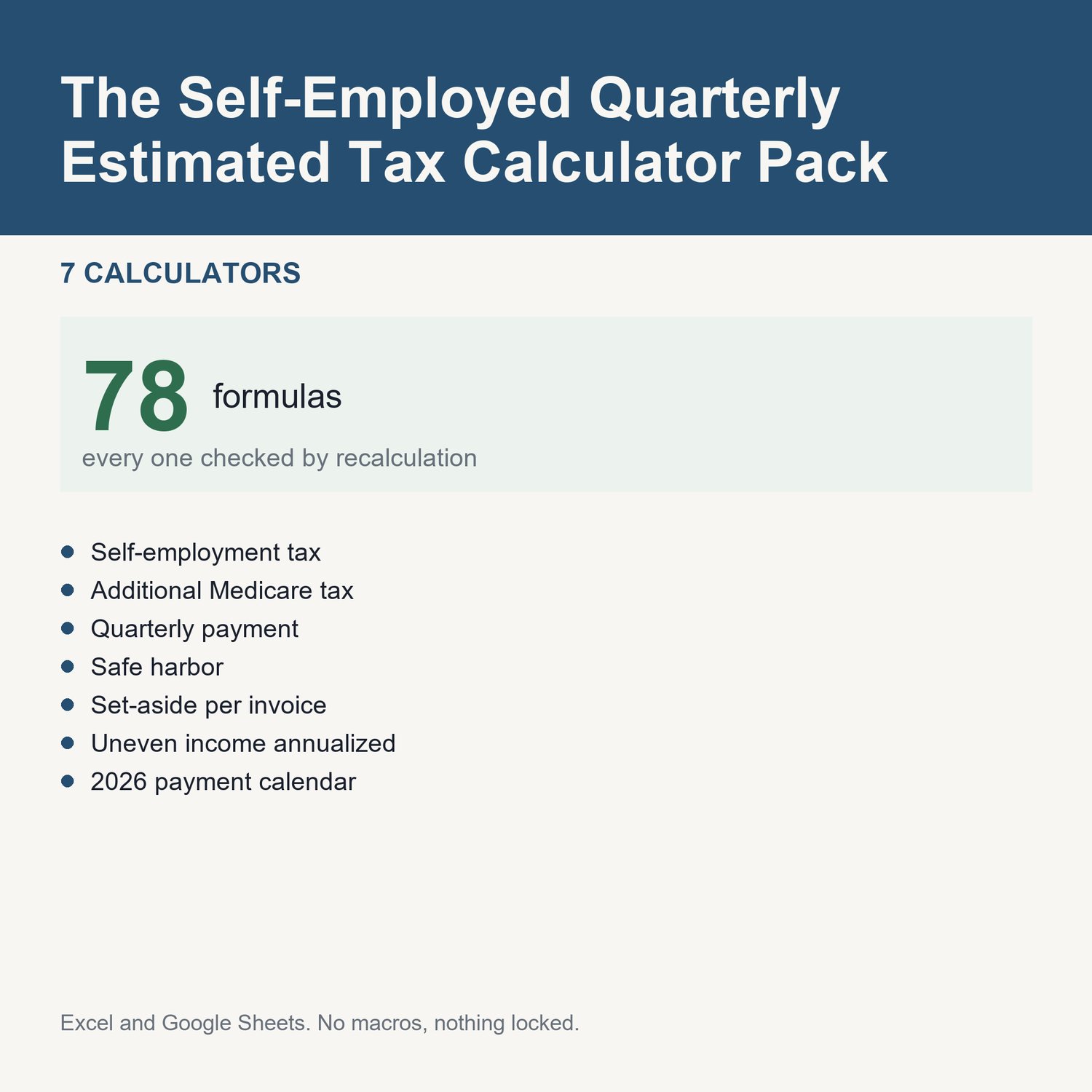
The Self-Employed Quarterly Estimated Tax Calculator Pack: Seven linked calculators, every formula checked by recalculation
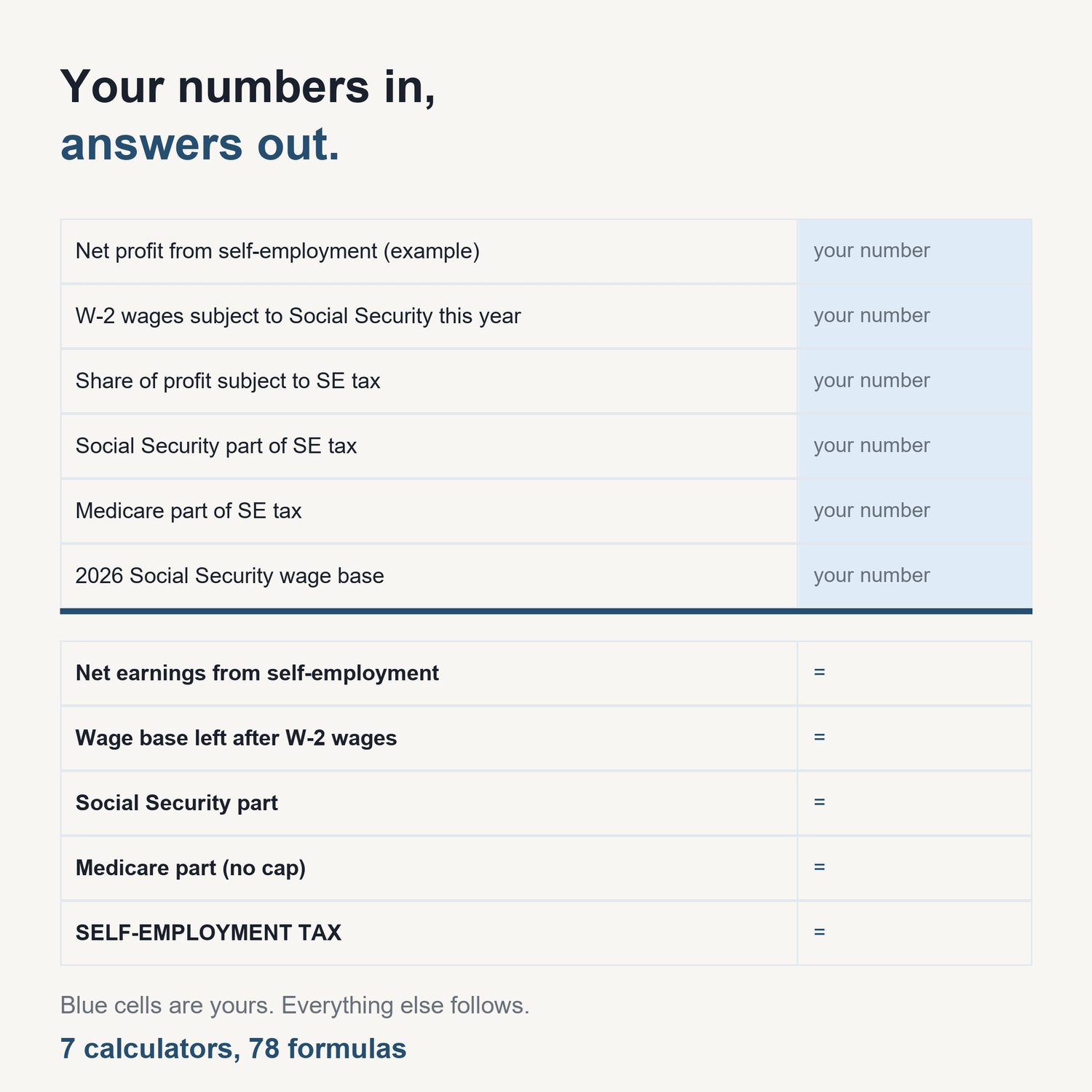
Seven calculators for paying tax four times a year on your own business income. Sheet 1 works out 2026 self-employment tax the way the IRS worksheet does: 92.35% of profit, 12.4% up to the $184,500 wage base, 2.9% on all of it ($12,010.12 on the worked example's $85,000). Sheet 3 turns that into a quarterly payment, sheet 4 finds the smallest safe-harbor amount, sheet 5 gives the share of each invoice to set aside, and sheet 6 handles income that arrives unevenly. Your income tax rate is your own input: no brackets are computed. Every IRS figure is quoted from the 2026 Form 1040-ES or Publication 505 and is an input you can update. Not tax advice. Every formula was recalculated and checked against an independent implementation before this shipped.
What is in it
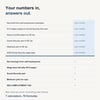
7 calculators, one per sheet. Overwrite the blue cells with your own numbers and everything else follows. Nothing is locked, there are no macros, and it opens in Excel, Numbers, LibreOffice and Google Sheets.
- Self-employment tax: What is your 2026 self-employment tax on your net profit?
- Additional Medicare tax: Does the 0.9% Additional Medicare Tax reach your profit?
- Quarterly payment: How much should each 2026 estimated tax payment be?
- Safe harbor: What is the least you can pay each quarter and avoid a penalty?
- Set-aside per invoice: How much of each payment you receive should go to a tax account?
- Uneven income annualized: If your income came late in the year, how small can early payments be?
- 2026 payment calendar: Which payment is next, when is it due, and are you behind?
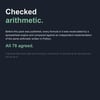
Every formula was checked
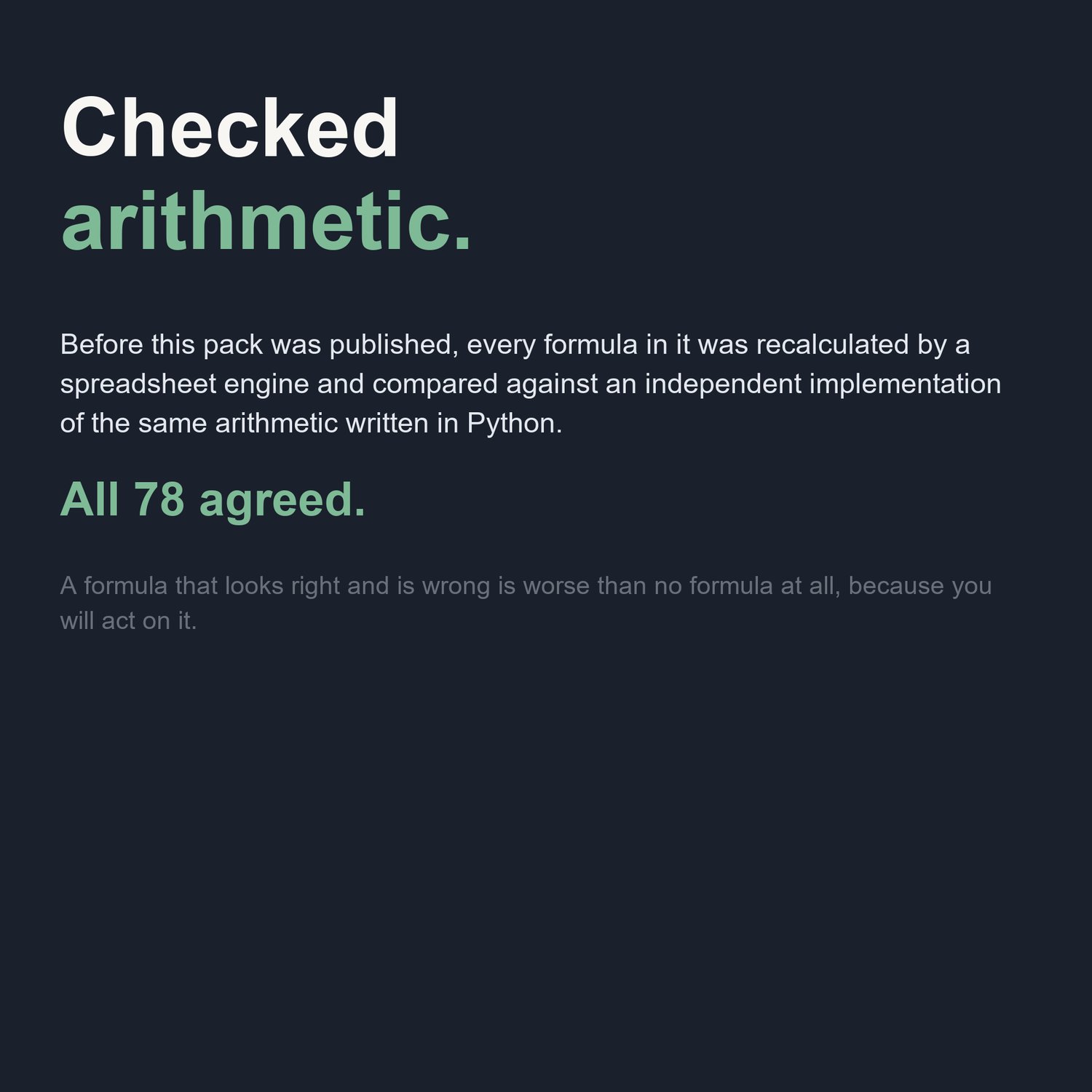
This pack contains 78 formulas. Before it was published, every one of them was recalculated by a spreadsheet engine and compared against an independent implementation of the same arithmetic written in Python. All 78 agreed to within a cent, and the workbook carries a Verification sheet saying so.
That is an unusual thing to be able to claim about a spreadsheet, and it is the main reason to buy this one rather than download a free template. A formula that looks right and is wrong is worse than no formula at all, because you will act on it.
What each calculator assumes
There is a sheet listing this, because a calculator that hides its assumptions is just a number generator:
- Follows the 2026 Form 1040-ES self-employment tax worksheet: 92.35% of net profit, 12.4% up to the wage base less W-2 wages, 2.9% on all of it, nothing if under $400. Farm optional methods, church employee income and the Conservation Reserve line are not modeled. The 0.9% Additional Medicare Tax is on sheet 2.
- Thresholds from IRS Pub. 505 (2026): $250,000 joint, $125,000 separate, $200,000 otherwise. For a joint return, enter both spouses' combined wages. An employer withholds the 0.9% only on its own wages over $200,000, which this sheet does not track. Railroad (RRTA) pay is not modeled.
- Your income tax rate is applied to profit after the half-SE deduction. The standard deduction, the qualified business income deduction, credits and other income are not computed; build them into the rate you enter. State tax is a flat rate you supply on the same base.
- The General Rule on the 2026 Form 1040-ES: pay the smaller of 90% of 2026 tax or 100% of 2025 tax (110% if 2025 AGI was over $150,000, or $75,000 married filing separately). Assumes equal quarterly payments made on time. Farming and fishing rules, joint-to-separate changes and the penalty itself are not computed.
- Below the Social Security wage base the SE rate is flat, so one percentage works for every invoice. Above the wage base the 12.4% part stops and this rate overstates the need. Costs are a flat share of revenue; real costs arrive unevenly.
- Follows the structure of IRS Pub. 505 (2026) Worksheet 2-9 with one simplification: your own flat income tax rate in place of the deduction and bracket lines. Assumes no W-2 wages and no withholding; if you have either, use the worksheet in Pub. 505. Profit figures are cumulative from January 1.
- Due dates are the 2026 Form 1040-ES dates. A due date on a weekend or holiday moves to the next business day, which the sheet does not adjust for. The underpayment penalty is not computed. If a state also requires estimates, its dates may differ.
What this is not
Not financial, tax or legal advice, and not a recommendation to buy, sell, borrow or sign anything. These are calculators: they show what a choice costs, not which choice is right for you. Where a published rate or threshold is used it is the one current when the pack was built. Those change, the arithmetic does not.
Honest about the format
One .xlsx workbook, 7 calculator sheets plus Start Here, Assumptions and Verification. Not a PDF, not a physical product, not a Notion template. Available immediately after purchase; nothing ships.
Refunds
If this isn't what you expected, email me within 30 days and I'll refund you in full, no need to explain. Because it's an instant download I can't take the file back, so I'd rather you just had your money back.