
Conversations for Couples
Conversations for Couples
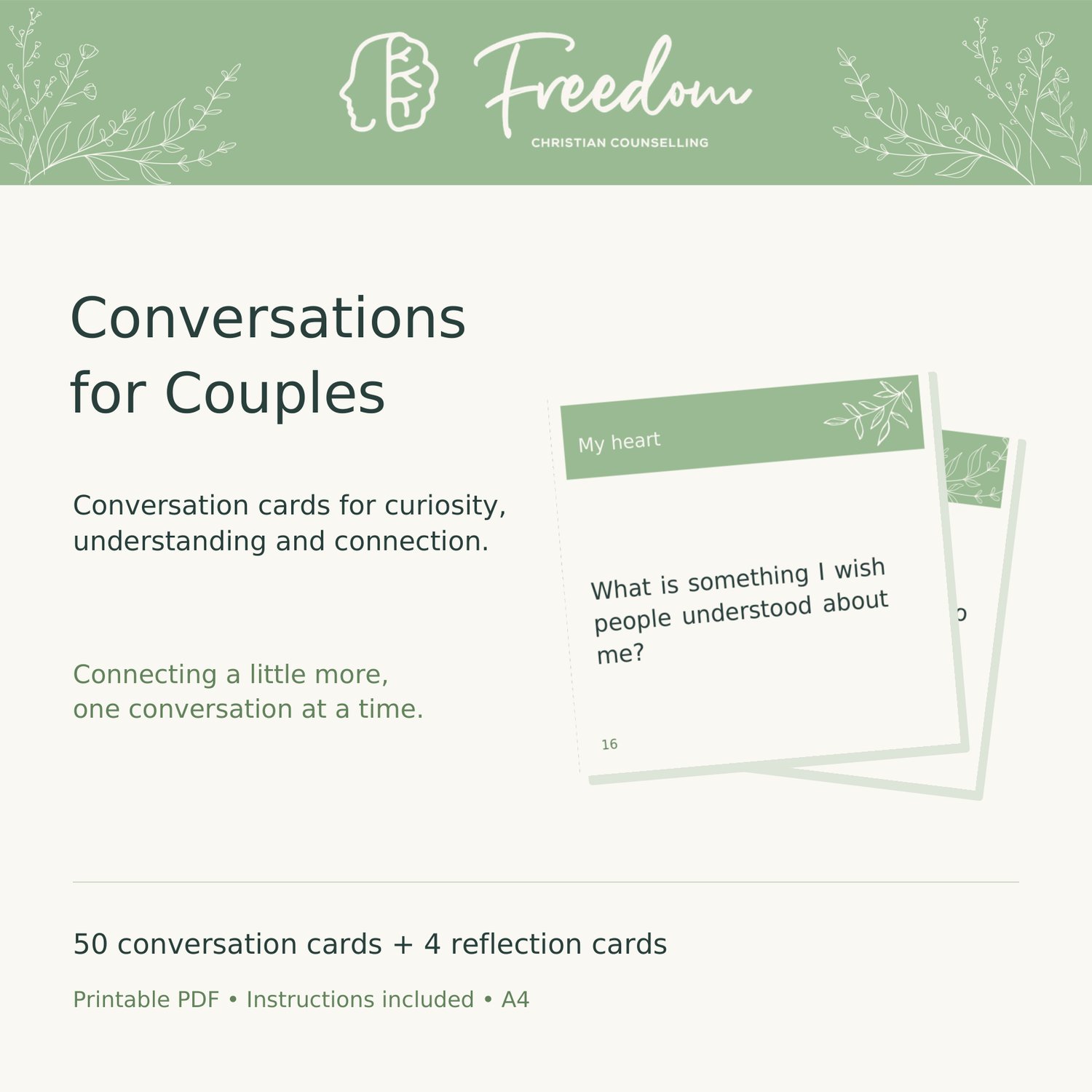
Conversation cards for curiosity, understanding and connection.
Created from personal experience and informed by relationship research, Conversations for Couples offers a gentle way to make intentional time together. Through 50 questions, couples take turns imagining their partner’s answer, then listening as their partner shares their own experience. This simple structure provides a starting point for conversations that can otherwise feel difficult to begin, making room for openness without the pressure of knowing what to say. Designed particularly with established couples in mind, these cards invite you to keep learning about each other as life changes.
The heart behind the cards
These cards began with a conversation between my husband and me about what it means to feel known by each other.
It began in a place of hurt. I was questioning how well we understood each other, and initially found myself looking for a way to measure that. Drawing on my background in counselling and psychology, I began exploring questions informed by relationship research, including Gottman’s concept of Love Maps.
As we talked, something shifted. We became less concerned with whether we could predict the “right” answer and more interested in what we were discovering. Questions opened into stories, feelings and experiences we hadn’t fully shared before. We found ourselves speaking vulnerably and listening openly, with a depth that came naturally through the conversation.
What began painfully became a meaningful opportunity for connection.
A gentler way into meaningful conversation
Part of what I valued was having somewhere to begin. We weren’t simply asking each other to open up; we were responding to a question and discovering how the other person understood us.
When your partner offers their impression, you have an opportunity to say what fits, what doesn’t, and what you would like them to understand. Even “That’s not quite how it is for me” can become the beginning of sharing something meaningful.
My intention with this structure is to ease some of the pressure that can bring our defences up. It may feel easier to explain your experience in response to a thoughtful guess than to introduce something vulnerable from scratch. Each person remains the authority on their own experience, with the freedom to share at their own pace.
The invitation is to meet those answers with curiosity and care.
For couples who want to keep knowing each other
Alongside this personal experience, I have heard a similar longing in my counselling work. People want to feel closer to their partner. They want to understand and be understood, but don’t always know how to begin. Setting aside intentional time together can be difficult when neither person knows what to say, or when the expectation of a “deep conversation” brings pressure of its own.
My heart behind these cards is to offer a gentle starting point: questions that help conversation unfold, with room for honesty, warmth and discovery.
I created them particularly with established couples in mind. Whether you are finding your way back towards each other, deepening an already strong connection, or simply wanting meaningful time together, these cards offer a place to begin. Couples at the beginning of their relationship are welcome here too.
My Christian faith shapes the value I place on marriage and connection. I believe God cares deeply about how we love, listen and make room for one another, including the ordinary moments when we choose to be open and present together.
Remaining students of each other
These are conversations you can return to. Life changes us. Our experiences, perspectives, priorities and needs shift over time, and an answer that fits today may be different a year from now.
My hope is that these cards encourage us to remain students of each other: willing to ask again, listen afresh and keep learning about the person beside us.
What’s included
The printable PDF includes 50 conversation cards that move from everyday questions into deeper reflections, four closing reflection cards and guidance for taking turns.
There is no score to keep. The priority is the conversation, with time to answer, listen and explore together.
Connecting a little more, one conversation at a time.