


How to Calculate TRUE Startup Costs For A Restaurant (And Avoid Undercapitalization)
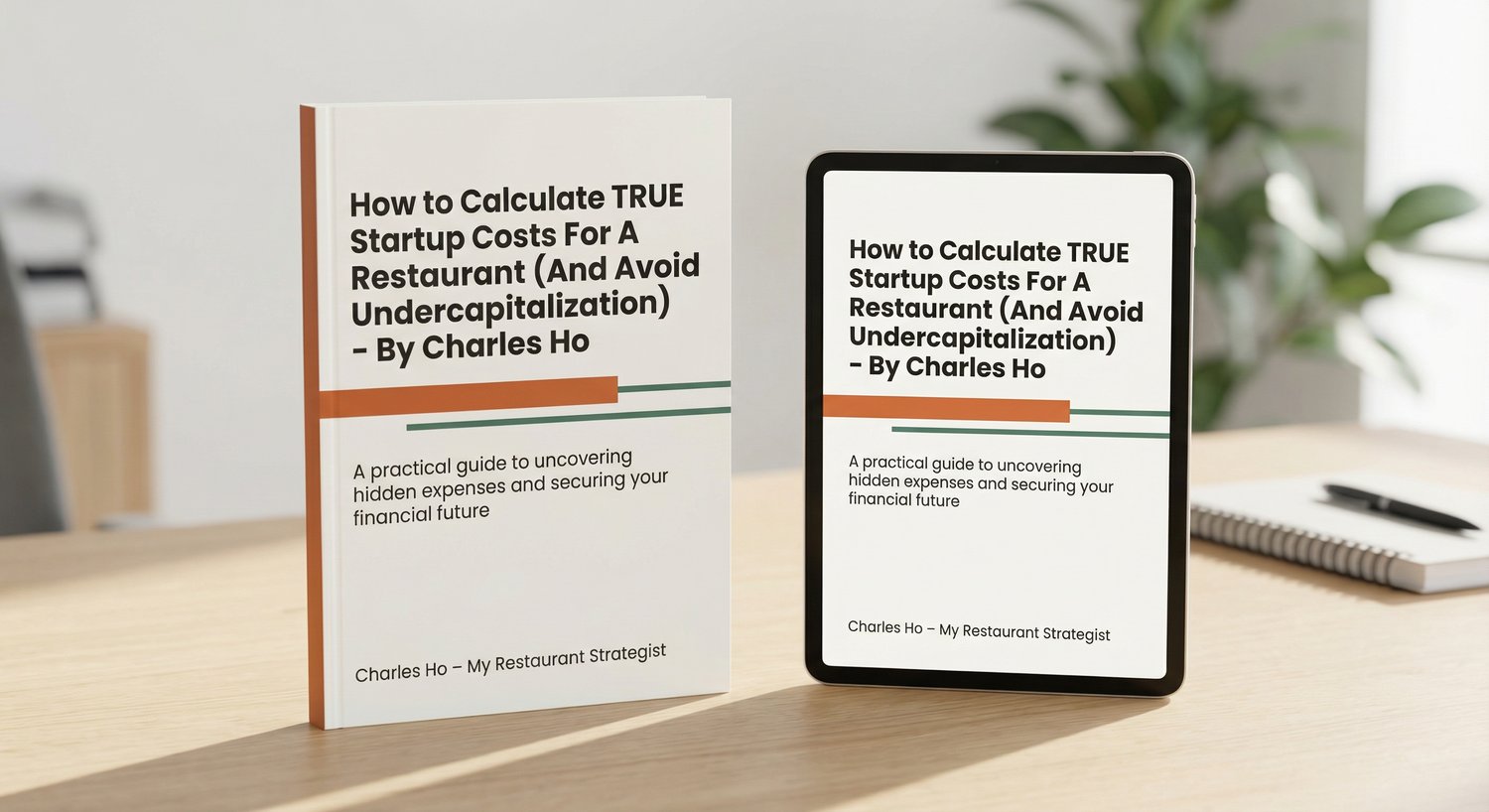
How to Calculate TRUE Startup Costs (And Avoid Undercapitalization) – By Charles Ho
If You Get the Money Wrong, Nothing Else Matters.
Most first-time restaurant owners don’t fail because of bad food.
They fail because they run out of cash.
Undercapitalization is behind 60% of early restaurant closures. First-time owners routinely underestimate startup costs by 30–50%—and only realise it when the bills are due, permits are delayed, and payroll is tomorrow.
This guide gives you a complete, brutally honest roadmap to calculating what it will really cost to open your restaurant—and how much you need in reserve so you don’t become another statistic.
This Guide Is For You If:
- You’re a first-time or aspiring restaurant owner and you refuse to “wing it” with money.
- You want to know, in plain numbers:
“Exactly how much do I need to open and survive the first 6–12 months?”
- You’re prepared to face uncomfortable financial realities now instead of brutal surprises later.
- You want a step-by-step framework you can use to build a realistic, complete startup budget for your specific concept and market.
This Is Not For You If:
- You’re looking for a fantasy budget that makes your dream look cheaper than it is.
- You think hustle, passion, and “being busy” will magically fix bad math.
- You’re committed to opening regardless of what the numbers say.
What You’ll Learn Inside
1. The Big Picture: What It Really Costs to Open a Restaurant
You’ll start with the true cost ranges for opening in today’s market:
- Why opening a restaurant can cost anywhere from $95,000 to $2M+.
- Typical median costs for leased vs. owned spaces.
- The reality behind the “$3,000–$3,700 per seat” rule of thumb.
- The three core cost buckets you must distinguish:
- Startup/build-out costs
- Ongoing operating costs
- Working capital / cash reserves
You’ll see where most owners fool themselves—and how to avoid that trap.
2. Location Costs: The Foundation of Your Budget
Location is usually your single largest ongoing expense and a major upfront cash drain.
You’ll learn to budget properly for:
- Rent vs. Buying
- Pros, cons, and capital implications of buying your space vs. leasing.
- Why renting usually makes more sense for first-time owners.
- Real Location Cost Drivers
- Neighborhood & foot traffic premiums.
- Space size vs. total cost (small, expensive per sq ft vs. larger, cheaper per sq ft).
- Accessibility, parking, and what your target market will actually tolerate.
- The “Hidden” Lease Costs
- Security deposits (often 3–6 months of rent).
- CAM fees, tax pass-throughs, insurance requirements.
- How these add 15–30% on top of base rent if you’re not careful.
You’ll get a clear picture of what your space will really cost before you even swing a hammer.
3. Renovation & Build-Out: Where Budgets Go to Die
Here’s where most first-timers get wrecked.
Inside, you’ll see:
- What drives renovation costs:
- Condition of the existing space.
- Taking over a previous restaurant vs. bare shell.
- Scope of work (kitchen build-out, HVAC, plumbing, bathrooms, structural issues).
- How regional labor and code differences blow up budgets.
- Realistic ranges:
- From $50,000 on the extreme low end to $350,000+ for full build-outs.
- Why most first-time operators land around $100,000–$200,000.
- The 10–20% Contingency Rule:
- Why industry veterans always tell you to add 10–20% minimum to any contractor quote.
- Concrete examples of surprise costs: electrical upgrades, hidden plumbing, HVAC failures, asbestos, structural fixes.
- Renovation cost-saving strategies that don’t sabotage your operations:
- Prioritising code-compliant kitchen and infrastructure first.
- DIY on aesthetics and décor where possible.
- Using modular/pre-fab solutions to save money and time.
You’ll walk away with a rough but honest range for your build-out—and a buffer for when (not if) things go wrong.
4. Kitchen Equipment: Spending Smart Where It Matters Most
Your kitchen is the production engine. Cheap or poorly planned equipment decisions kill you slowly through:
- Higher breakdown rates
- Higher labour costs
- Inefficiency and downtime
You’ll learn to:
- Map out essential equipment categories:
- Large appliances (ovens, ranges, fryers, refrigeration, dishwashers, hoods)
- Smallwares (knives, pans, utensils, tools)
- Bar equipment and serviceware
- Storage and prep infrastructure
- Budget intelligently:
- At least $50,000 for a small cafe/compact kitchen.
- $150,000+ for full-service kitchens; $250,000+ for specialised/high-volume concepts.
- Decide what to buy new vs. used:
- Why refrigeration and core cooking equipment often should be new.
- Where used gear makes sense and where it’s a false economy.
- Understand leasing as an alternative:
- How equipment leasing preserves cash but costs more long-term.
- When leasing is a smart move vs. a cashflow band-aid.
- Plan for maintenance & replacement:
- Typical lifespans (5–20 years depending on equipment).
- Why you should start a replacement fund from year 1.
You’ll stop thinking “What’s the cheapest I can get?” and start asking “What setup gives me reliable, profitable operations?”
5. Permits, Licenses, Legal & Professional Fees
You can’t open without them—and they take longer and cost more than you think.
You’ll work through:
- Must-have permits & licenses (with realistic cost ranges):
- Business license, EIN, local registration
- Food service permits & health certifications
- Liquor license (the big wildcard: anywhere from hundreds to hundreds of thousands depending on market)
- Sign permits, fire, CO, outdoor seating, music licensing, etc.
- Lawyer & Accountant Costs
- Why skipping legal review of your lease is suicidal.
- Budgeting $500–$2,000+ for attorney work and $500–$1,500 for initial accountant setup.
- Ongoing accounting costs and why they’re non-negotiable.
- Time delays as real costs:
- The 1–3+ month timelines for permits and especially liquor licenses.
- How every month of delay burns rent, utilities, and loan payments with zero revenue.
By the end, you’ll know what paperwork you need, how long it will likely take, and what to budget so delays don’t sink you.
6. Staffing & Labour: The Pre-Opening Payroll Reality
Labour costs don’t start on opening day—they start well before.
You’ll learn to budget for:
- Hiring & Recruitment Costs
- Job ads, background checks, interviews.
- Realistic totals: $500–$2,000 just to build your team.
- Training & Soft Opening
- 1–2 weeks of payroll before you generate any revenue.
- Soft opening services where staff are on the clock but sales are limited.
- How quickly this becomes $4,000–$8,000+ even in small operations.
- First 1–3 Months of Payroll
- Full monthly labour cost including wages, taxes, workers’ comp, and basic benefits.
- Example breakdown so you can plug in your numbers.
- Labour law compliance costs:
- Scheduling software, mandated training, required postings.
- Why cutting corners here leads to lawsuits that dwarf what you “saved”.
You’ll stop pretending you can “just cover it from early sales” and start planning real cash for pre-revenue payroll.
7. Marketing & Launch: Getting Actual People In the Door
“Open and hope” is not a marketing strategy.
You’ll see how to budget for:
- Pre-opening branding & assets
- Logo, brand identity, menus, signage.
- Professional work vs. cheap, and what each really costs.
- Website and online presence
- Realistic ranges for a functional site and online profiles.
- Pre-launch buzz
- Local PR, food bloggers, community partnerships, social media campaigns.
- Why you should plan $1,000–$5,000 to prime the pump properly.
- Grand opening event
- Food, bev, promo, extra staff, decor, invited media and influencers.
- Typical range: $2,000–$10,000, and why it’s an investment, not a vanity party.
- Ongoing marketing budget
- Why you should expect 3–7% of revenue to go into marketing in year one if you want to stay relevant.
You’ll emerge with a clear, line-item view of what it really takes to be seen, not just open.
8. Technology, POS & Systems
You’ll learn:
- The true cost of a modern POS setup:
- Hardware, software, terminals, printers, kitchen displays.
- Startup ranges: $2,000–$5,000 for small operations, more for multi-station setups.
- Monthly fees and payment processing percentages you can’t ignore.
- Other essential tech:
- Inventory management, staff scheduling, security, internet/WiFi.
- Realistic monthly spend for a lean but functional tech stack.
- Hidden tech costs:
- Add-on modules, training time, support fees, broken hardware, etc.
You’ll stop thinking of tech as a toy and start budgeting for it as a core operational necessity.
9. Initial Inventory, Supplies & All the “Small Stuff” That Isn’t Small
You’ll get a clear breakdown of:
- Opening food and beverage inventory:
- Typical ranges by concept: $8,000–$25,000+ for small to medium restaurants; more for strong bar programs.
- Smallwares & consumables:
- Cleaning, chemicals, disposables, office supplies, first aid, packaging.
- Why you should expect $1,350–$4,200 (or more) just for this bucket at the start.
- How to estimate and plan opening stock for the first 1–2 weeks without overbuying or running dry.
You’ll stop underestimating “little things” and see how quickly they become a five-figure line item.
10. Utilities, Insurance & Operating Overhead
You’ll learn to budget for:
- Utility deposits & setup:
- Electricity, gas, water, waste, internet/phone – usually $1,000–$3,000 up front.
- Monthly utility costs based on real-world examples (not fantasies):
- Small local cafe vs. medium NYC restaurant vs. larger concepts.
- Insurance:
- General liability
- Property
- Workers’ comp
- Liquor liability
- Why annual totals of $5,000–$15,000+ are common, and how much to have ready for first-quarter premiums.
You’ll be able to plug realistic numbers into your own model instead of guessing.
11. Contingency Planning & Operating Reserves: Your Survival Cushion
This is where you protect yourself.
You’ll learn:
- Why 10–20% contingency on total startup costs is standard, not “paranoid”—and why first-timers should be closer to 20%.
- How to calculate your monthly burn rate (expenses – expected revenue during ramp-up).
- How much 6–12 months of operating reserves actually means in dollars for your concept.
- Real-world case studies:
- A bistro that succeeded because it had 35% more capital than its budget said it needed.
- A promising concept that failed after 11 months purely from undercapitalization—even with good food and decent demand.
This section alone can save you years of financial pain—or a complete shutdown.
12. Tools, Templates & Building Your Own Budget
You’ll also get a roadmap for how to:
- Use online startup cost calculators and industry tools properly (and not let them lull you into false confidence).
- Build your own detailed startup cost spreadsheet with:
- Projected vs. actual columns
- Variance tracking
- Notes for what went wrong or right
- Use that tool as a living document to manage your startup and inform future locations.
You’ll finish with a customisable framework you can plug your local quotes and assumptions into—so your numbers stop being guesses and start being grounded.
What You’ll Walk Away With
By the end of this guide, you’ll have:
- A complete, line-item startup budget for your restaurant, not a napkin sketch.
- A clear understanding of where your capital will go and when.
- A realistic number for how much you actually need to raise (including buffers and reserves).
- The confidence to say no to jumping in undercapitalized—even if your emotions are screaming “go.”
- Or the conviction to proceed, knowing you have the financial runway to survive the ramp-up and early surprises.
About the Author – Charles Ho, Restaurant Strategist
Charles Ho is a restaurant strategist and consultant who specialises in helping first-time and independent owners avoid financial suicide by undercapitalization.
Drawing on decades of experience across ownership, consulting, and advisory roles, he has:
- Worked with hundreds of food entrepreneurs from idea to opening.
- Seen, in painful detail, how often good concepts die purely from bad financial planning.
- Built and refined the exact frameworks used in this guide to help owners open with eyes wide open—and enough money in the bank.
This isn’t theory. It’s pattern recognition from the trenches.
Format, Access & How to Use This Guide
- Format: Digital eBook (PDF)
- Access: Instant download after purchase
- Includes:Category-by-category breakdowns of all major and minor startup costs
- Example numbers and ranges you can adapt to your own market
- Contingency and operating reserve frameworks
- Guidance on tools, calculators, and your own budget spreadsheet
Use it as:
- A pre-funding reality check before you raise or borrow.
- A planning tool while you get quotes and talk to landlords, contractors, and suppliers.
- A guardrail to keep your optimism from quietly editing your numbers down.
Before You Sign a Lease or Apply for a Loan, Read This.
If you’re about to:
- Commit to a long-term lease
- Take on debt
- Ask friends, family, or investors for money
- Start spending real cash on build-out and equipment
…then you owe it to yourself to know your TRUE startup cost.
This guide will either:
- Confirm that your plan is financially solid and properly capitalized, or
- Show you exactly how far off you are—and how much more you need to be safe.
Both outcomes are better than finding out the truth when your bank account hits zero.
Add “How to Calculate TRUE Startup Costs (And Avoid Undercapitalization)” to your cart now and give your restaurant the one thing almost nobody starts with:
A realistic financial foundation and enough runway to survive.