
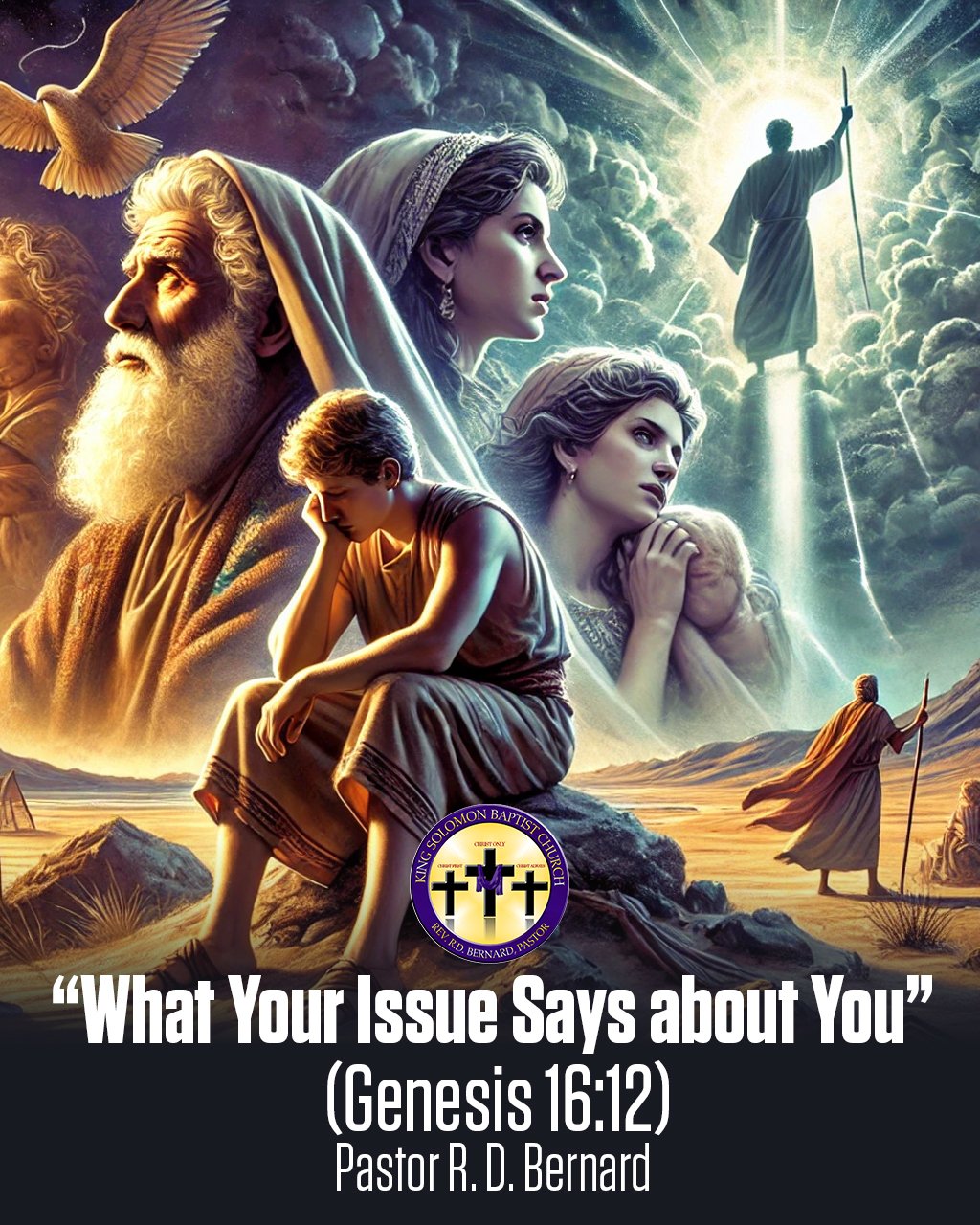
"What Your Issue Says about You" (Genesis 16:12)
The word "issue" in some older English translations of the Bible was used to describe one's offspring or children. In more modern translations, such as the English Standard Version or even the King James Version, the words "seed" or "offspring" are now translated to mean "children" or "descendants."
My personal preference is for the older translation using the word "issue." This word had the meaning of "proceeding from." It directly tied a mother and a father to not only their children but to their children's problems.
What issues your children (the ones who proceed from you) face is a direct reflection of the time spent in your home. It ties, using a straight line, one generation to the next. In fact, when the book of Genesis introduces the lives of the people it will discuss, the reader is generally told three things about each of the people:
- Who they would proceed from (their parents)
- How their parents were living when they were created (the setting for their creation)
- What issue this person (their child) will take to the next generation because of how they were created
This is the prototype for all families and for each individual (e.g., Noah - Genesis 5:29; Abraham - Genesis 12:1-3; Ishmael - Genesis 16:11-12; Isaac - Genesis 17:19; Jacob - Genesis 25:23; Joseph - Genesis 37:5-11).
Two people come together and produce a third who is then stamped with their issues or values and then sent out into the world where they, in their own generation, will meet the very same issues again. Ishmael was one of the very first that the Bible uses this method to introduce. Consider the following three points.
- How children are produced matters.
- Ishmael came into being because of his father's (Abraham) and stepmother's (Sarah) impatience with the plan of God. His mother, Hagar, married Abraham in a sham marriage just to produce an heir (Genesis 16:1-3). This matters because of the sinful situation in which Ishmael was born.
- Ishmael would spend his early life in competition with his father's other child, Isaac (Genesis 21:9), for attention and affection.
- Hagar, Ishmael's mother, would be in competition with Abraham's other woman, his lawful wife, Sarah (Genesis 16:5).
- How you live before children matters.
- Notice the things that the angel, in Genesis 16:12, said about his character. Ishmael would be:
- A wild man (can't stay in one place, not settled, doesn't own anything, always rents, changes jobs frequently).
- His hand would be against every man. Ishmael would see in every man, not a friend, but an enemy. Therefore, all men are now seen as being "against him."
- Ishmael would be made a great nation (Genesis 17:20-21). This is earthly success. But everywhere he went, he caused trouble and brought his chaos.
- The angel said in Genesis 16:12 that Ishmael would dwell in the presence of all his brethren, but he lived in tension with them as well.
- Whether the parent ultimately finds Christ or not matters.
- When Hagar got her mind off Abraham and his riches, and she had nowhere else to turn, then God revealed Himself to her (Genesis 16:13).
- Hagar named her son "Ishmael" or "God hears."
- God promised Abraham that although the covenant would remain with Isaac, Ishmael too, would be a great nation (Genesis 17:18-21).
"Christ First, Christ Only, Christ Always."