
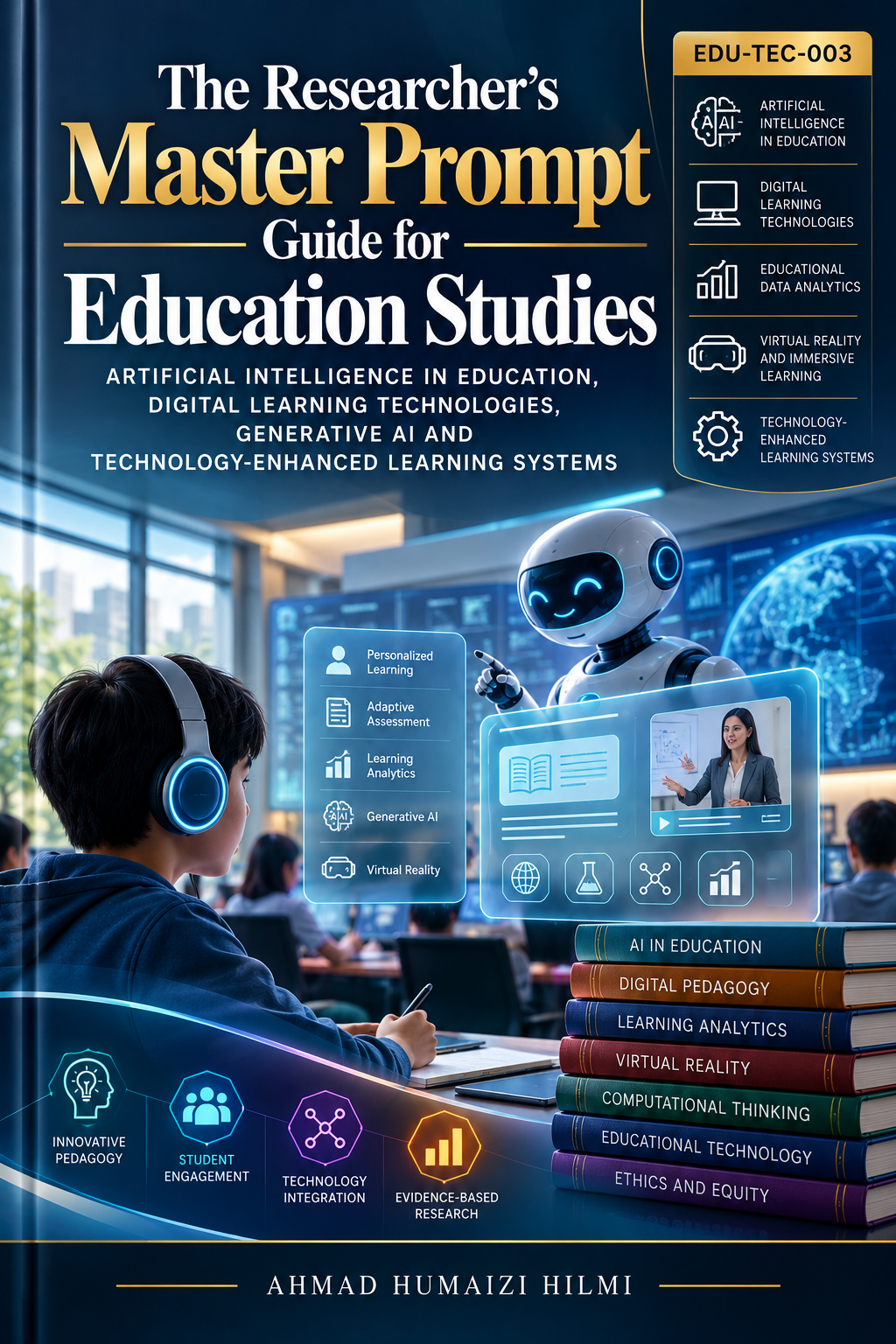
3. EDU-TEC-003 — Artificial Intelligence in Education, Digital Learning Technologies, Generative AI, Educational Data Analytics, Virtual Reality, Computational Thinking and Technology-Enhanced Learning Systems
Description
This Master Prompt provides a comprehensive research framework for investigating the integration, adoption, implementation, effectiveness and ethical implications of artificial intelligence and emerging digital technologies in contemporary education. It encompasses artificial intelligence, generative AI, large language models, intelligent tutoring systems, adaptive learning, machine learning, educational data mining, learning analytics, automated assessment, personalized learning, digital literacy, computational thinking, virtual laboratories, virtual reality, augmented reality, immersive learning environments and technology-enhanced STEM education. The framework examines technology adoption and acceptance through relevant theoretical models, including the Technology Acceptance Model, Unified Theory of Acceptance and Use of Technology, Diffusion of Innovations, Technological Pedagogical Content Knowledge and digital competence frameworks. Particular emphasis is placed on teacher readiness, student AI literacy, digital pedagogical competence, instructional effectiveness, learner engagement, accessibility, technological infrastructure, academic integrity, algorithmic bias, data privacy, educational equity and responsible AI governance. The Master Prompt integrates quantitative modelling, structural equation modelling, experimental and quasi-experimental evaluation, qualitative inquiry, mixed-methods research, systematic literature reviews, bibliometric mapping, computational analysis and comparative technology assessments. It supports the development and validation of AI-enabled educational frameworks, digital teaching strategies, technology acceptance models, intelligent instructional systems and evidence-based recommendations for sustainable and ethically responsible educational transformation.