
Walk in Their Skin: Five Historical Writing Prompts
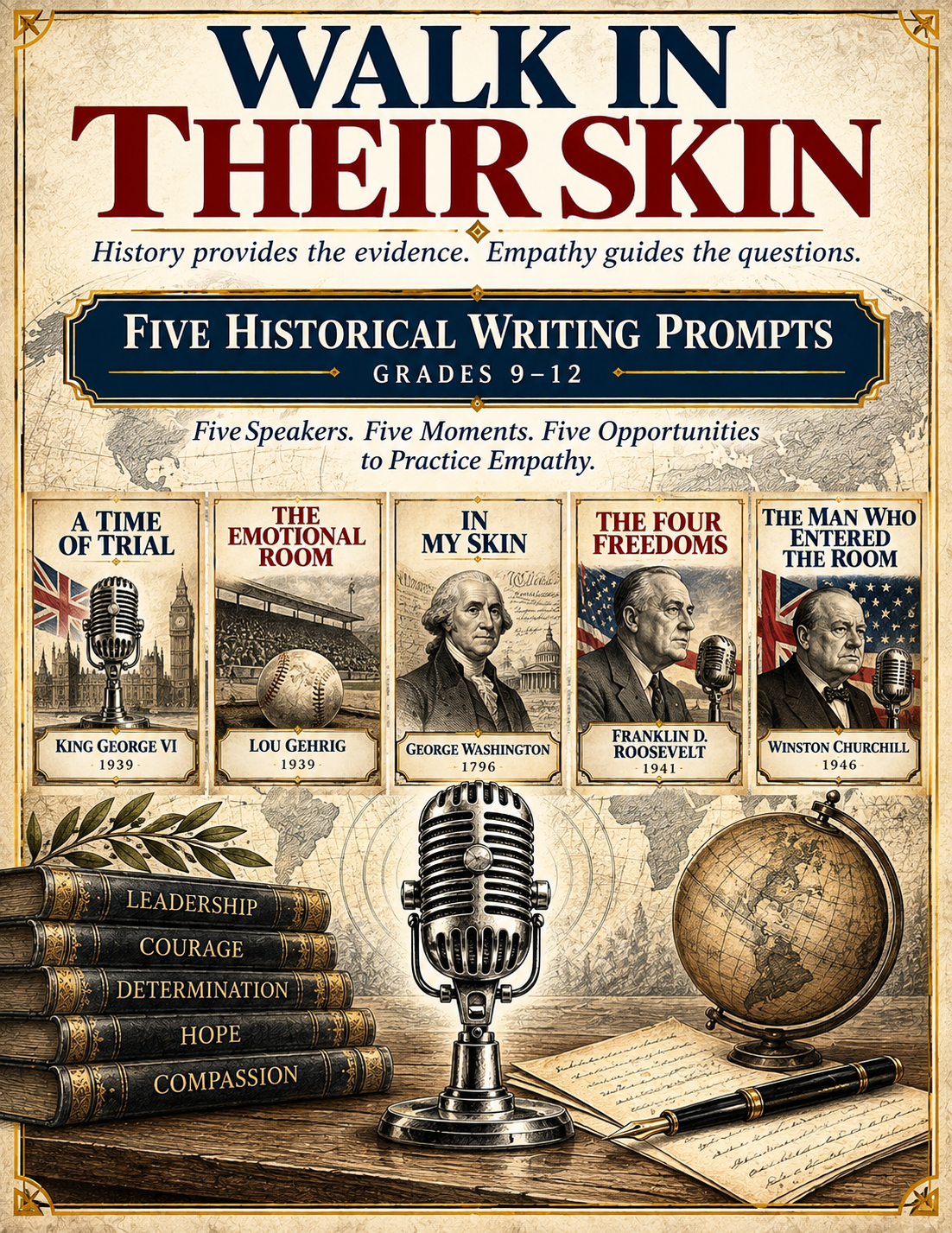
Walk in Their Skin: Five Historical Writing Prompts
Historical Research, Creative Writing & Critical Thinking | Grades 9–12
Five speakers. Five historical moments. Six opportunities to explore the person behind the words.
History provides the evidence. Empathy guides the questions.
What was a person carrying when they stood up to speak? What experiences shaped their words? Who was listening? And how might understanding the person change the way we interpret the message?
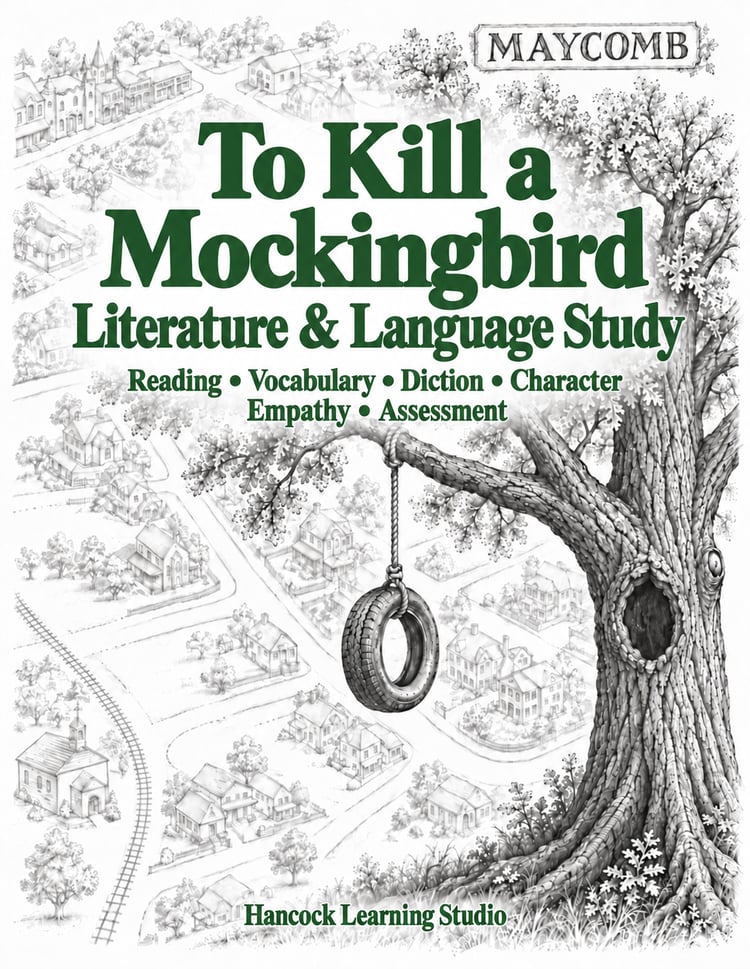
Inspired by the lesson Atticus Finch teaches Scout in To Kill a Mockingbird, Walk in Their Skin encourages students to look beyond a famous name, historical event, or memorable quotation and consider the human being behind the words.
This collection brings together five standalone historical writing studies spanning 1796–1946. Each introduces students to the speaker, the circumstances surrounding the speech, and the historical evidence needed to begin developing a thoughtful written response.
Five Historical Writing Studies Included
1. King George VI — A Time of Trial (1939)
On September 3, 1939, King George VI addressed a nation entering World War II. Students examine the unexpected responsibilities of kingship, his lifelong speech difficulties, and the pressures of speaking to a frightened nation.
Assignment: A 4–6 paragraph historical research and analytical essay.
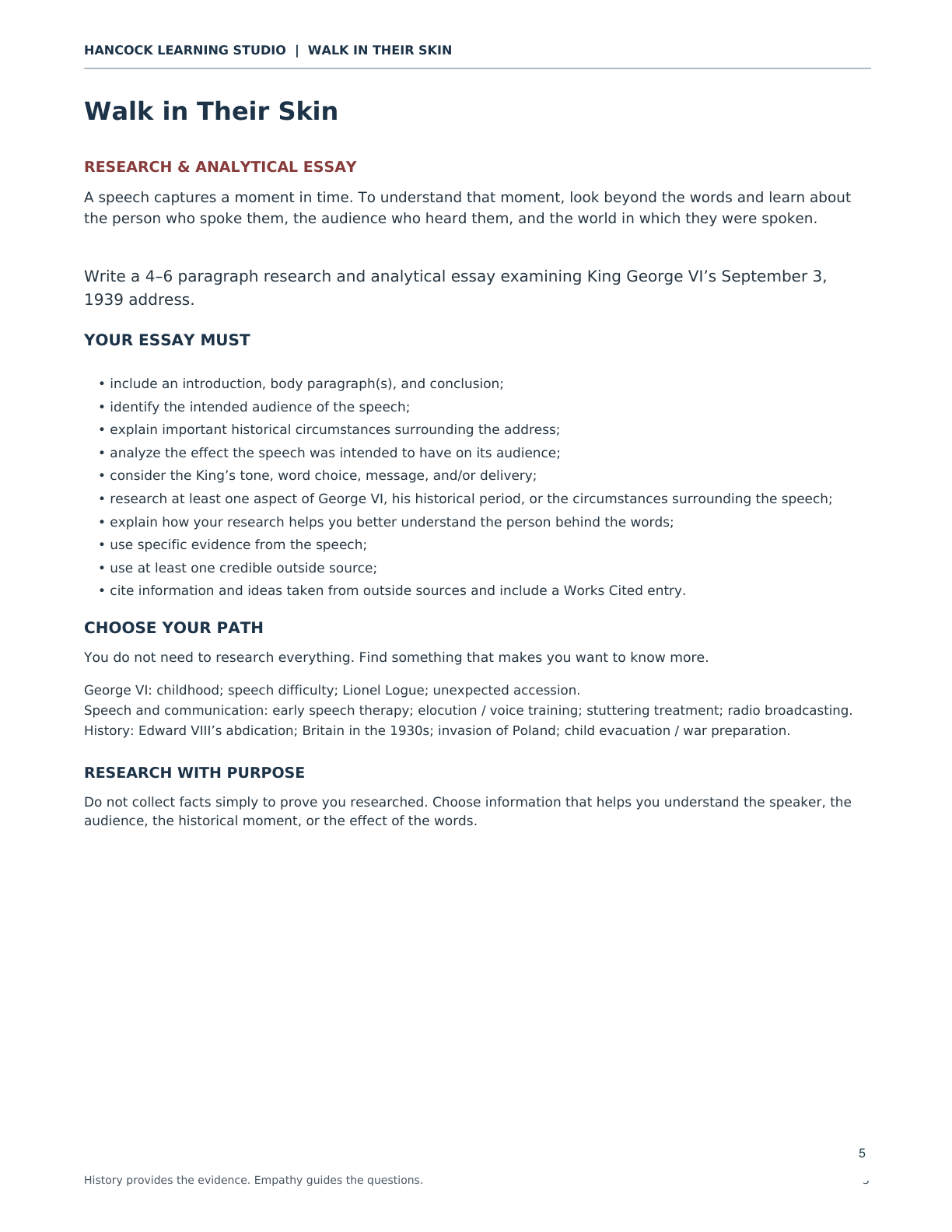
2. Lou Gehrig — The Emotional Room (1939)
On July 4, 1939, Lou Gehrig stood at home plate at Yankee Stadium—not to play baseball, but to address the people who had supported him throughout his career.
Students investigate Gehrig's life, his diagnosis, the stadium, and the people surrounding him before imagining the experience from his perspective.
Assignment: A 4–6 paragraph historically grounded creative essay.
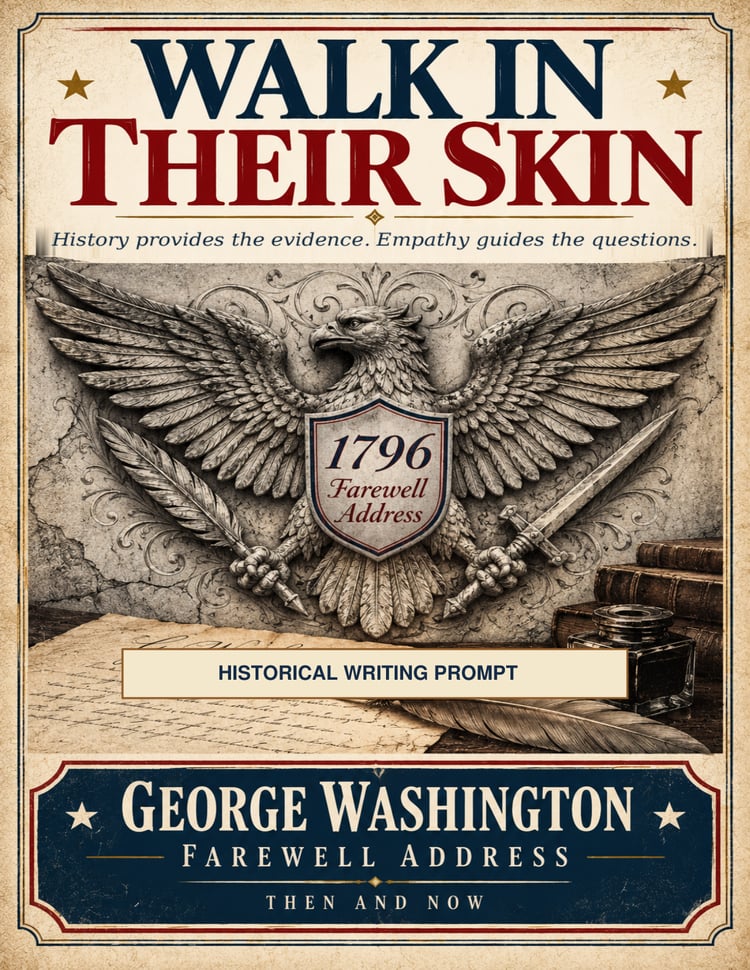
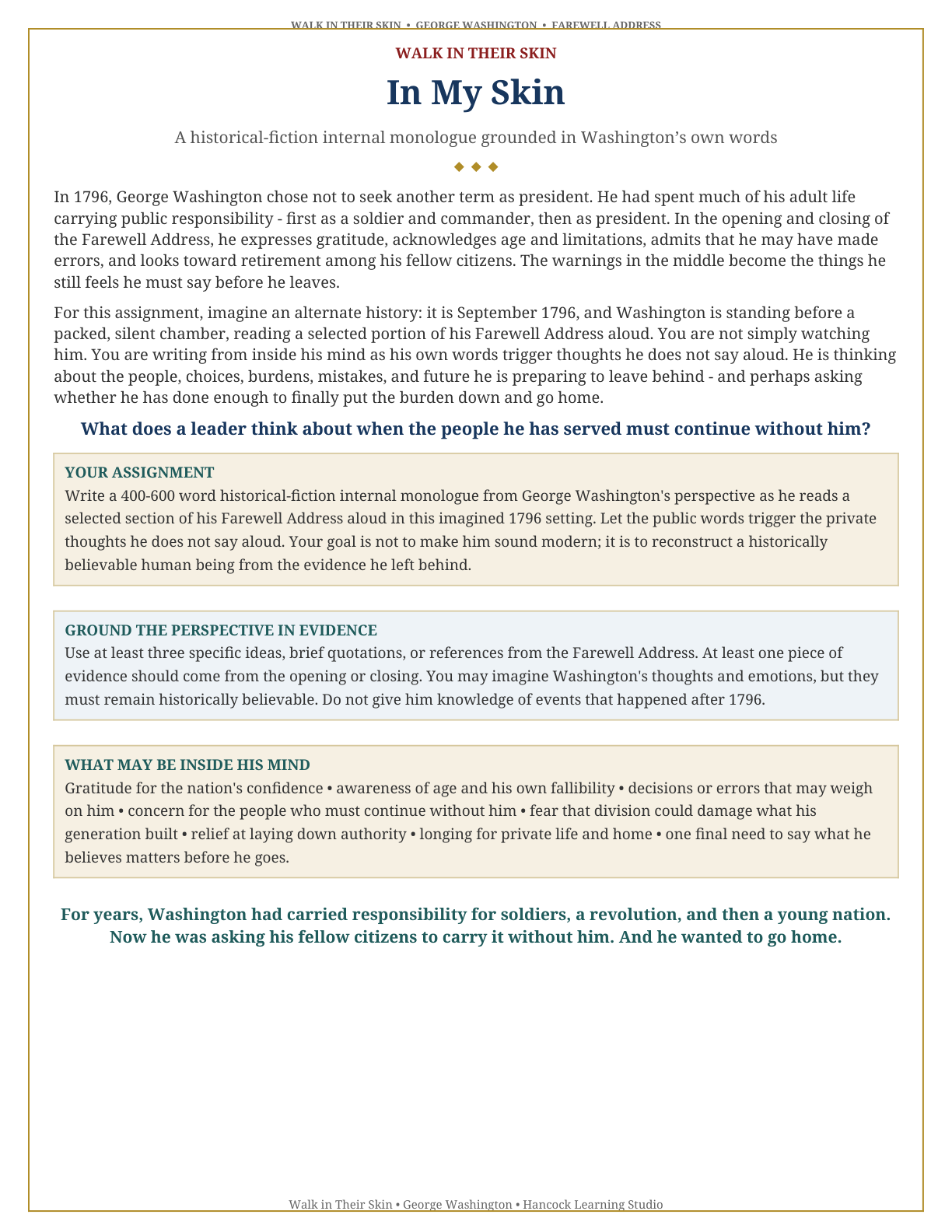
3. George Washington — In My Skin (1796)
George Washington prepared to leave the presidency after years of military and political leadership. His Farewell Address reveals gratitude, concern for the nation's future, and a desire to return to private life.
Students explore the man behind the written address through two imaginative, evidence-based assignments.
Assignments:
- In My Skin: A 400–600 word historical-fiction internal monologue imagining Washington in 1796.
- In My Skin: 230 Years Later: An optional upper-grades extension imagining Washington encountering his words being read in 2026.
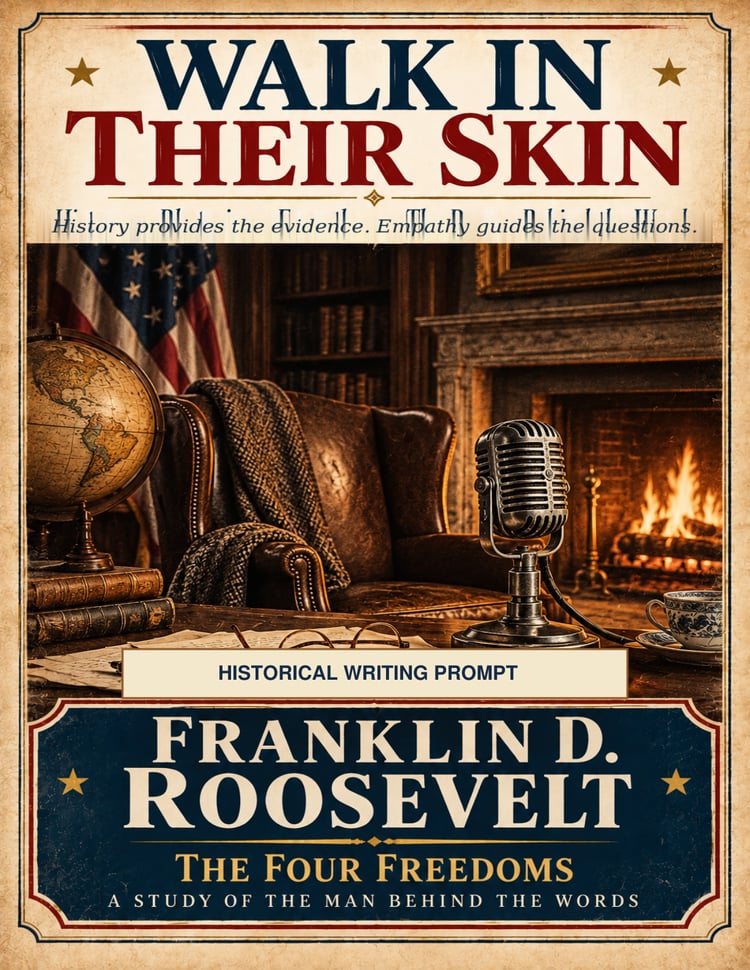
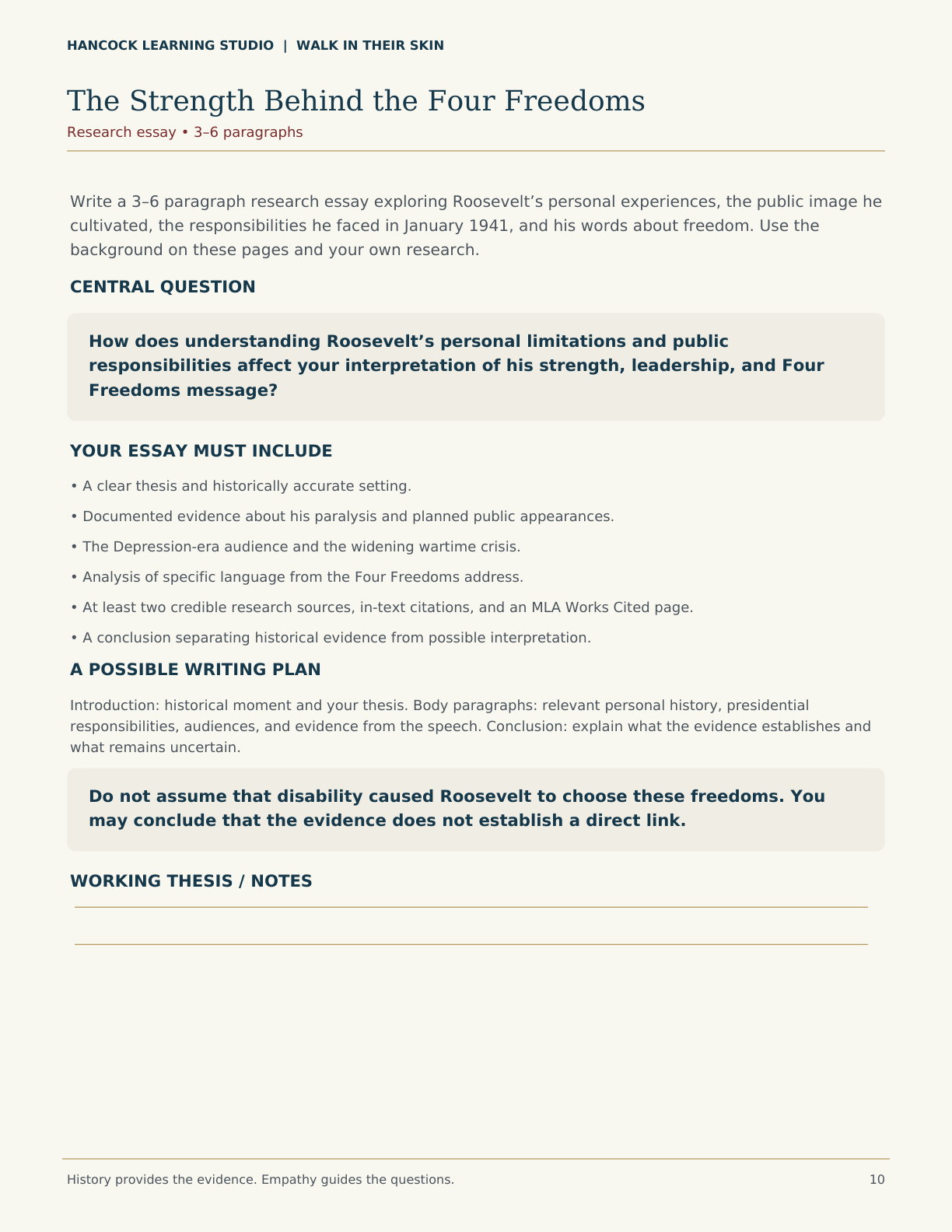
4. Franklin D. Roosevelt — The Strength Behind the Four Freedoms (1941)
Franklin D. Roosevelt addressed Americans still experiencing the Great Depression while war threatened people overseas. Students explore the president's physical limitations, public responsibilities, historical audience, and the four freedoms he asked the world to consider.
Assignment: A 3–6 paragraph research essay exploring Roosevelt's experiences, leadership, and Four Freedoms message.
Includes an authentic teacher-graded high school student writing sample.
5. Winston Churchill — The Man Who Entered the Room (1946)
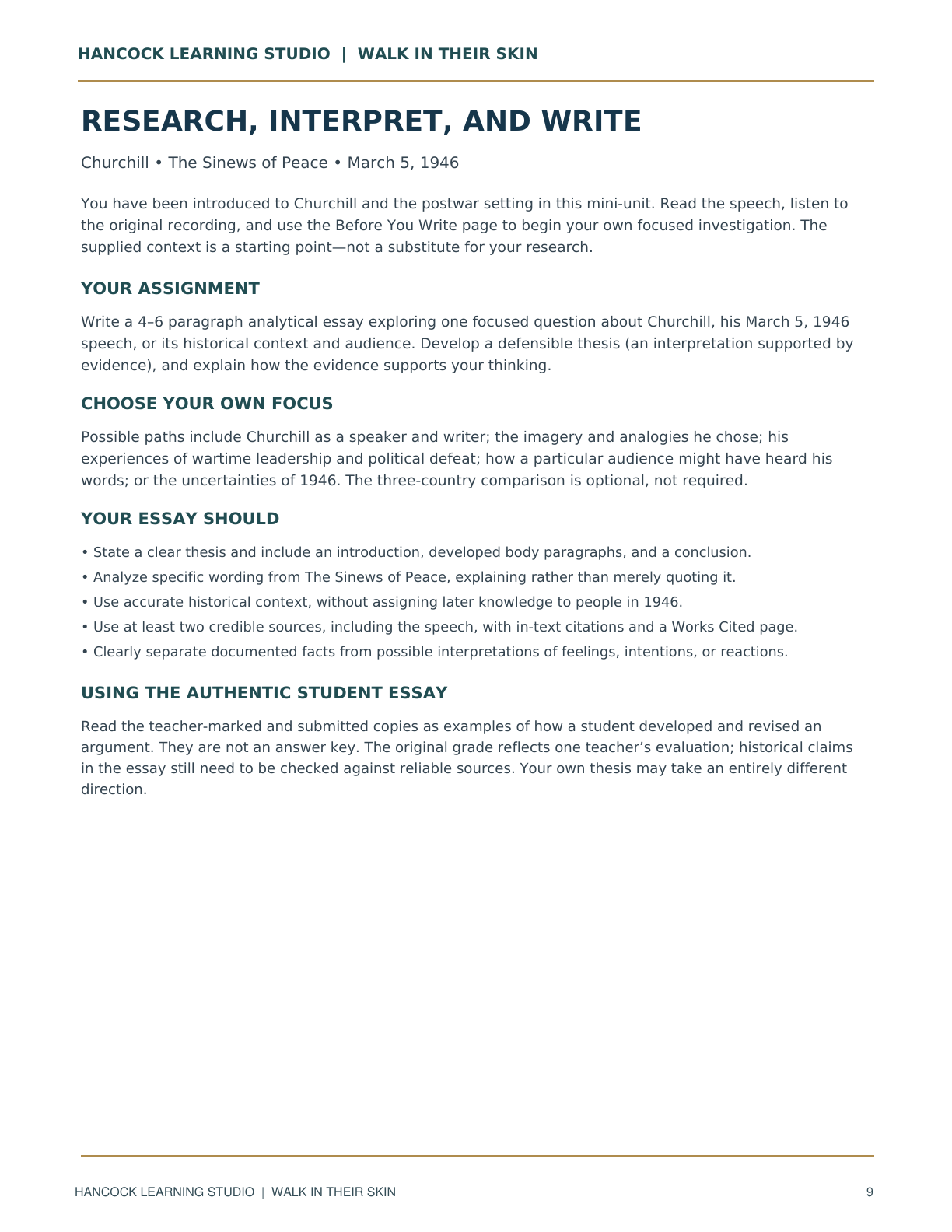
Churchill arrived at Westminster College in Fulton, Missouri, after helping lead Britain through World War II, experiencing political defeat, and witnessing an uncertain postwar world.
Students examine the man who entered that room, his carefully chosen language, and the audiences who would hear his warning.
Assignment: A 4–6 paragraph historical research and analytical essay with a student-selected focus.
Includes authentic high school student writing, teacher feedback, and a submitted essay for comparison.
What's Included
- Five complete, standalone PDF writing studies
- Historical background and speaker-specific context
- Access to original speeches and supporting research materials
- Six writing assignments, including Washington's optional extension
- Research and writing guidance
- Opportunities to examine speech, audience, language, and historical perspective
- Authentic student writing examples in the Roosevelt and Churchill studies
- Teacher rubrics for assessing student work
More Than a Writing Prompt
These assignments do not ask students simply to summarize speeches or decide whether historical figures were right or wrong.
Instead, students investigate the people behind the words.
They learn that understanding another person's perspective does not require agreement. They also learn that historical empathy must be grounded in evidence—not assumptions about private thoughts or feelings.
Students are encouraged to research, question, listen, analyze, and develop their own supported interpretations.
Perfect For
- High school English Language Arts, grades 9–12
- Homeschool history and literature studies
- Historical research and essay writing
- Speech and rhetorical analysis
- Critical thinking and perspective-taking
- Independent writing assignments
Each PDF can be used independently, and students may complete the studies in any order.
Please note: This bundle contains five historical writing studies, not the five complete Walk in Their Skin speech units. The full studies are available separately through Hancock Learning Studio.
History provides the evidence. Empathy guides the questions.
Hancock Learning Studio — Walk in Their Skin