
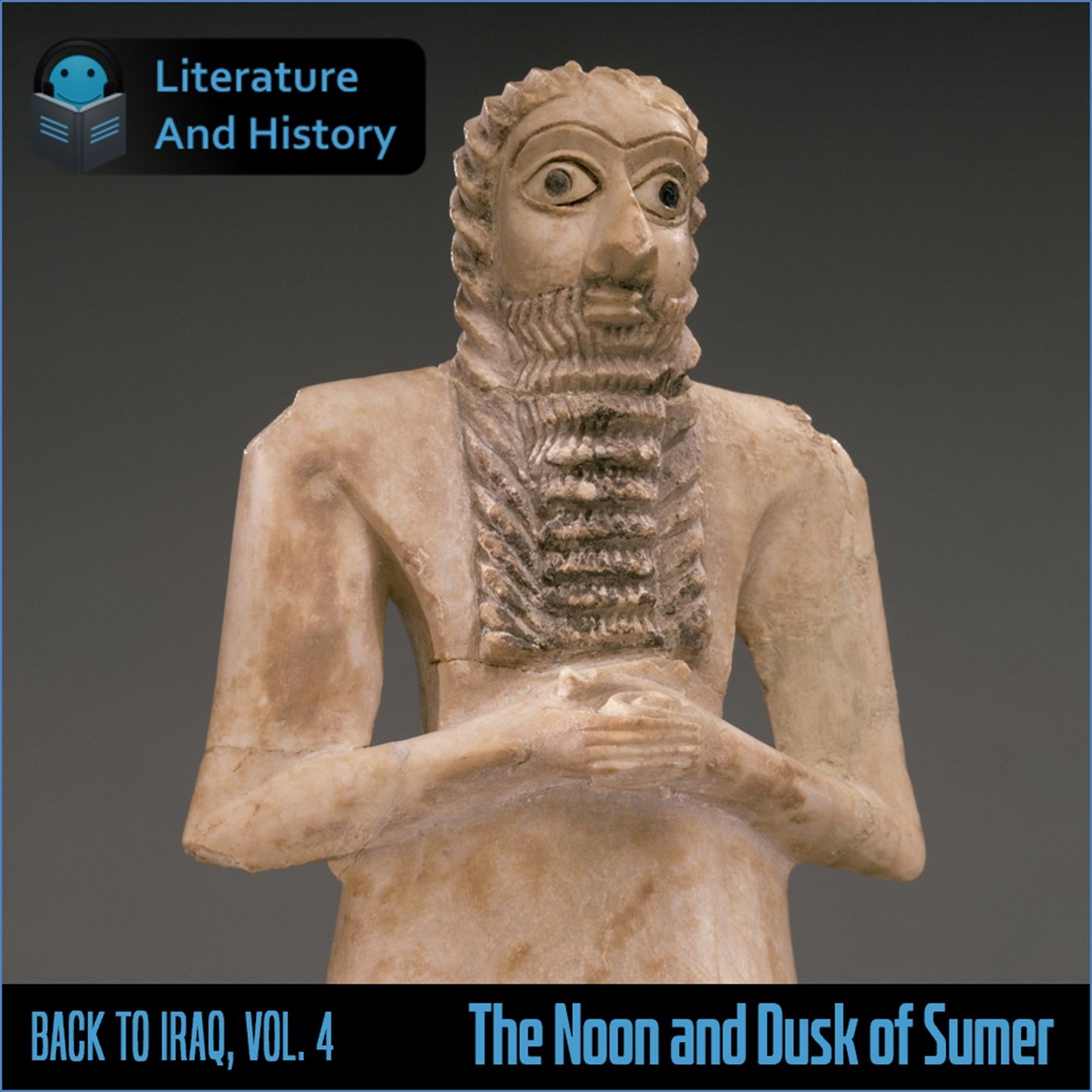
BTI 4: The Noon and Dusk of Sumer
Volume 4 of Back to Iraq considers two final, distinct texts from ancient Sumerian literature. The first of these is called the Cylinders of Gudea. The Cylinders of Gudea constitute the longest surviving piece of Sumerian writing. They tell the lengthy story of a southern Mesopotamian king named Gudea, and his dutiful, detailed efforts to erect a temple to Ningirsu, the Sumerian god of spring storms. Sprawling in size and full of lovely incidental details, the Cylinders of Gudea offer a wealth of information about Sumerian daily life and religion, and they also prefigure later ancient near eastern writings about sacred structures, like Exodus’ explication of the Tabernacle. Volume 4 of Back to Iraq also covers the Lament for Ur. This final piece of Sumerian literature in the series is the most famous lamentation text from antiquity outside of those in the Bible. Written and performed around 2004 BCE to commemorate the loss of Sumer’s most celebrated city after it was sacked by invaders, the Lament for Ur is a beautiful poem as well as a valuable window into later Sumerian theology. Together, the Cylinders of Gudea and Lament for Ur offer a long, final look at Sumerian culture.