


Machine Learning (ML) – Introduction
On Sale
$3.00
$3.00
Machine Learning is a part of Artificial Intelligence (AI) where computers learn from data and improve their performance without being explicitly programmed.
👉 Instead of writing rules manually, we train models using data.
Simple example:
- Traditional programming: Rules + Data → Answer
- Machine Learning: Data + Answers → Rules (Model)
🧠 Why Machine Learning Is Important
- Automates decision-making
- Finds patterns humans can’t easily see
- Improves over time with more data
Used in:
- Recommendation systems (Netflix, YouTube)
- Spam detection
- Image & face recognition
- Voice assistants
- Fraud detection
📊 Types of Machine Learning
1️⃣ Supervised Learning
Model learns from labeled data (input + output known).
Examples:
- Email spam detection
- House price prediction
Common algorithms:
- Linear Regression
- Logistic Regression
- Decision Trees
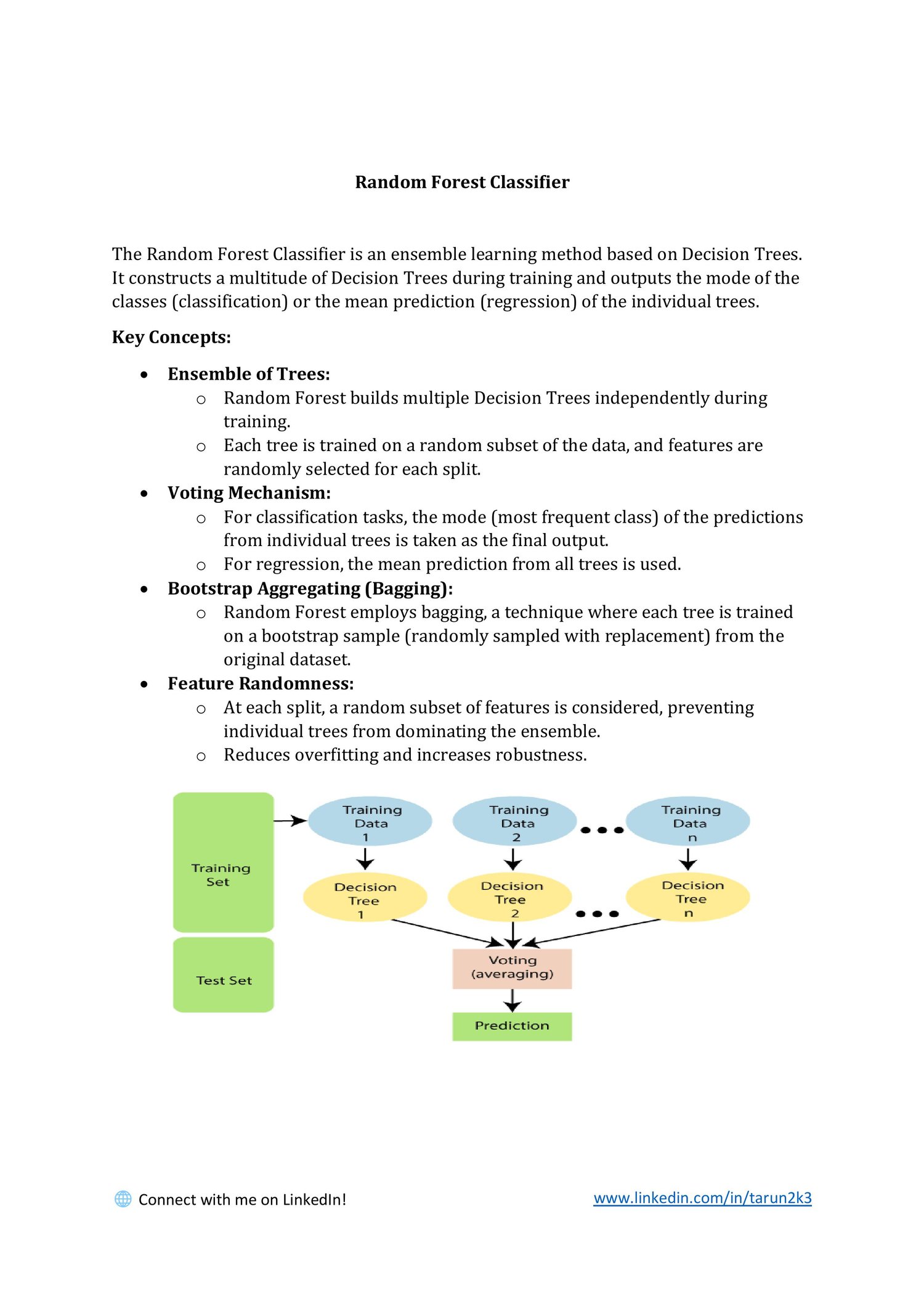
- Random Forest
- Support Vector Machines (SVM)
2️⃣ Unsupervised Learning
Model works with unlabeled data (no predefined output).
Examples:
- Customer segmentation
- Pattern discovery
Common algorithms:
- K-Means Clustering
- Hierarchical Clustering
- PCA (Dimensionality Reduction)
3️⃣ Reinforcement Learning
Model learns by trial and error using rewards and penalties.
Examples:
- Game AI (chess, Go)
- Robotics
- Self-driving simulations
🔁 Machine Learning Workflow
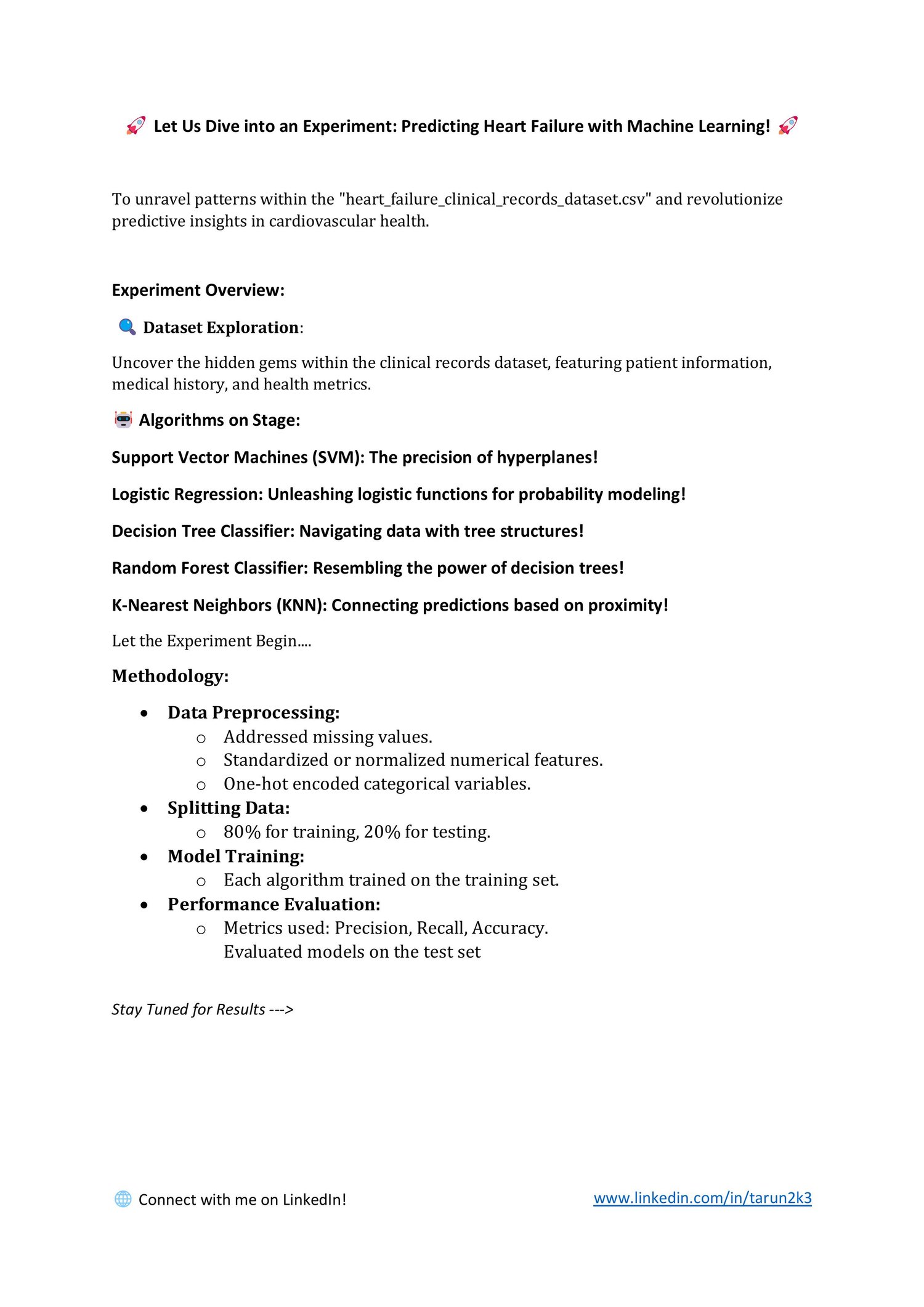
- Collect data
- Clean & preprocess data
- Split data (train / test)
- Choose algorithm
- Train the model
- Evaluate performance
- Improve & deploy
🧰 Tools & Technologies
- Languages: Python (most popular), R
- Libraries:
- NumPy, Pandas
- Scikit-learn
- TensorFlow, PyTorch
- Visualization: Matplotlib, Seaborn
📈 Key ML Concepts (Interview Important)
- Feature & label
- Training vs testing data
- Overfitting & underfitting
- Accuracy, precision, recall
- Bias vs variance
- Model evaluation