
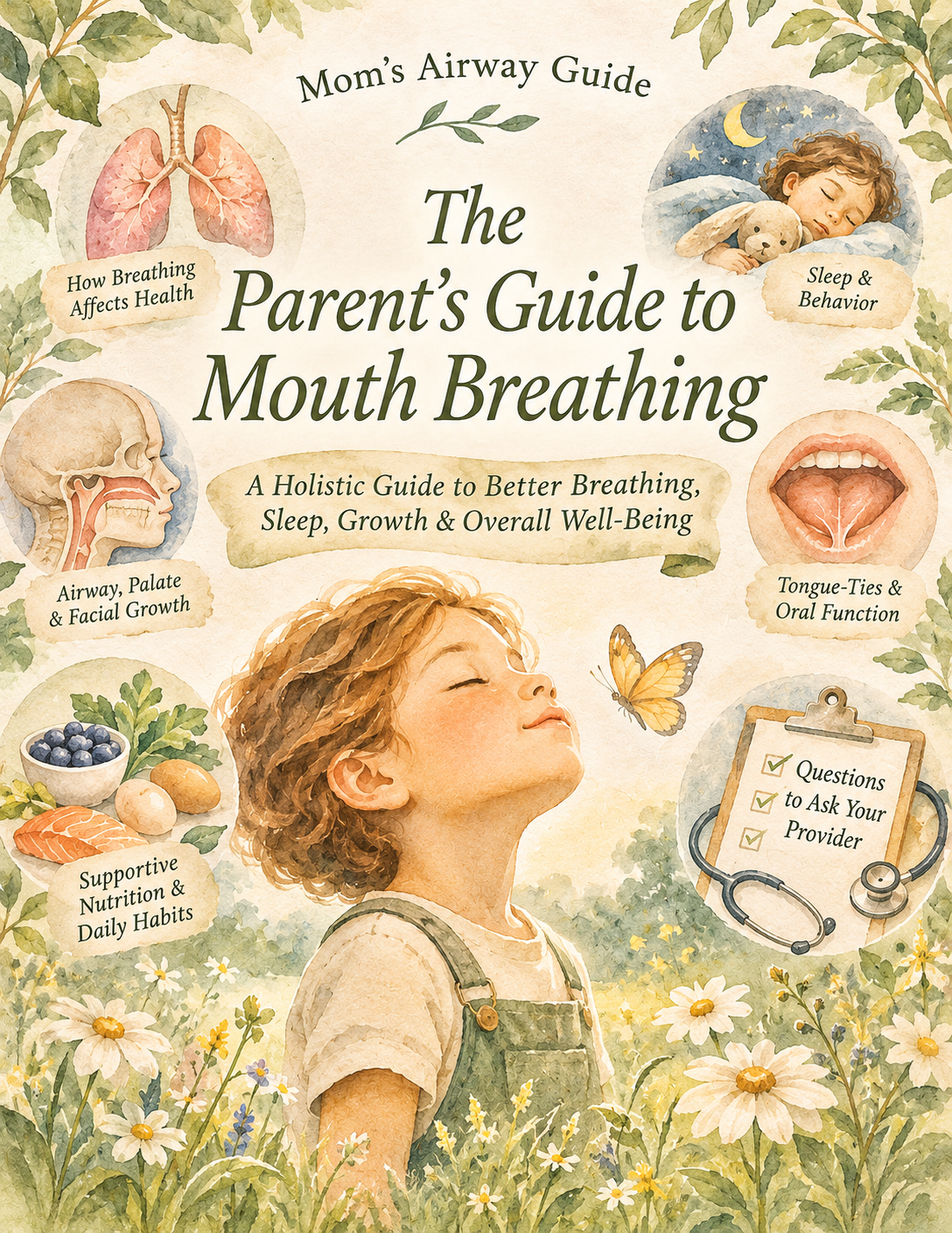
The Parent's Guide to Mouth Breathing | Kids' Sleep & Airway Health
Does Your Child Sleep With Their Mouth Open?
Maybe you've noticed snoring, teeth grinding, restless sleep, or frequent nighttime waking.
Perhaps you've wondered whether your child's breathing could be affecting their sleep, but you're not sure what to look for or which questions to ask.
The Parent's Guide to Mouth Breathing was created to help parents feel more informed and prepared when navigating concerns about their child's breathing, sleep, and oral development.
What You'll Learn
🌿 Recognize Signs Worth Noticing
Understand common nighttime and daytime observations that may deserve a closer look.
🌙 Explore the Connection Between Breathing & Sleep
Learn why nasal breathing matters and how breathing patterns may relate to sleep quality and overall well-being.
🦋 Understand Possible Contributing Factors
Explore nasal obstruction, allergies, oral function, tongue mobility, and jaw development.
🌸 Feel More Prepared for Healthcare Appointments
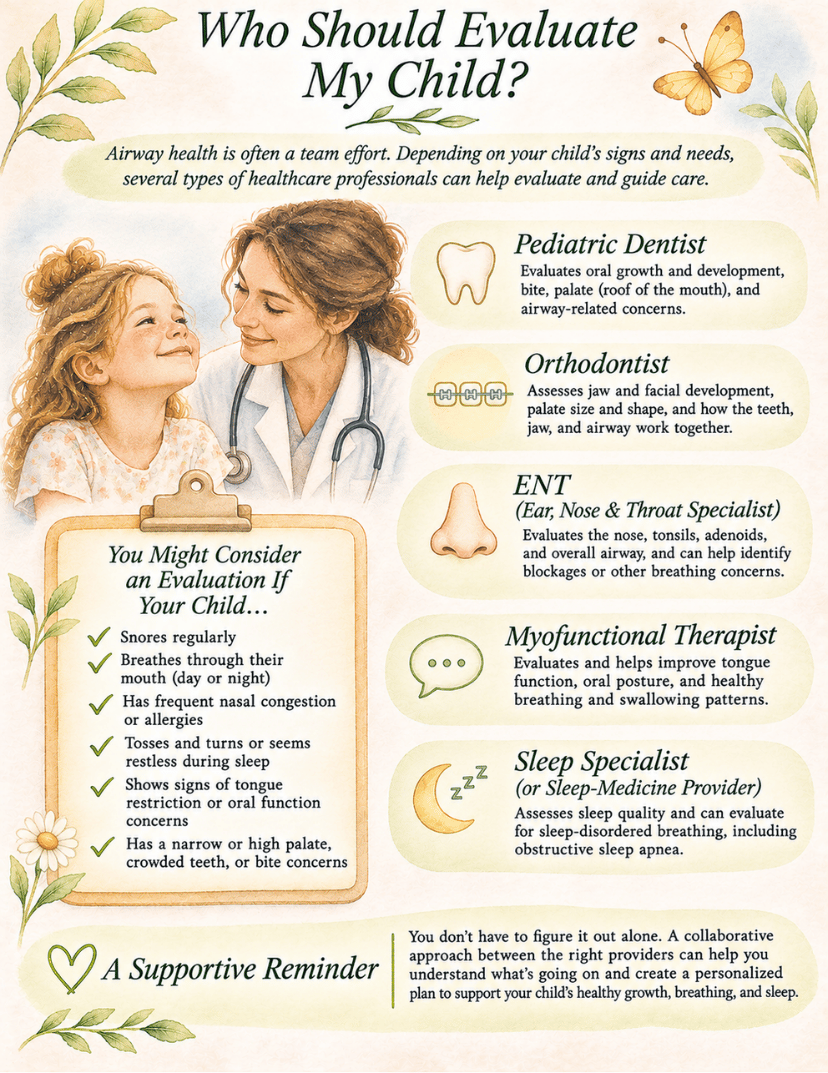
Discover questions to ask and which healthcare professionals may be helpful when further evaluation is needed.
💛 Learn About Supportive Everyday Habits
Explore practical, age-appropriate habits that may support your child's comfort and well-being.
This Guide Is For You If…
- Your child regularly sleeps with their mouth open.
- You've noticed snoring, restless sleep, or teeth grinding.
- You're curious about the relationship between breathing, sleep, and oral development.
- You want to feel more confident discussing your concerns with healthcare providers.
What's Included?
- An illustrated digital educational guide
- Easy-to-understand explanations
- Questions to bring to healthcare appointments
- Supportive habits and practical considerations for parents
- Instant PDF download
You don't need to have all the answers. Sometimes, knowing what to notice and what to ask is the first step.
Instant Digital Download
For educational purposes only. This resource does not replace individualized medical advice, diagnosis, or treatment. Persistent snoring, gasping, or observed breathing pauses should be evaluated by a qualified healthcare professional.'s health.