
John Deere 344K Wheel Loader Operator's Manual PDF Download (OMT313329) - MJODOMT313329.zip
John Deere 344K Loader Operator's Manual (OMT313329)
omt313329 - Operator's manual for the John Deere 344K Loader (PIN: 1LU344K_ _ _B030077— ) in PDF format
Complete Operator's Manual for John Deere 344K Loaders, with all the shop information to maintain & operate your loader.
PRODUCT DETAILS:
Total Pages: 414 pages
File Format: PDF (Internal Links, Bookmarked, Table of Contents, Searchable, Printable, high quality)
Language: English
omt313329 - 344K Loader (PIN: 1LU344K_ _ _B030077— )
Table of Contents
Foreword
Manual Identification—READ THIS FIRST!
IMPORTANT
EPA Non-road Emissions Control Warranty Statement—Compression Ignition
CARB Non-road Emissions Control Warranty Statement—Compression Ignition
FCC Notifications to User
Service ADVISOR™ Remote (SAR)—SOFTWARE TERMS AND CONDITIONS
Technical Information Feedback Form
Section 1-1: Safety—Safety and Operator Convenience
Safety and Operator Convenience Features
Section 1-2: Safety—General Precautions
Recognize Safety Information
Follow Safety Instructions
Operate Only If Qualified
Wear Protective Equipment
Avoid Unauthorized Machine Modifications
Inspect Machine
Stay Clear of Moving Parts
Avoid High-Pressure Fluids
Avoid High-Pressure Oils
Work In Ventilated Area
Prevent Fires
Prevent Battery Explosions
Handle Chemical Products Safely
Decommissioning: Proper Recycling and Disposal of Fluids and Components
Exhaust Filter Ash Handling and Disposal
Prepare for Emergencies
Clean Debris from Machine
Add Cab Guarding for Special Uses
Section 1-3: Safety—Operating Precautions
Use Steps and Handholds Correctly
Start Only From Operator's Seat
Use and Maintain Seat Belt
Prevent Unintended Machine Movement
Avoid Worksite Hazards
Use Special Care When Operating Loader
Keep Riders Off Machine
Avoid Backover Accidents
Avoid Machine Tip Over
Operating on Slopes
Operating or Traveling On Public Roads
Inspect and Maintain ROPS
Add and Operate Attachments Safely
Section 1-4: Safety—Maintenance Precautions
Park and Prepare for Service Safely
Service Tires Safely
Service Cooling System Safely
Remove Paint Before Welding or Heating
Make Welding Repairs Safely
Drive Metal Pins Safely
Clean Exhaust Filter Safely
Section 1-5: Safety—Safety Signs
Safety Signs
Replace Safety Signs
Section 2-1: Operation—Operator Station
Loader Control Switches and Levers
Multi-Function Lever
Pedals
Monitor Display
Monitor Display Functions
Switch Panel
Switch Panel Functions
Audible Alarm
Cab Climate Controls
Opening and Securing Side Door and Secondary Exit
Adjusting Steering Column Tilt
Adjusting Seat
Section 2-2: Operation—Operating the Machine
Inspect Machine Daily Before Starting
Battery Disconnect Switch
Check Instruments Before Starting
Engine Break-In Period
Starting the Engine
Warm-Up
Cold Weather Warmup
Park Brake Switch
Selecting Travel Direction
Selecting Travel Speed Range
Slowing and Stopping the Machine
Verifying Bucket Stop
Loader Control Lever
Differential Lock Button
Operating Boom Float
Operating 3rd Function Hydraulics—If Equipped
Operating Ride Control—If Equipped
Operating Secondary Steering—If Equipped
Operating Quick Disconnect
Operating Beacon Light—If Equipped
Fork Attachment
Parking the Machine
Loading Machine on a Trailer
Towing Procedure
Section 3-1: Maintenance—Machine
Alternative and Synthetic Lubricants
Hydraulic Oil
Differentials, Gear Case, and Final Drive Oil
Service (Drum) Brake Oil
Grease
Lubricant Storage
Mixing of Lubricants
Diesel Fuel
Diesel Fuel Specifications
Lubricity of Diesel Fuel
Handling and Storing Diesel Fuel
BioDiesel Fuel
Testing Diesel Fuel
Minimizing the Effect of Cold Weather on Diesel Engines
John Deere Break-In™ Plus Engine Oil
Engine Oil and Filter Service Intervals — Interim Tier 4, Final Tier 4, Stage IIIB, and Stage IV Engines
Diesel Engine Coolant (engine with wet sleeve cylinder liners)
Drain Intervals for Diesel Engine Coolant
John Deere COOL-GARD™ II Coolant Extender
Supplemental Coolant Additives
Operating in Warm Temperature Climates
Additional Information About Diesel Engine Coolants and John Deere COOL-GARD™ II Coolant Extender
Testing Diesel Engine Coolant
Disposing of Coolant
Section 3-2: Maintenance—Periodic Maintenance
Service Your Machine at Specified Intervals
Check Hour Meter Regularly
Prepare Machine for Maintenance
Drain Hose Storage
Opening Hood and Removing Grille
Fuel Tank
Locking Machine Frame
Loader Boom Lock
Fluid Analysis Program Test Kits and 3-Way Coolant Test Kit
Service Intervals
Required Parts
Section 3-3: Maintenance—As Required
Check Coolant
Check Serpentine Belt
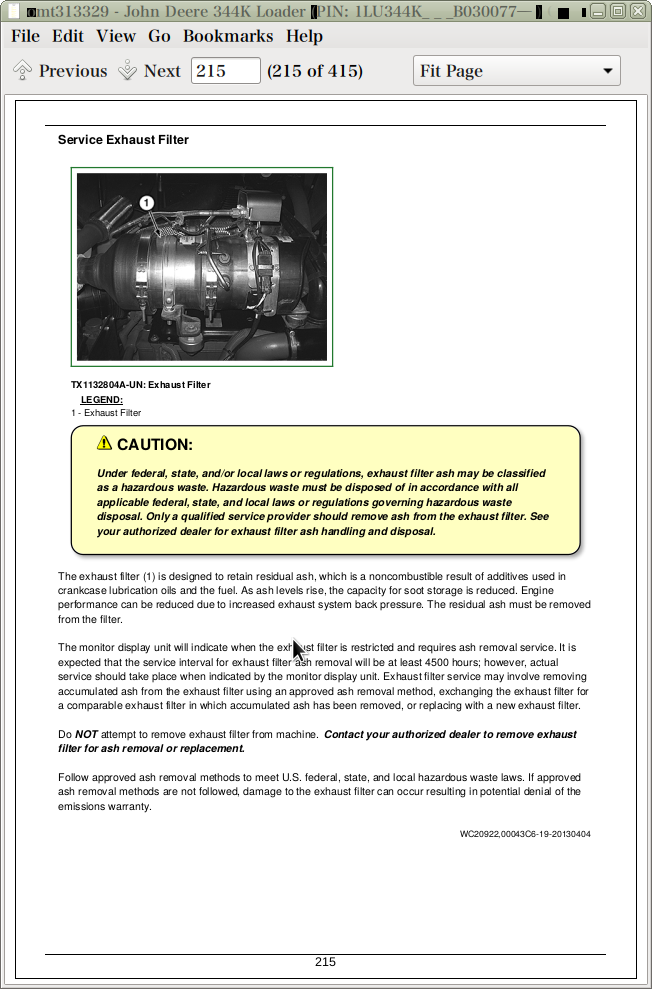
Service Exhaust Filter
Drain Primary Fuel Filter and Water Separator
Check Windshield Washer Fluid Level
Lubricate Door Hinges
Check Wheel Bolt Torque
Check Tire Pressure
Tire Pressures
Section 3-4: Maintenance—Every 10 Hours or Daily
Check Engine Oil Level
Clean Air Cleaner Dust Unloader Valve
Check Recovery Tank Coolant Levels
Check Hydraulic Oil Level
Lubricate Quick Disconnect Pins and Bushings
Section 3-5: Maintenance—Every 50 Hours
Lubricate Loader Linkage and Cylinder Pivots
Lubricate Drive Shaft
Lubricate Steering Cylinder
Lubricate Frame Hinge Pivots
Lubricate Rear Oscillating Axle
Section 3-7: Maintenance—Every 250 Hours
Check Service (Drum) Brake Oil Level
Check Cab Recirculation Air Filter
Section 3-8: Maintenance—Every 500 Hours
Lubricate Rear Axle Steering Pivots
Check Final Drives Oil Level
Check Rear Axle Differential and Gear Case Oil Levels
Check and Clean Cooling Package
Check Battery Electrolyte Level and Terminals
Change Engine Oil and Replace Oil Filter
Replace Primary Fuel Filter and Water Separator
Replace Final Fuel Filter
Check Air Intake Hoses
Replace Hydraulic System Return Suction Filter
Check and Adjust Inching Linkage
Check Front Axle Differential Oil Level
Section 3-9: Maintenance—Every 1000 Hours
Check Park (Wet) Brake Pads
Check Service (Drum) Brake Pads
Change Final Drive Oil
Change Rear Axle Differential and Gear Case Oil
Check Coolant
Clean Engine Crankcase Vent Tube
Replace Air Cleaner Elements
Replace Dust Unloader Valve
Replace Hydraulic Oil Reservoir Breather
Replace Cab Recirculation Air Filter
Change Front Axle Differential Oil
Section 3-10: Maintenance—Every 2000 Hours
Replace Open Crankcase Ventilation (OCV) Filter
Change Hydraulic Oil
Clean Hydraulic System Strainer
Section 3-11: Maintenance—Every 6000 Hours
Drain Cooling System
Fill Cooling System
Section 4-1: Miscellaneous—Machine
Check Windshield Washer Fluid Level
Precautions for Alternator and Regulator
Handling, Checking, and Servicing Batteries Carefully
Using Booster Batteries—12-Volt System
Using Battery Charger
Replacing Batteries
Removing Batteries
Replacing Fuses
Check Radiator Hoses
Drain Fuel Tank Sediment
Return-to-Dig Adjustment
Replacing Drive and Marker Light Bulbs
Bleeding Fuel System
Welding on Machine
Do Not Service Control Valves, Cylinders, Pumps, or Motors
Servicing Air Conditioning System—If Equipped
Replacing Bucket Teeth—TK Series
ROPS Torque Specifications
Hardware Torque Specifications
Metric Bolt and Screw Torque Values
Unified Inch Bolt and Screw Torque Values
Section 4-2: Miscellaneous—Operational Checkout
Operational Checkout
Section 4-3: Miscellaneous—Troubleshooting
Troubleshooting Procedure
Engine
Hydrostatic Transmission
Differential and Axle
Service Brake
Drive Line
Park Brake
Hydraulic System
Steering
Air Conditioning System
Heater System
Section 4-4: Miscellaneous—Machine Storage
Prepare Machine for Storage
Monthly Storage Procedure
Section 4-5: Miscellaneous—Machine Numbers
Record Product Identification Number (PIN)
Record Engine Serial Number
Record Hydraulic Pump Serial Number
Record Axle Serial Numbers
Keep Proof of Ownership
Keep Machines Secure
Section 4-6: Miscellaneous—Specifications
Engine Specifications
Specifications
Drain and Refill Capacities