
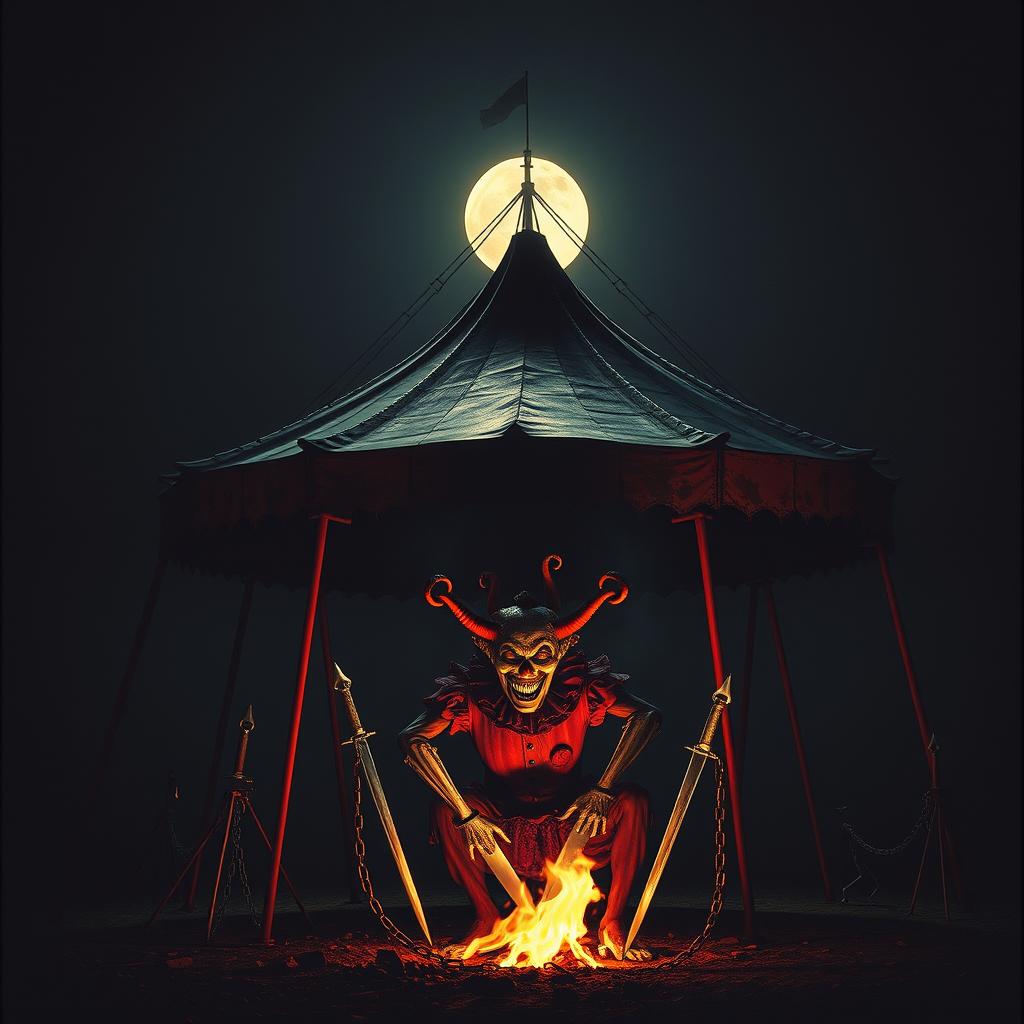
Where the Clowns Learned to Pray
Infernal, merciless, predatory.
This poem does not rage constantly—it stalks, then strikes. The evil is ancient and confident, not frantic. Nothing here begs to be feared; it expects fear.
Emotionally, the tone sits at:
- Cold dominance
- Ritualistic malice
- Apocalyptic certainty
There is no hope, no rebellion—only inevitability.
Vocal Character (Overall)
- Register: Low to mid-low, chest-heavy
- Texture: Roughened, scorched, but controlled (think gravel through velvet, not screaming chaos)
- Pacing: Slow to deliberate, with sudden accelerations
- Authority: Speak like the narrator knows the ending already
Imagine:
- A hell-preacher
- A ringmaster demon
- Or Death narrating its favorite memory
Stanza-by-Stanza Vocal Direction
“The sky splits open like a throat…”
Tone: Ominous, ceremonial
Vocal: Slow, hollow, almost whispered but resonant
Let the words “bleeds,” “black,” “choke” linger.
This is the invocation—the gate opening.
“The big top isn’t cloth anymore—”
Tone: Revelatory horror
Vocal: Slight rise in volume, but restrained
Deliver this like unveiling something sacred and obscene.
Pause after “anymore”—let dread breathe.
“Clowns crawl out of the furnace mouth,”
Tone: Contemptuous menace
Vocal: Add a sneer, curl the consonants
This is where disgust enters—not fear, revulsion.
Don’t rush. Make the listener picture it against their will.
“Sawdust drinks the gore of wars,”
Tone: Blasphemous poetry
Vocal: Almost lyrical, unsettlingly beautiful
This contrast is key—say it like a hymn sung wrong.
Beauty weaponized.
“They hunt the hunters,”
Tone: Judgment
Vocal: Sharper, clipped, more percussive
Each line here should hit like a gavel.
This is the law being spoken.
“Their laughter isn’t sound—it’s law,”
Tone: Absolute authority
Vocal: Strongest projection so far, but still controlled
This is the thesis of the poem.
Deliver it like a sentence being passed—final, unquestionable.
“Hellcats stalk on chains of fire,”
Tone: Predatory elegance
Vocal: Lower again, smoother, almost purring
Let the rhythm stalk with the imagery.
This is terror that enjoys itself.
“The ringmaster wears a crown of hooks,”
Tone: Mocking welcome
Vocal: Add a twisted warmth, a false hospitality
Smile audibly on “Welcome home.”
That smile should feel like a trap snapping shut.
“No exit. No repentance.”
Tone: Finality
Vocal: Flat, cold, stripped of flourish
Short pauses between sentences.
This is the door locking.
Final lines: “It just laughs…”
Tone: Eternal mockery
Vocal: Gradually quieter, closer, more intimate
Each “laughs” should feel closer to the listener’s ear.
End not loud—but inescapable.