

The Elephant Planner for School Social Workers
You carry a caseload shaped by need, not by capacity. You work in classrooms you do not run, toward outcomes that depend on families, agencies, and systems far beyond your hallway. And when your work succeeds, it tends to be invisible: the crisis that never happened, the family that stayed housed, the student who quietly came back.
Most planners were built for people whose days go as planned. Yours were not. So we built this one for the job you actually have.
How do you eat an elephant? One bite at a time. This planner cuts the role into bites. Each section takes one piece of the work and gives it a goal you monitor, questions that keep you honest, and room to capture what you see. The weekly pages are where those bites happen.
WHAT’S INSIDE
226 pages. One school year. The whole role.
Set Up Your Year. The pages you fill once, in August, and refer back to all year. A self-evaluation across six domains, priorities by term, goals with progress monitoring checkpoints, your service delivery vision, a tiered services map, a compliance calendar, and the contacts you will call most.
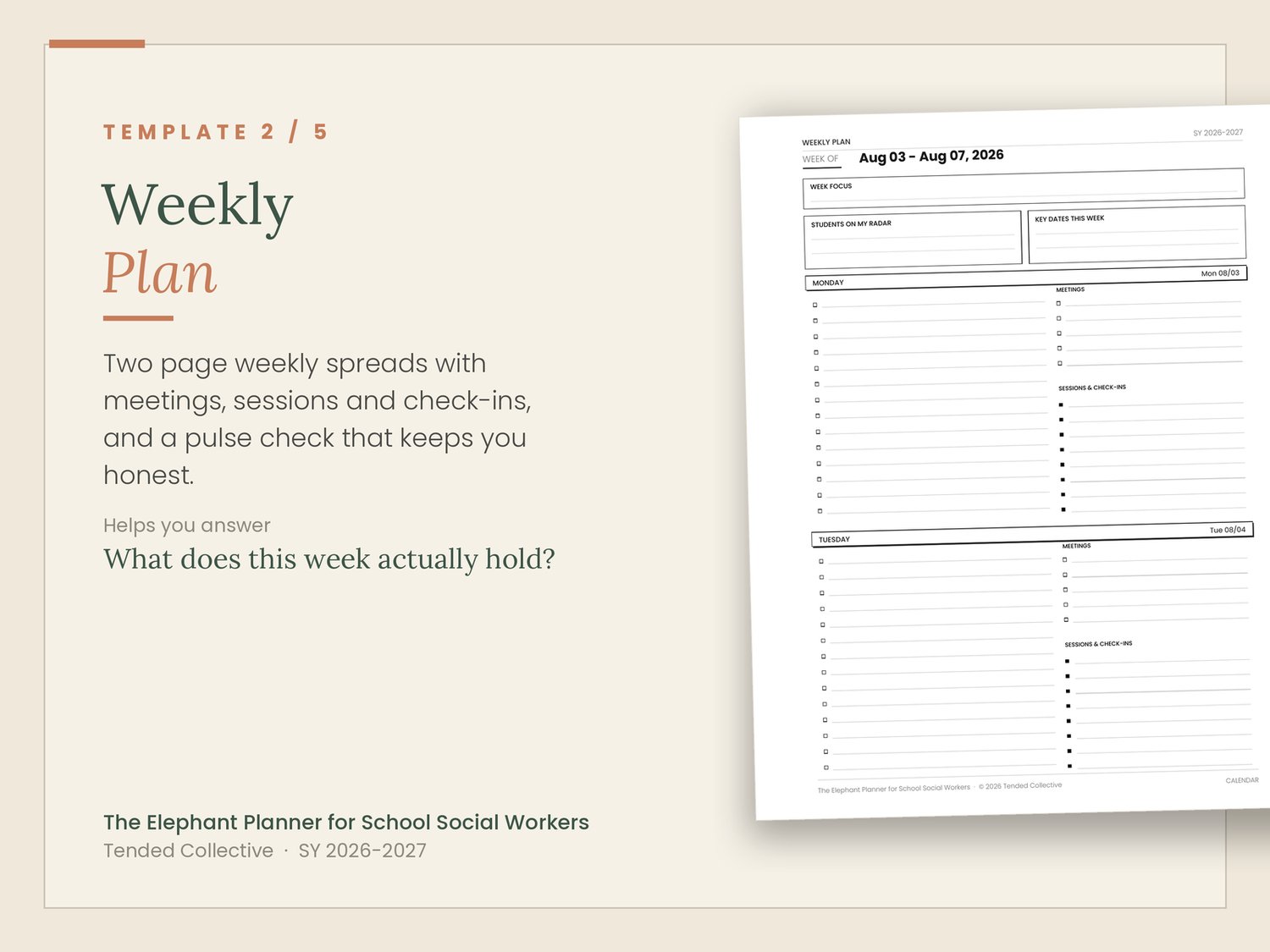
A full calendar, built as spreads. Twelve monthly spreads with awareness months and key dates already placed. A social worker schedule in thirty minute blocks, because your calendar fills with whatever the building needs and the planned work is what disappears when it does. And forty six two page weekly spreads with room for meetings, sessions and check-ins, students on your radar, and a weekly pulse check that asks about your gratitude, your boundaries, and the one thing you will release.
A template library of 33 working tools, organized into six sections and designed to be printed on demand, as many times as you need:
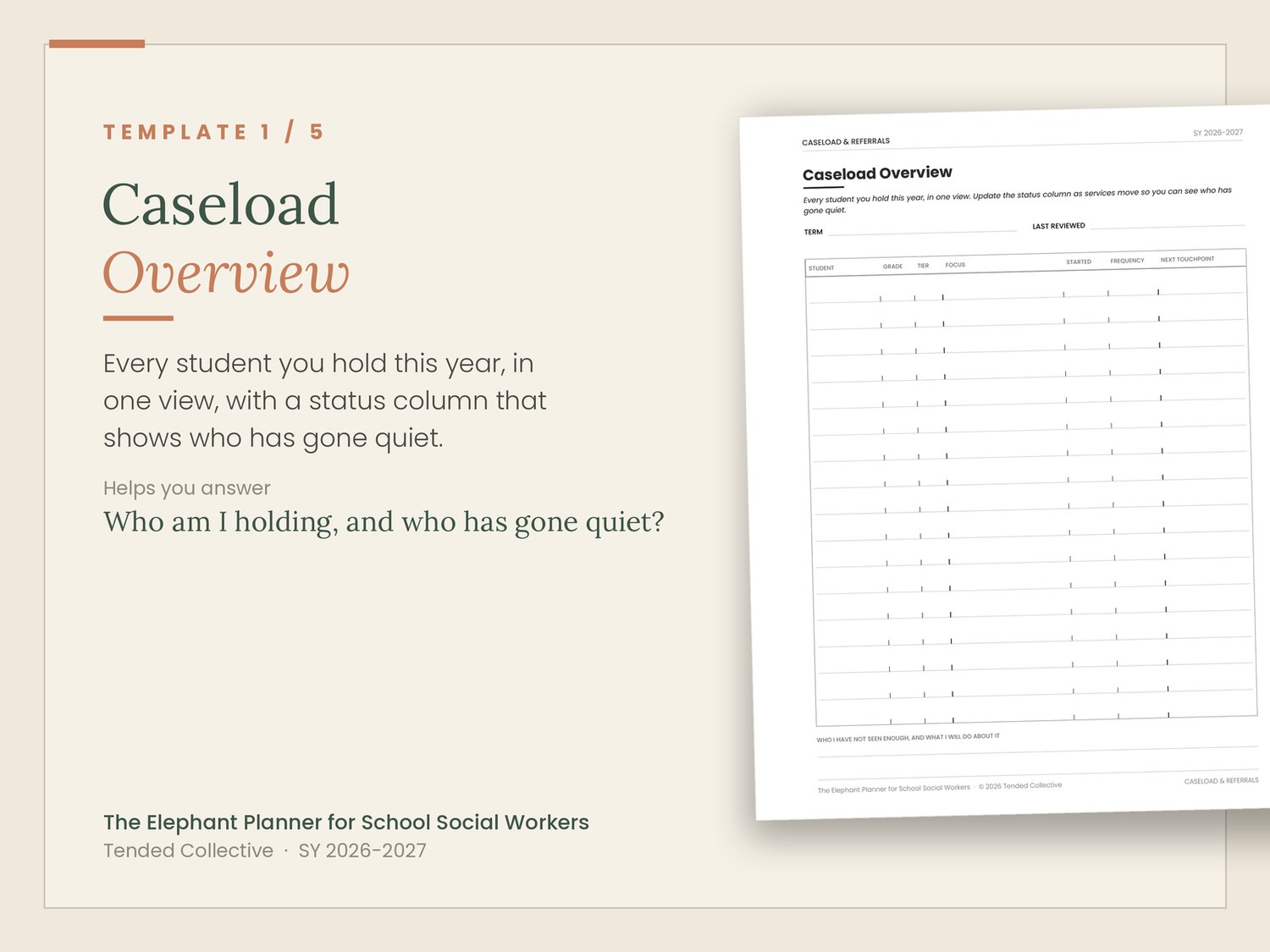
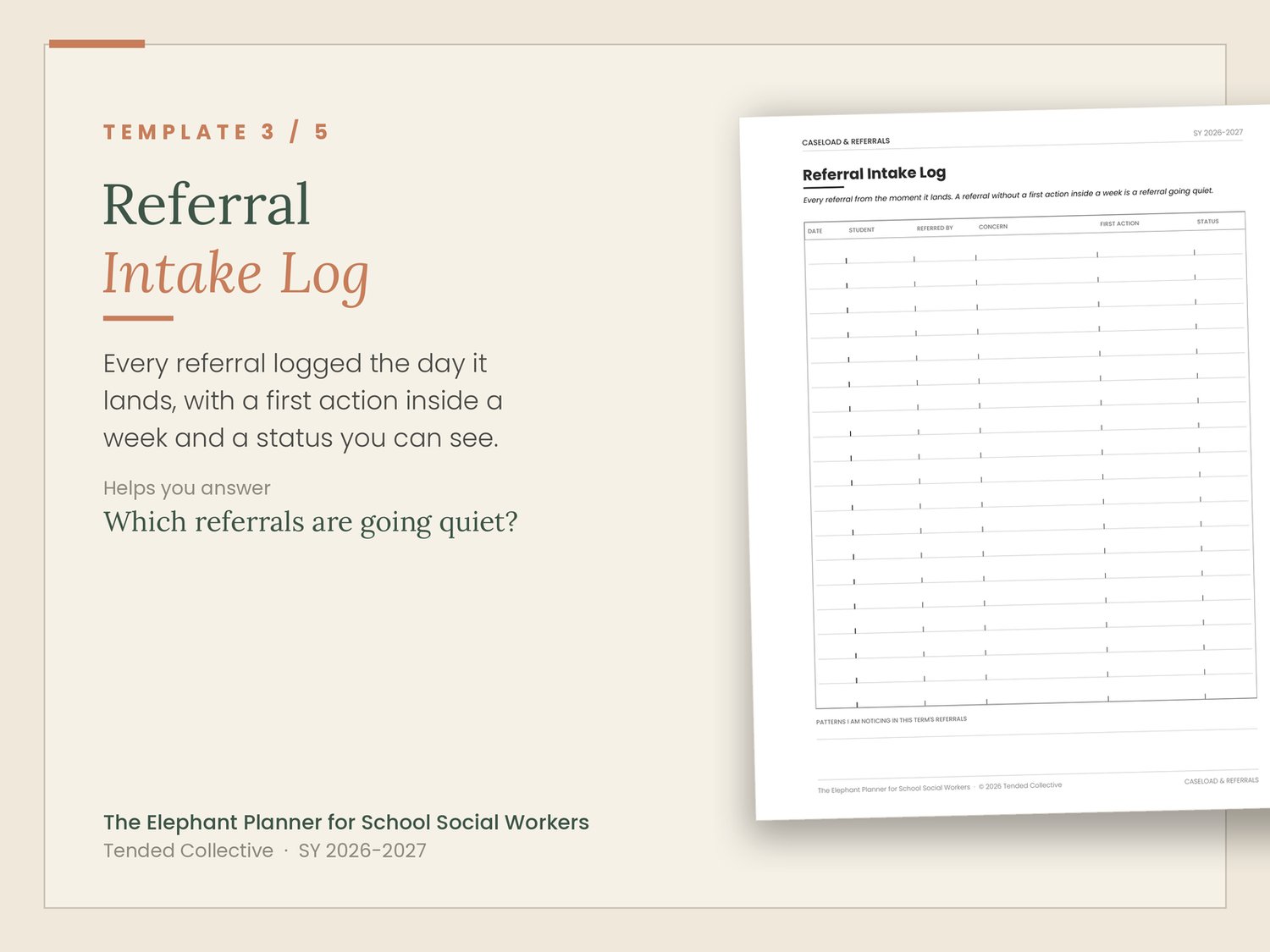
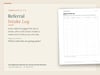
• Caseload & Referrals. A caseload overview that shows you who has gone quiet, a referral intake log, progress monitoring, and case transition notes so cases close on purpose instead of fading out.
• Student Support. Individual and group session notes, a group planner, a check-in and check-out tracker, conference notes, and an attendance intervention plan.
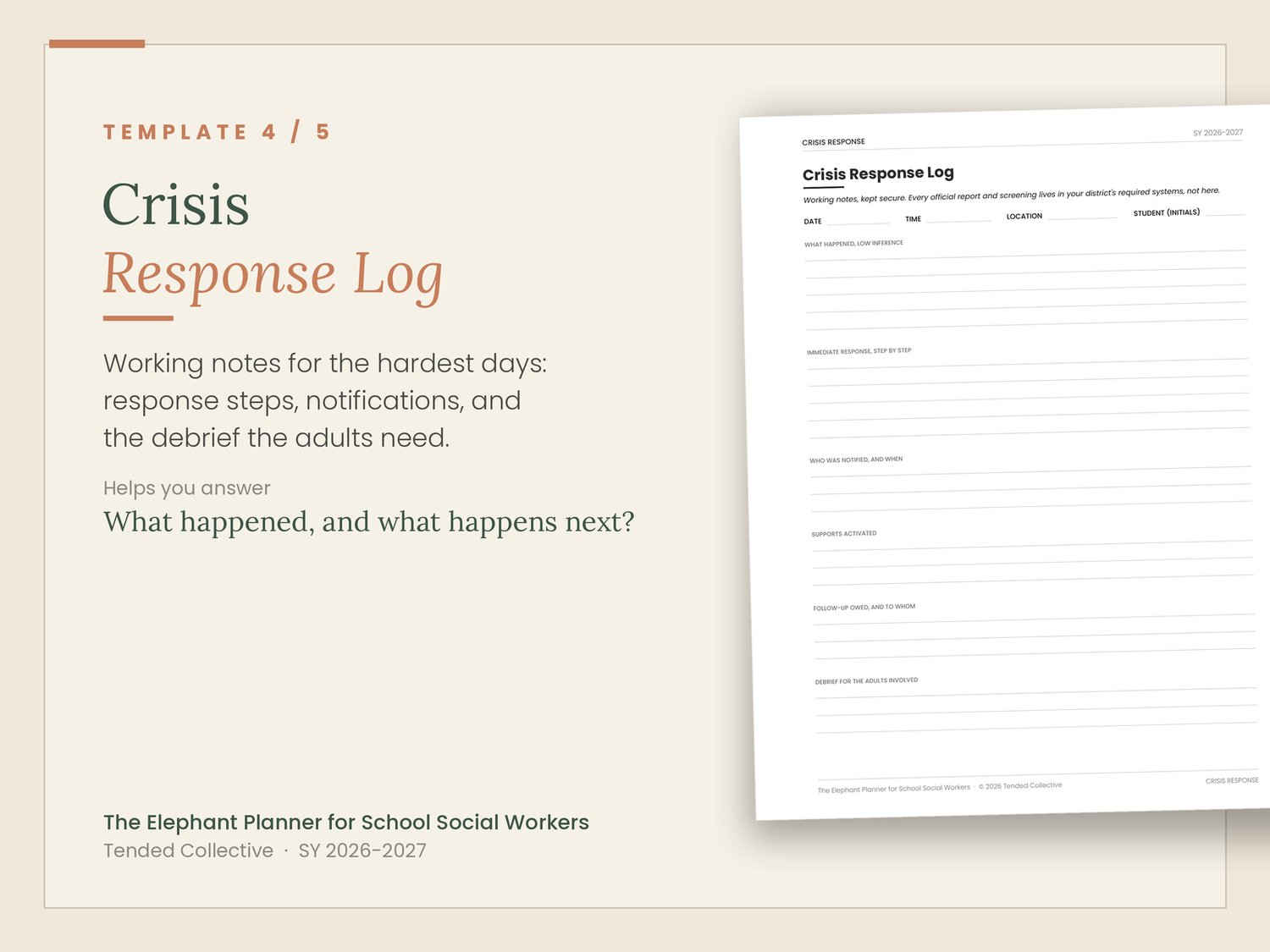
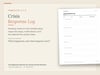
• Crisis Response. Steady working notes for before, during, and after the hardest days: a response log, safety planning notes, screening follow-up, re-entry meeting notes, and a de-escalation debrief. Because the adults need a debrief too.
• Family & Community. A contact log, family meeting and home visit notes, a community partner directory you build before you need it, and a resource referral log that tracks which referrals actually land.
• Teams & Operations. MTSS and SST notes, IEP and 504 meeting notes, a mandated report log, a service documentation tracker, a confidentiality checklist, and the meeting and project pages that keep operations off your mind and on paper.
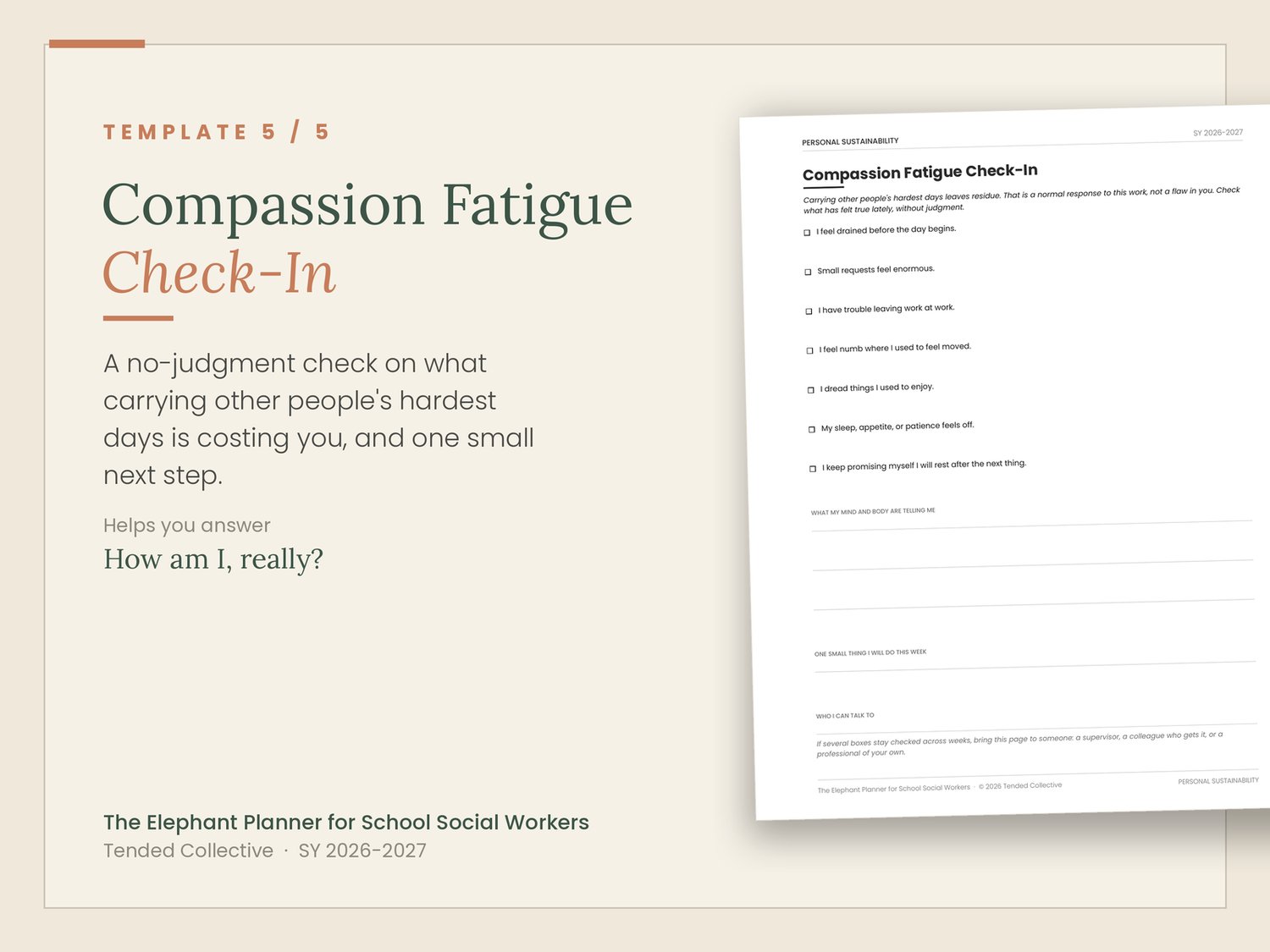
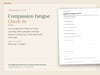
• Personal Sustainability. A boundaries planner, a compassion fatigue check-in, supervision notes, self-reflection, and summer priorities. Because you cannot pour from an empty cup, and we refuse to pretend otherwise.
Every section closes with reflection questions written for this role. Real ones. The kind that ask which case you have been avoiding closing, and what you are afraid of.
Reference pages on choosing priorities, protecting your week, and running a referral pipeline that grows by decision instead of accumulation.
WHAT MAKES IT DIFFERENT
Nothing here is a goal without a place to track it. Goals paired with checkpoints outperform goals alone. Every domain gets both. Working notes stay separate from official records. Crisis, screening, and mandated report pages are working notes only, kept secure and initials only, with clear reminders that official documentation belongs in your district’s systems. What helps you remember and what belongs in a file are two different things, and only one of them is yours.
Your wellbeing is in the table of contents. Not as an afterthought on the last page. Personal Sustainability is a full section with its own goal, its own tools, and its own reflection questions, because burnout is a systems problem, and organization is one of the systems.