
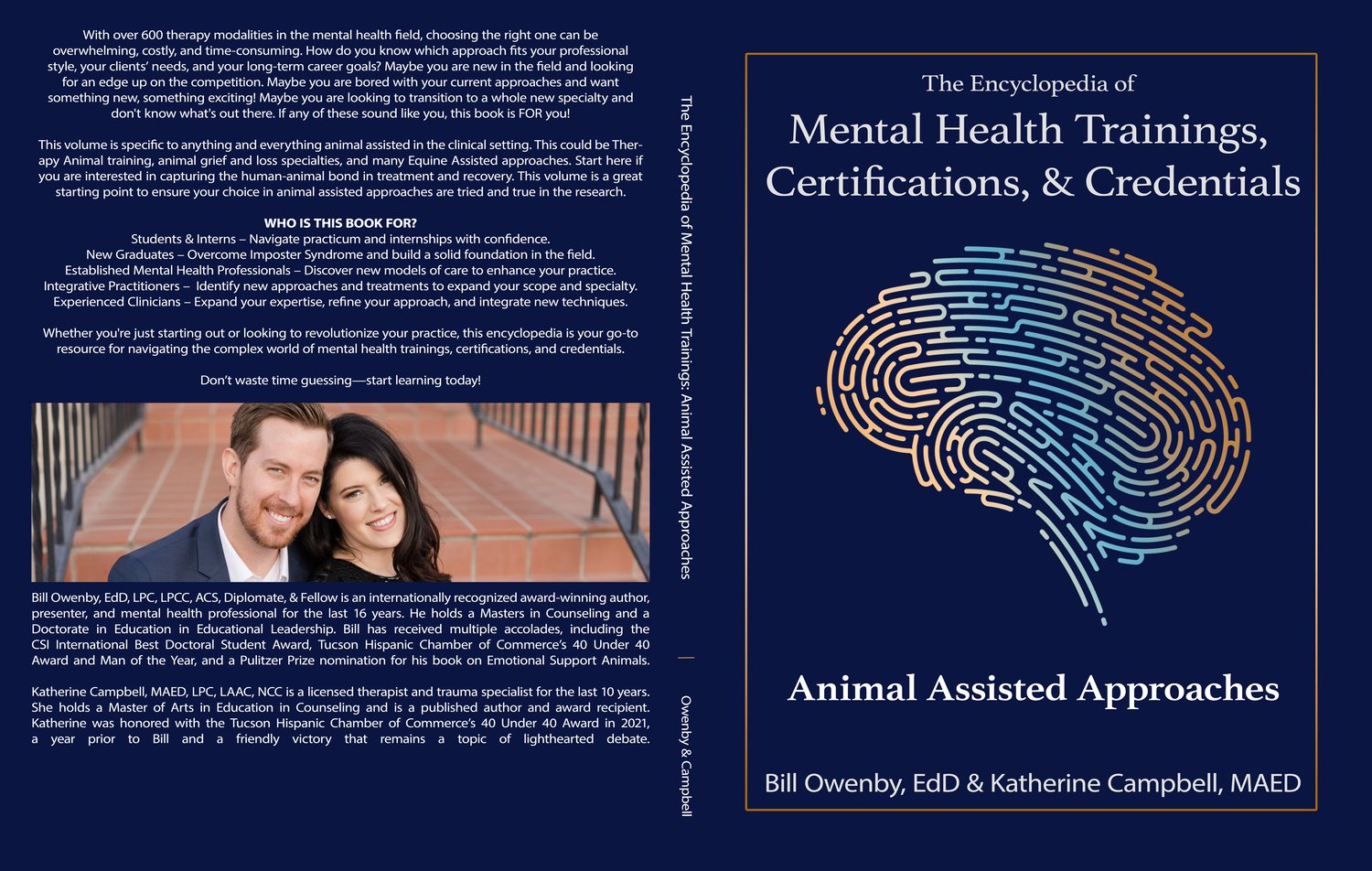
The Encyclopedia of Mental Health Trainings, Certifications, & Credentials: Animal Assisted Approaches
Animal assisted approaches have become an increasingly recognized component of mental health practice, offering unique opportunities for connection, regulation, and engagement that extend beyond traditional talk therapy. Whether through therapy dogs, equine-assisted work, or other structured human-animal interactions, these approaches introduce relational dynamics that can support emotional processing, safety, and therapeutic alliance in ways that are often difficult to replicate through verbal interventions alone.
At the same time, the growing interest in animal assisted therapy has led to a wide range of programs, certifications, and training pathways, many of which vary significantly in depth, structure, and clinical applicability. For clinicians, students, and professionals exploring this area, it can be challenging to determine what constitutes legitimate training, what falls within scope of practice, and how to ethically integrate animals into therapeutic work.
This volume of The Encyclopedia of Mental Health Trainings, Certifications, & Credentials provides a structured and practical guide to animal assisted interventions within mental health. Rather than promoting a single model, the book maps the broader landscape of animal assisted modalities, including therapy animal programs, equine-assisted approaches, and other forms of structured human-animal interaction used in clinical and supportive settings.
Readers will gain clarity on how these approaches function, what roles animals play within treatment, and how different models vary in their goals, structure, and training requirements. The book also addresses important considerations related to ethics, animal welfare, client safety, and professional responsibility, emphasizing that animal assisted work requires more than interest or affinity for animals—it requires intentional training, appropriate boundaries, and a clear understanding of clinical application and also animal welfare.
Animal assisted approaches are not a replacement for traditional therapy, but they can serve as a powerful complement when used appropriately. For some clients, the presence of an animal can support emotional regulation, reduce barriers to engagement, and facilitate trust. For clinicians, these approaches offer alternative pathways for connection, particularly with populations who may struggle with verbal expression or traditional therapeutic formats.
Written for mental health professionals, graduate students, educators, and individuals exploring animal assisted work, this volume provides a grounded overview of training pathways, certifications, and practical considerations for integrating animals into practice. Each chapter explores a different modality or program, helping readers understand what it is, how it is used, and when it may be appropriate within a professional role.
As part of the broader Encyclopedia of Mental Health Trainings, Certifications, & Credentials series, this book can be used as a stand-alone resource or alongside companion volumes on trauma therapy, relational approaches, experiential modalities, and professional development pathways. The goal of the series is to support clinicians in navigating the expanding landscape of mental health training with clarity, ethical awareness, and intentional decision-making.
Whether you are considering incorporating a therapy animal into your work or simply seeking to understand the role of animal assisted interventions in mental health, this volume provides a clear and practical guide to an area of practice that continues to grow in both interest and application.