
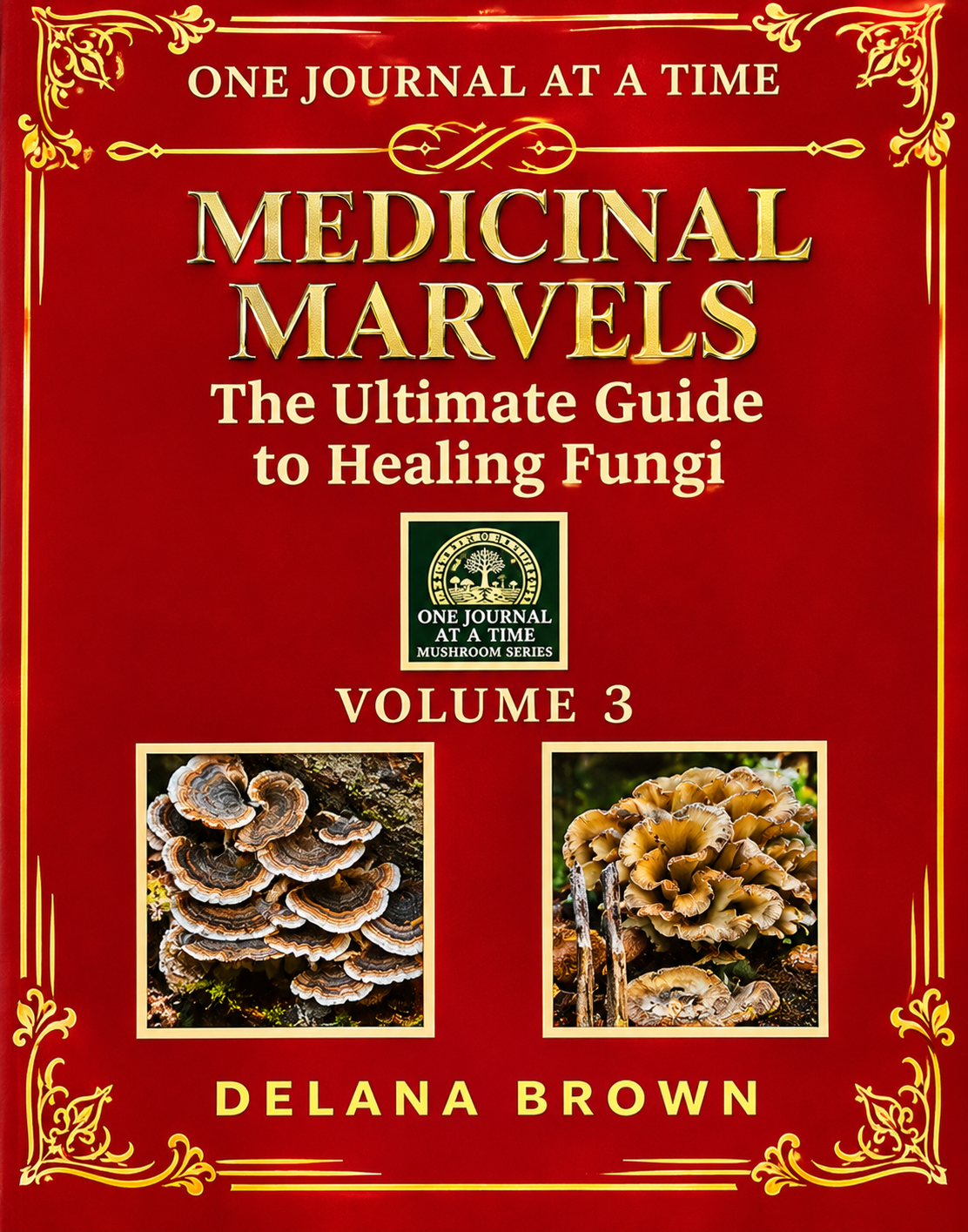
Product Image Product Image Read sample Follow the author DELANA K BROWN DELANA K BROWNDELANA K BROWN Following Medicinal Marvels: The Ultimate Guide to Healing Fungi Featuring Maitake & Turkey Tail Mushrooms
MEDICINAL MARVELS — VOLUME 3
THE ULTIMATE GUIDE TO HEALING FUNGI
Featuring Maitake & Turkey Tail Mushrooms
ONE JOURNAL AT A TIME — MUSHROOM CULTIVATION & WELLNESS SERIES
By DeLana K. Brown
Published by Wholesome Harvest Mushrooms LLC
━━━━━━━━━━━━━━━━━━━━
MORE THAN A MUSHROOM GUIDE — DISCOVER THE SCIENCE OF FUNGI AND HUMAN BIOLOGY
You're not just growing mushrooms. You're growing with them.
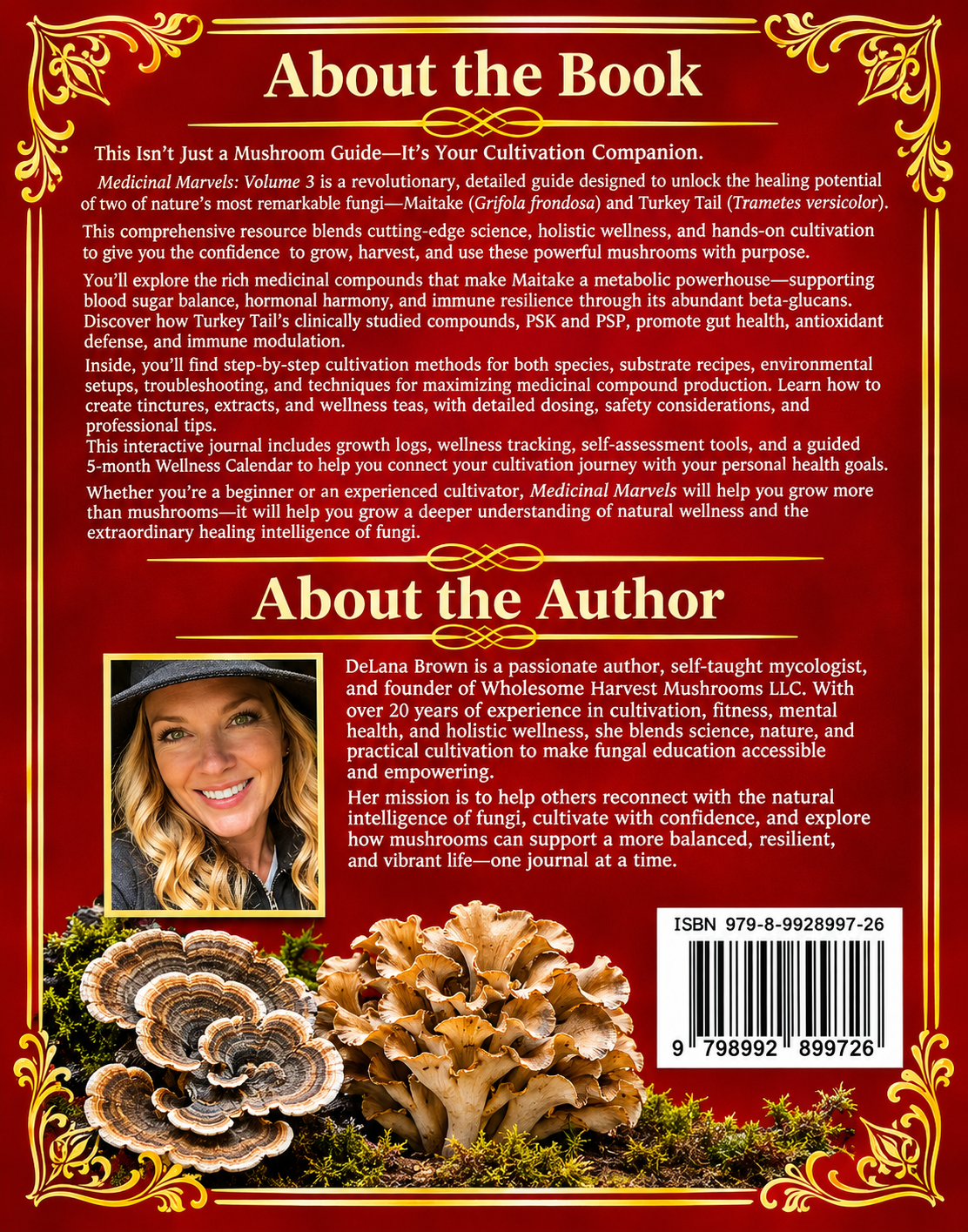
Medicinal Marvels — Volume 3 is a comprehensive, 250-page cultivation and educational companion that brings together advanced mycology, fungal biochemistry, human biology, emerging medicinal mushroom research, and interactive wellness journaling.
Unlike traditional mushroom-growing manuals, this book goes beyond teaching you how to cultivate fungi.
It explores WHY mushrooms contain biologically significant compounds, HOW those compounds interact with the human body, and WHAT scientific research reveals about their potential applications.
Featuring two remarkable fungi—Maitake (Grifola frondosa) and Turkey Tail (Trametes versicolor)—this volume introduces readers to the fascinating relationship between mushroom cultivation, immune function, metabolism, cellular communication, and human wellness.
━━━━━━━━━━━━━━━━━━━━
- MASTER THE CULTIVATION OF MAITAKE & TURKEY TAIL
From laboratory preparation to harvesting, Medicinal Marvels guides readers through the scientific foundations of cultivating these extraordinary fungi.
DISCOVER:
• Fungal anatomy, mycelial development, and life cycles.
• Laboratory preparation, sterile techniques, and contamination prevention.
• Culture propagation, grain spawn, and substrate preparation.
• Nutrient-rich substrates and their influence on fungal growth.
• Environmental requirements, including temperature, humidity, airflow, and lighting.
• Colonization, fruiting, harvesting, and troubleshooting.
• Cultivation schedules, environmental tracking, and detailed grow logs.
• How cultivation conditions can influence mushroom development and chemical composition.
Develop the knowledge and confidence to approach mushroom cultivation with precision, curiosity, and scientific understanding.
━━━━━━━━━━━━━━━━━━━━
- THE SCIENCE OF MEDICINAL MUSHROOM COMPOUNDS
What makes Maitake and Turkey Tail so fascinating to researchers?
Their complex chemistry.
Medicinal Marvels introduces the biological compounds found in these mushrooms and explains why scientists continue investigating their relationships with human physiology.
MAITAKE — GRIFOLA FRONDOSA
Explore the scientific interest surrounding Maitake's polysaccharides, beta-glucans, and other naturally occurring constituents.
Research topics include:
• Immune signaling and immune-cell activity.
• Glucose metabolism and metabolic regulation.
• Inflammatory pathways and cellular communication.
• Antioxidant activity and oxidative stress.
• The biological significance of Maitake's polysaccharide fractions.
TURKEY TAIL — TRAMETES VERSICOLOR
Discover why Turkey Tail has become one of the most extensively investigated medicinal fungi.
Explore compounds including:
• Polysaccharide-K (PSK).
• Polysaccharopeptide (PSP).
• Beta-glucans and other fungal polysaccharides.
• Phenolic compounds and antioxidant constituents.
Learn about research examining immune modulation, gut microbial interactions, and the investigation of certain standardized Turkey Tail preparations in supportive oncology.
Understand the important distinction between laboratory findings, clinical research, and established medical treatments.
━━━━━━━━━━━━━━━━━━━━
- HUMAN BIOLOGY — HOW MUSHROOM COMPOUNDS INTERACT WITH YOUR BODY
This is where Medicinal Marvels becomes different from an ordinary cultivation manual.
The book connects fungal chemistry with the remarkable complexity of the human body.
Explore the biological principles behind:
• THE IMMUNE SYSTEM — How immune cells recognize and respond to biological molecules, including certain fungal polysaccharides.
• THE DIGESTIVE SYSTEM — How mushroom-derived carbohydrates interact with digestion and the intestinal environment.
• THE GUT MICROBIOME — Why researchers investigate the relationship between fungal polysaccharides, intestinal microorganisms, and immune signaling.
• CELLULAR COMMUNICATION — How receptors, enzymes, and signaling pathways help regulate biological responses.
• METABOLISM — The biological processes involved in glucose regulation, energy utilization, and metabolic health.
• OXIDATIVE STRESS — How reactive molecules and antioxidant defenses relate to cellular function.
• INFLAMMATION — Why inflammatory signaling is important in both normal physiology and disease research.
Readers are encouraged to understand not simply what mushroom compounds are, but why their chemical structures, preparation