
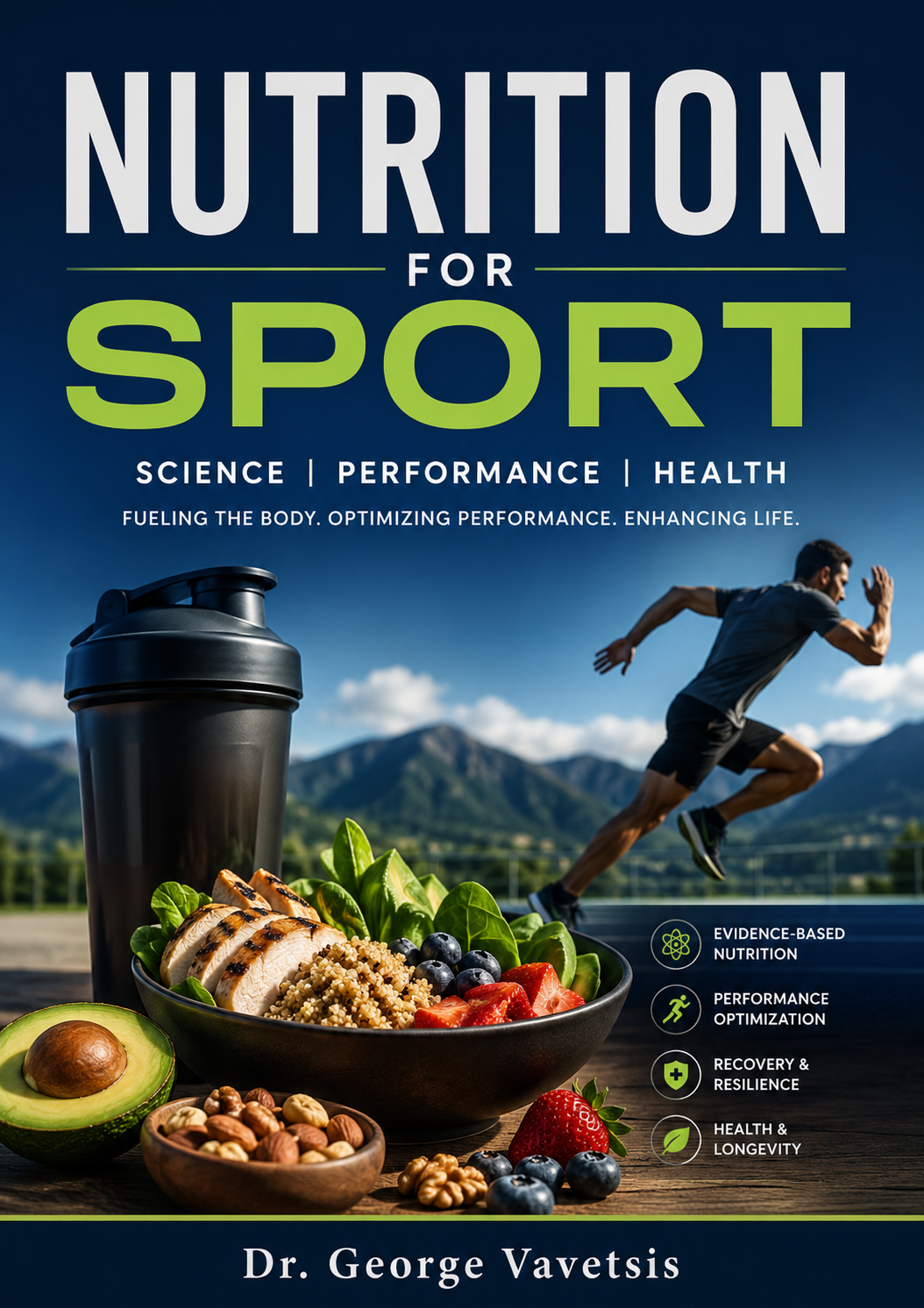
Nutrition for Sport
Pages: 1555
In the modern era of sport, exercise, and health science, nutrition is no longer viewed simply as a supportive lifestyle component or a secondary consideration to training. It has evolved into a central performance system—an evidence-driven, strategically periodized, and biologically integrated discipline capable of influencing nearly every aspect of human function and athletic adaptation. From elite Olympic preparation and professional team sport competition to long-term metabolic health and disease prevention, nutritional science now stands at the core of performance optimization, recovery acceleration, cognitive regulation, immune resilience, and physiological longevity.
This book, Nutrition for Sport, was created to bridge the gap between foundational nutritional science and the applied realities faced by athletes, coaches, clinicians, strength and conditioning specialists, physiologists, dietitians, and health professionals working in high-performance and health-oriented environments. The objective is not merely to explain nutrients or dietary principles, but to present nutrition as a dynamic biological system that continuously interacts with biomechanics, metabolism, endocrinology, neuroscience, recovery physiology, and human performance.
The contemporary athlete operates in an environment characterized by congested schedules, intensified travel demands, chronic psychological stress, sleep disruption, environmental extremes, and increasingly complex training loads. Under these conditions, nutrition becomes far more than caloric intake or macronutrient balance. It becomes a tool for regulating glycogen kinetics, maintaining neuromuscular efficiency, optimizing mitochondrial adaptation, preserving hormonal function, minimizing fatigue accumulation, supporting connective tissue remodeling, enhancing thermoregulation, and reducing the risk of Relative Energy Deficiency in Sport (RED-S). Nutritional strategies must therefore evolve beyond generic recommendations and instead become highly individualized, sport-specific, context-dependent, and physiologically targeted.
Throughout this book, special emphasis is placed on the concept of nutritional periodization. Just as training is organized into accumulation, intensification, tapering, and competition phases, nutritional intake must also fluctuate according to physiological demand. Carbohydrate availability, protein distribution, fluid regulation, micronutrient support, and supplementation strategies are not static variables. They are adaptive tools that must correspond precisely with training density, metabolic stress, environmental conditions, recovery windows, and performance objectives.
Modern sports nutrition also requires a deep understanding of energy availability. Inadequate energy intake relative to training expenditure impairs endocrine function, decreases bone mineral density, disrupts recovery processes, compromises immune function, and diminishes athletic performance. The increasing recognition of RED-S has highlighted the importance of monitoring not only body composition and caloric intake, but also hormonal biomarkers, psychological readiness, sleep quality, menstrual function, metabolic flexibility, and long-term health outcomes. Athletes cannot sustain elite performance without sustaining physiological integrity.
Equally important is the growing understanding that nutrition affects not only muscular systems but also the brain and nervous system. Neurotransmitter synthesis, autonomic nervous system regulation, reaction time, decision-making accuracy, emotional stability, concentration, and cognitive fatigue are profoundly influenced by nutrient availability and feeding strategies. In team sports and high-speed decision-making environments, nutritional interventions can influence tactical execution and neurocognitive resilience as much as physical performance itself.
This text also explores the increasingly sophisticated relationship between technology and nutrition. Wearable devices, continuous glucose monitoring systems, sweat composition analysis, GPS-derived energy expenditure tracking, heart-rate variability integration, and AI-driven nutritional monitoring systems are transforming how practitioners evaluate and prescribe nutritional interventions. Precision nutrition is rapidly becoming a defining feature of elite sport science. The future of performance nutrition will depend on the ability to integrate real-time physiological monitoring with individualized nutritional adaptation.
Beyond performance, this book strongly emphasizes the role of nutrition in health promotion and disease prevention. Exercise and nutrition operate synergistically to influence cardiovascular health, insulin sensitivity, immune function, musculoskeletal integrity, gastrointestinal health, neuroprotection, and healthy aging. Nutritional strategies designed for athletes often possess direct translational relevance for general populations seeking improved health, body composition, physical function, and quality of life.
Importantly, this book does not promote extreme dietary ideology or simplistic nutritional dogma. Human physiology is multifactorial, adaptive, and context-dependent. Effective nutrition requires flexibility, critical thinking, scientific literacy, and individualized application. No single dietary approach is universally optimal for all athletes, sports, or health conditions. Instead, the goal is to understand the mechanisms that govern adaptation and then apply nutritional principles strategically according to the demands of the individual.
The chapters that follow examine the scientific foundations of metabolism, macronutrients, micronutrients, hydration, supplementation, recovery nutrition, body composition management, energy systems, environmental physiology, gastrointestinal function, immune support, and performance nutrition strategies across a wide spectrum of sporting and health contexts. Considerable attention is given to practical application, including timing protocols, dosage ranges, nutrient distribution models, competition preparation strategies, recovery frameworks, and monitoring systems used in elite performance settings.
Ultimately, nutrition is not simply about feeding the body. It is about shaping adaptation, preserving resilience, and maximizing human potential. The athlete who recovers faster, maintains physiological balance under stress, stabilizes energy availability, protects immune function, and sustains neuromuscular efficiency across an entire season gains an enormous competitive advantage. Likewise, the individual who aligns nutritional behavior with exercise and health principles builds a stronger foundation for long-term vitality and disease prevention.
It is my hope that this book serves not only as a scientific resource, but also as a practical framework for applied decision-making in real-world performance and health environments. Whether you are a coach designing nutritional systems for elite competition, a clinician supporting rehabilitation and health optimization, a student exploring exercise metabolism, or an athlete seeking peak performance, this text aims to provide a comprehensive, evidence-informed, and highly applied understanding of nutrition in sport, exercise, and health.
The science of nutrition continues to evolve rapidly. Yet one principle remains constant: performance, recovery, adaptation, and health are inseparable from the quality, timing, quantity, and strategic application of nutrition itself.