

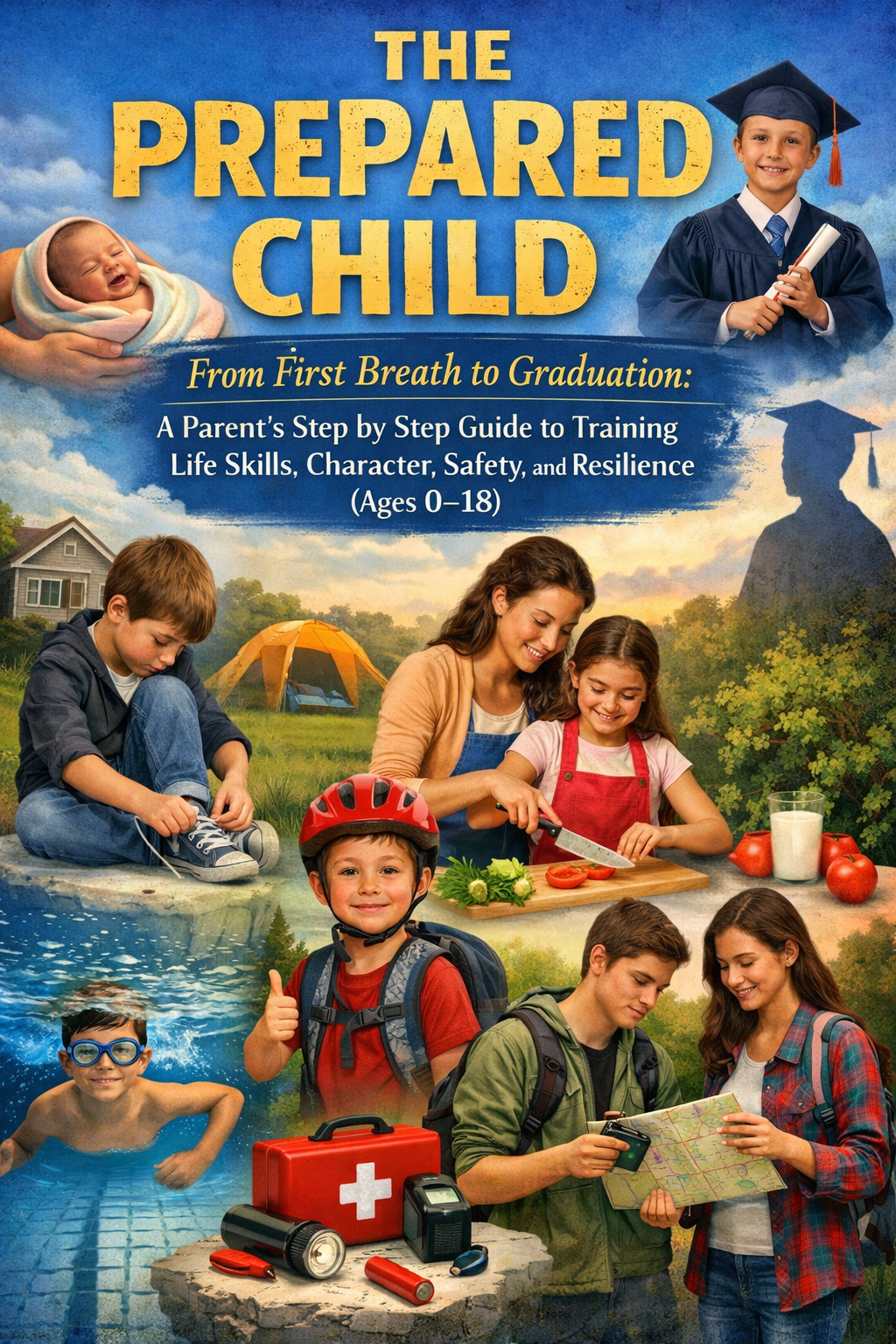
The Prepared Child. From First Breath to Graduation: A Parent’s StepbyStep Guide to Training Life Skills, Character, Safety, and Resilience (Ages 0–18)
Table of Contents
Introduction: Why “Training” Beats “Talking” – and How to Use This Book
PART ONE – THE FOUNDATION YEARS (AGES 0–6)
Chapter 1: Life Skills That Make Kindergarten Work
1.1 Toileting Independence
1.2 Dressing & Undressing
1.3 Opening Lunch Items
1.4 Blowing Nose & Covering Cough
1.5 Cleaning Up After Themselves
Chapter 2: Core Knowledge for School Readiness
2.1 Name Recognition & Writing
2.2 Letter Sounds (Not Just the ABC Song)
2.3 Counting & Number Sense
2.4 Book Handling & Print Awareness
Chapter 3: Safety & Protection Every Child Must Know
3.1 Personal Information (Phone Number, Address)
3.2 Safe vs. Unsafe Touch & Body Autonomy
3.3 “Tricky People” – Not Stranger Danger
3.4 Emergency Basics (911 & First Responders)
Chapter 4: Emotional & Social Protection
4.1 Using Words to Set Boundaries
4.2 Identifying Feelings (Emotional Literacy)
4.3 Waiting, Sharing & TurnTaking
4.4 Asking for Help – Exact Scripts
Chapter 5: Household Chores & Cleanliness
5.1 Matching Chores to Motor Skills (Age 2–6)
5.2 Backward Chaining: How to Train Any Chore
5.3 Specific Chores: Table Setting, Wiping, Sweeping, Laundry, Plants, Trash
5.4 Motivating Without Battles
Chapter 6: Personal Cleanliness (Hygiene)
6.1 Handwashing – The 6Step Routine
6.2 Toothbrushing: The TwoMinute Game
6.3 Bathing & Body Washing
6.4 Nail Trimming & Skin Care
6.5 Toilet Hygiene (Wiping & Flushing)
Chapter 7: Protecting Against Dangerous Home Devices
7.1 The Mindset: Childproofing + Teaching
7.2 Kitchen Dangers (Stove, Knives, Appliances, Dishwasher)
7.3 Bathroom Dangers (Hair Straightener, Medicines, Cleaners)
7.4 Electrical & Fire Dangers (Outlets, Cords, Heaters)
7.5 Windows, Blinds & Balconies
7.6 Emergency Response at Home
PART TWO – THE SCHOOL YEARS & ADOLESCENCE (AGES 7–18)
Chapter 8: Making True Friends & Avoiding False Ones
The Friend Test (Three Questions)
The TwoFriend Rule
RolePlaying False Friend Scenarios
The Trust Battery for Teens
Chapter 9: Being Helpful, Kind & Polite to Everyone
The Three Doors Rule
Politeness as Respect, Not Rules
The Invisible Helper Game
The Elevator Test
Chapter 10: Facing a School Bully
Gray Rock Method (No Reaction)
The Three Tries Rule (Ignore → Walk → Tell)
Building a Protective Pack
Cyberbullying: Screenshot, Block, Tell
Physical SelfDefense Basics
Chapter 11: How to Study Well
The Study Environment Setup
Pomodoro for Kids (15/5 Method)
TwoColumn NoteTaking
The 321 Test Prep Plan
HelpSeeking Scripts
Chapter 12: Controlling Hormones & Emotions (Teens)
Name It to Tame It (The FiveSecond Pause)
Physical Outlets for High Hormones
The Mood Thermometer (1–10 Scale)
Emergency Plan for Emotional Flooding
Sleep as Hormone Management
Chapter 13: Avoiding Peer Pressure
Three Refusal Styles (Broken Record, Exit, Reverse Pressure)
The Friend Filter
The PreCommitted No
The Buddy System & Safe Ride Promise
Chapter 14: Resisting Sex Before Marriage (For Families Who Choose This Value)
Separating Desire from Decision
Setting Green/Yellow/Red Physical Boundaries
The TwoYes Rule
Avoiding “Accidental” Situations
Responding Without Shame After a Mistake
Chapter 15: How to Resist Temptation (General Skill)
The 101010 Rule
IfThen Plans
Environment Design Over Willpower
The “One Yes = Many Nos” Principle
Chapter 16: Boosting SelfConfidence
The Victory Jar (Evidence of Success)
The “Yet” Rule
The Best Friend Test (SelfTalk)
Real Responsibility Builds Real Confidence
Chapter 17: Avoiding Smoking, Vaping & Drinking
Costs You Don’t See (Short & Long Term)
The FirstTime Trap
Refusal Scripts (Practice Out Loud)
The Secondhand Social Cost
Chapter 18: Beware of Online Friendship
The Hard Truth: Anyone Can Pretend
Rules for Online Friendship (No Private DMs, No Secret Photos)
Recognizing Grooming Scripts
Catfish Warning for Teens
Chapter 19: Managing Money (Allowance to First Job)
The Three Jars (Save, Spend, Give) – Ages 7–9
Earning & Budgeting – Ages 10–12
Bank Account & Debit Card – Ages 13–15
PartTime Job & Compound Interest – Ages 16–18
Chapter 20: Choosing Recreation Wisely
The Green/Yellow/Red Recreation Test
Screens Are Tools, Not Pacifiers
Boredom Is Good (The 20Minute Rule)
The Two Hobbies Rule
The Party Screen (Exit Plan)
Conclusion: Your Child’s North Star – A Summary of the 10 Most Important Lessons
Appendix: Quick Reference Charts
AgebyAge Chore List (2–18)
Emergency Phone Number Practice Sheet