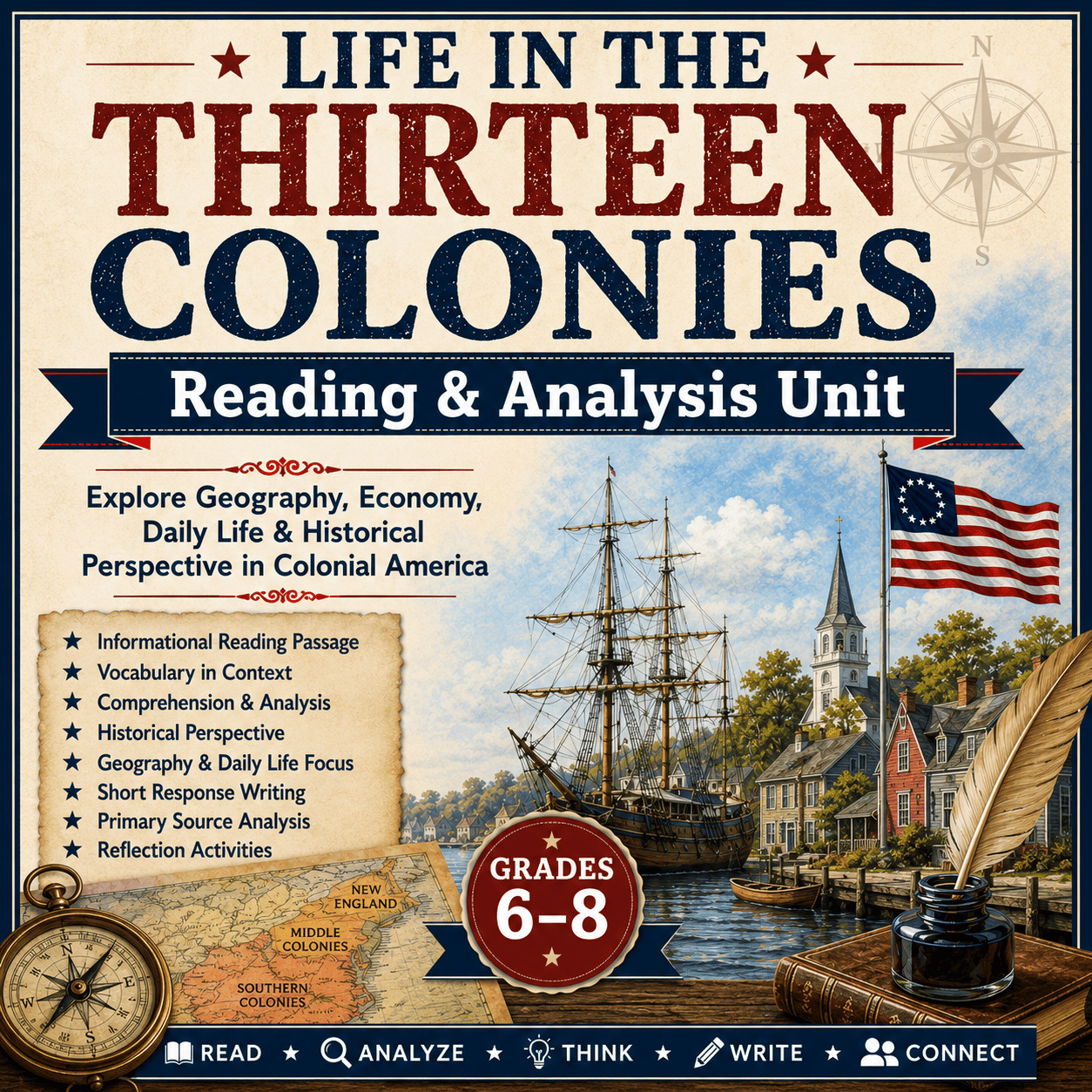
13 Colonies Reading Comprehension & Activities | Colonial America U.S. History Unit | Grades 6–8
Life in the Thirteen Colonies | Colonial America Reading Comprehension & U.S. History Activities | Grades 6–8
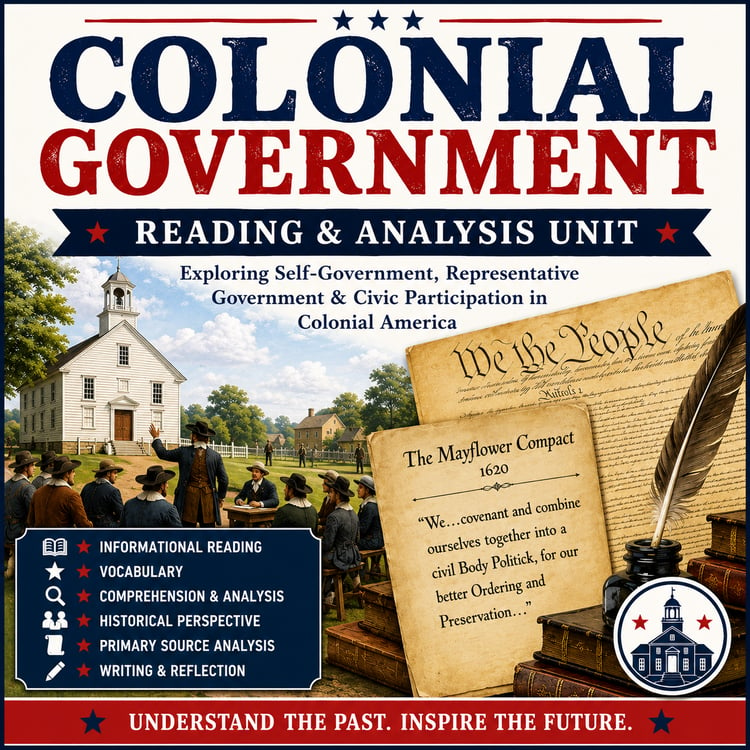
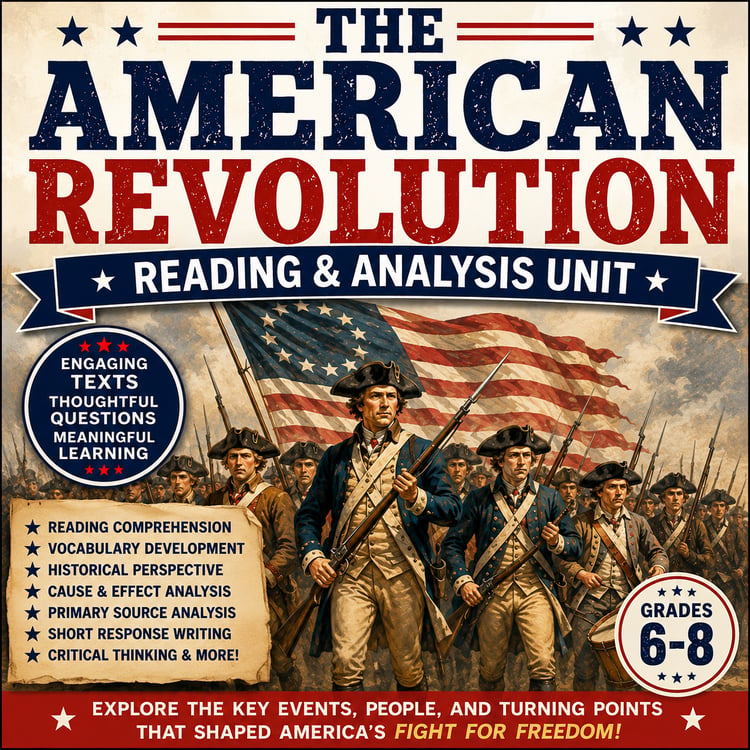
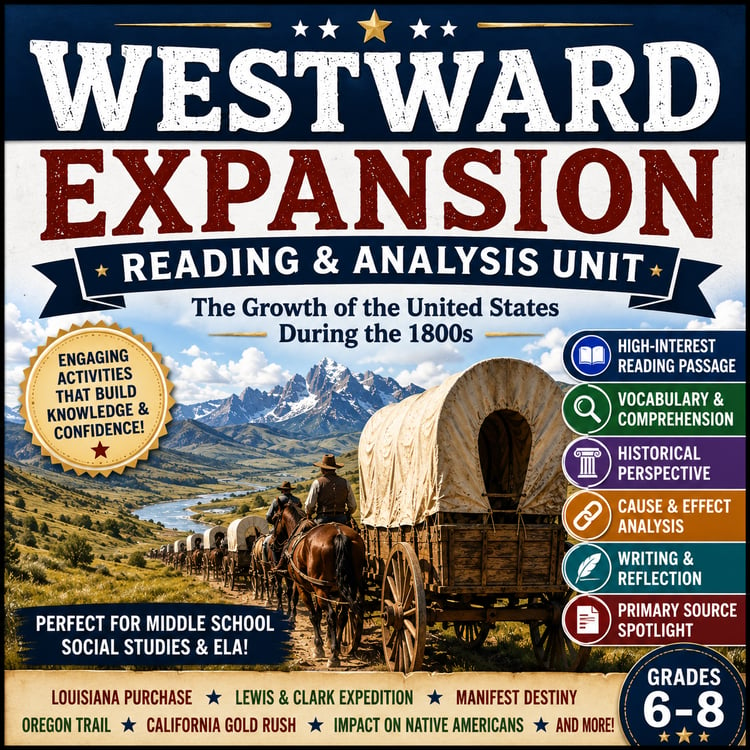
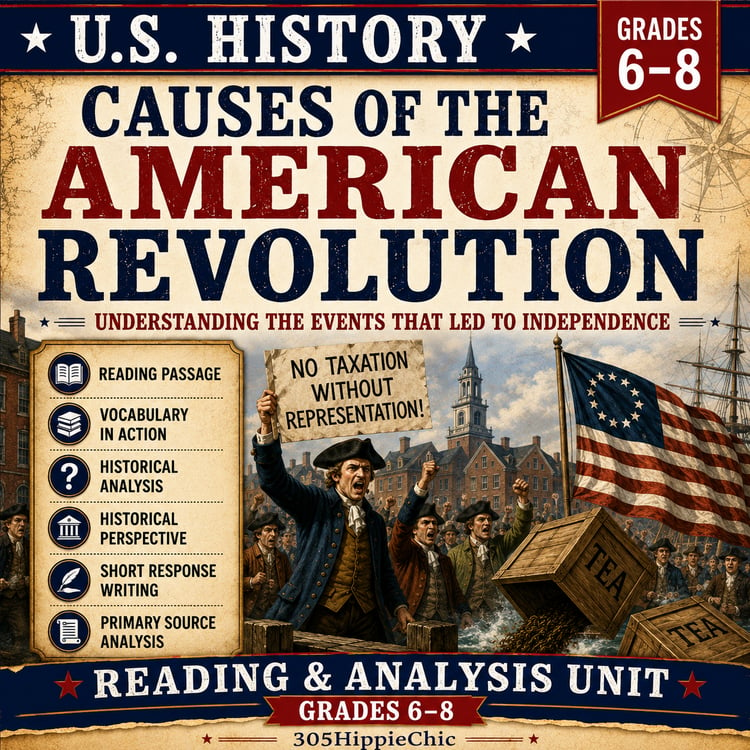
Bring Colonial America to life with this comprehensive 23-page U.S. History reading and analysis unit designed for middle school students in grades 6–8!
Looking for engaging 13 Colonies worksheets, Colonial America reading comprehension activities, or ready-to-use middle school social studies lessons?
This standards-aligned resource helps students explore life in the original Thirteen Colonies while developing essential reading comprehension, historical thinking, geography, vocabulary, critical thinking, and evidence-based writing skills.
Rather than simply memorizing historical facts, students investigate how geography, climate, natural resources, and economic opportunities influenced the development of the New England, Middle, and Southern Colonies.
Through informational reading passages, historical analysis, vocabulary activities, primary source interpretation, and written responses, students develop a deeper understanding of the people, places, and experiences that shaped early American history.
Perfect for 6th, 7th, and 8th grade U.S. History, American History, social studies, homeschool instruction, and cross-curricular ELA lessons.
📚 WHAT’S INCLUDED?
This 23-page printable PDF resource includes teacher support materials, informational reading passages, student activities, historical analysis exercises, and a complete answer key.
1. Teacher Notes & Instructional Guidance
- Overview of essential historical concepts
- Key learning objectives
- Discussion questions
- Historical perspective focus
- Geography and daily life connections
- Evidence-based writing focus
- Common Core skills alignment
2. Informational Reading Passages
Students explore the development of the original Thirteen Colonies through engaging informational texts covering:
New England Colonies
- Massachusetts, Connecticut, Rhode Island, and New Hampshire
- Climate and geographic characteristics
- Fishing, shipbuilding, and trade
- Education and community life
- How rocky soil and cold winters influenced economic development
Middle Colonies
- New York, New Jersey, Pennsylvania, and Delaware
- Fertile farmland and agricultural development
- The region’s importance as America’s Breadbasket
- Trade and commerce
- Cultural and religious diversity
Southern Colonies
- Maryland, Virginia, North Carolina, South Carolina, and Georgia
- Warm climate and long growing seasons
- Plantation agriculture and cash crops
- Tobacco, rice, and indigo production
- The role of enslaved African labor
- Rivers, transportation, and colonial trade
Students examine how each region developed distinct economic activities and ways of life.
3. Vocabulary in Action
Strengthen academic vocabulary and social studies literacy through activities focusing on essential historical terminology.
Students practice:
- Using context clues
- Explaining historical vocabulary
- Connecting vocabulary to informational texts
- Applying historical understanding
- Supporting responses with evidence
4. Reading Comprehension & Historical Analysis
Text-dependent questions encourage students to move beyond basic recall.
Activities develop:
- Reading comprehension
- Identifying central ideas
- Cause-and-effect reasoning
- Comparing and contrasting
- Drawing conclusions
- Historical analysis
- Supporting explanations with textual evidence
Students analyze how geography influenced settlement patterns, economic development, occupations, and daily life throughout Colonial America.
5. Historical Perspective Activities
Encourage students to think like historians!
Students consider what life might have been like in different colonial regions.
They examine:
- Regional advantages and challenges
- Economic opportunities
- Climate and natural resources
- Daily responsibilities
- Differences in colonial experiences
- How regional development influenced the future United States
These activities encourage perspective-taking, reasoning, and evidence-based explanations.
6. Geography & Daily Life Analysis
Help students understand the relationship between geography and human activity.
Students investigate:
- How climate influenced agriculture
- How natural resources affected occupations
- Why settlements developed in particular locations
- How rivers and oceans supported transportation and trade
- How geographic differences influenced colonial economies
Students also connect these historical concepts to modern communities.
7. Primary Source Spotlight
Introduce students to authentic historical evidence through a primary source excerpt from William Byrd II’s 1728 account of colonial Virginia.
Students practice:
- Interpreting primary source evidence
- Identifying historical perspective
- Connecting primary sources to informational reading
- Analyzing the relationship between geography and economic development
- Considering how social position influenced historical viewpoints
This activity strengthens historical literacy and critical thinking.
8. Evidence-Based Short Response Writing
Students respond to the essential question:
How did geography influence life in the Thirteen Colonies?
The structured writing activity includes:
- A focused historical writing prompt
- Planning questions
- Text evidence development
- Space for an organized written response
- A student self-check checklist
Students practice explaining historical concepts while supporting their ideas with evidence.
9. Reflection & Critical Thinking Activities
Thought-provoking questions encourage students to connect historical learning to the present.
Students consider:
- How geography influences communities
- Why people settle in different regions
- How natural resources create economic opportunities
- How environments influence occupations
- What modern communities can learn from colonial development
10. Complete Answer Key
A comprehensive answer key includes:
- Vocabulary responses
- Reading comprehension answers
- Historical analysis guidance
- Geography activity responses
- Sample written explanations
- Primary source analysis answers
- Guidance for open-ended reflection questions
Save valuable preparation and grading time!
🎯 HISTORICAL TOPICS COVERED
✔ The Original Thirteen Colonies
✔ Colonial America
✔ New England Colonies
✔ Middle Colonies
✔ Southern Colonies
✔ Colonial Geography
✔ Climate and Natural Resources
✔ Colonial Economies
✔ Agriculture and Trade
✔ Plantation Agriculture and Enslaved Labor
✔ Colonial Occupations
✔ Regional Differences
✔ Daily Life in Colonial America
✔ Historical Perspective
✔ Primary Source Analysis
✔ Cause and Effect in History
✏️ SKILLS STUDENTS WILL DEVELOP
This resource integrates social studies instruction with essential literacy skills.
Students practice:
✔ Reading informational texts
✔ Identifying central ideas
✔ Understanding historical vocabulary
✔ Analyzing cause-and-effect relationships
✔ Comparing and contrasting historical regions
✔ Evaluating historical perspectives
✔ Interpreting primary sources
✔ Making historical connections
✔ Using textual evidence
✔ Developing critical thinking skills
✔ Writing organized explanations
✔ Participating in meaningful discussions
🏫 PERFECT FOR
This flexible Colonial America resource works well for:
- Middle School U.S. History
- 6th–8th Grade Social Studies
- American History Units
- Colonial America Lessons
- Whole-Class Instruction
- Small-Group Activities
- Independent Learning
- Homeschool History Curriculum
- Social Studies Literacy Centers
- Cross-Curricular ELA Instruction
- Enrichment and Review
- Homework Assignments
- Substitute Teacher Plans
Use the complete resource as a focused reading and analysis unit or assign individual activities to reinforce specific historical concepts.
📖 STANDARDS ALIGNMENT
Designed to support Common Core State Standards for grades 6–8, including:
Reading Informational Text: RI.6.1–3, RI.7.1–3, RI.8.1–3
Writing: W.6.1, W.6.2, W.6.9, W.7.1, W.7.2, W.7.9, W.8.1, W.8.2, W.8.9
Language: L.6.4, L.6.6, L.7.4, L.7.6, L.8.4, L.8.6
Speaking & Listening: SL.6.1, SL.7.1, SL.8.1
The resource supports literacy development while strengthening students’ understanding of early American history.
📥 DIGITAL DOWNLOAD DETAILS
Product: Life in the Thirteen Colonies Reading & Analysis Unit
Subject: U.S. History / Social Studies / American History
Topic: Colonial America and the Original Thirteen Colonies
Grade Levels: 6–8
Format: Printable PDF
Length: 23 pages
Includes: Informational readings, student activities, primary source analysis, teacher notes, and complete answer key
Delivery: Instant digital download
Please Note: This is a digital educational resource. No physical product will be shipped.
🌼 WHY CHOOSE 305HIPPIECHIC?
At 305HippieChic, educational resources are designed to encourage students to become thoughtful readers, critical thinkers, and confident writers.
Our goal is to make learning meaningful by connecting content knowledge with reading comprehension, analysis, discussion, and reflection.
Help your students do more than memorize history. Give them opportunities to read, analyze, think, write, and connect!
🌼 305HippieChic — Print. Write. Think. Learn.