


Visual Inference Toolkit - Body Language & Social Clues
Social Scribe Visual Inference Toolkit
A Visual Inference System for Faces, Bodies, Tone, and Sensory Clues
The Social Scribe Visual Ladder Toolkit is a comprehensive, neuroaffirming visual system designed to help students move from noticing what they see and hear to describing it with clear vocabulary and inferring meaning in stories and real-life interactions.
Rather than teaching emotions in isolation, this toolkit supports Theory of Mind, reading comprehension, and social understanding by explicitly teaching how meaning is built from visual, auditory, and sensory cues.
What Makes This Toolkit Different
- Focuses on observable cues first (face, body, tone, texture)
- Separates literal description from emotional interpretation
- Teaches figurative language through emotional–sensory bridges
- Uses a consistent Notice → Describe → Feel framework
- Designed with neuroaffirming supports and low cognitive load
- Flexible for classrooms, therapy, and home use
💡 What’s Included
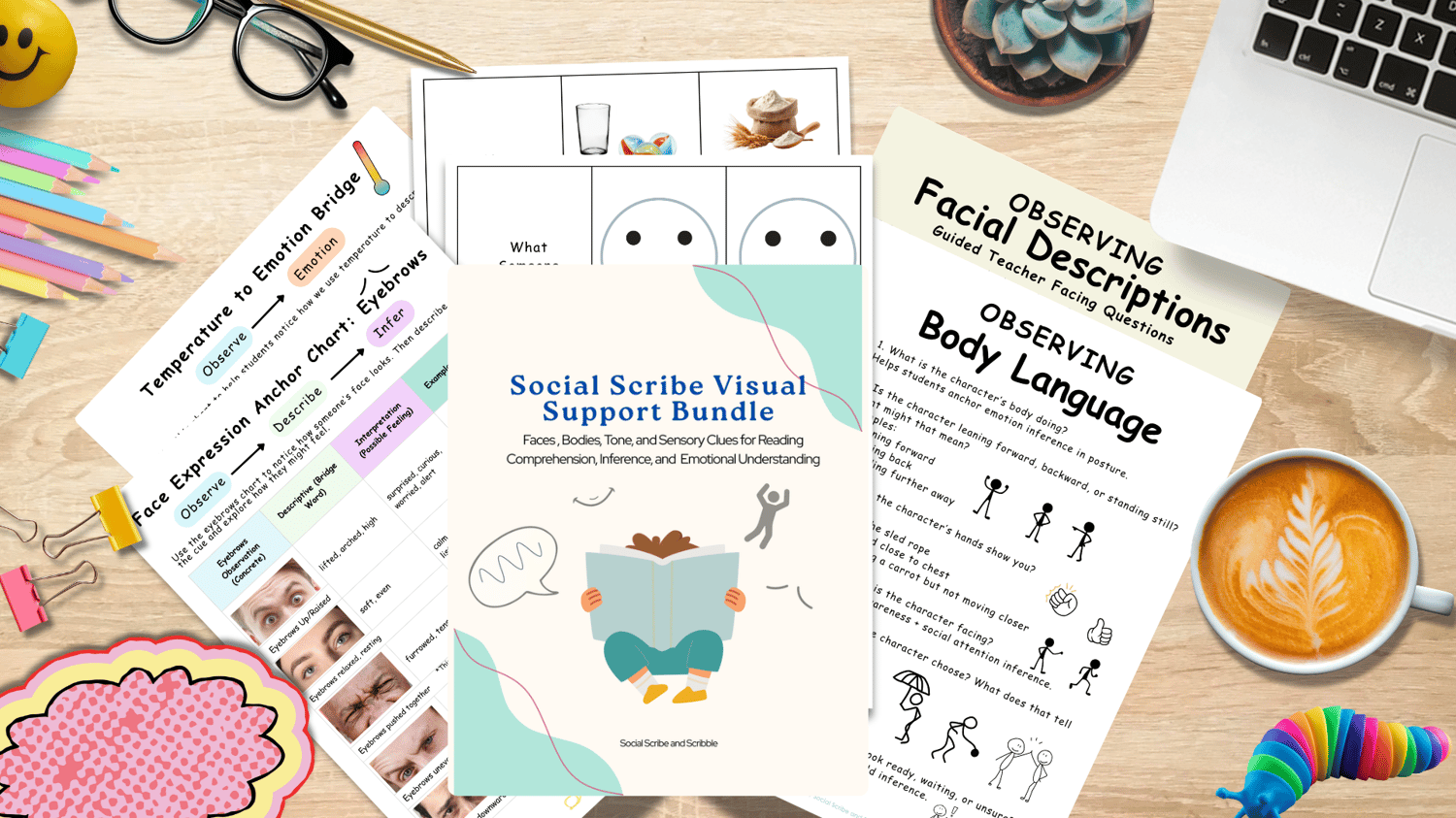
- Visual anchor charts for face, body, tone, and sensory cues
- Mini cue cards for hands-on practice and discussion
- Emotional–sensory bridge visuals to support figurative language
- Student worksheets that mirror the visual system
- Teacher guidance for scaffolded, respectful instruction
- Bonus inference charts for deeper reasoning
💫 Who This Is For
- Speech-language pathologists
- Elementary and middle school teachers
- Special education and SEL providers
- Reading interventionists
- Parents supporting social understanding and comprehension
How It’s Used
- Introduce visual cues before labeling emotions
- Support reading comprehension and character analysis
- Practice inference using stories, photos, or real-life situations
- Pair with Boom decks for interactive application
- Use as a full system or select individual components as needed
Built to Grow With Learners
Each component can be used independently or combined into a complete system, making it easy to differentiate for emerging readers, developing inferencers, and older students who need explicit support.